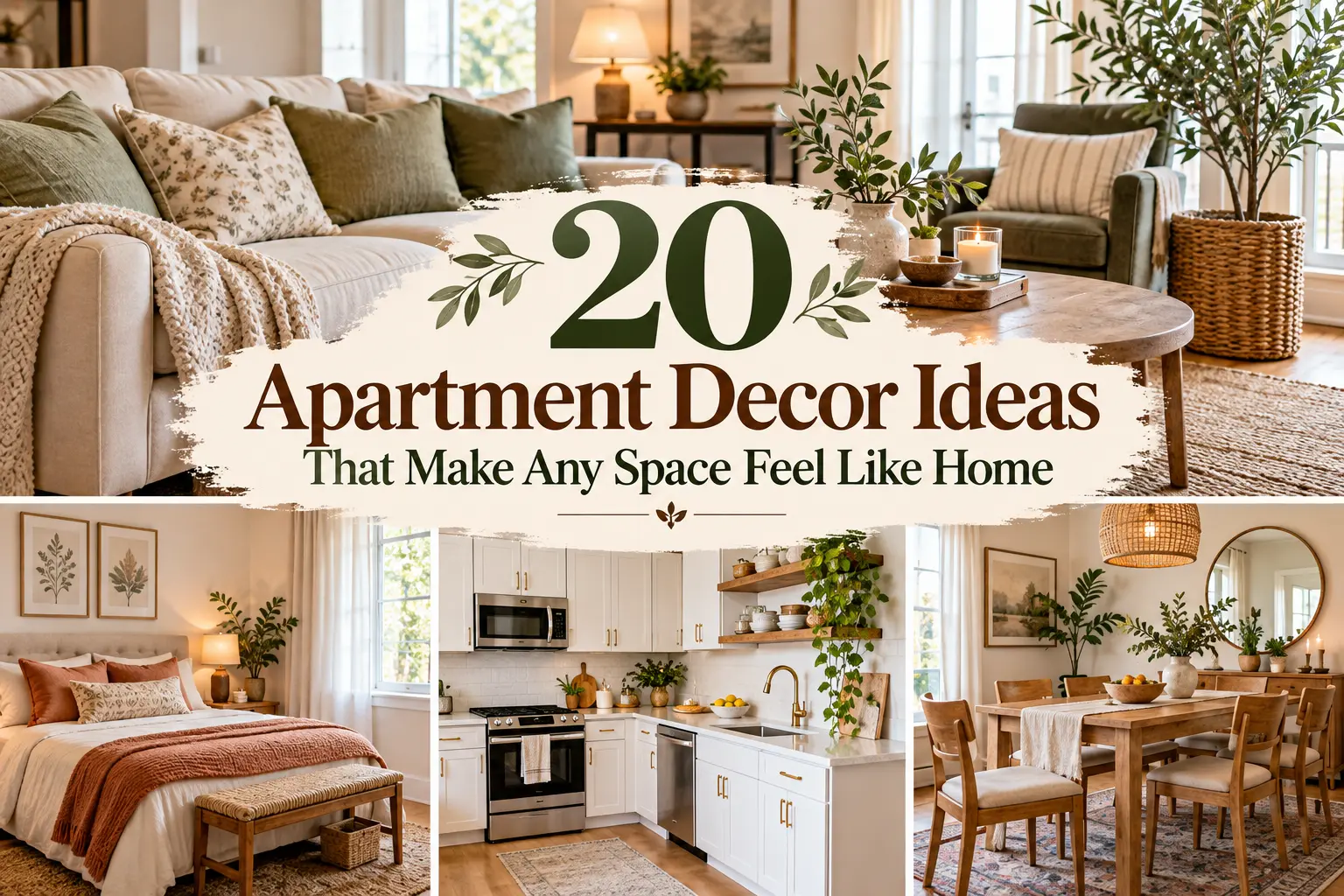
20 Apartment Decor Ideas That Make Any Space Feel Like Home
An apartment doesn’t need a large floor plan, expensive furniture, or a complete renovation to feel like home. Sometimes, the biggest difference comes from softer lighting, meaningful accessories, a comfortable seating arrangement, or a few personal touches that make an ordinary room feel more inviting.
The best apartment decor ideas balance personality with practicality. Whether you’re decorating a small studio, furnishing your first apartment, or refreshing a rental you’ve lived in for years, thoughtful choices can make your space feel warmer, more organized, and distinctly yours.
From cozy living room layers to creative wall displays and space-saving furniture, these ideas work across a range of budgets and interior styles. Many are also renter-friendly, so you can personalize your apartment without making permanent changes.
The goal isn’t to make your apartment look like a showroom. It’s to create a comfortable, functional space that reflects how you actually live.
1. Create a Cozy Living Room With Layered Textures
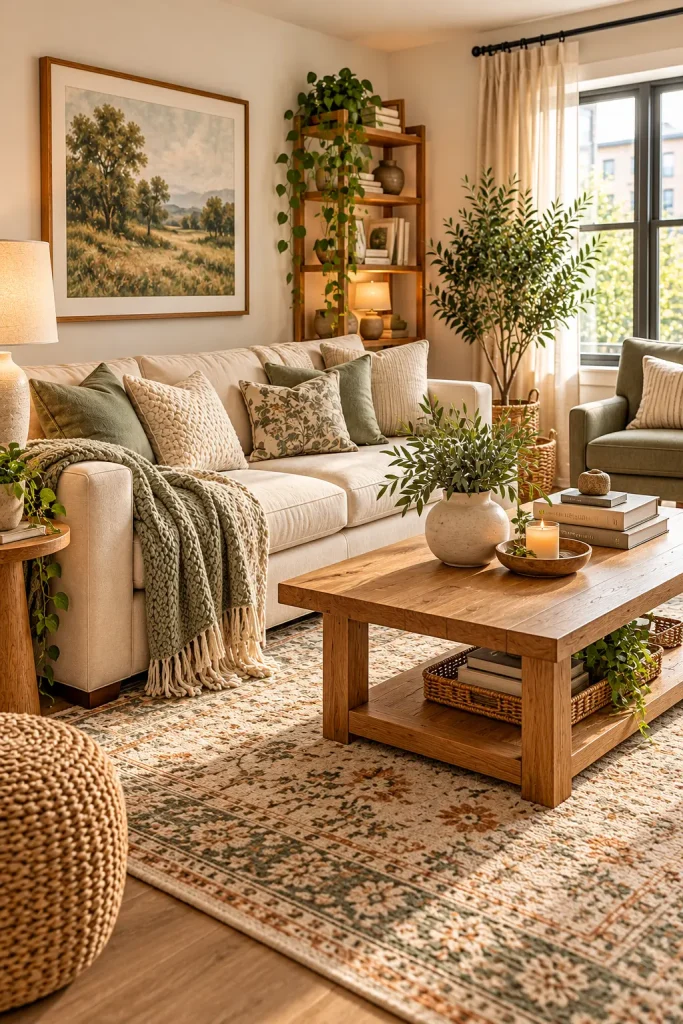
A comfortable living room is often the heart of an apartment. Even if your space is small, layering different textures can make it feel welcoming without filling it with unnecessary furniture.
Start with a neutral sofa in cream, beige, warm gray, or soft taupe. Add a combination of linen cushions, a chunky knit throw, and a textured area rug. A natural wood coffee table introduces warmth, while a ceramic vase or a small stack of books gives the room a personal finishing touch.
How to recreate the look:
- Combine three or four complementary textures instead of using the same fabric everywhere.
- Choose pillows in different sizes to create a relaxed, layered appearance.
- Add a rug large enough to connect the seating area visually.
- Include one or two meaningful accessories rather than decorating every surface.
Budget-friendly alternative: Refresh your existing sofa with new cushion covers and a secondhand coffee table. You can achieve a noticeably different look without replacing your largest furniture pieces.
2. Use Warm Lighting to Make Evenings More Inviting
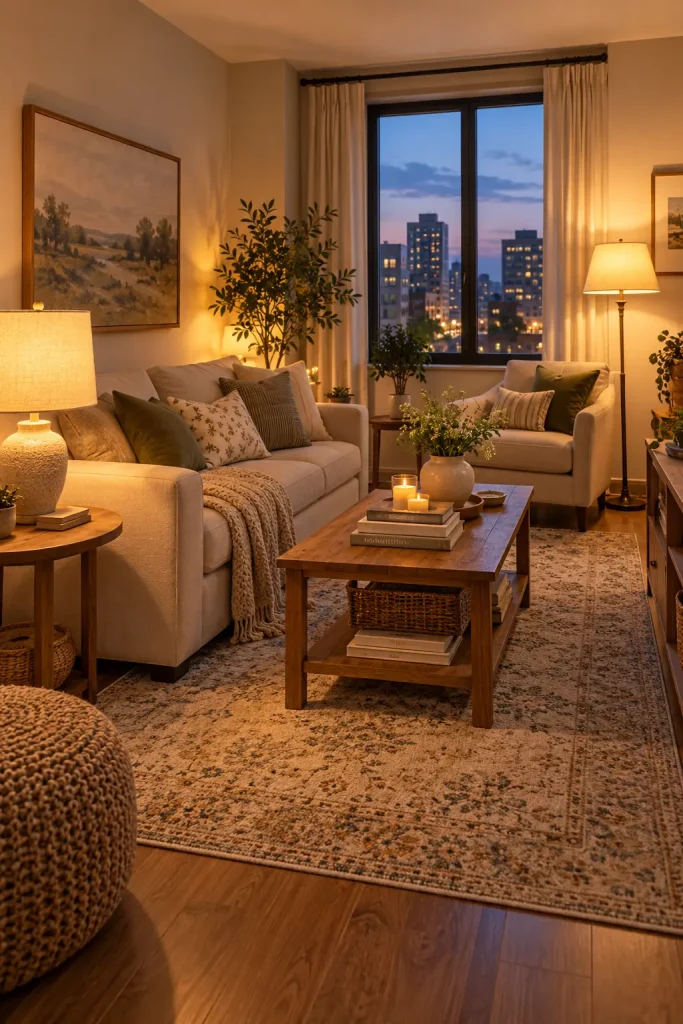
Lighting can change the entire atmosphere of an apartment. A room with one bright overhead fixture may feel functional during the day but harsh and uninviting at night.
Instead of relying on a single ceiling light, create several smaller pools of light throughout the space. A table lamp beside the sofa, a floor lamp near a reading chair, and a bedside lamp can make an apartment feel more relaxed and thoughtfully designed.
Choose lamps with fabric shades, ceramic bases, or natural wood details to complement your furniture. Warm-white bulbs generally create a softer residential atmosphere than cool, bluish lighting.
A simple lighting plan:
- Keep overhead lighting for general visibility.
- Add a table or floor lamp near the main seating area.
- Place a small lamp on a bedside table or dresser.
- Use dimmable bulbs where compatible to adjust the brightness throughout the evening.
If you’re renting, plug-in lamps are particularly useful because they require no electrical modifications.
3. Personalize Plain Walls With Removable Decor
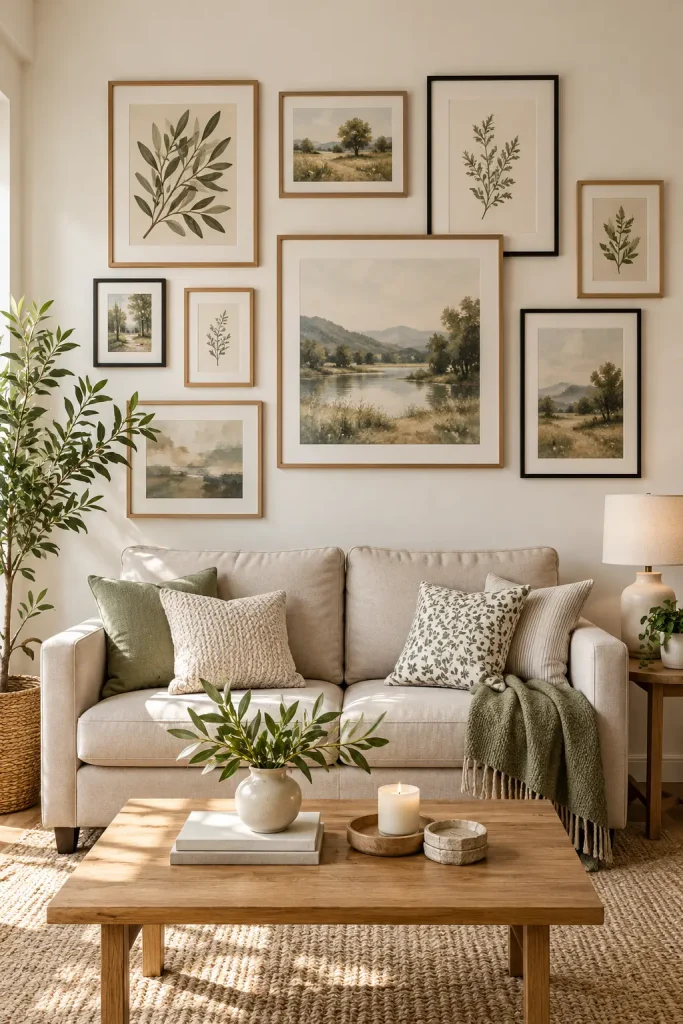
Bare walls can make an apartment feel temporary, especially when you’re surrounded by white paint and standard rental finishes. Adding artwork, framed photographs, or removable wall accents helps establish a stronger sense of personality.
A coordinated gallery wall works beautifully above a sofa, dining table, or bedroom dresser. Mix abstract prints, landscape photography, botanical illustrations, and personal photographs while keeping a consistent relationship between their colors.
If drilling holes isn’t allowed, consider removable picture-hanging strips rated for the artwork’s weight. Peel-and-stick wallpaper can also introduce a subtle pattern behind a bed or desk, provided the product is suitable for the wall surface and your lease permits it.
For a cohesive display, try this combination:
- One larger print to anchor the arrangement.
- Two or three smaller artworks in complementary colors.
- Matching or coordinating frames.
- Enough space between pieces to prevent the wall from feeling crowded.
Common mistake: Hanging every frame at a different height without considering the overall arrangement. Plan the layout on the floor first, then transfer it to the wall.
4. Define Your Living Area With a Beautiful Area Rug
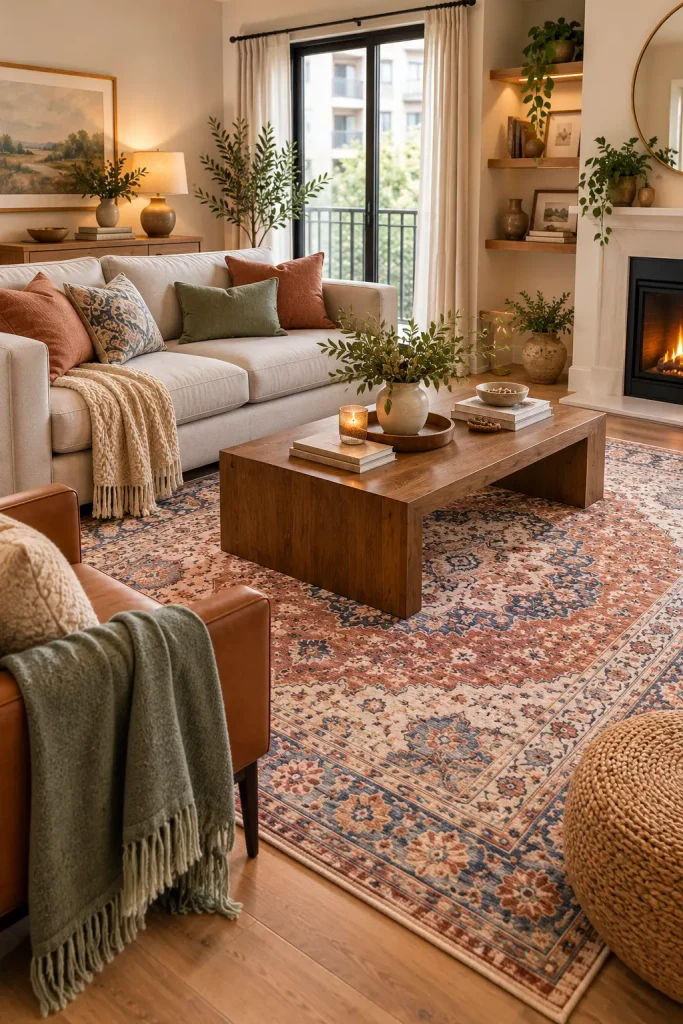
An area rug can help an apartment feel more finished by visually connecting the furniture in a seating area. It’s especially useful in open-plan apartments where the living room, dining space, and kitchen share one continuous floor.
Choose a rug that complements your existing furnishings rather than competing with them. A faded vintage-inspired pattern adds character to a neutral room, while a solid textured rug creates a quieter foundation for colorful artwork and accessories.
Scale matters more than many people realize. A rug that’s too small can make the furniture arrangement feel disconnected. When possible, select a size that allows at least the front legs of the sofa and chairs to rest on it.
| Rug style | Visual effect | Works well with |
|---|---|---|
| Muted vintage pattern | Adds character and color | Simple furniture and neutral walls |
| Natural woven texture | Creates an organic, relaxed feel | Oak furniture and linen fabrics |
| Soft solid neutral | Keeps the room visually calm | Colorful artwork and patterned cushions |
In apartments with hard flooring, a rug also adds softness underfoot. Use an appropriate nonslip rug pad where permitted, particularly on smooth surfaces.
5. Bring Life Into Your Apartment With Houseplants
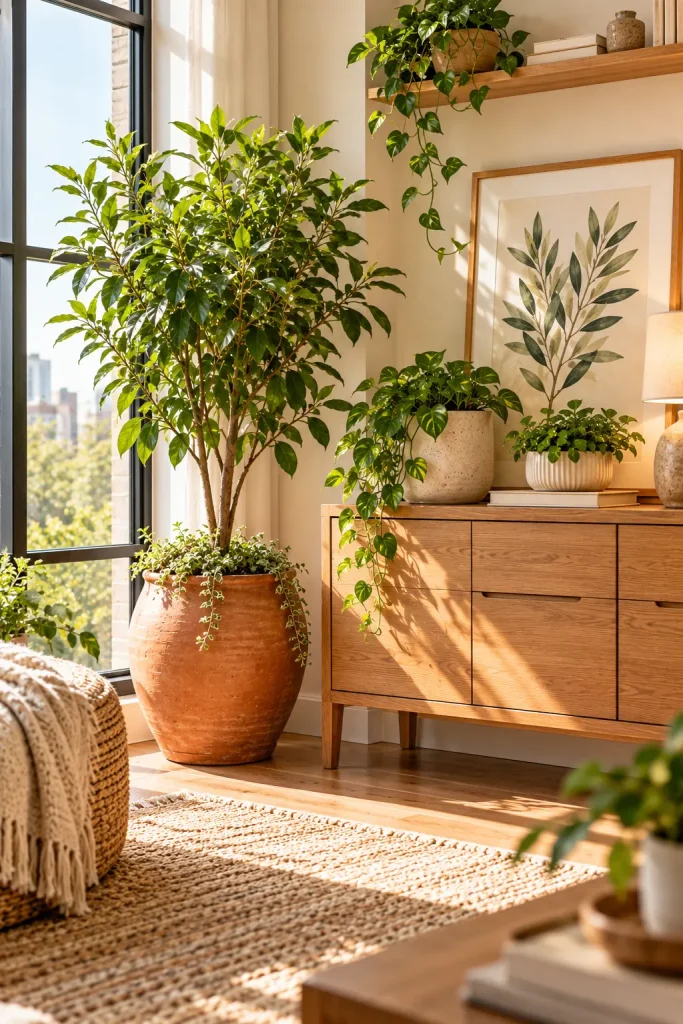
Plants introduce natural color, varied shapes, and a softer visual quality to apartment interiors. Even one thoughtfully positioned plant can make a plain corner feel more complete.
For a simple arrangement, place a medium-sized plant beside a sofa or near a bright window. Smaller plants can sit on shelves, desks, and kitchen counters, while a trailing plant adds interest to a high shelf.
Choose plants according to the actual light conditions in your apartment rather than selecting them only for appearance. A bright windowsill and a dim interior corner will support different plants.
Easy ways to style plants:
- Use ceramic planters in complementary colors.
- Group plants of different heights to create a natural arrangement.
- Place a larger plant beside furniture to soften hard corners.
- Keep leaves away from obstructed walkways and frequently used surfaces.
If you have pets, check whether a plant is safe for the animals in your household before bringing it home.
You don’t need a large collection to achieve the effect. A few healthy plants with room to grow usually look better than too many crowded together.
6. Make a Small Apartment Feel Bigger With Mirrors
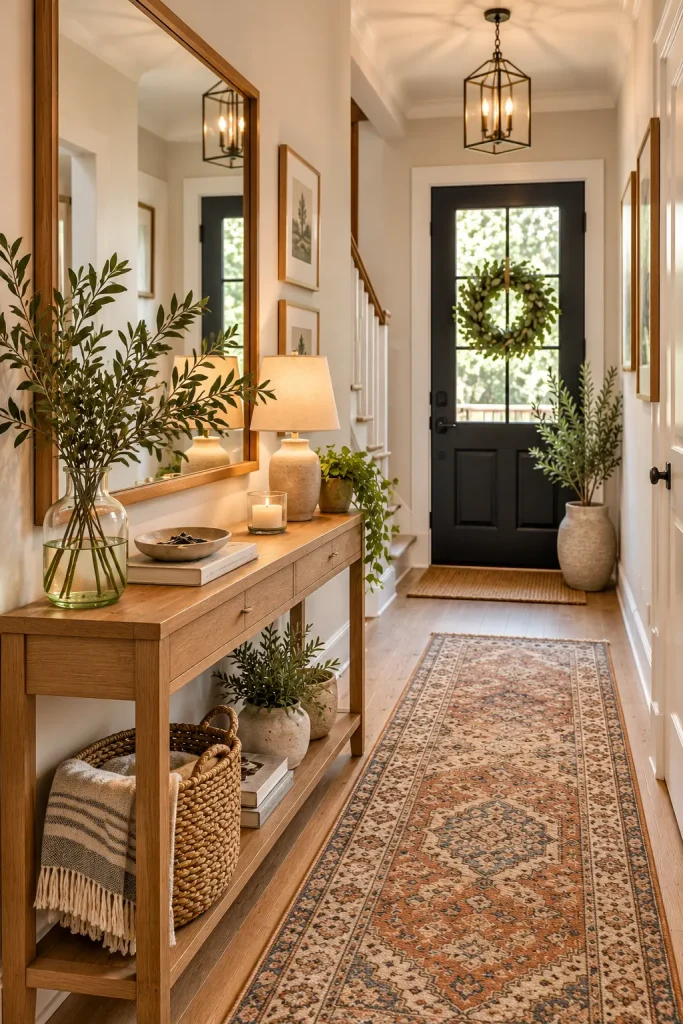
Mirrors are a practical decorating choice for apartments because they reflect light and create a sense of visual depth. A well-positioned mirror can make a narrow entryway or compact living room feel less enclosed.
A full-length mirror leaning securely against a wall works well in a bedroom or dressing area. A large round mirror can soften the straight lines of a console table, while a rectangular mirror can make a narrow hallway feel more open.
Placement is important. Position the mirror where it reflects a window, an attractive view, or a well-lit part of the room instead of an unappealing corner.
Quick Tip: Before purchasing a large mirror, check your lease and consider how it will be secured. Heavy mirrors should be installed with appropriate hardware, particularly in homes with children or pets.
For a cohesive look, choose a frame that relates to your existing finishes. Oak adds warmth, black creates contrast, and a simple frameless design keeps the overall appearance understated.
7. Choose Furniture That Works Harder in Small Spaces
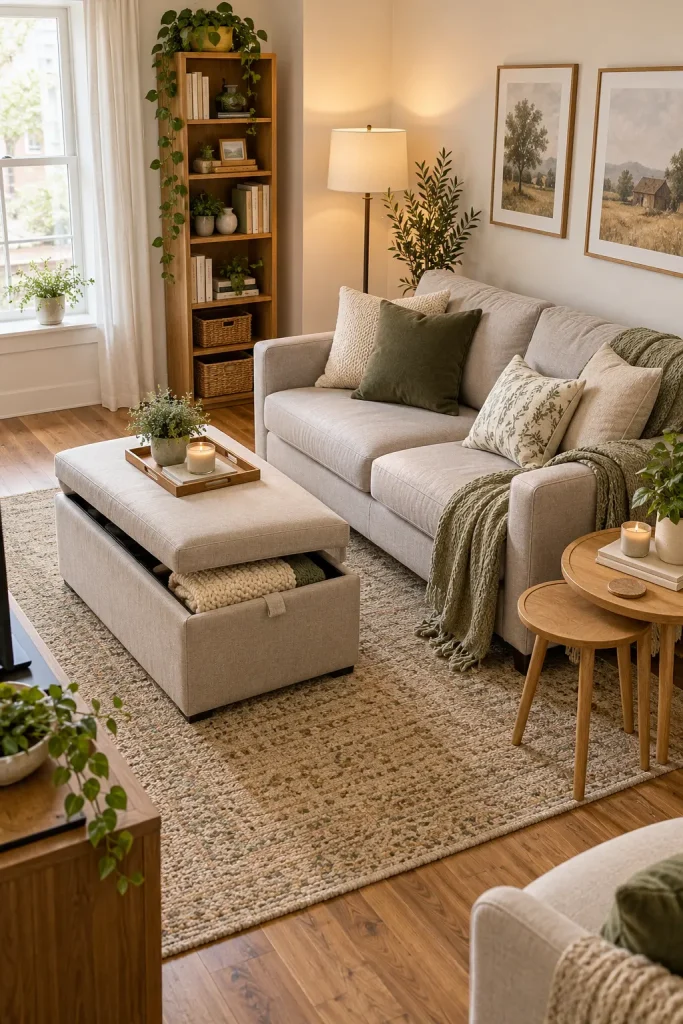
In an apartment, every piece of furniture should earn its place. Choosing items that provide more than one function helps you maintain a comfortable home without overcrowding the floor plan.
A storage ottoman can serve as a footrest, an extra seat, and a place to store blankets. Nesting coffee tables provide flexible surfaces when guests visit and tuck away when they’re not needed. A console table behind a sofa can double as a work surface if its height and depth are appropriate.
Consider these useful options:
- Storage ottoman: Keeps throws, games, and small accessories out of sight.
- Nesting tables: Provide extra surface space without permanently occupying a large footprint.
- Extendable dining table: Accommodates additional guests when needed.
- Storage bed: Makes use of the space beneath the mattress.
- Drop-leaf table: Creates a compact dining or work area that can be folded down.
Before buying anything, measure the furniture footprint and the available walking space. A versatile piece isn’t helpful if it blocks a doorway or makes it difficult to move around the room.
8. Style Your Bed With Soft, Layered Bedding
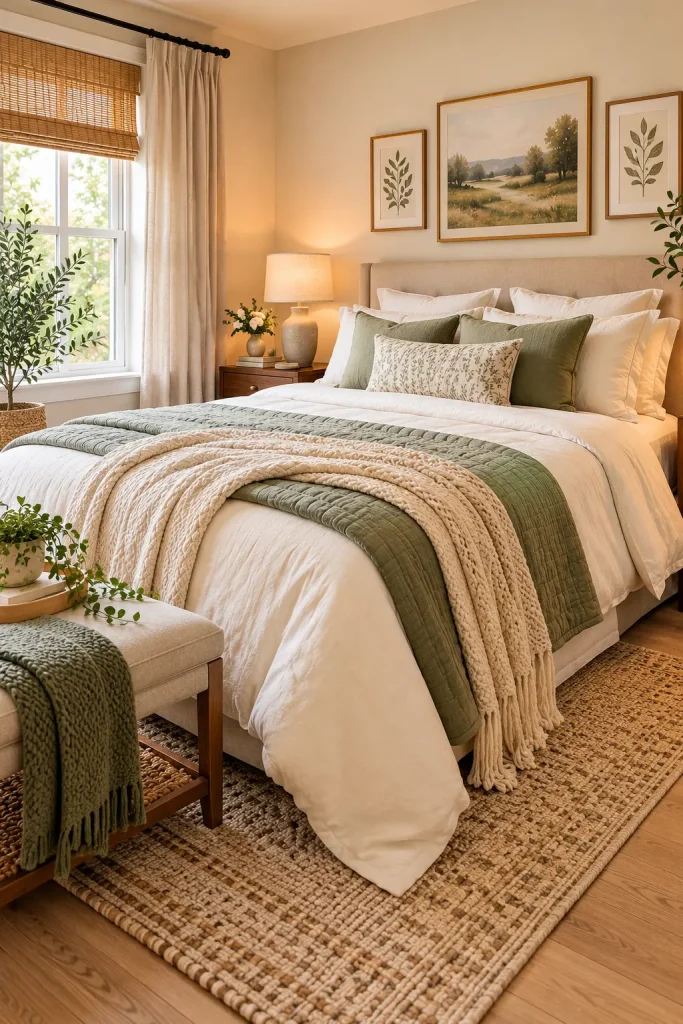
Your bedroom should feel like a comfortable retreat rather than an afterthought. One of the simplest ways to achieve that feeling is to layer bedding in complementary colors and textures.
Start with crisp sheets, add a duvet or comforter, and finish with a lightweight throw folded across the foot of the bed. Two sleeping pillows and a couple of decorative cushions can provide enough dimension without making the bed difficult to maintain.
For a calm bedroom, combine ivory bedding with oatmeal, muted sage, or soft blue accents. If you prefer a more expressive style, introduce a patterned quilt or a pair of contrasting pillow covers.
A simple bedding formula:
- Choose one main color for the sheets and duvet.
- Add a second color through the throw or pillow covers.
- Introduce texture with linen, cotton, or a knitted blanket.
- Keep the bedside area uncluttered so the bed remains the focal point.
You don’t need expensive bedding to make the room feel inviting. Coordinated colors and thoughtful layering often have a greater visual impact than a high thread count or elaborate decorative accessories.
9. Turn an Empty Corner Into a Reading Nook
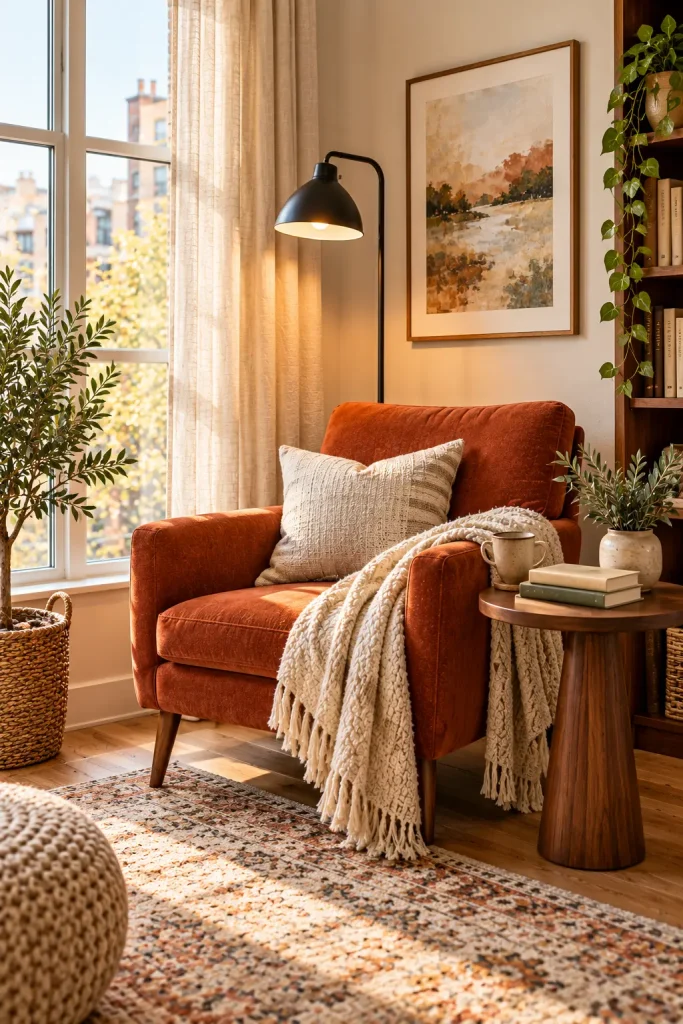
An unused corner can become one of the most enjoyable areas in your apartment with just a few carefully selected pieces. A reading nook creates a dedicated place to relax without requiring an entire room.
Begin with a comfortable chair that fits the available space. Add a small side table for a drink or book and a floor lamp that provides adequate reading light. A soft throw and a cushion make the seating more inviting.
If your apartment is particularly small, look for a narrow accent chair or a compact upholstered armchair with visible legs. Furniture that allows more of the floor to remain visible can help the arrangement feel less bulky.
What makes a reading nook work?
- A chair with enough support for comfortable sitting.
- Lighting positioned for reading rather than decoration alone.
- A nearby surface for everyday essentials.
- A clear route through the room.
- One personal detail, such as favorite books or a framed print.
Place the nook near a window if the layout allows, but avoid positioning the chair where it obstructs a frequently used walkway.
10. Create an Entryway That Feels Organized and Welcoming
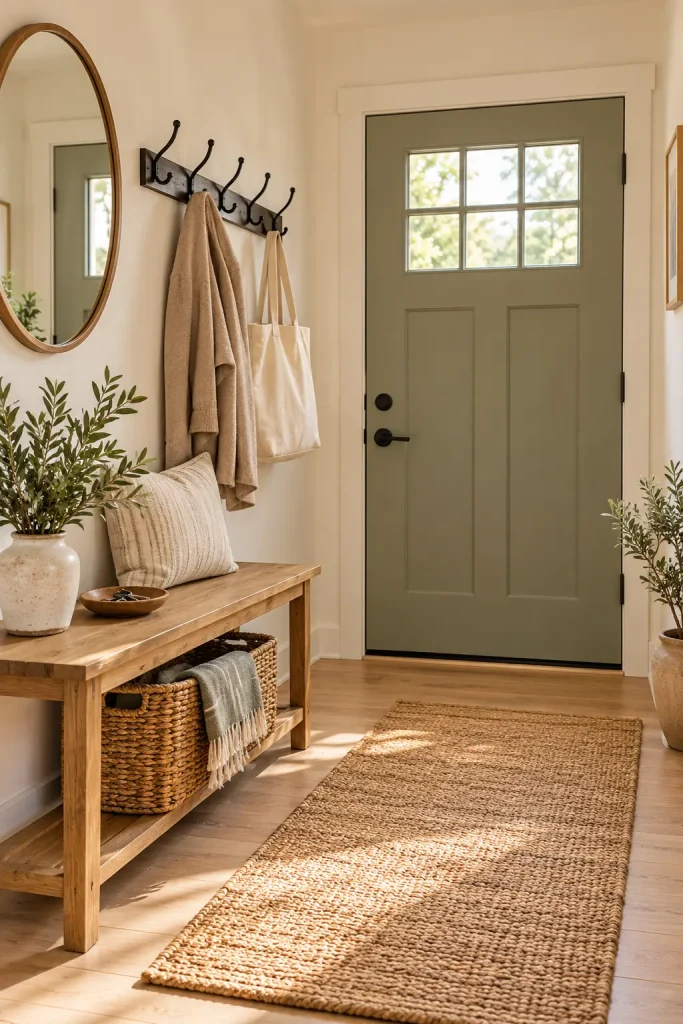
Even a small apartment entrance deserves attention. It’s the first area you encounter when you arrive home, and a practical arrangement can make everyday routines feel more organized.
If you don’t have a separate foyer, create a visual entryway beside the front door. A narrow console, a wall-mounted row of hooks, or a slim bench can establish a distinct landing area.
Keep the design proportional to the available space. A shallow shelf may be more practical than a full-size console in a narrow corridor, while a small bench can provide a convenient place to put on shoes if there’s enough room.
Useful entryway essentials include:
- A tray or bowl for keys.
- Wall hooks for frequently used bags and coats.
- A small shoe rack or closed shoe cabinet.
- A mirror for a final check before leaving.
- A washable mat near the entrance.
Avoid filling the entrance with decorative pieces that interfere with the door or walking path. The best entryways combine a welcoming appearance with storage that genuinely supports daily life.
11. Add Curtains to Soften the Windows
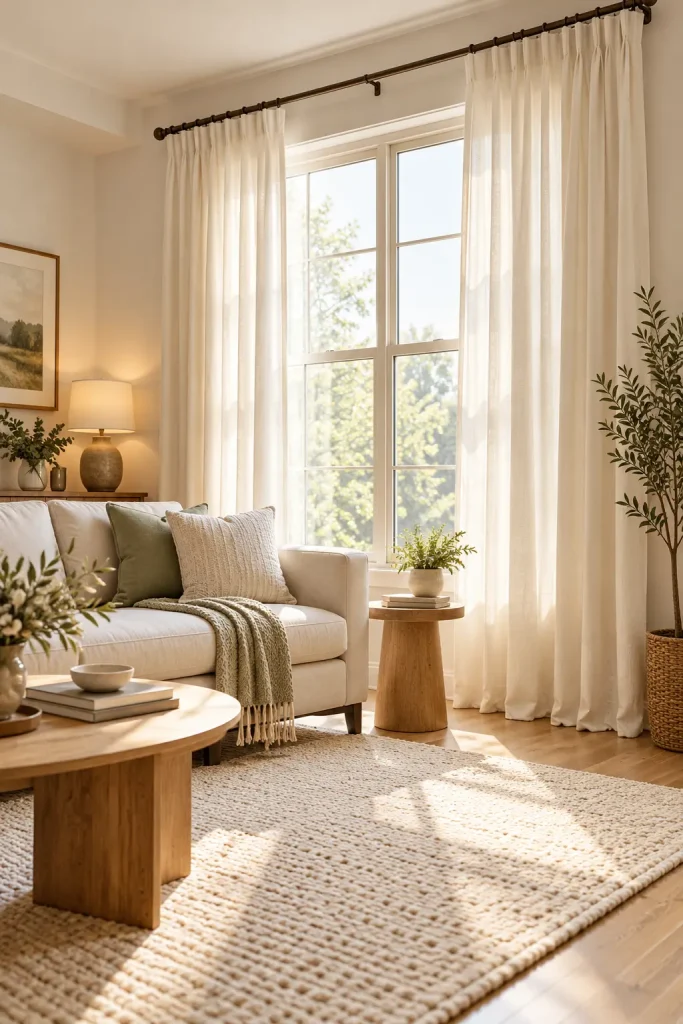
Window treatments can make an apartment feel more complete by introducing fabric, controlling light, and framing the view.
Light-filtering curtains are a useful option for living rooms and bedrooms where you want natural daylight without the stark appearance of bare windows. Linen-look fabrics create a relaxed effect, while heavier curtains can provide more coverage and a richer visual presence.
When the window and wall arrangement permits, mounting the curtain rod higher and wider than the window frame can make the window area feel more generous. Check your lease before drilling, and use suitable hardware for the wall type and curtain weight.
For a cohesive result, coordinate the curtain color with the room’s largest furnishings rather than trying to match every accessory.
| Curtain choice | Decorating effect | Considerations |
|---|---|---|
| Sheer ivory panels | Light, airy appearance | Limited privacy and light blocking |
| Linen-look neutral curtains | Soft, relaxed texture | Check the fabric’s care requirements |
| Heavier lined curtains | Fuller appearance and more coverage | Require an appropriately sturdy rod |
| Subtle patterned curtains | Introduce visual interest | Coordinate with existing rugs and cushions |
For bedrooms, consider how much privacy and darkness you need before choosing a fabric.
12. Make Your Dining Area Feel Like a Separate Room
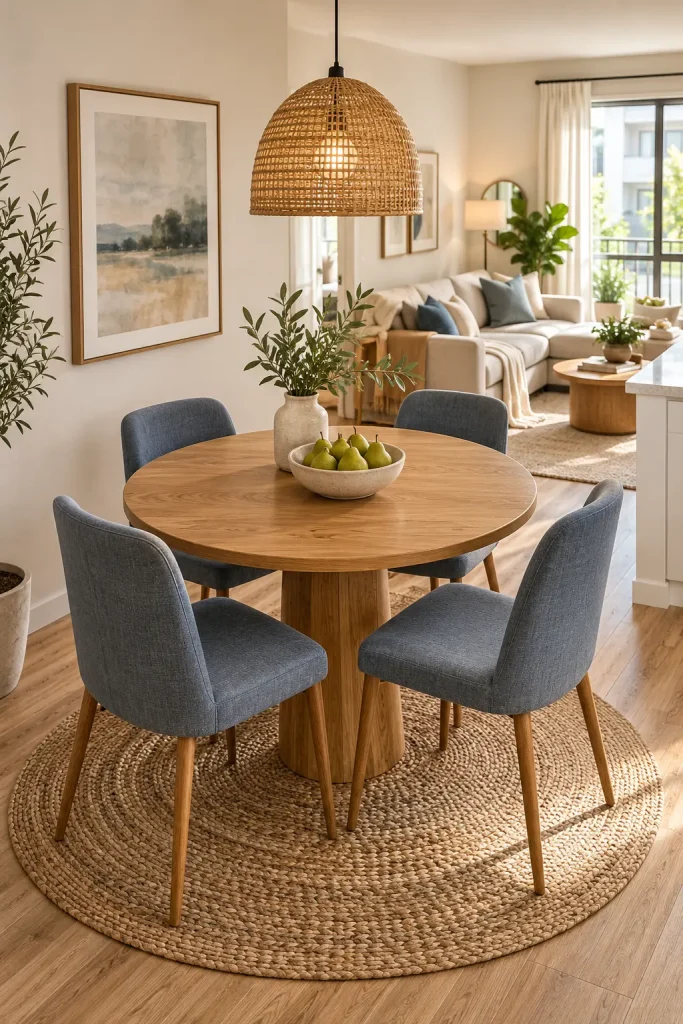
Open-plan apartments often combine the kitchen, dining area, and living room into one space. A defined dining zone makes the layout feel more intentional without requiring a partition.
Start with a dining table suited to the number of people who regularly use it. A round table can be useful in certain compact layouts because it eliminates corners, while a narrow rectangular table may fit better along a wall.
A rug beneath the dining set can distinguish the area from the living room, provided there’s enough space for chairs to move without catching on the edges. A pendant light above the table can also create a visual focal point.
If you can’t change the existing lighting, a table centerpiece and coordinated dining chairs can establish a similar sense of purpose.
For a finished look, add:
- A small ceramic vase or low bowl.
- Simple placemats or a washable runner.
- A single piece of artwork on the nearest wall.
- Chairs that complement the table without overwhelming the room.
Keep everyday dining surfaces relatively clear so the area remains practical for meals, working, and entertaining.
13. Give Your Kitchen Counters a Thoughtful Refresh
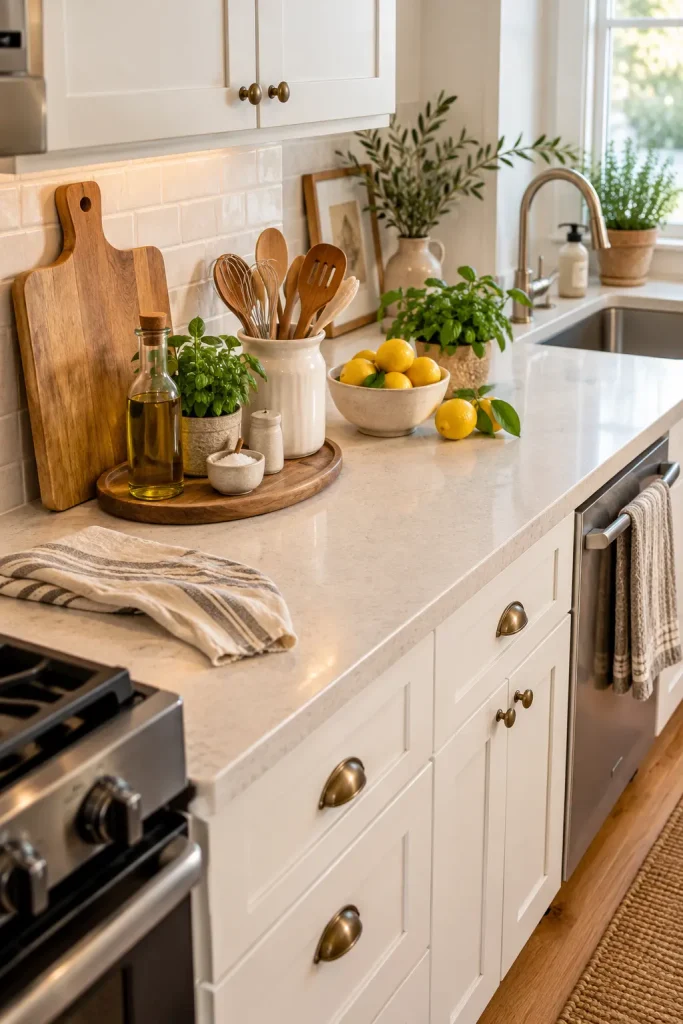
You don’t need a renovated kitchen to make an apartment feel more personal. Small changes to the countertop styling can create a warmer, more organized appearance while preserving the space you need for cooking.
Start by clearing away items you rarely use. Keep everyday essentials accessible, then group them into a few intentional arrangements.
For example, a wooden tray can hold cooking oil, salt, and a small utensil container. A ceramic fruit bowl adds color, while a compact herb plant near a suitable window can bring a natural element into the kitchen.
A practical countertop arrangement:
- Place frequently used cooking items together near the stove, away from direct heat.
- Use a small tray to contain bottles and simplify cleaning.
- Store bulky appliances elsewhere when they’re not needed, if convenient.
- Leave generous clear work surfaces for food preparation.
Choose accessories that complement your kitchen’s existing finishes. Warm wood can soften a white kitchen, while black or stainless-steel accents may suit a more contemporary space.
The key is restraint. A few useful, attractive objects usually create a more inviting kitchen than a crowded collection of decorative accessories.
14. Decorate With Personal Photographs and Meaningful Objects
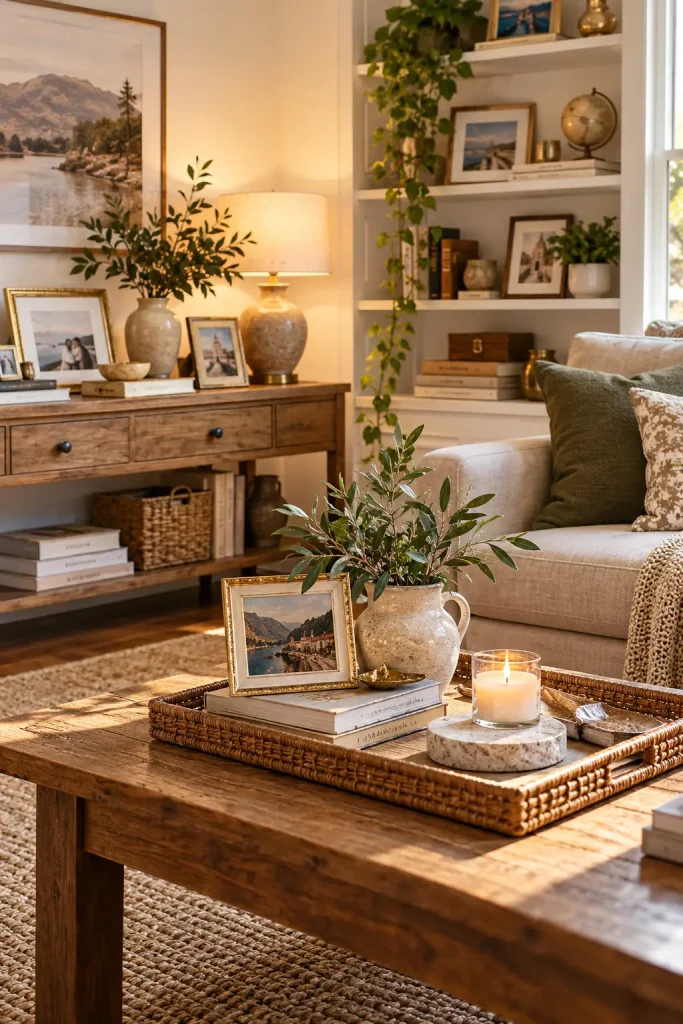
A home feels more personal when it reflects the people who live there. Photographs, souvenirs, inherited objects, and favorite books can give an apartment character that coordinated furniture alone cannot provide.
Instead of scattering sentimental items throughout every room, create a few intentional displays. Arrange framed photographs on a bookshelf, group travel souvenirs on a console, or place a meaningful object beside a stack of books on the coffee table.
Try to create a balance between personal expression and visual breathing room.
A simple styling method:
- Select three to five objects with a shared color, material, or personal connection.
- Vary their heights to avoid a flat arrangement.
- Place larger items toward the back and smaller ones toward the front.
- Leave some empty space so each object remains visible.
You don’t need matching frames or expensive display furniture. A mixture of secondhand frames and meaningful keepsakes can look collected over time rather than purchased all at once.
The result should feel like your home, not a display that needs to remain untouched.
15. Use Floating Shelves to Display Decor Without Bulky Furniture
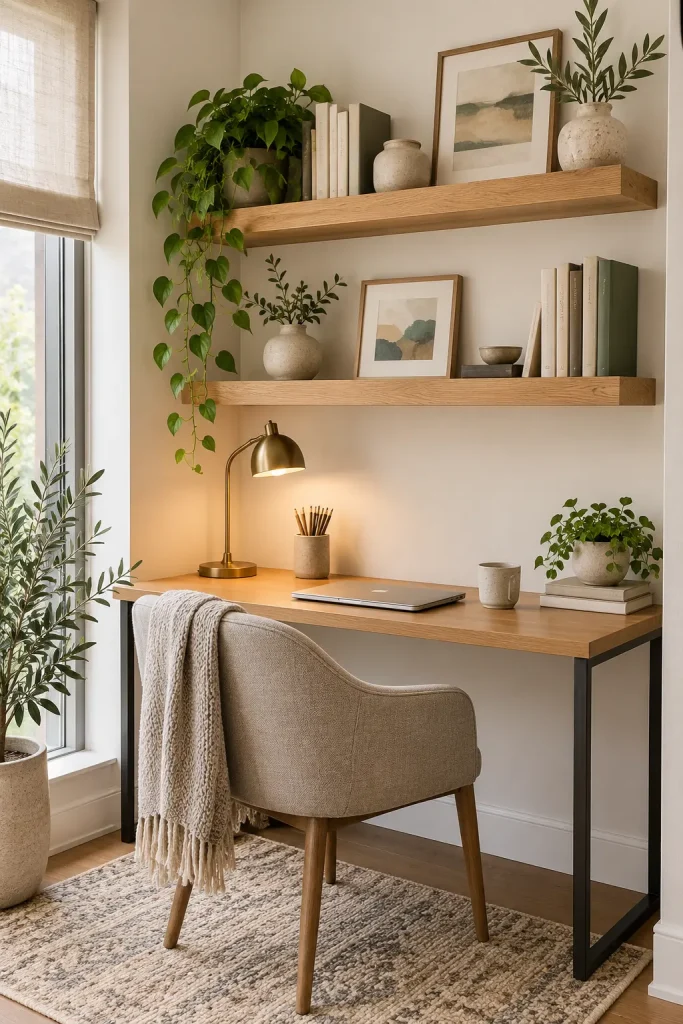
Floating shelves can add storage and display space without taking up the floor area required by a bookcase or cabinet. They’re particularly useful in compact living rooms, bedrooms, and work-from-home corners.
Install one or two shelves above a desk, beside a sofa, or in an unused wall section where they won’t interfere with doors or movement. Keep the displayed objects relatively light in appearance, even when the shelves themselves are sturdy.
A successful shelf arrangement includes a mixture of books, small framed artwork, ceramics, and perhaps one trailing plant. Vary the height and orientation of objects while keeping enough space between them.
Common mistake: Filling every inch of the shelf with small accessories. Too many objects can make a compact apartment feel cluttered.
Before installation, check your lease and the shelf manufacturer’s weight limits. Use mounting hardware appropriate for the wall construction and intended load.
For a renter-friendly alternative, consider a freestanding ladder shelf or a narrow bookcase that can be moved when you leave.
16. Introduce Color Through Accent Furniture
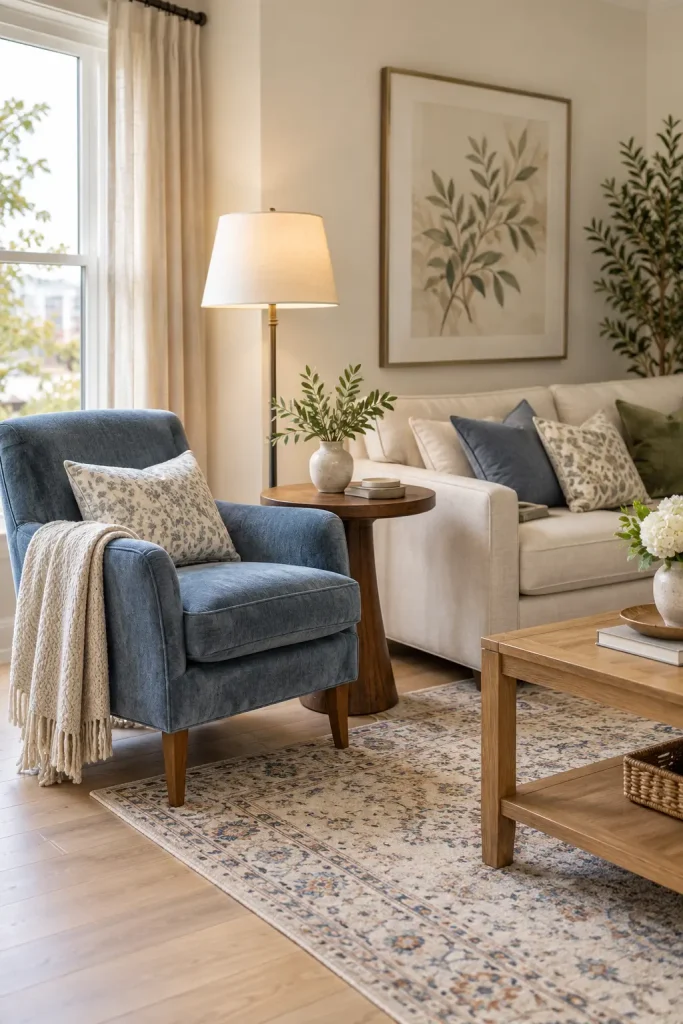
Neutral walls and large furnishings create a flexible foundation, but a little color can make an apartment feel more distinctive. Accent furniture offers a practical way to introduce personality without committing to a full room makeover.
A muted blue armchair, olive-green side table, terracotta bedside cabinet, or burgundy upholstered stool can become a focal point in an otherwise understated room.
Choose a color that relates to at least one other element in the space. For example, a blue chair can connect visually with artwork, a patterned rug, or a pair of cushions.
You don’t need every piece of furniture to match. In fact, a carefully chosen contrast often makes the room feel more collected and individual.
Color combinations worth considering:
- Sage green and warm oak: Natural, relaxed, and understated.
- Dusty blue and ivory: Soft, fresh, and suitable for many apartment styles.
- Terracotta and cream: Warm and earthy without feeling overly dark.
- Burgundy and walnut: Richer, moodier, and well suited to an autumn-inspired interior.
If you’re renting, an accent chair or small side table is often an easier way to experiment with color than repainting the walls.
17. Make a Home Office Feel Like Part of Your Decor
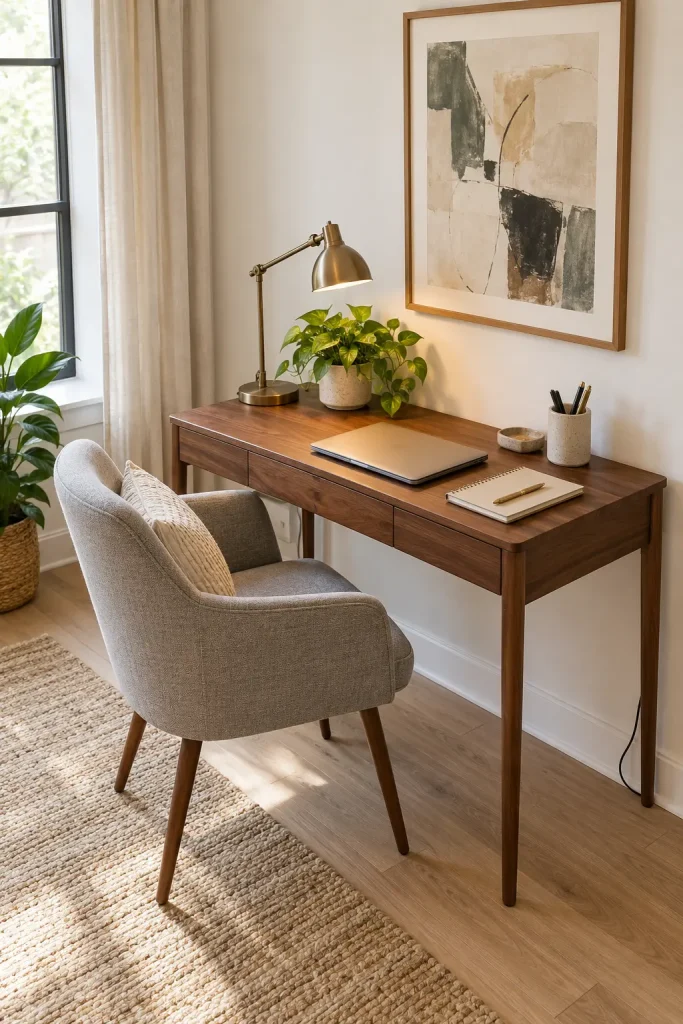
Working from home is easier when your workspace feels comfortable and organized. Even if your apartment doesn’t have a dedicated office, a thoughtfully styled desk can fit naturally into a bedroom, living room, or unused wall area.
Choose a desk that suits both your work requirements and the available floor space. A slim writing desk may be enough for a laptop, notebook, and lamp, while a larger work surface may be necessary for multiple monitors or creative projects.
Keep the decorative elements useful. A desk lamp, small plant, pen holder, and framed print can introduce personality without consuming valuable workspace.
For a cohesive home office:
- Match the desk finish to nearby furniture where practical.
- Choose a comfortable chair that fits beneath the desk.
- Use a small drawer unit or desktop organizer for supplies.
- Route cables neatly to reduce visual clutter.
- Position the monitor to minimize distracting reflections and glare.
If your workspace shares a room with your bed or sofa, use a rug, lighting, or a small bookcase to distinguish it visually.
The aim is to create a functional work zone that still feels like a natural part of your home.
18. Create a Calm Bathroom With Coordinated Accessories
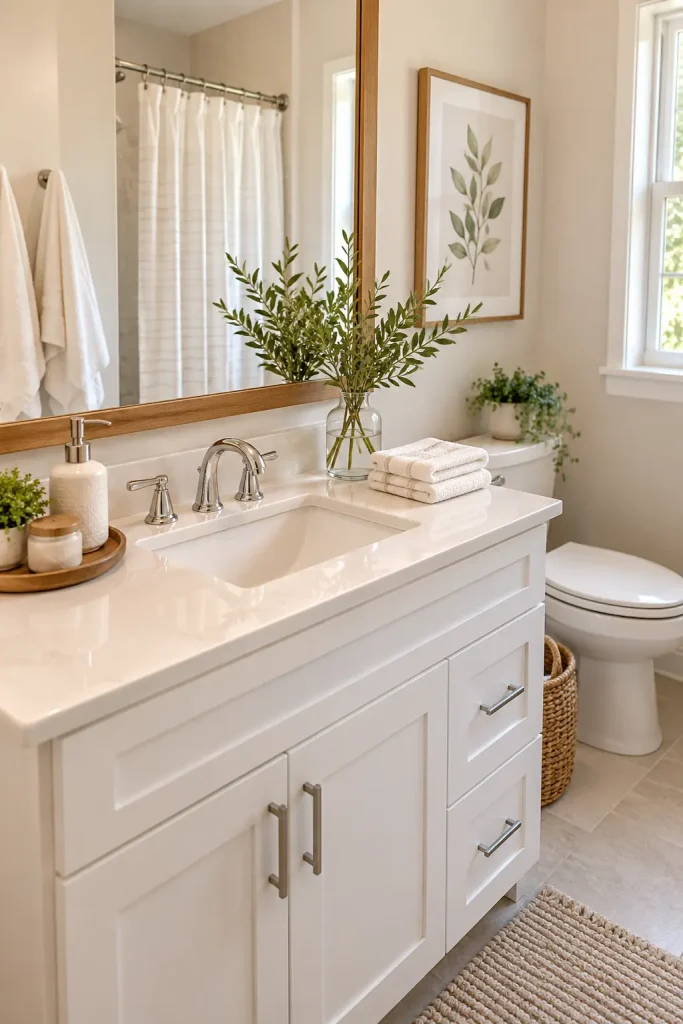
A rental bathroom may have basic tiles, standard fixtures, and very little decorative character. Coordinated accessories can make it feel more intentional without requiring a renovation.
Start with matching towels, a simple bath mat, and a soap dispenser that complements the existing finishes. A small tray can organize everyday toiletries on the vanity, while a framed print or an appropriate decorative object can add personality if there’s enough space.
Color coordination makes a noticeable difference. White and warm beige create a clean, relaxed look, while muted green or dusty blue introduces a gentle hint of color.
Useful bathroom updates include:
- Matching hand towels and bath towels.
- A coordinated soap dispenser and toothbrush holder.
- A nonslip bath mat suited to the floor.
- A small storage basket for extra toiletries.
- A mirror or lighting update where permitted.
Keep moisture and ventilation in mind when selecting decorative materials. Avoid placing unprotected artwork or moisture-sensitive objects where they may be damaged by frequent steam or splashes.
The best bathroom decor looks attractive while remaining easy to clean and maintain.
19. Bring Warmth Into Your Apartment With Natural Materials
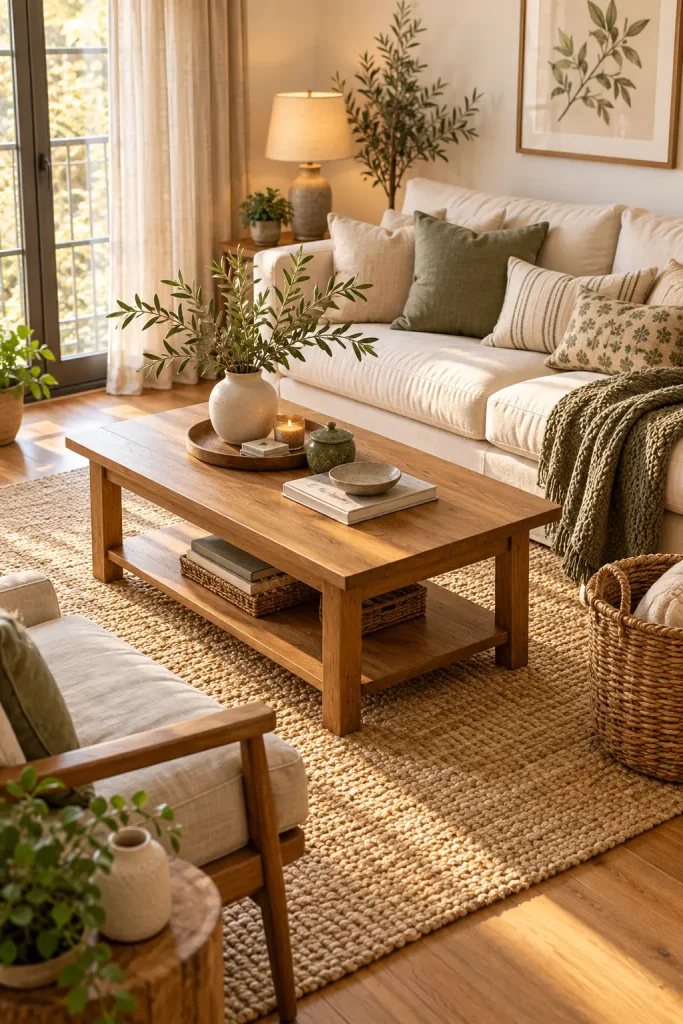
Natural materials add visual depth to apartment interiors, particularly when the architecture and finishes are simple. Wood, woven fibers, linen, cotton, and handmade ceramics can make a room feel warmer without relying on excessive decoration.
You can introduce these materials gradually. A woven basket beside the sofa, an oak tray on the coffee table, linen cushion covers, or a ceramic lamp base can soften a room dominated by painted surfaces and manufactured finishes.
The key is to mix materials rather than use the same one everywhere.
For example, pair a wooden coffee table with a woven rug, linen curtains, and a ceramic vase. Each material contributes a different texture while the restrained color palette keeps the room cohesive.
An easy natural-material palette:
- Light oak or walnut for furniture.
- Linen or cotton for curtains and upholstery.
- Jute or another suitable woven fiber for baskets and rugs.
- Ceramic for lamps, bowls, and vases.
- Green foliage for a touch of living color.
Choose materials that suit your household and maintenance preferences. Some natural fibers are more sensitive to moisture, spills, or heavy wear than others, so consider where each item will be used.
20. Display a Few Favorite Objects on a Coffee Table
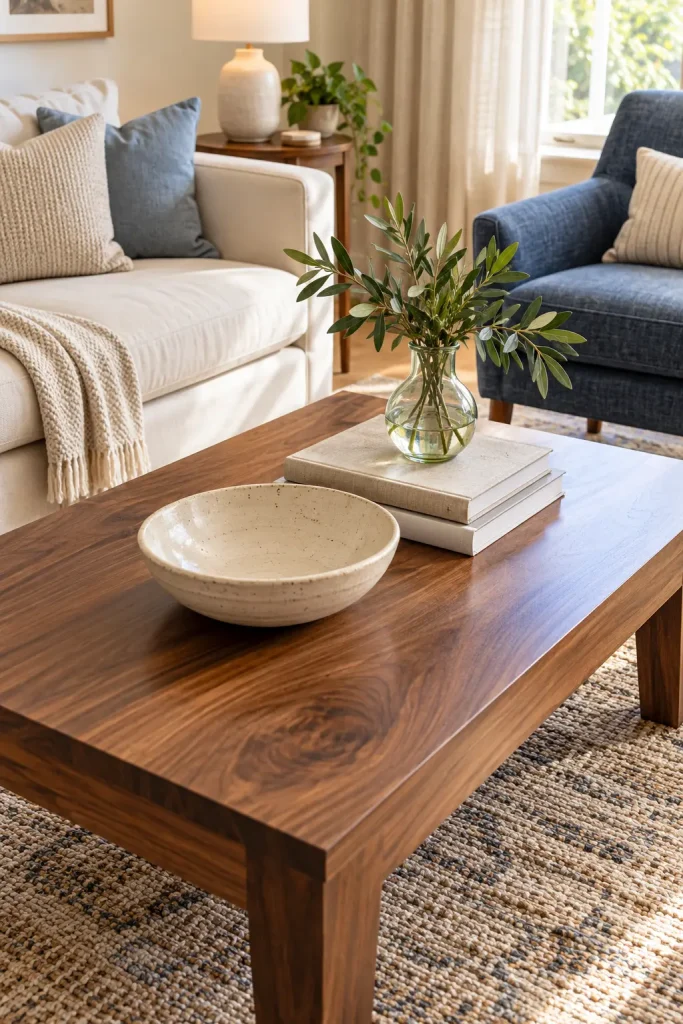
A coffee table is a natural focal point in many living rooms. Styling it thoughtfully can make the entire seating area feel more finished, even when the rest of the apartment has relatively simple furnishings.
Start by considering how you use the table. If you regularly eat meals there, work on a laptop, or entertain guests, leave enough open surface space for everyday activities.
For a practical decorative arrangement, combine a small stack of books, a low ceramic bowl, and one vase or sculptural object. A tray can group smaller pieces together, making them easy to move when you need the surface.
Three coffee-table styling approaches:
| Style | What to include | Overall effect |
|---|---|---|
| Natural and relaxed | Oak tray, ceramic bowl, greenery | Warm and understated |
| Colorful and collected | Art books, patterned object, small vase | Personal and expressive |
| Minimal and modern | One sculptural vessel, one book | Clean and uncluttered |
Vary the height of objects slightly, but avoid creating a tall display that blocks conversation across the sofa.
Quick Tip: If your coffee table is small, choose one or two decorative pieces rather than trying to fit an entire arrangement onto it.
A coffee table should look attractive in photographs, but it should also work for the way you live.