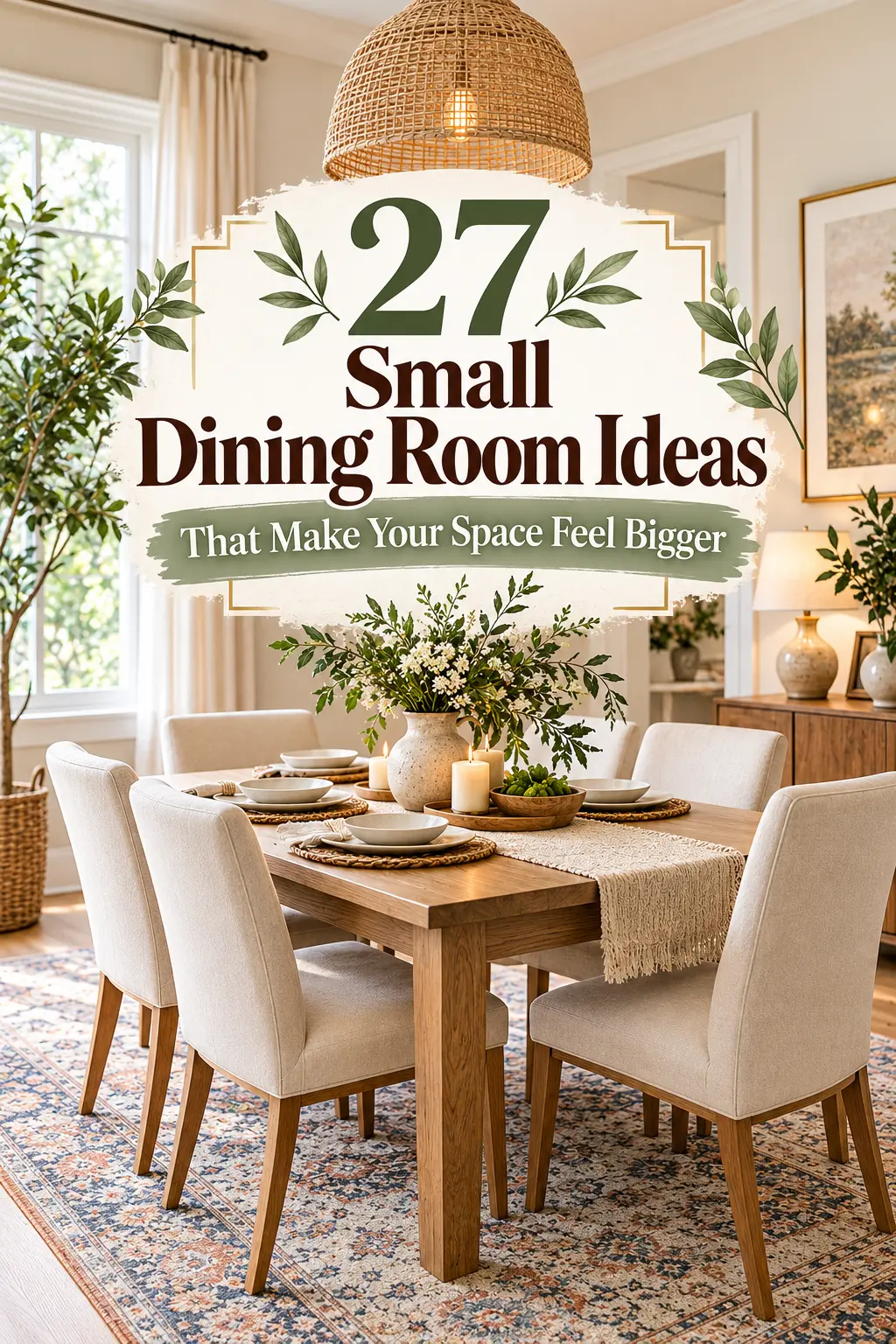
27 Small Dining Room Ideas That Make Your Space Feel Bigger
A small dining room doesn’t have to feel cramped, crowded, or difficult to decorate. With the right furniture, thoughtful lighting, and a few clever design choices, even a compact dining area can feel open, comfortable, and inviting. The secret is to make every element work harder without filling the room with unnecessary furniture or accessories.
Whether you’re decorating a small apartment dining nook, a narrow dining room in an older house, or an open-plan space that shares its footprint with the kitchen, there are plenty of ways to create a room that feels larger than it actually is.
These 27 small dining room ideas explore practical solutions alongside beautiful design inspiration. You’ll find space-saving tables, light-reflecting mirrors, transparent furniture, clever storage, and color combinations that help create a more spacious atmosphere. Many of these ideas can also be adapted to rental homes and budget-conscious makeovers without requiring a major renovation.
1. Choose a Round Dining Table
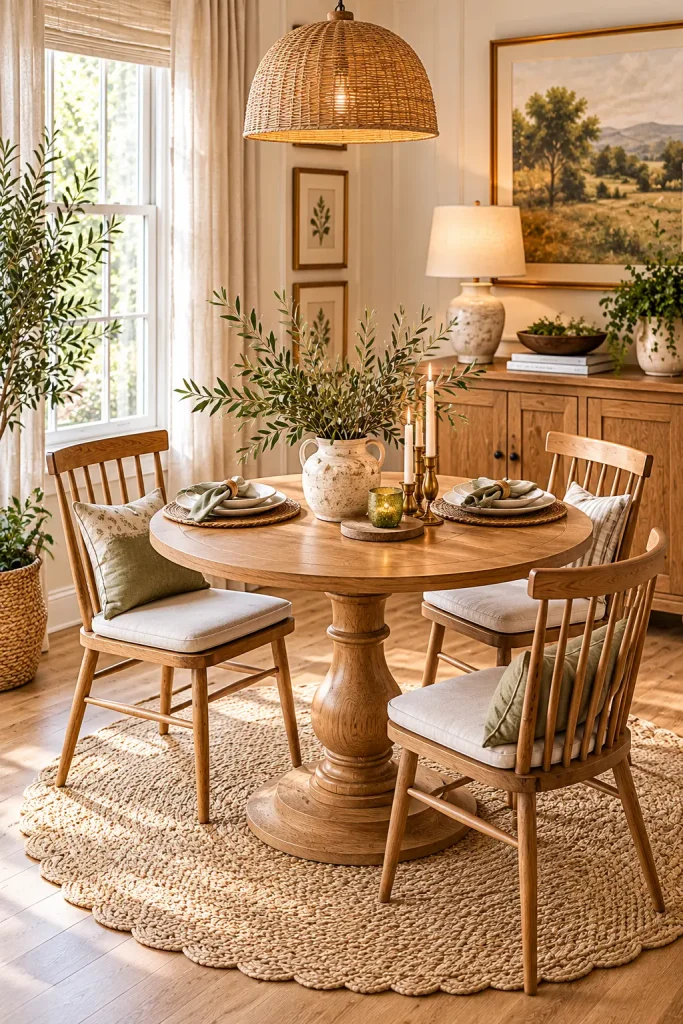
A round dining table is an excellent starting point when decorating a compact dining room. Unlike a rectangular table, it has no sharp corners to interrupt the flow of movement, making it easier to navigate in a tight space.
A small round table with a slim pedestal base is particularly useful because it leaves more room for chairs and legs. A natural oak finish brings warmth to the room, while a white or pale wood tabletop keeps the overall appearance light.
Pair the table with three or four appropriately sized chairs, depending on the available floor area. Avoid oversized upholstered seats with bulky arms, which can make the arrangement feel crowded.
Styling tip: A simple ceramic vase with a few branches creates an attractive centerpiece without occupying too much table space.
2. Hang a Large Mirror to Reflect Light
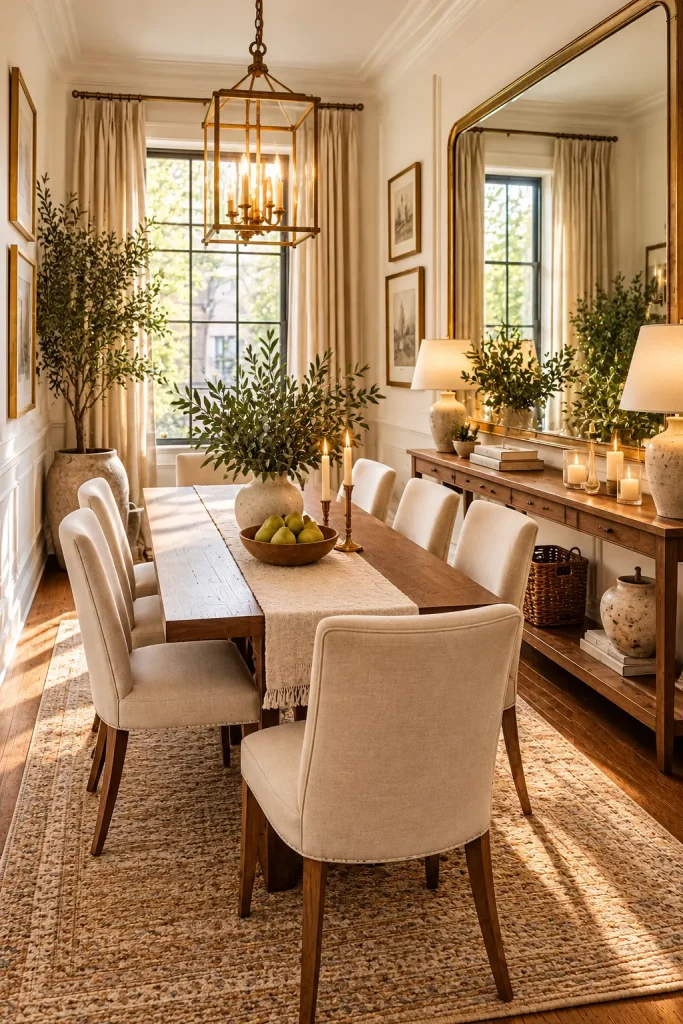
A strategically placed mirror can make a small dining room feel brighter and visually deeper. When it reflects a window, a doorway, or a well-lit part of the home, the room gains a greater sense of openness.
For a classic look, hang a large rectangular mirror above a sideboard. A thin brass frame adds warmth, while a simple frameless mirror suits a contemporary interior.
In a narrow dining room, consider a vertically oriented mirror to draw the eye upward. If the room is long and enclosed, a wider mirror can visually expand the wall.
Be intentional about what the mirror reflects. Position it to capture natural light or an attractive focal point rather than a cluttered corner.
3. Use a Glass Dining Table
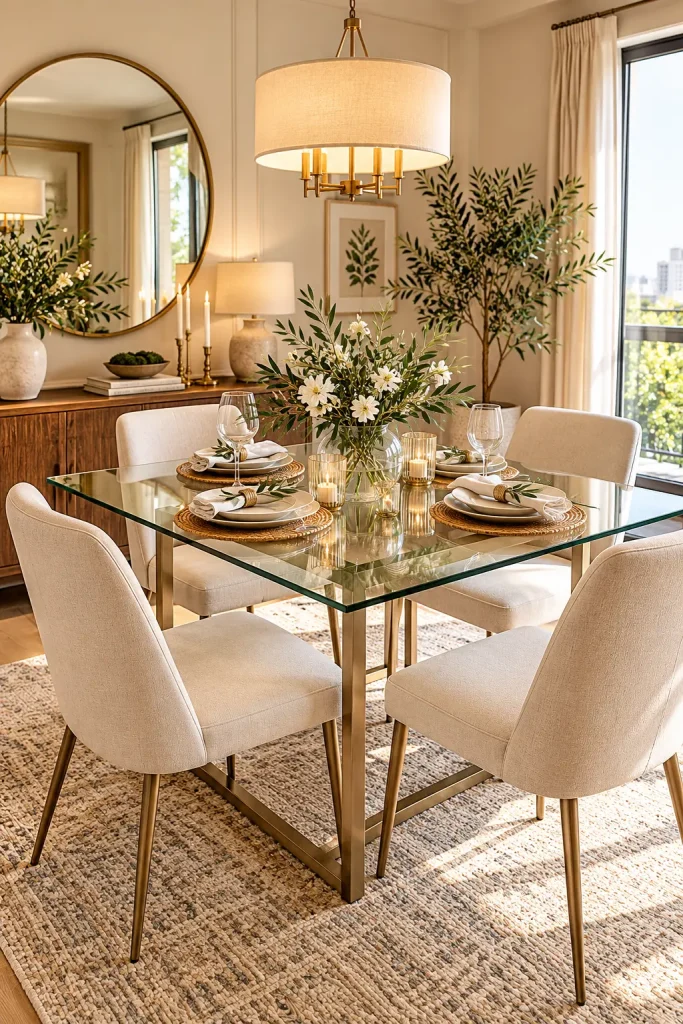
A glass dining table can help a compact room feel less visually crowded. Because the tabletop is transparent, the flooring and furniture beneath it remain visible, creating a lighter overall appearance.
Choose a simple rectangular or round design with a slim metal or wood base. Pair it with upholstered chairs in cream, beige, or soft gray to add texture without overwhelming the arrangement.
Glass tables work especially well in contemporary apartments, where the dining area may sit close to the living room or kitchen.
Keep the tabletop relatively uncluttered. A small bowl, a single stem in a narrow vase, or a simple linen runner is usually enough.
Common mistake: Combining a glass table with an oversized base and bulky chairs defeats much of the visual lightness. Look for furniture with balanced proportions.
4. Paint the Walls a Warm White
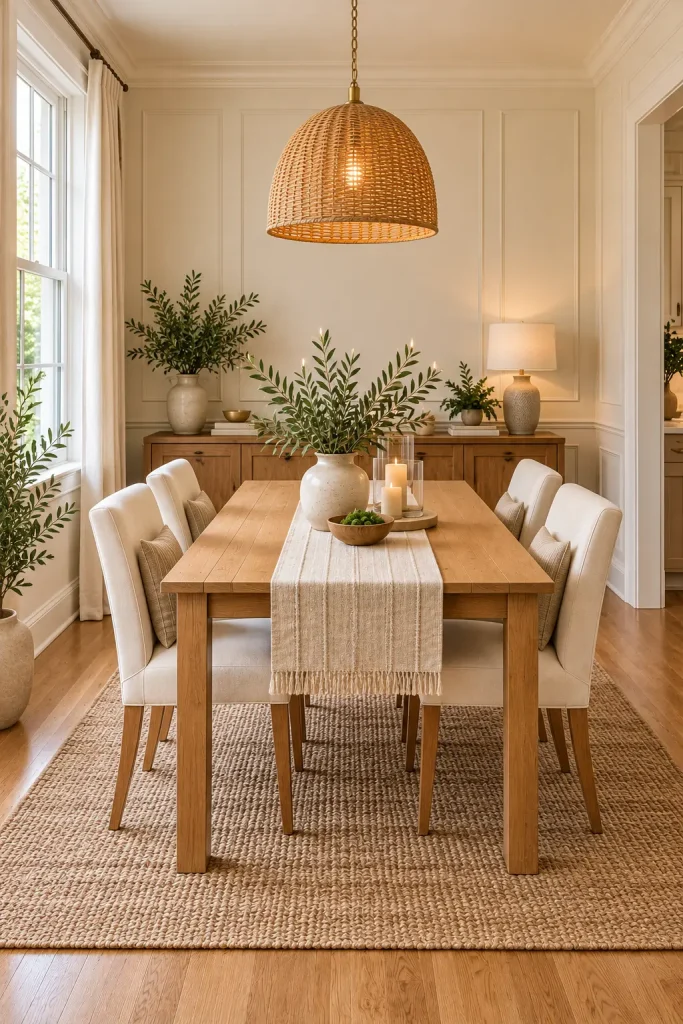
Wall color has a significant influence on how a small dining room feels. Warm white creates a bright background that allows natural light to travel through the space while maintaining a welcoming atmosphere.
Rather than choosing a stark, cool white automatically, consider shades with subtle cream or neutral undertones. These can work beautifully with oak furniture, woven textures, linen upholstery, and natural stone.
For a cohesive look, repeat the wall color on the trim or choose a closely related shade. This reduces visual interruptions and helps the room feel more continuous.
Warm white is also a flexible backdrop if you enjoy changing your dining room decor seasonally.
5. Install a Slim Linear Pendant Light
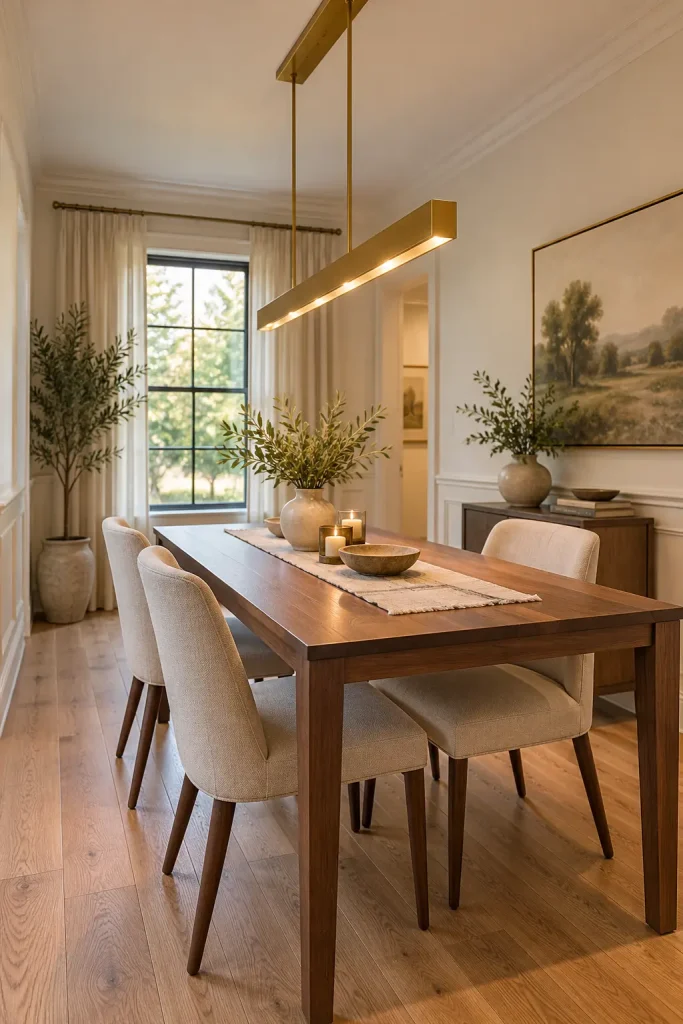
The right pendant light can make a small dining room feel thoughtfully designed rather than cramped. A linear pendant works particularly well above a rectangular dining table because its shape follows the length of the furniture.
Look for a fixture with a slender profile and an open design. Matte black, brushed brass, and understated white finishes can all work, depending on the room’s palette.
Hang the light at a height that illuminates the tabletop without obstructing conversation or blocking important sightlines. Follow the fixture manufacturer’s installation instructions and account for ceiling height.
For a round table, a compact globe pendant or small sculptural fixture may be a better choice.
6. Choose a Narrow Rectangular Table
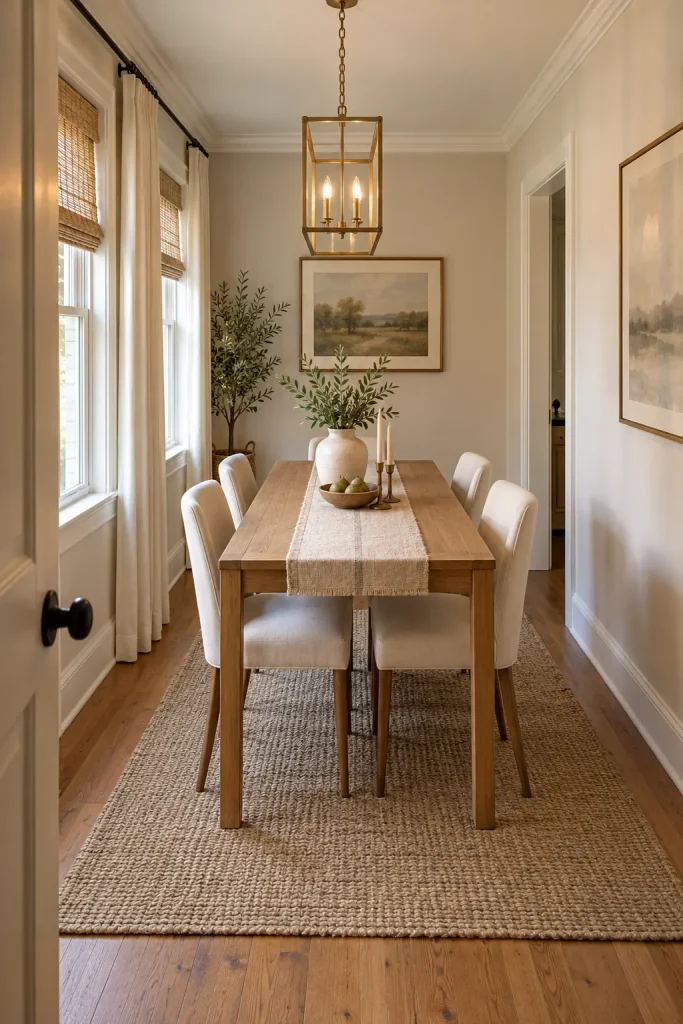
If your dining room is long and narrow, a slim rectangular table may make better use of the available floor space than a round table.
Look for a design with a relatively shallow tabletop and narrow legs. A simple four-legged table can be a practical choice, while a pedestal design may offer more flexibility for seating.
Before buying, measure the room and allow enough space for people to pull out their chairs and move around the table. The amount of clearance you need depends on the layout and how the room is used.
A narrow table can also serve as a work surface when needed, provided its dimensions and placement suit both activities.
7. Replace Bulky Chairs With Slim Dining Chairs
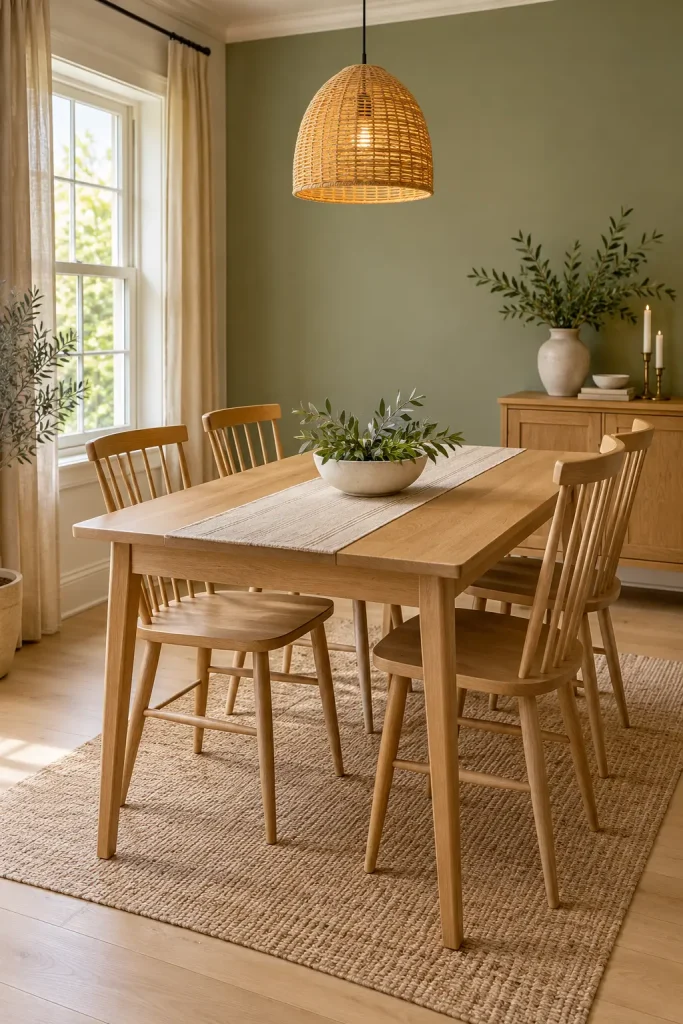
Large dining chairs can occupy more visual and physical space than expected. Replacing them with slim, armless designs is a straightforward way to make a small dining room feel less crowded.
Consider wooden spindle-back chairs, simple metal-frame chairs, or lightly upholstered seats with narrow legs. These styles maintain comfortable seating while allowing more of the room to remain visible.
You don’t have to choose four identical chairs. Two upholstered end chairs combined with slimmer side chairs can add character without creating a heavy appearance.
Quick Tip: Check the width of the chairs, not just their overall height. Several inches saved per chair can make a meaningful difference around a compact table.
8. Add a Built-In Dining Bench
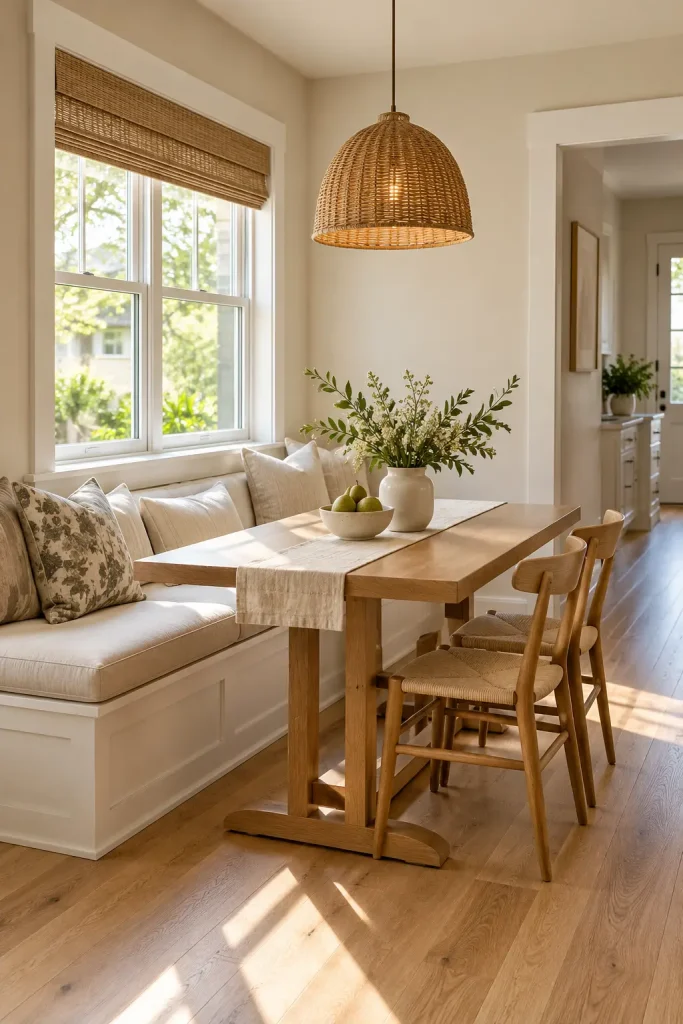
A built-in bench can make a small dining room more efficient by using wall space instead of requiring separate chairs on every side of the table.
Position the bench against a wall or beneath a window, then place a compact dining table in front of it. The bench can provide generous seating along one side while allowing chairs to be used on the opposite side.
For a finished appearance, consider a simple upholstered seat in a durable neutral fabric. If you’re planning custom joinery, you can incorporate drawers or lift-up storage where the design allows.
Leave sufficient room for people to slide into the bench and move comfortably around the table.
9. Use a Banquette With Hidden Storage
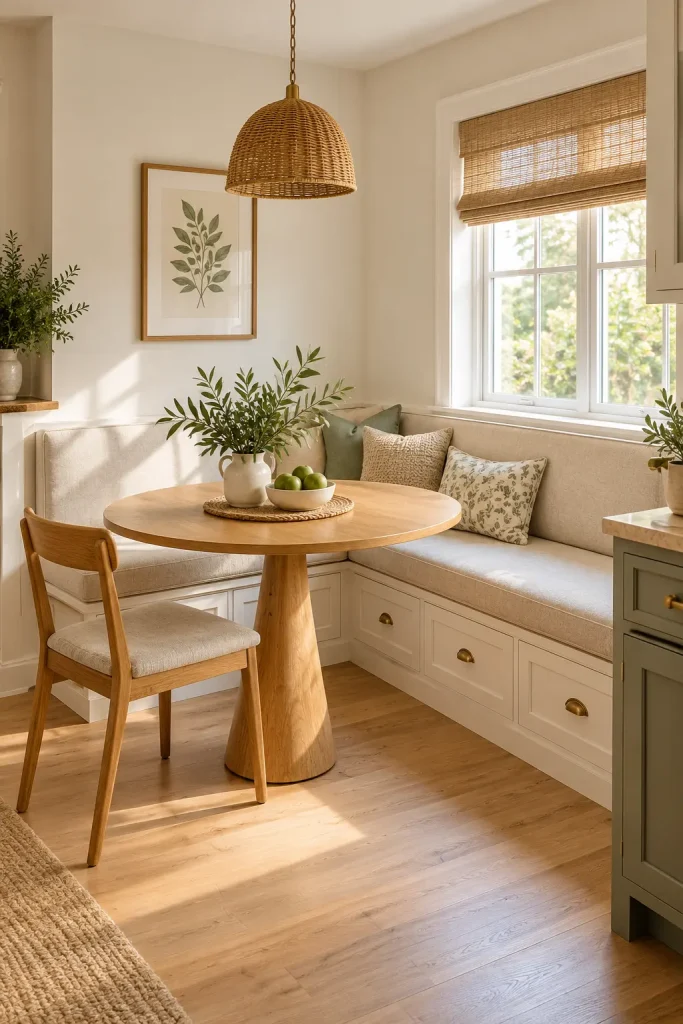
A storage banquette combines seating with a place to keep items that would otherwise occupy valuable cabinet or floor space.
The storage compartment can hold table linens, placemats, spare napkins, or seasonal dining accessories. In an apartment, that extra storage can be especially useful when a dedicated dining room cabinet isn’t practical.
A fitted banquette creates a streamlined appearance, particularly when its upholstery and color coordinate with the surrounding walls.
For everyday convenience, choose a design that allows the storage compartment to open without moving the dining table. Drawers may be easier to access in some layouts, while a lift-up seat can provide a larger storage area.
10. Extend the Dining Area Into the Kitchen
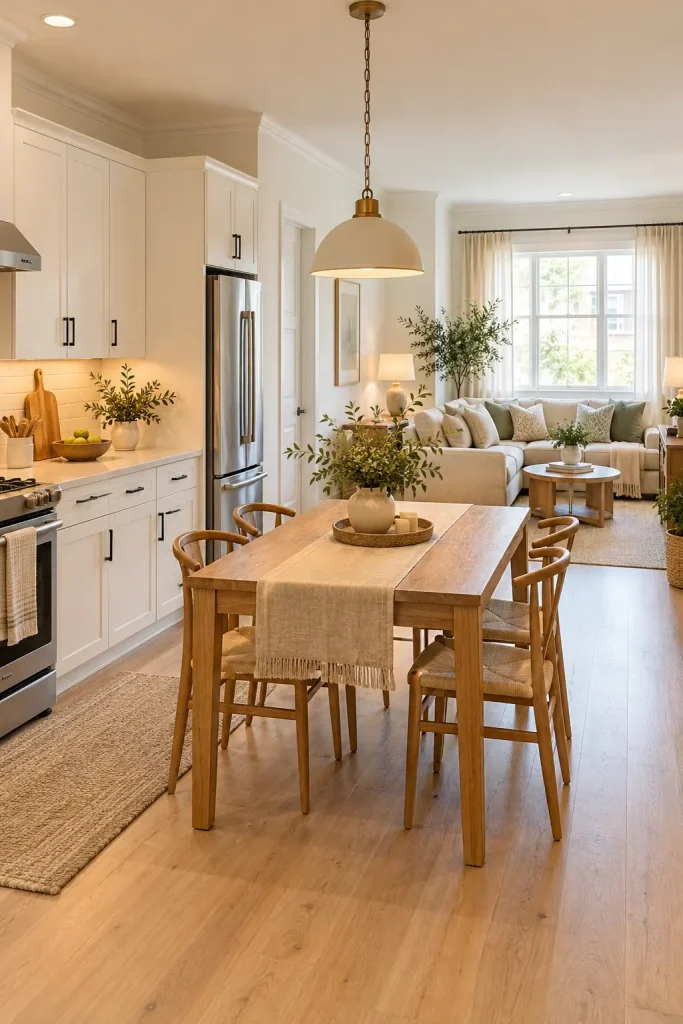
In an open-plan home, a dining area doesn’t always need its own separate room. Positioning a small dining table between the kitchen and living room can make the entire space feel more connected.
Choose furniture that coordinates with the kitchen finishes. For example, an oak table can complement wood cabinetry, while black metal chair legs can echo dark cabinet hardware.
A pendant light, a compact rug, or a change in wall decor can help define the dining zone without adding a partition.
Keep the transition between the kitchen and dining area clear. The table should not obstruct cabinet doors, appliance access, or the main walking route.
11. Use a Drop-Leaf Dining Table
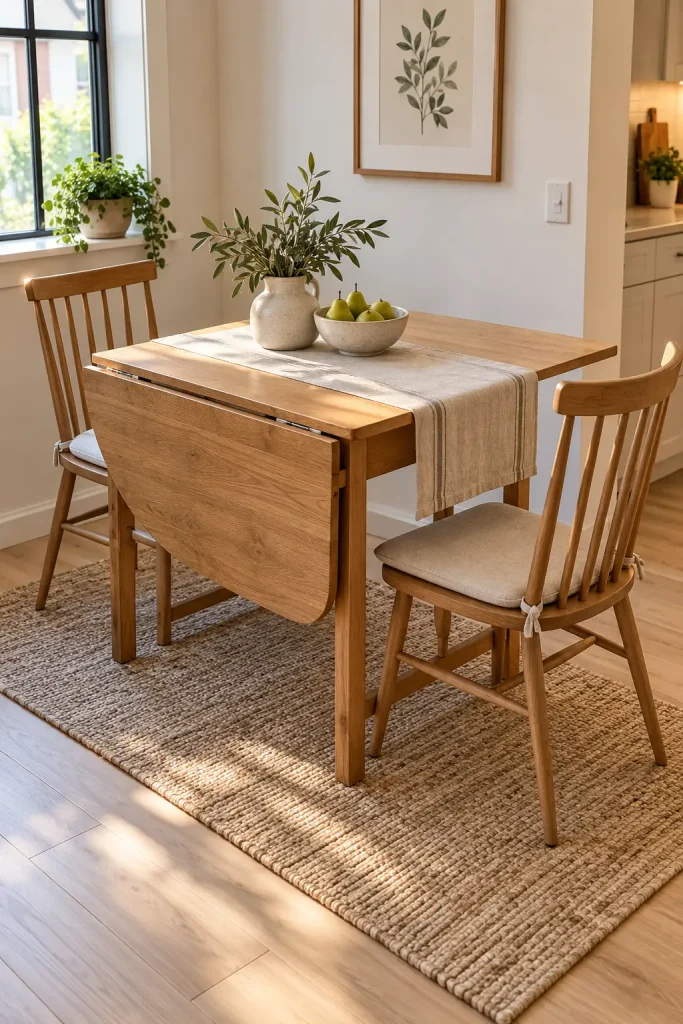
A drop-leaf table is a useful choice when your dining room needs to accommodate different activities throughout the day.
Keep the leaves lowered for everyday meals when only one or two people need the table. Raise them when guests arrive or when additional surface space is required.
Some designs have a central pedestal, while others use folding legs or side supports. Choose a mechanism that feels stable and is easy to operate.
This option works especially well in small apartments, breakfast corners, and multipurpose rooms where a full-size dining table would take up too much space.
Best for: Households that need flexibility more than permanent seating for a large group.
12. Try a Wall-Mounted Folding Table
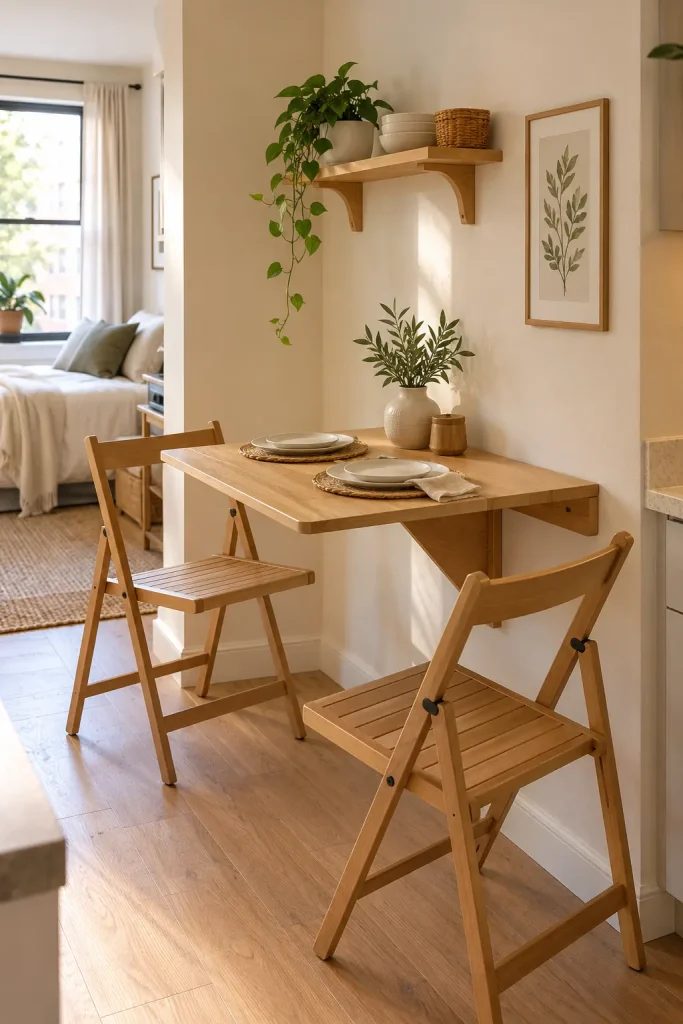
When floor space is extremely limited, a wall-mounted folding table offers an alternative to a permanent dining table.
The tabletop folds down when needed and returns to a vertical position when the meal is over. Depending on the design, the folded table may occupy relatively little space along the wall.
This arrangement can work well in studio apartments, small kitchens, or multipurpose rooms. Pair it with lightweight folding chairs that can be stored nearby.
Choose an appropriate mounting system for the wall construction and follow the manufacturer’s load and installation requirements. The table must be securely supported for safe use.
13. Create a Dining Nook Beneath a Window
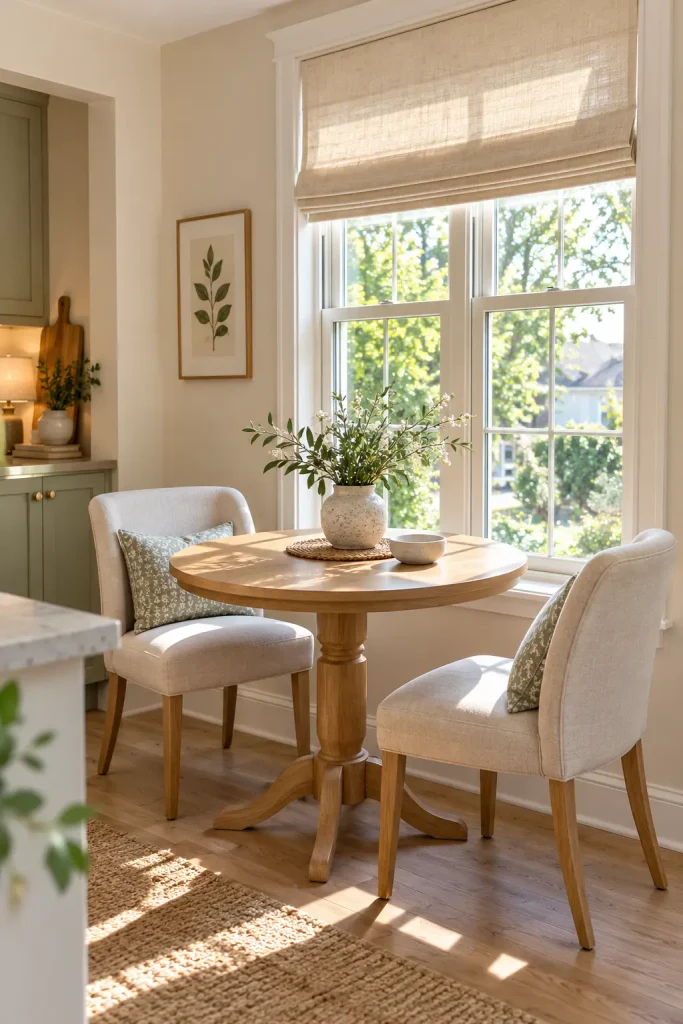
A window-side dining nook can make an awkward corner feel intentional. Natural light creates a pleasant place for breakfast, coffee, or everyday meals, while the window provides a natural focal point.
A small round table is often a good fit because it allows easier movement around the seating area. Alternatively, a narrow rectangular table can work beneath a wide window.
Keep window treatments simple. Light-filtering curtains or a discreet Roman shade can soften the room without visually crowding the window.
If the window has a deep sill, a small plant or a single decorative object may be enough to finish the space.
14. Install Floating Shelves Instead of a Large Cabinet
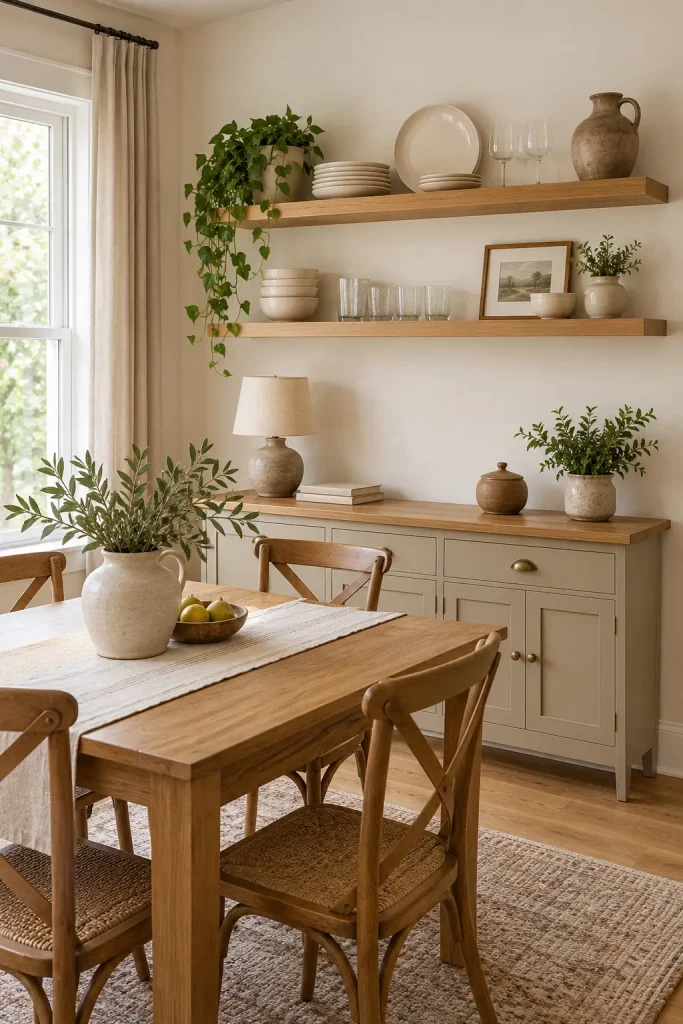
A full-size china cabinet may overwhelm a compact dining room, especially when the room has limited wall space.
Floating shelves provide a lighter alternative for displaying a few plates, bowls, glasses, or decorative pieces. Natural oak shelves bring warmth, while painted shelves that match the wall color create a more understated effect.
Keep the arrangement selective rather than filling every shelf. A combination of useful dinnerware, one or two small framed pieces, and a ceramic vessel creates visual interest without turning the wall into a cluttered display.
Install shelves securely and position them where they won’t interfere with chairs or people’s movement.
15. Use a Monochromatic Color Scheme
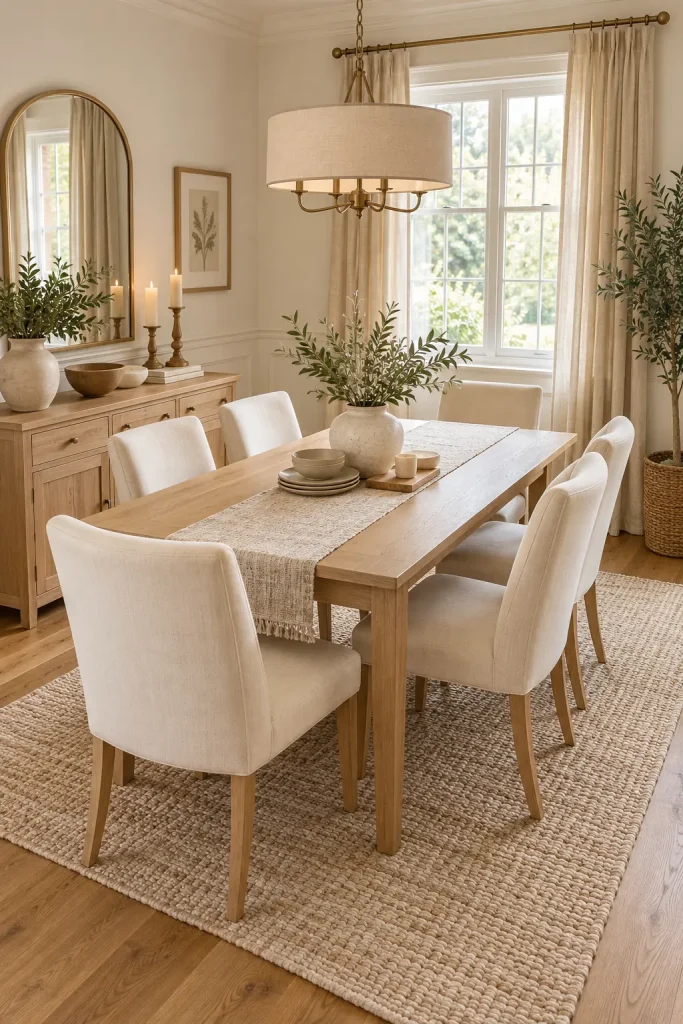
A monochromatic dining room uses different tones of one main color family to create a cohesive appearance. In a small space, this can reduce the visual interruptions caused by too many contrasting finishes.
You might combine warm white walls, cream upholstery, pale beige curtains, and light oak furniture. Alternatively, soft sage, muted gray, or warm taupe can provide a little more color while maintaining a coordinated look.
The key is to introduce variation through texture rather than relying on many unrelated colors.
Try combining:
- Linen upholstery with smooth painted walls.
- Natural wood with woven accessories.
- Matte ceramics with glass accents.
- Soft textiles with a subtly textured rug.
A restrained palette doesn’t have to feel plain when the materials have enough variety.
16. Add Vertical Stripes to Draw the Eye Upward
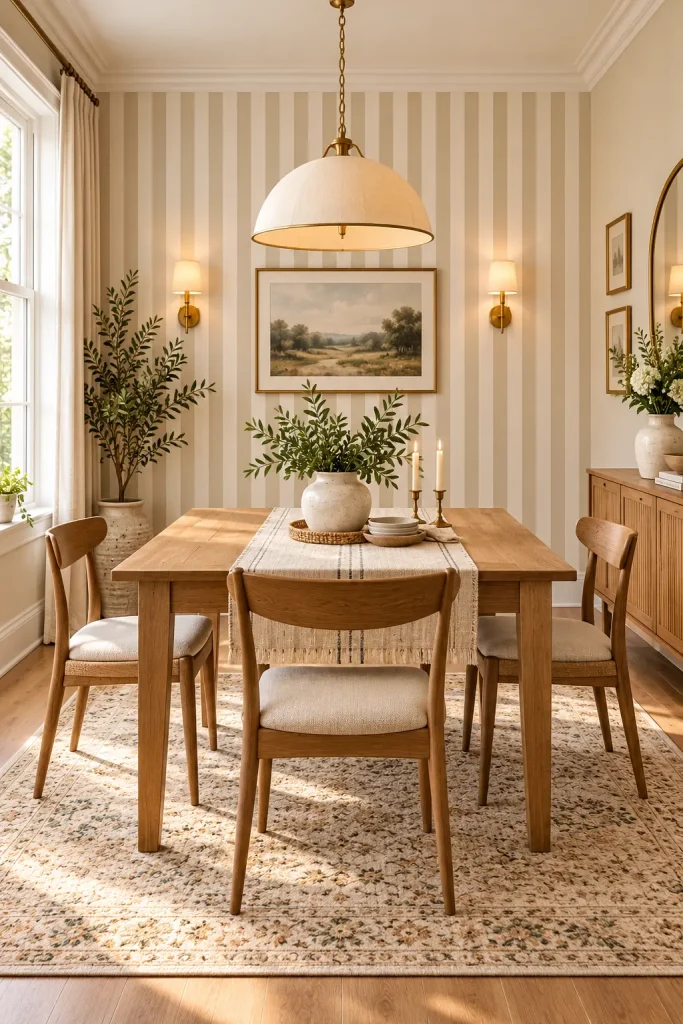
Vertical stripes can create the visual impression of greater wall height. They’re worth considering if your dining room has low ceilings or feels compressed vertically.
Subtle stripes in warm white and pale beige create a quiet backdrop, while soft sage and cream introduce more noticeable character.
You can achieve the effect with wallpaper or carefully painted stripes. If you’re renting, removable wallpaper may be an option, provided the wall finish and product are compatible.
Use stripes selectively rather than covering every surface with a strong pattern. A single accent wall can provide enough visual direction without overwhelming the room.
17. Choose Furniture With Exposed Legs
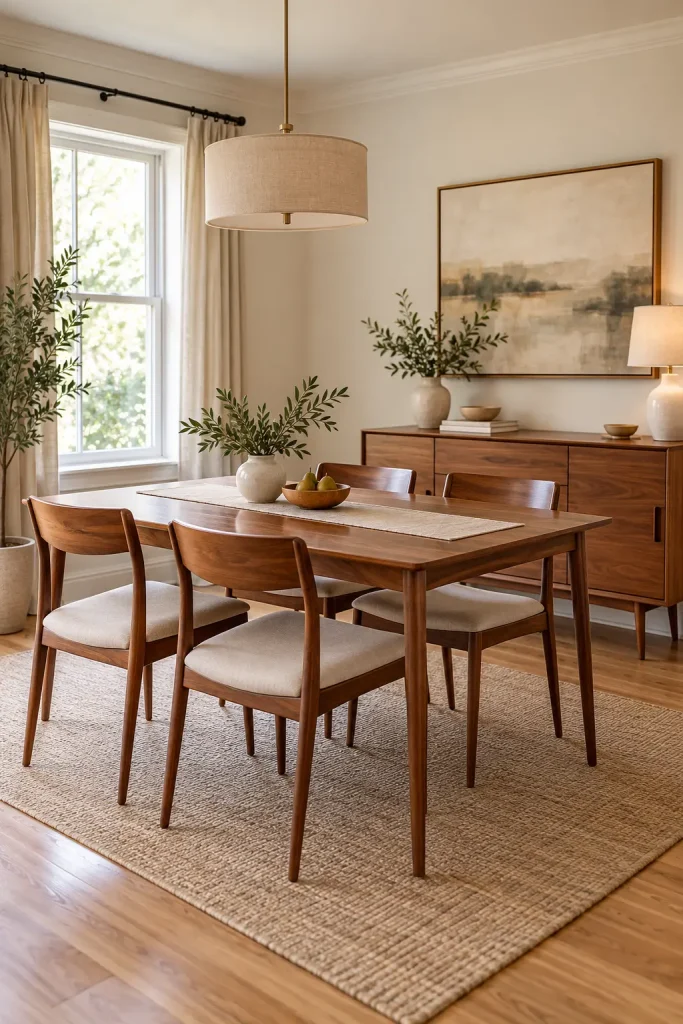
Furniture with exposed legs allows more of the floor to remain visible. That uninterrupted view can make a small dining room feel less crowded than an arrangement dominated by solid furniture bases.
Consider a table with slender tapered legs and chairs with open frames. A narrow sideboard raised on legs can provide storage without appearing as visually heavy as a large floor-to-ceiling cabinet.
This approach works with many interior styles, including Scandinavian, mid-century-inspired, and traditional American decor.
If you need substantial storage, you don’t have to avoid closed cabinetry entirely. Simply balance one solid storage piece with lighter furniture elsewhere in the room.
18. Use a Large Rug to Define the Dining Area
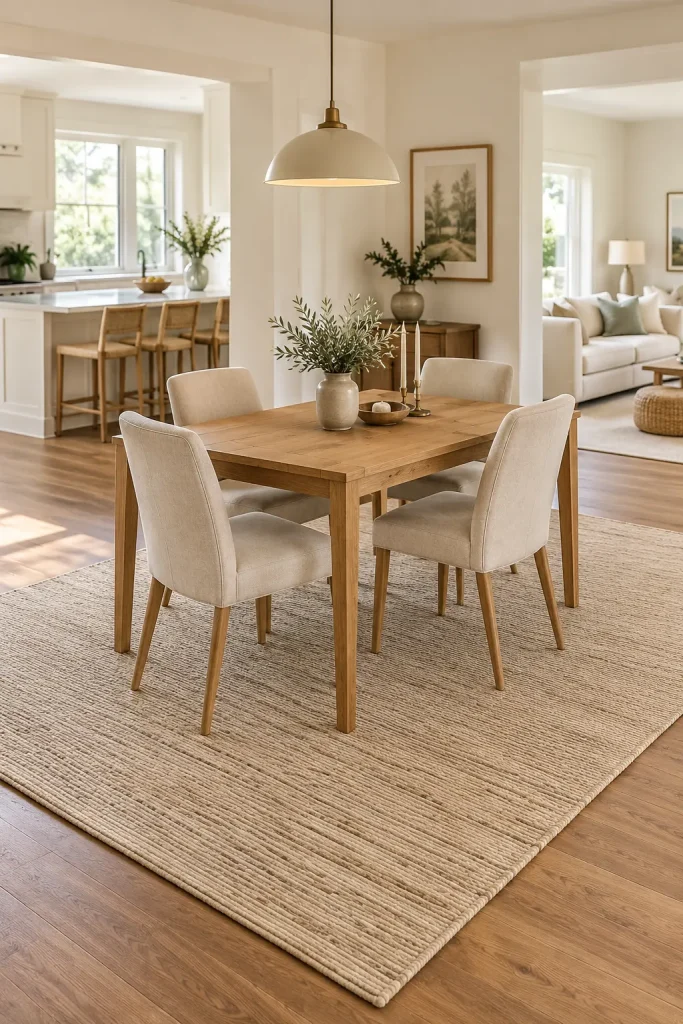
A rug can help a dining area feel organized, especially in an open-plan home where the table shares space with a living room or kitchen.
The important consideration is proportion. A rug that’s too small can make the table and chairs appear crowded together. Ideally, the rug should allow chairs to remain on its surface when pulled back for seating.
Choose a flatweave or low-pile design that’s practical for moving chairs and cleaning up everyday spills. Subtle patterns can conceal minor marks more effectively than a completely plain surface, depending on the rug’s color and construction.
In a particularly tight dining room, compare the rug dimensions against the table and available walking space before purchasing.
19. Hang Curtains Higher and Wider
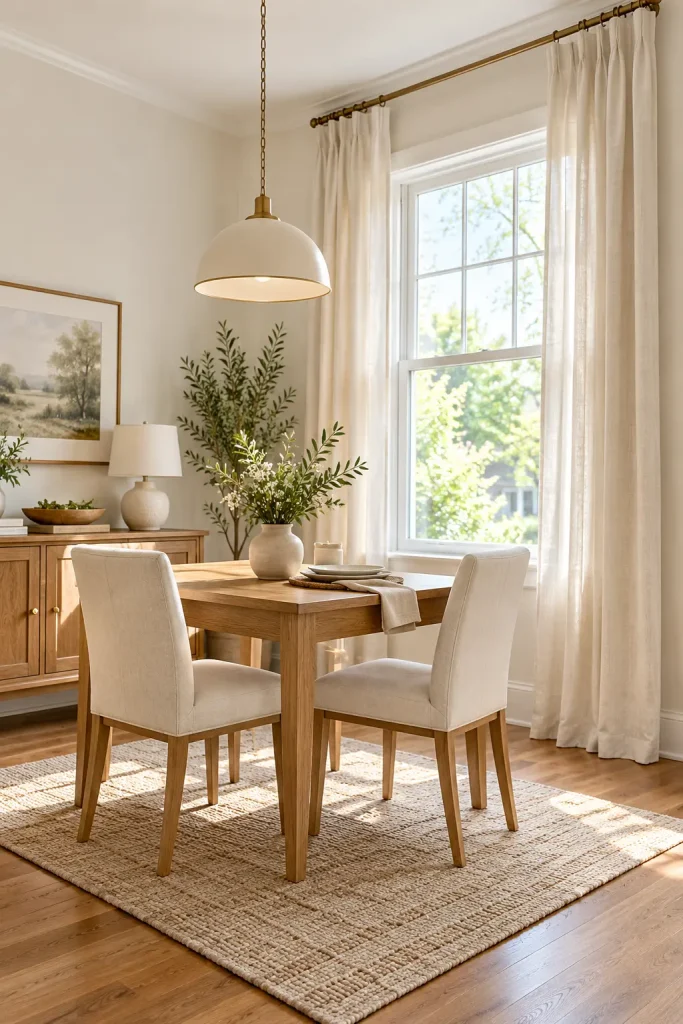
Window treatments can influence how spacious a dining room feels. Hanging a curtain rod closer to the ceiling and extending it beyond the window frame can create a taller, wider visual impression.
Choose lightweight linen or linen-look curtains in a color that coordinates with the walls. When open, the panels should sit mostly outside the glass rather than blocking a large portion of the window.
For a narrow room, simple curtain panels are often easier to incorporate than elaborate swags or heavy layered treatments.
Measure carefully before installing the rod, and check that the curtains won’t interfere with radiators, furniture, or doors.
20. Incorporate a Slim Sideboard
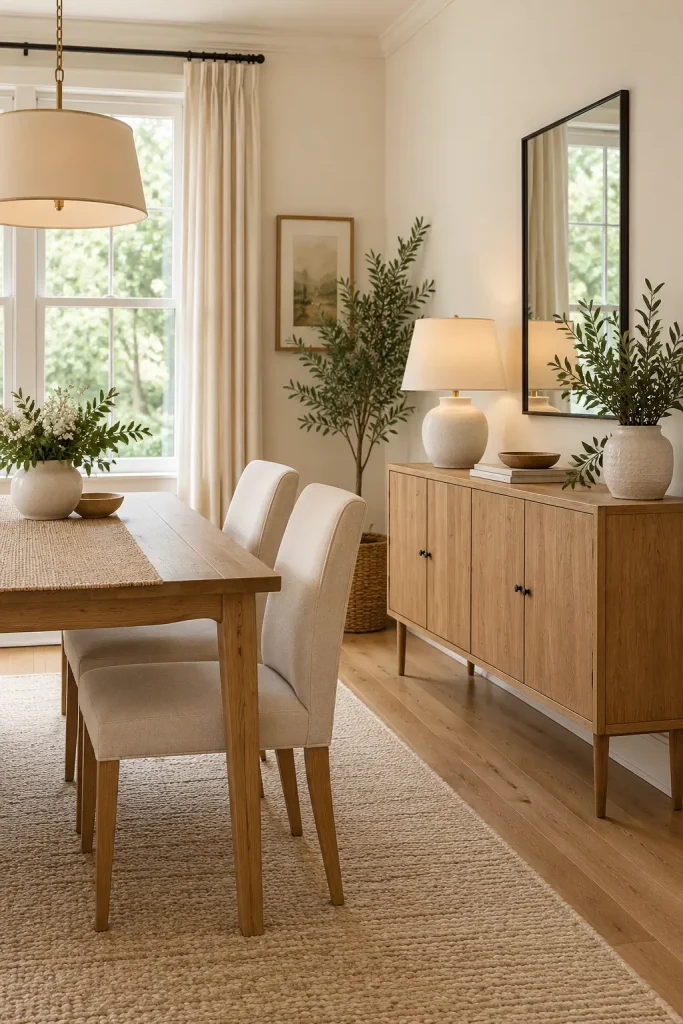
A slim sideboard provides useful dining storage without taking up as much room as a deep buffet cabinet.
Look for a design with shallow dimensions, clean lines, and enough internal space for the items you actually use. It can hold serving dishes, napkins, table linens, and other dining essentials.
A sideboard also gives you a place to display a mirror, a lamp, or a small arrangement of branches. However, avoid filling the top with too many accessories, especially if the table is already close by.
Measure the cabinet’s depth and account for the space needed to open doors or drawers.
21. Try a Pedestal Dining Table
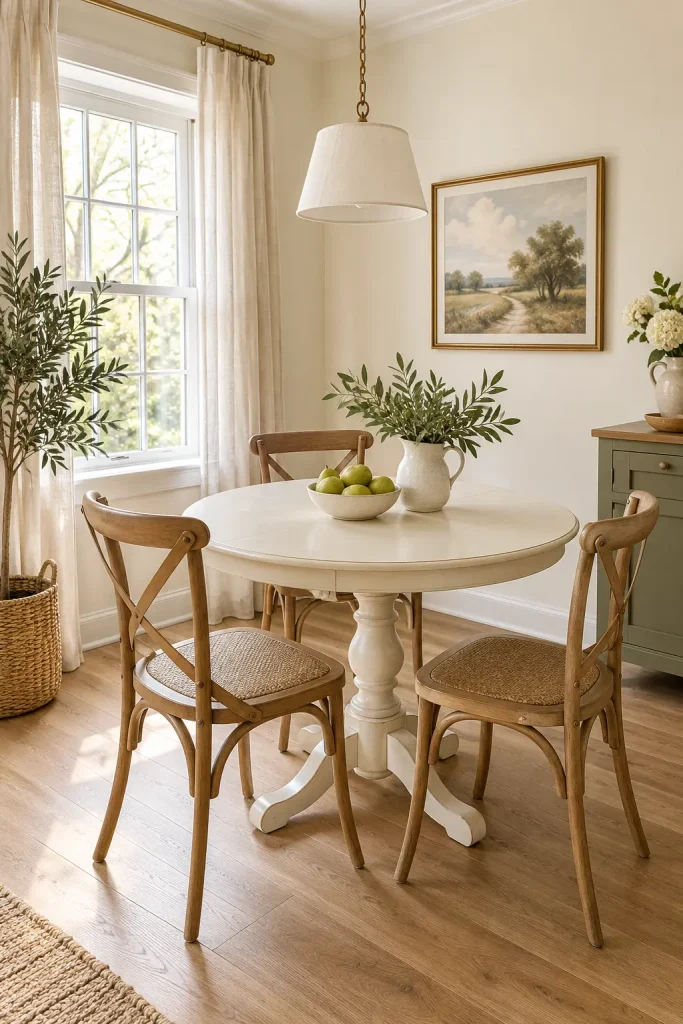
A pedestal dining table can be especially useful when you need to fit several chairs around a small tabletop.
Because the table’s support is concentrated near the center, there are no conventional corner legs to work around. Depending on the pedestal design, this can provide greater flexibility when positioning chairs.
Choose a base that is appropriately scaled for the tabletop. A large sculptural pedestal may look attractive but can occupy valuable foot space in a very compact room.
For a classic interior, consider a painted round pedestal table. A natural wood version can suit a modern farmhouse or Scandinavian-inspired dining area.
22. Add a Bench on One Side of the Table
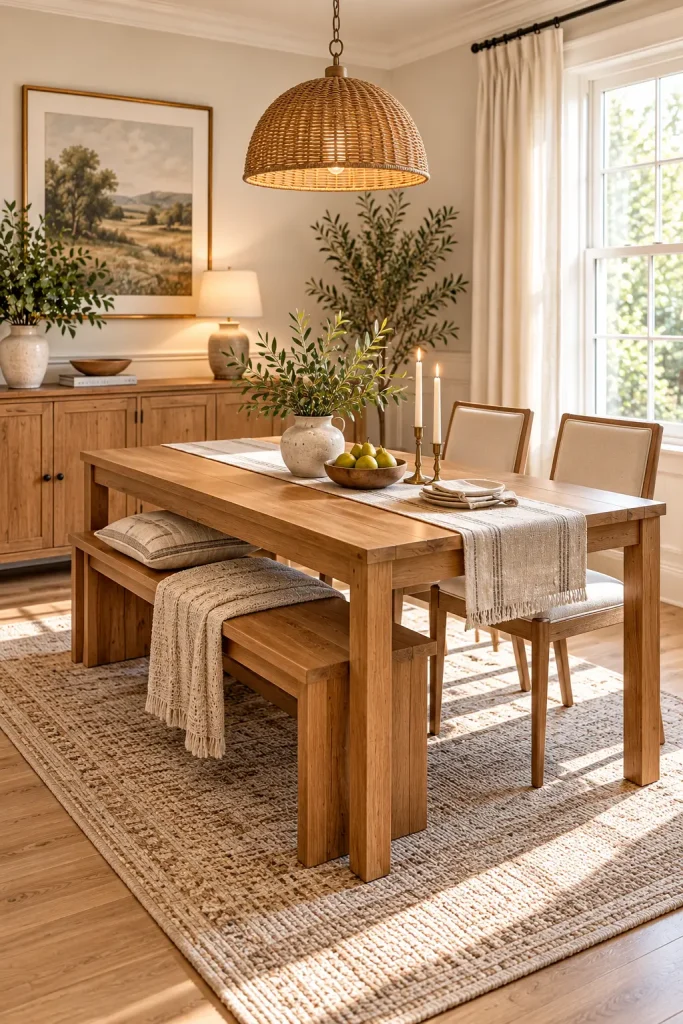
You don’t always need a built-in banquette to benefit from bench seating. A freestanding dining bench can provide a flexible alternative to individual chairs along one side of the table.
When not in use, the bench may slide beneath the tabletop, freeing up some of the surrounding floor. This is particularly useful in a small dining room where chairs would otherwise remain in the walking path.
Choose a bench that fits the table’s height and has a suitable seat depth. A wooden bench creates a relaxed, casual look, while an upholstered version adds softness.
If the bench will be used daily, make sure it provides comfortable seating and is easy to access.
23. Use Wall Sconces Instead of Table Lamps
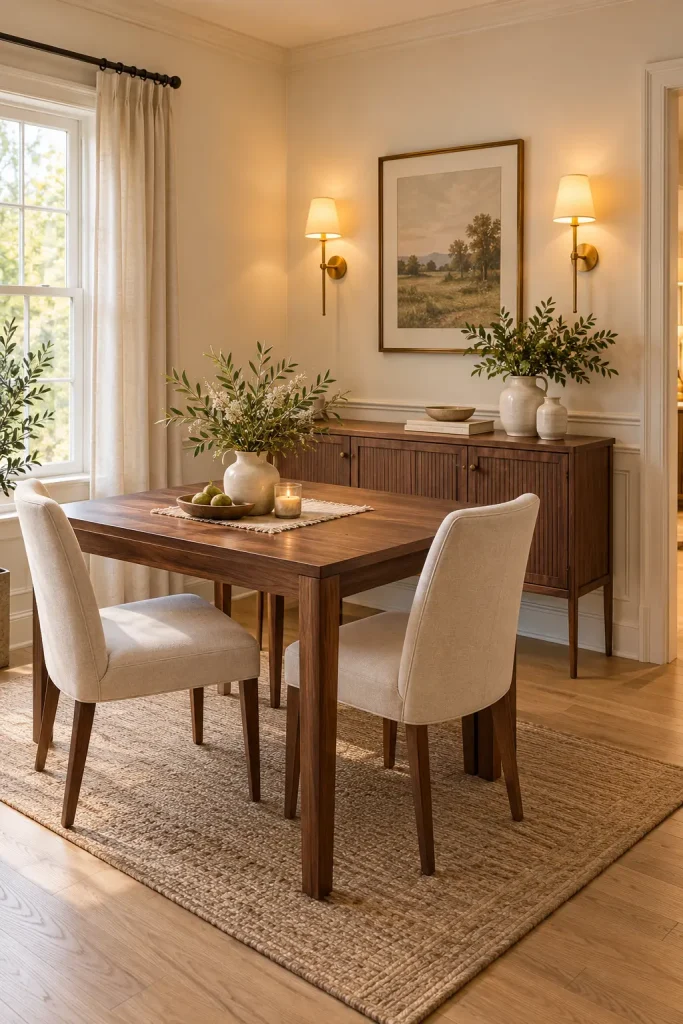
Table lamps can add warmth to a dining room, but they also occupy valuable surface space. Wall sconces provide an alternative source of ambient lighting without taking up room on the table or sideboard.
A pair of simple sconces can frame artwork or a mirror above a sideboard. Alternatively, one well-placed fixture can provide useful light in a small dining nook.
Choose a finish that complements your existing hardware and light fixtures. Brass works with warm woods, while matte black can introduce a little contrast.
If hardwiring isn’t practical, consider suitable plug-in sconces with neatly managed cords, or battery-operated fixtures where appropriate.
24. Keep the Centerpiece Low and Simple
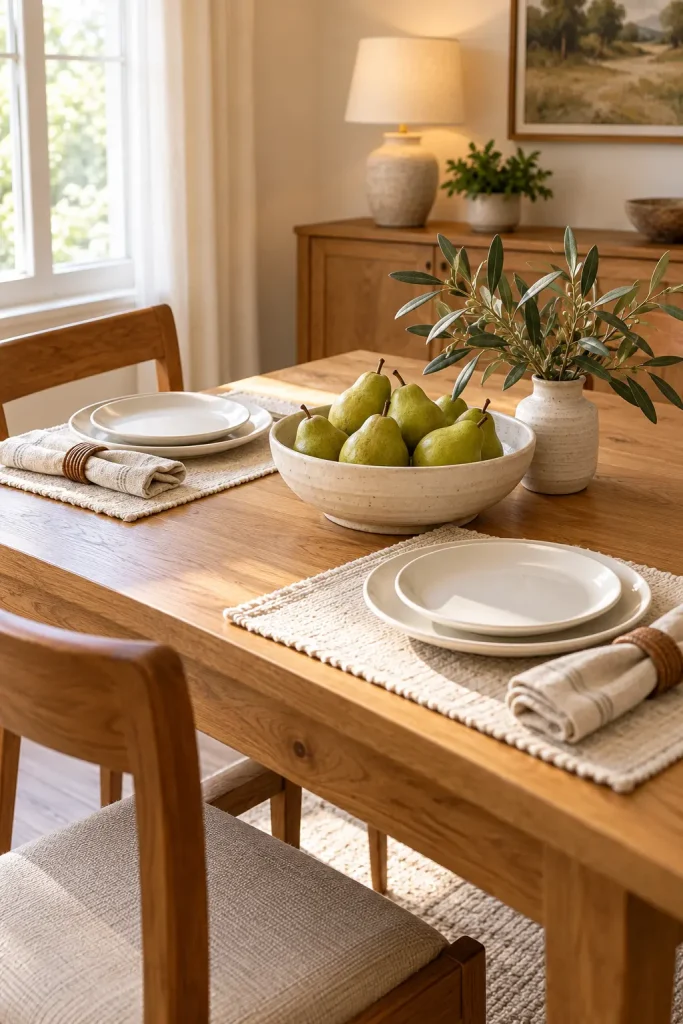
A large floral arrangement or tall decorative centerpiece can overwhelm a small dining table. A lower, simpler arrangement maintains visual interest without interrupting conversation or making the tabletop feel crowded.
Try a shallow ceramic bowl, a small vase with a few branches, or a short arrangement of seasonal flowers.
Choose an object that leaves enough usable surface for plates, glasses, and serving dishes. For a narrow table, a slim centerpiece positioned along the centerline is often more practical than several scattered decorations.
You can change the arrangement seasonally without redesigning the entire room.
Quick Tip: Before settling on a centerpiece, imagine the table set for an ordinary meal. If the decoration leaves too little room for everyday use, choose something smaller.
25. Introduce a Touch of Natural Wood
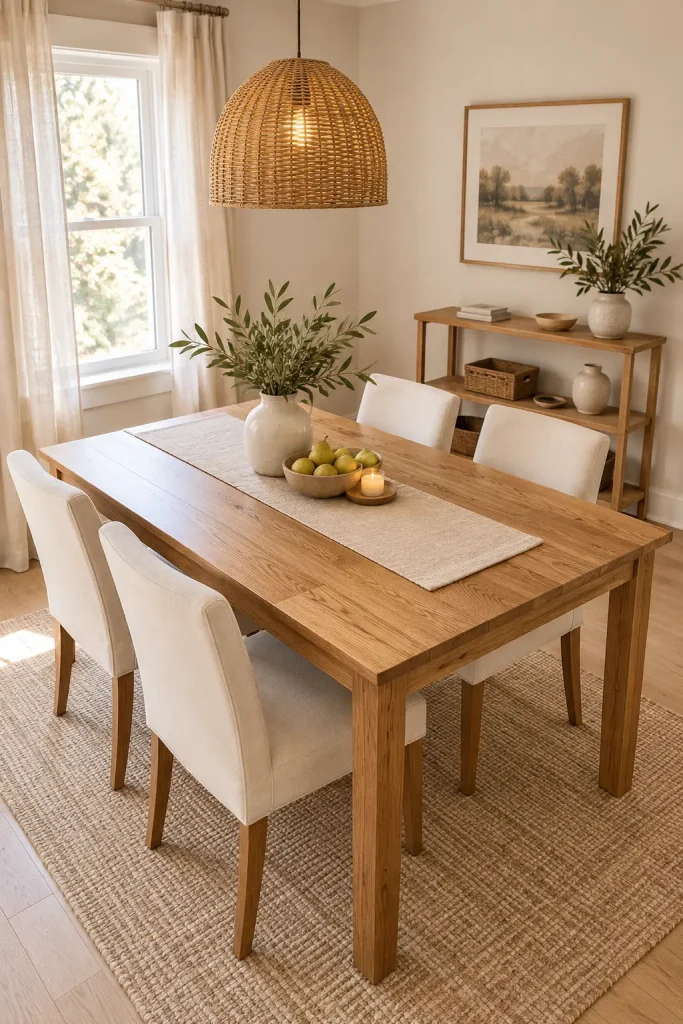
Natural wood adds warmth and texture without requiring a busy color scheme. In a small dining room, a light or medium oak table can provide a clear focal point while keeping the overall design grounded.
Pair oak furniture with cream upholstery, soft white walls, and a few woven accents. If your existing furniture is darker, repeat that tone in smaller details rather than introducing several unrelated wood finishes.
You can also use wood through a simple wall shelf, a framed print, or a compact sideboard instead of replacing the entire dining set.
The aim is to create a cohesive material palette rather than fill every surface with wood.
26. Use a Subtle Pattern to Add Depth
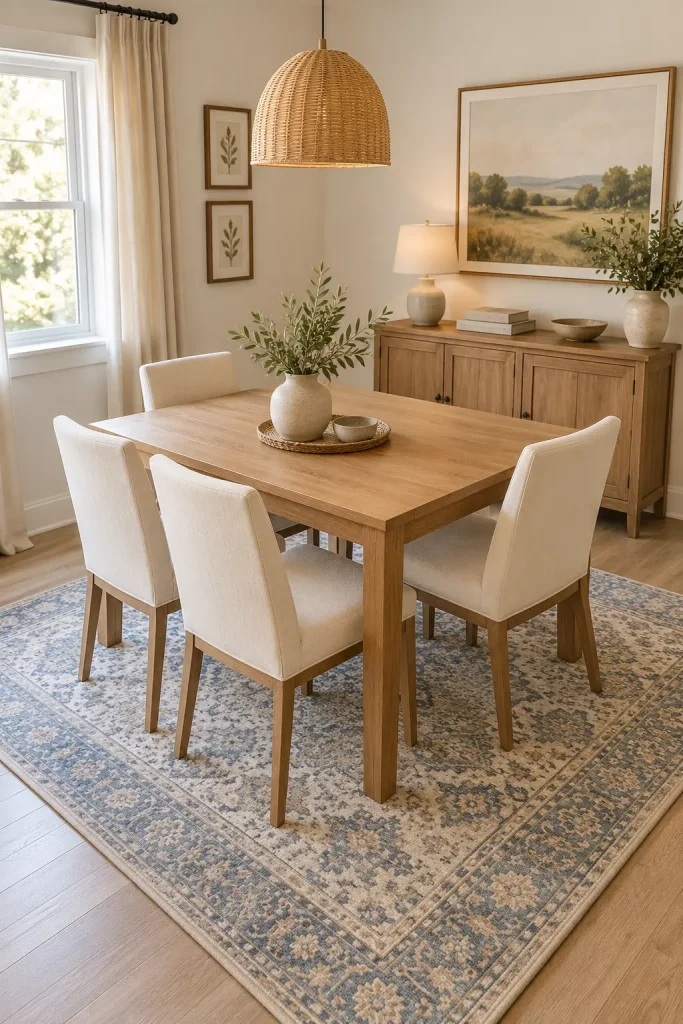
A small dining room doesn’t need to be completely plain to feel spacious. A carefully chosen pattern can add character while allowing the room to remain visually calm.
Consider a muted geometric rug, delicate botanical wallpaper, or curtains with a fine woven stripe. Choose one main patterned element and keep the surrounding surfaces relatively simple.
For example, a faded blue-and-beige rug can introduce color beneath a natural wood table without competing with artwork or upholstery.
Scale matters, too. A pattern that’s too large or high-contrast may dominate the room, while a subtle repeat can create interest without overwhelming the available space.
27. Embrace a Minimalist Dining Room Layout
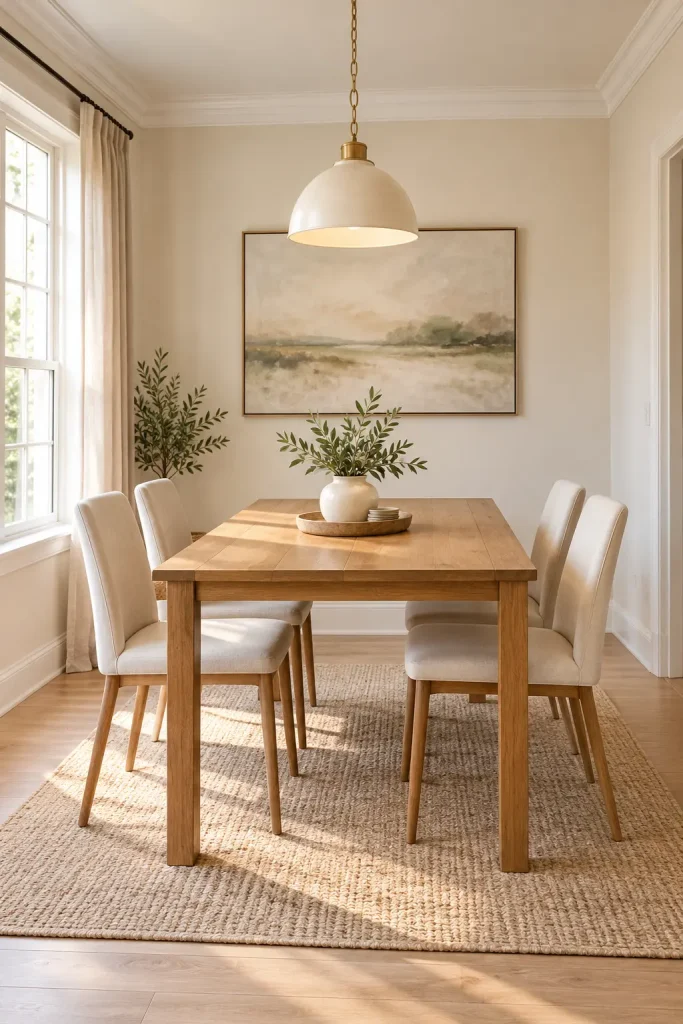
Sometimes the most effective way to make a small dining room feel bigger is to remove what it doesn’t need.
A minimalist layout focuses on a comfortable table, appropriately scaled chairs, useful lighting, and only a few carefully selected accessories. Instead of filling every wall, leave some surfaces open so the eye has room to rest.
Start by removing decorative objects that don’t serve a purpose, then reassess the furniture arrangement. If a side table or oversized cabinet makes movement difficult, consider whether you can store those items elsewhere.
Minimalism doesn’t have to mean a cold or empty room. Natural wood, soft textiles, warm lighting, and a favorite piece of artwork can keep the space inviting.
A simple starting point:
- Keep only the furniture needed for everyday dining.
- Make the main walking routes as clear as the room allows.
- Choose one focal point, such as a pendant, artwork, or mirror.
- Add a small amount of texture through wood, linen, or ceramics.