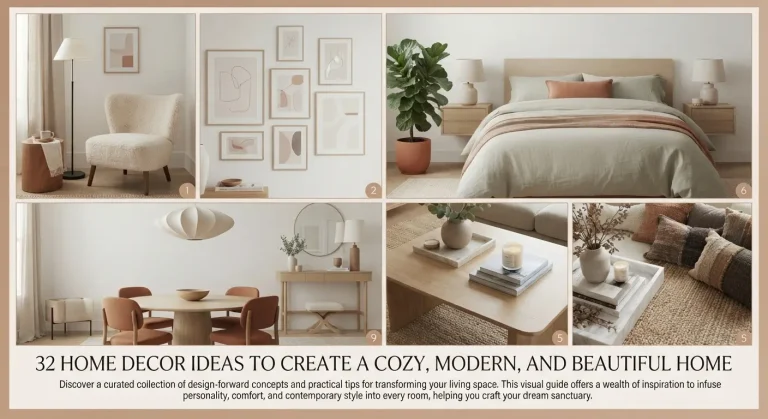
18 Beautiful Dining Room Decor Ideas for a Stylish and Welcoming Home
A dining room should feel just as inviting on an ordinary Tuesday evening as it does when you’re hosting friends and family. The right dining room decor can make everyday meals more enjoyable while creating a space that feels polished, comfortable, and connected to the rest of your home.
You don’t need a large formal dining room or an expensive renovation to achieve that balance. A thoughtfully chosen dining table, layered lighting, beautiful wall decor, and a few natural textures can make a noticeable difference in almost any space. Even a small dining nook can feel intentional with the right furniture and layout.
These 18 beautiful dining room decor ideas explore a range of styles, from warm wood and timeless neutrals to bold accent walls and contemporary lighting. Each idea includes practical styling advice and an original image prompt to help you visualize the look and adapt it to your own home.
1. Choose a Warm Wooden Dining Table
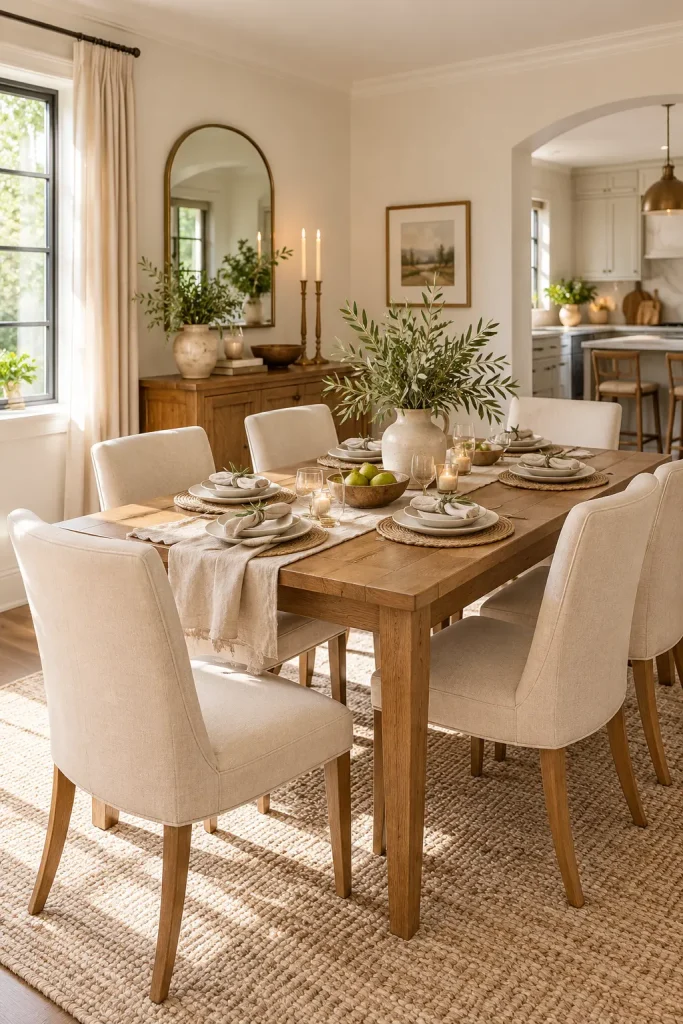
A wooden dining table is a wonderful foundation for a welcoming dining room. Natural oak, walnut, and reclaimed wood bring warmth and character to the space, making them easy to pair with different decorating styles. Whether your home leans toward modern farmhouse, traditional, Scandinavian, or contemporary design, a thoughtfully chosen wooden table can help everything feel connected.
For a light and airy look, choose a natural oak table with a simple rectangular top and gently tapered legs. If you prefer something richer, walnut offers deeper brown tones that work beautifully with cream upholstery, brass accents, and warm lighting.
How to style it:
- Pair light oak with ivory or beige upholstered chairs.
- Add a ceramic vase filled with fresh seasonal greenery.
- Use a textured area rug to define the dining area.
- Keep the tabletop relatively uncluttered for everyday meals.
Consider the size of your room before choosing a table. A rectangular design suits many longer dining rooms, while a round table can make a compact space feel less crowded.
2. Make a Statement With an Elegant Pendant Light
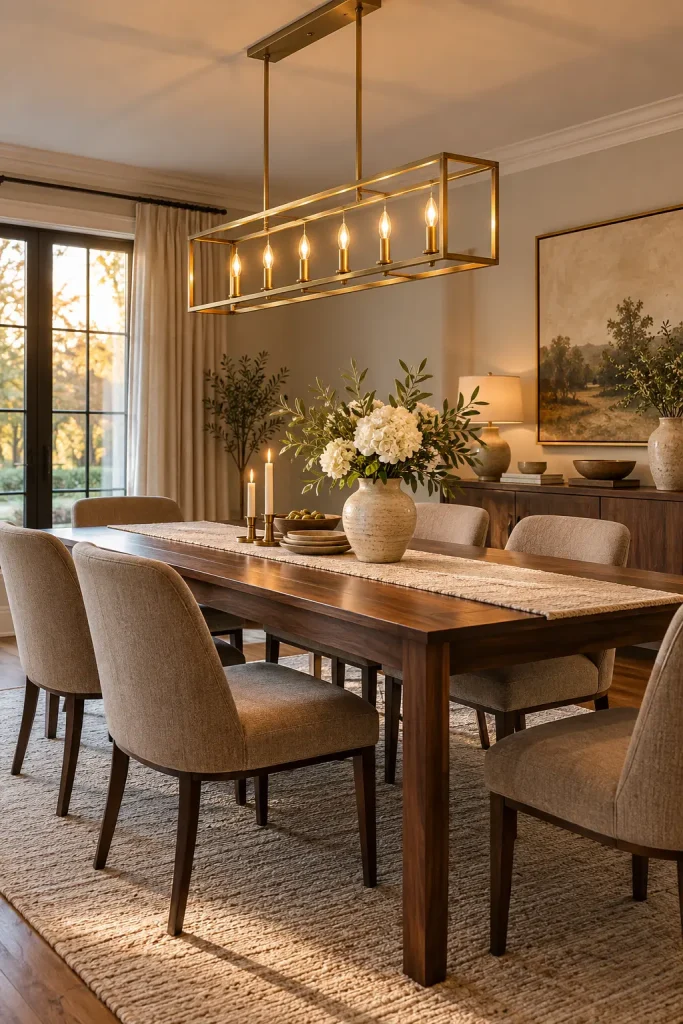
Lighting can change the entire atmosphere of a dining room. A beautiful pendant light or chandelier creates a focal point above the table while providing practical illumination for meals, conversations, and entertaining.
For a relaxed contemporary interior, consider a sculptural pendant in matte black, brushed brass, or natural woven material. Traditional dining rooms may benefit from a classic chandelier with understated metal detailing, while minimalist spaces often look best with a clean, geometric fixture.
The key is choosing a light that complements the table without overwhelming the room. A wide fixture can suit a long dining table, whereas a smaller pendant may be more appropriate for a compact breakfast area.
Styling considerations:
- Center the fixture over the dining table rather than automatically centering it in the room.
- Choose a size that feels proportionate to the table and ceiling.
- Use warm-toned bulbs for a comfortable evening atmosphere.
- Consider a dimmer for greater flexibility between everyday dining and special occasions.
If you’re replacing a ceiling fixture, check the existing electrical setup and consult a qualified electrician when needed.
3. Create a Cozy Neutral Dining Room
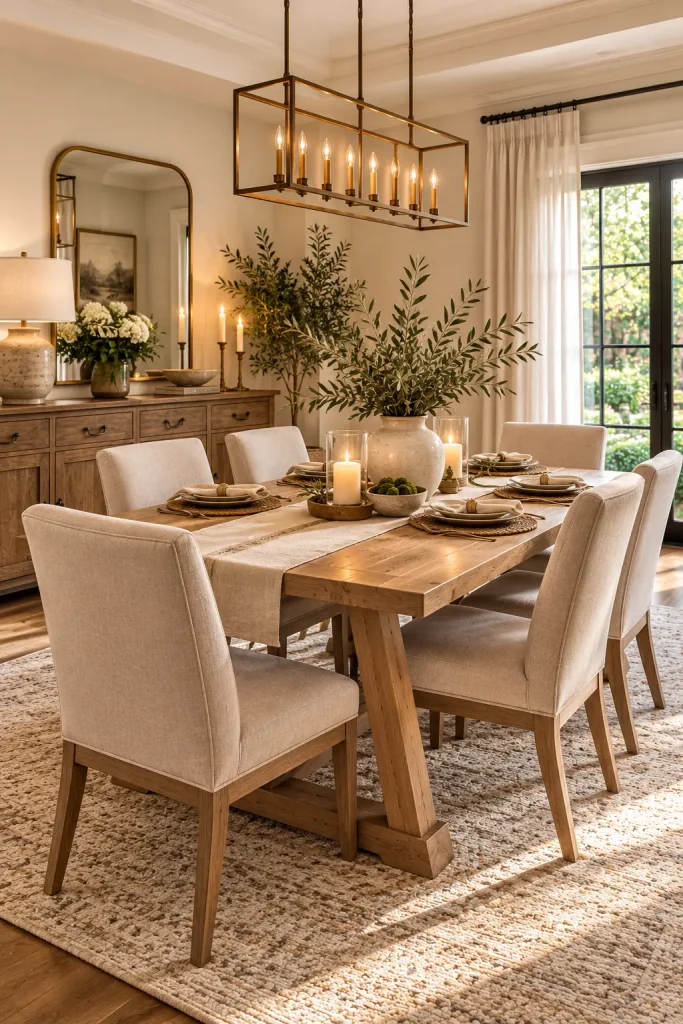
Neutral dining room decor offers a calm backdrop that can feel both timeless and personal. Shades of warm white, oatmeal, taupe, sand, and soft beige work particularly well when they’re layered through different materials rather than used as a single flat color.
For example, combine an ivory wall color with a pale wood table, textured linen curtains, woven dining chairs, and a natural-fiber rug. Small differences in texture help the room feel interesting without requiring bright colors or elaborate decorations.
The trick is to balance the neutral palette with enough contrast to define the furniture and architectural details.
Try combining these elements:
- Cream walls with a medium-toned wooden table.
- Beige upholstered chairs with darker wooden legs.
- A textured rug that adds subtle pattern.
- Black or antique-brass accents for definition.
- Green branches or seasonal flowers for a natural touch.
If everything is the same shade of beige, the room may feel visually flat. Introduce variations in wood tone, fabric texture, and lighting to create depth.
4. Add Character With a Beautiful Area Rug
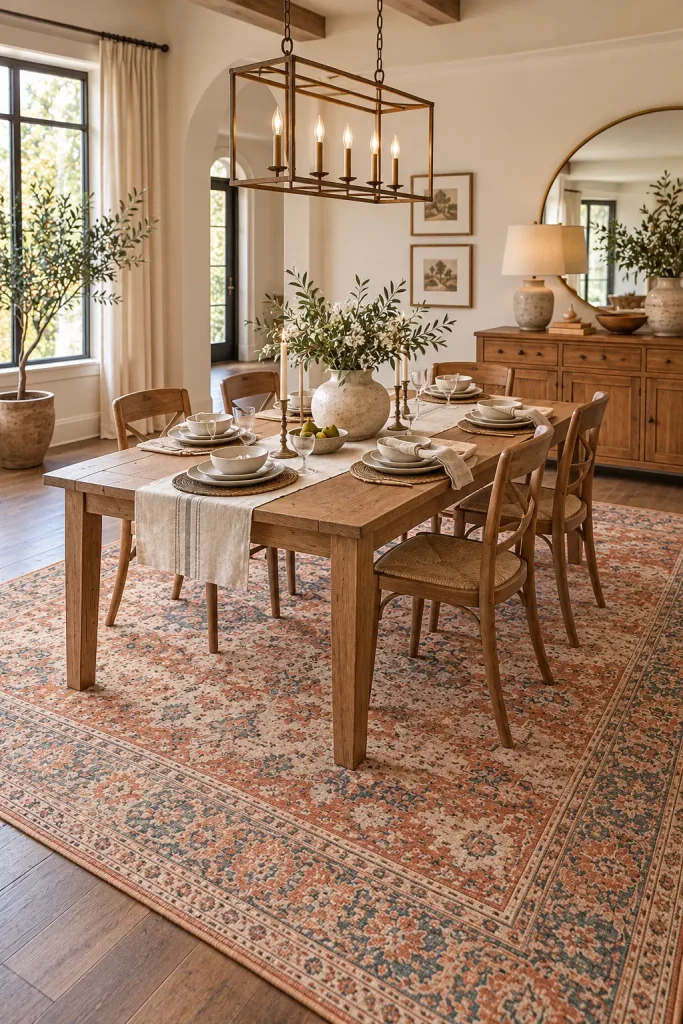
An area rug can visually anchor the dining table, introduce color or pattern, and make a dining room feel more finished. It’s especially useful in open-plan homes, where the dining area may need its own identity without physical walls.
A vintage-inspired rug can add character to a traditional or eclectic room. A subtle geometric pattern works well in contemporary spaces, while a flatwoven natural-fiber rug suits relaxed, organic interiors.
Practicality matters, too. Dining chairs move frequently, and crumbs or spills are part of everyday dining. Choose a rug that is easy to clean and appropriate for the household’s needs.
How to choose the right rug:
- Measure the table and the space needed for chairs.
- Allow enough room for chairs to remain on the rug when pulled out for seating.
- Select a pattern that complements the furniture rather than competing with it.
- Consider a low-pile or flatwoven design for easier chair movement.
A rug that’s too small can make the furniture arrangement feel cramped. When possible, test the measurements with painter’s tape on the floor before buying.
5. Decorate With Fresh Flowers and Natural Greenery
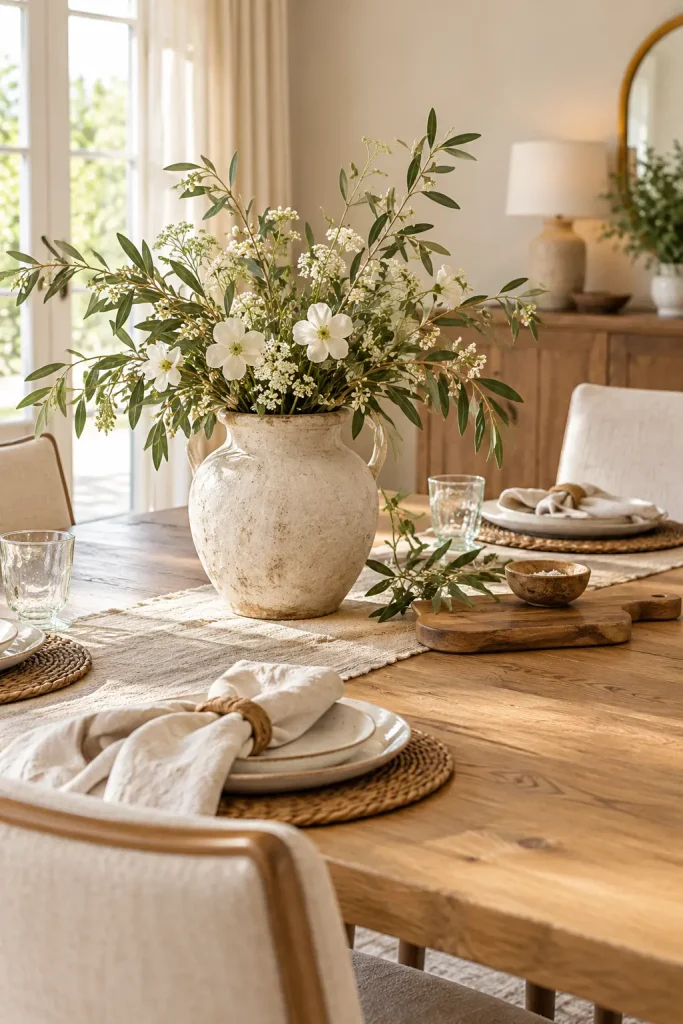
Fresh flowers and greenery bring life to a dining table without requiring a complete room makeover. Their organic shapes soften the straight lines of furniture and add a natural focal point that can change with the seasons.
For an understated arrangement, place a few leafy branches in a tall ceramic vase. A low arrangement of white flowers works beautifully for everyday dining, while seasonal branches or colorful blooms can introduce more personality when you’re entertaining.
The arrangement should suit the table rather than compete with it.
Ideas worth trying:
- Olive branches in a simple stoneware vase.
- White seasonal flowers in a low glass vessel.
- Eucalyptus-style greenery arranged loosely in a ceramic pitcher.
- A small collection of individual bud vases along a long table.
- Seasonal foliage paired with natural linen and wooden serving boards.
Keep the centerpiece low enough to preserve eye contact across the table, particularly if the dining room is used for family meals and conversation.
6. Introduce a Dark Accent Wall
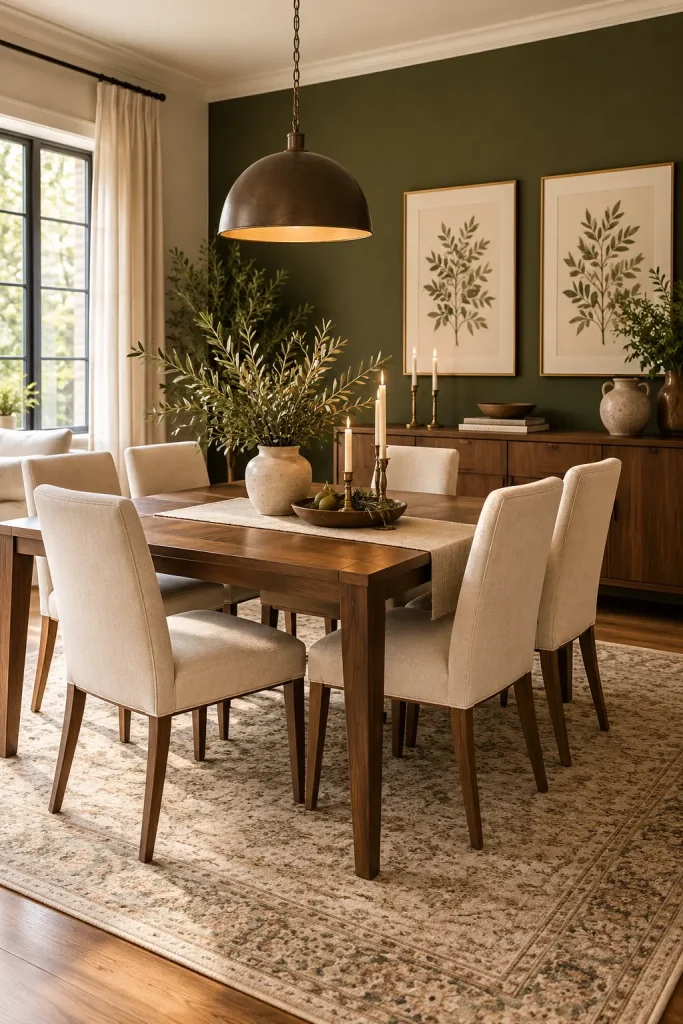
A dark accent wall can give a dining room depth and make lighter furniture, artwork, and table settings stand out. Deep olive, charcoal, muted navy, and rich brown are particularly effective when used thoughtfully.
This approach works well in dining rooms that need a stronger focal point or a little contrast. A charcoal wall behind a light oak table, for example, creates a balanced combination of dark and natural materials.
You don’t necessarily need to paint the entire room. Start with the wall behind the sideboard or the wall that frames the dining table. Keeping the other walls lighter can preserve a sense of openness.
For a balanced look:
- Pair dark paint with warm wood.
- Add a mirror or artwork to create visual interest.
- Choose lighting that prevents the room from feeling gloomy.
- Repeat the accent color in small details, such as a vase or chair upholstery.
Before committing, test paint samples in different lighting conditions. A color that looks soft in daylight may appear considerably darker under warm evening lighting.
7. Mix Dining Chair Styles for an Eclectic Look
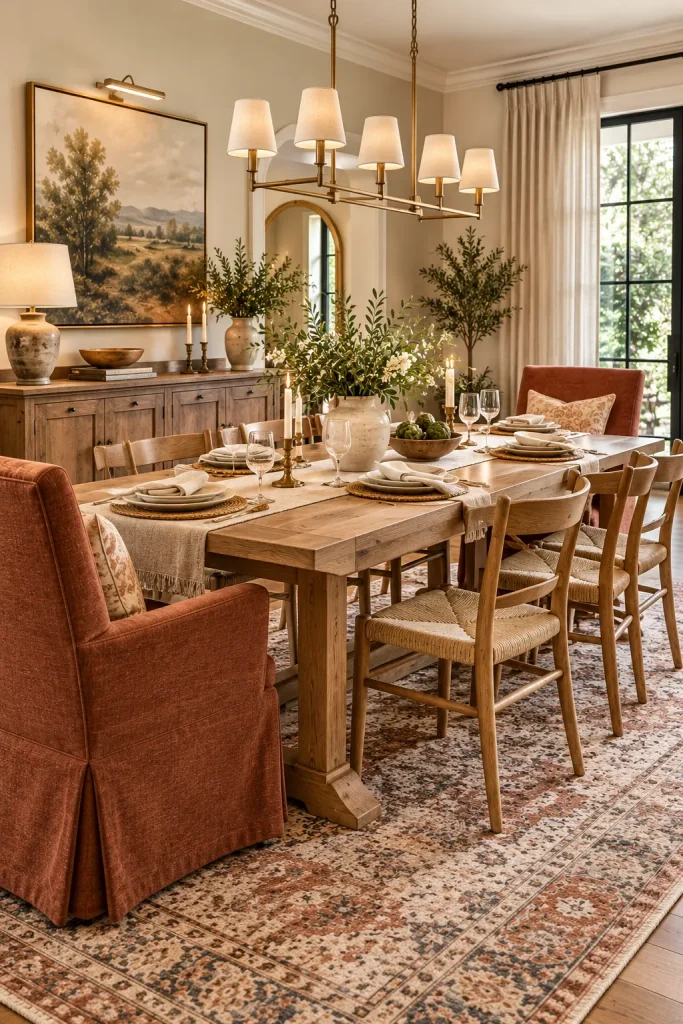
Matching dining chairs create a coordinated appearance, but mixing chair styles can give a dining room more individuality. When the combinations are carefully chosen, different silhouettes and materials can make the furniture feel collected rather than purchased as a single set.
A straightforward approach is to keep the dining table consistent and introduce variation through the chairs. For example, pair upholstered chairs along the sides with two distinctive wooden chairs at the ends.
Another option is to use chairs with different shapes but similar finishes. Black-painted chairs in several silhouettes can feel cohesive because they share a common color.
Three combinations to consider:
- Warm and natural: Oak chairs with woven seats and simple upholstered end chairs.
- Modern contrast: Black dining chairs paired with a light wood table.
- Collected traditional: Upholstered side chairs with curved wooden end chairs.
Pay attention to seat height, comfort, and overall scale. Chairs should fit comfortably beneath the table, and the arrangement should leave enough room for people to sit down and move around.
8. Style a Beautiful Dining Room Sideboard
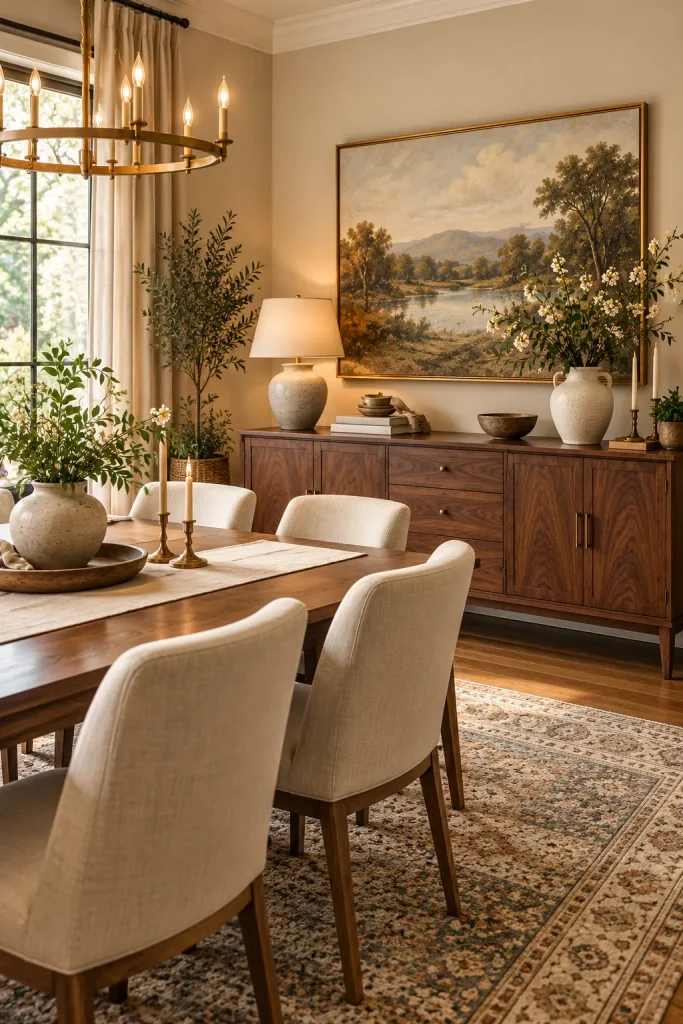
A sideboard can be both a practical storage solution and an attractive decorating feature. It provides a place for serving dishes, table linens, glassware, and other dining essentials while creating another surface for artwork and accessories.
Choose a sideboard that suits the room’s proportions. A long, low design can complement a rectangular dining table, while a compact cabinet may work better in a smaller space.
The styling doesn’t need to be complicated. A large piece of artwork or a mirror can establish the focal point, while a table lamp, ceramic vase, and small stack of books add layers.
A simple styling formula:
- Begin with one substantial element, such as a mirror or framed artwork.
- Add a lamp or vase on one side.
- Introduce a smaller decorative object to balance the arrangement.
- Leave some empty space so the surface remains usable.
Avoid filling every inch of the sideboard. The combination of practical storage and open display space makes the furniture more useful and visually appealing.
9. Bring in Texture With Woven Materials
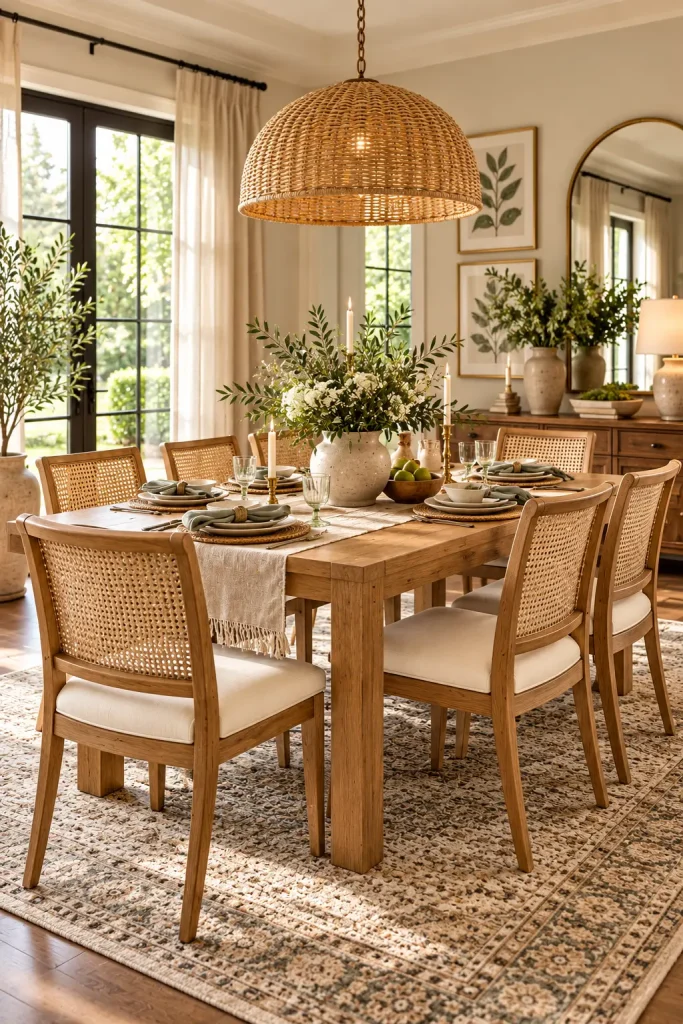
Texture is one of the easiest ways to make a dining room feel warmer and more inviting. Woven materials introduce subtle visual variation, especially when the room already contains smooth wood, painted walls, and simple upholstery.
Consider natural cane chairs, woven pendant lights, baskets, textured curtains, or a flatwoven rug. These details work particularly well in organic modern, coastal, Scandinavian, and relaxed farmhouse interiors.
You don’t need to use every material at once. Two or three well-chosen textures are usually enough to give the room character.
Try this combination:
- A solid oak dining table.
- Cane-backed chairs with comfortable cushions.
- A woven pendant light.
- Linen curtains in a warm neutral shade.
- A ceramic centerpiece with a handmade finish.
If your dining room already has a lot of visual detail, choose a simpler woven element rather than introducing several competing patterns.
10. Create a Charming Gallery Wall
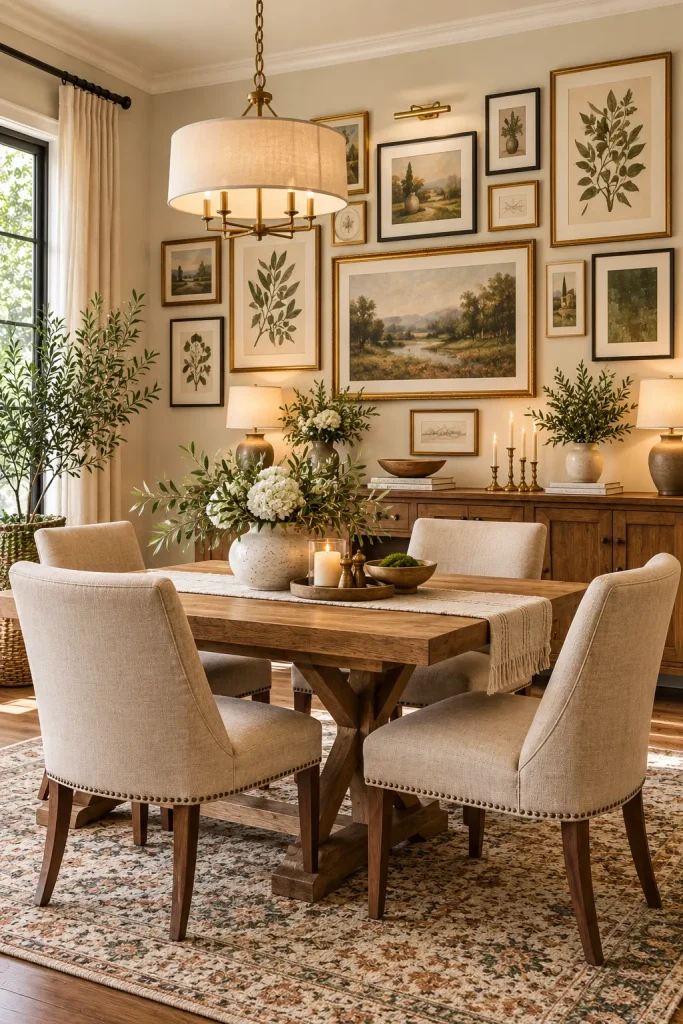
A gallery wall can give a dining room a more personal appearance without requiring major renovation. It provides an opportunity to display artwork, family photographs, botanical prints, or a collection of illustrations that reflect your taste.
For a calm, coordinated arrangement, choose artwork that shares a common color palette. Botanical prints in natural wood frames, for example, work beautifully with warm neutral walls and wooden dining furniture.
If you prefer an eclectic style, mix different frame sizes while keeping enough visual connection between the pieces.
How to arrange a gallery wall:
- Lay the frames on the floor before hanging them.
- Choose a consistent gap between neighboring frames.
- Use a common color, subject, or framing material to create cohesion.
- Position the arrangement in relation to the dining table and surrounding furniture.
A gallery wall should complement the room rather than compete with a prominent chandelier or heavily patterned rug. In a smaller dining area, a few carefully selected pieces may have more impact than a large collection.
11. Choose a Round Table for a Small Dining Room
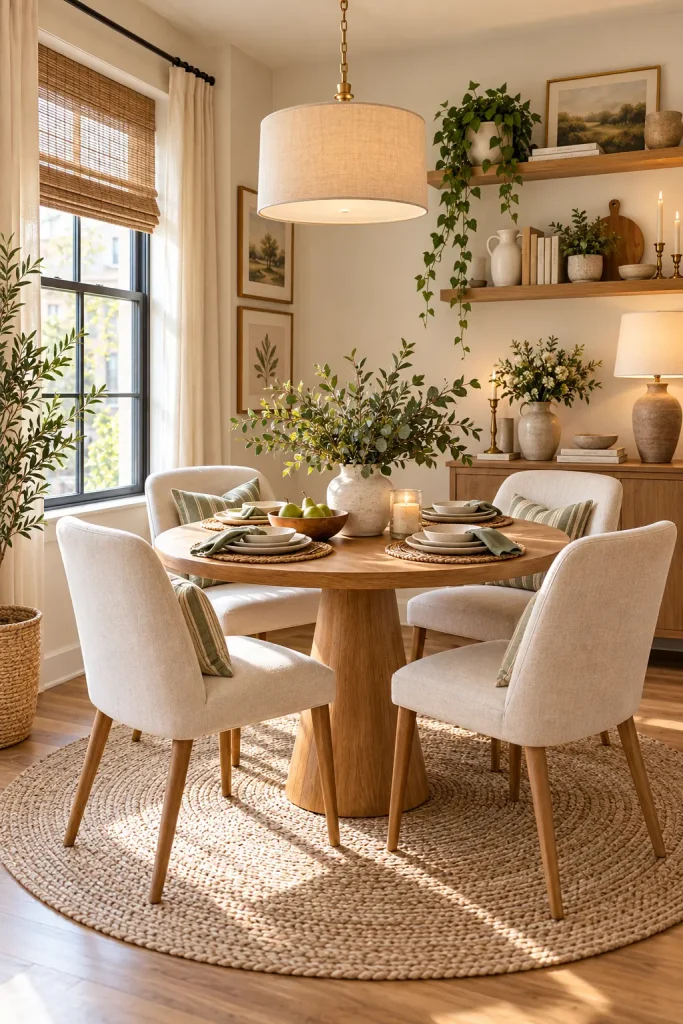
A round dining table can be an excellent choice for a breakfast nook, apartment dining area, or compact dining room. Its curved edges create a softer visual profile, and the lack of table corners can make it easier to navigate certain layouts.
A pedestal base can be particularly useful because it leaves more legroom than some four-legged designs. Depending on the table’s size and chair dimensions, this may also make seating arrangements more flexible.
For a small room, consider a light wood finish, a simple base, and chairs that can be tucked away when they’re not in use.
Small-space styling tips:
- Measure the available floor area before selecting the table.
- Leave enough clearance for chairs and everyday movement.
- Use a pendant light to visually define the dining spot.
- Add a small wall mirror if it suits the layout and helps reflect natural light.
- Choose a compact sideboard or wall-mounted shelf for additional storage.
A round table isn’t automatically the best solution for every small room. A narrow rectangular table may fit better in a long, tight space, so let the room’s shape guide your choice.
12. Add Traditional Elegance With Crown Molding and Paneling
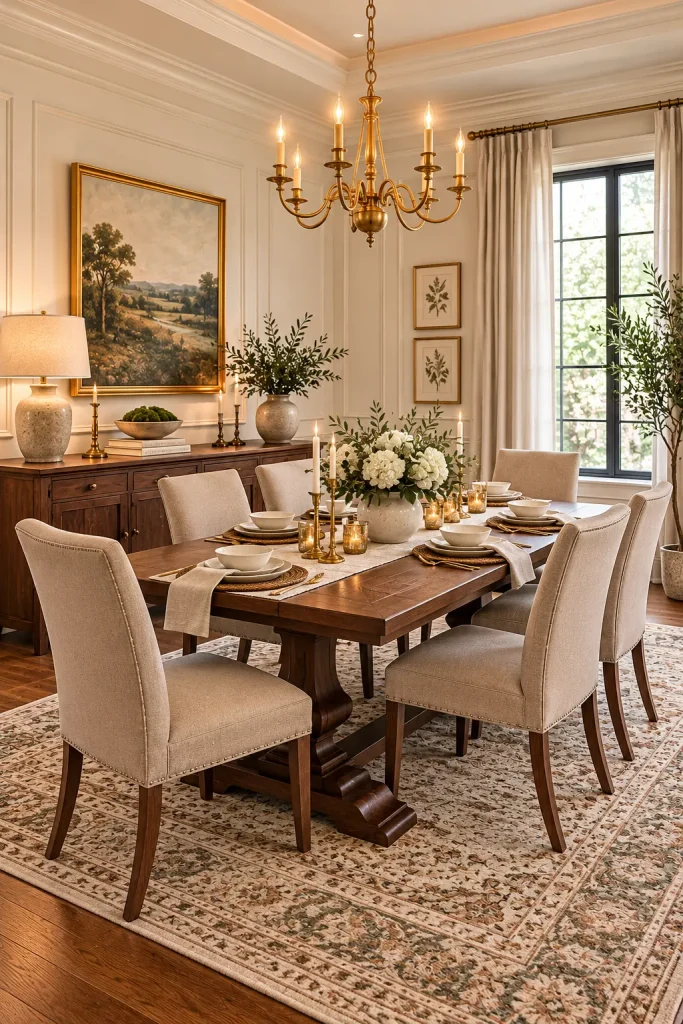
Architectural details can make a dining room feel more established and refined. Crown molding, wall paneling, and applied molding create depth on otherwise plain walls, helping the space feel intentional even when the furniture and accessories are relatively simple.
For a traditional look, pair white or cream paneling with a wooden dining table, upholstered chairs, and a classic chandelier. For a more contemporary interpretation, paint the molding and walls the same muted color to create a subtle, unified effect.
If a full architectural upgrade isn’t practical, consider a simpler treatment on one wall. Applied molding can create a framed-panel appearance without requiring elaborate custom millwork.
Keep the result balanced:
- Match the complexity of the molding to the home’s existing architecture.
- Choose furniture with proportions that suit the room.
- Avoid combining too many competing decorative details.
- Consider professional installation for more involved projects.
In rental homes, removable artwork and carefully selected furniture can create a similar sense of structure without permanently changing the walls.
13. Introduce Color With Upholstered Dining Chairs
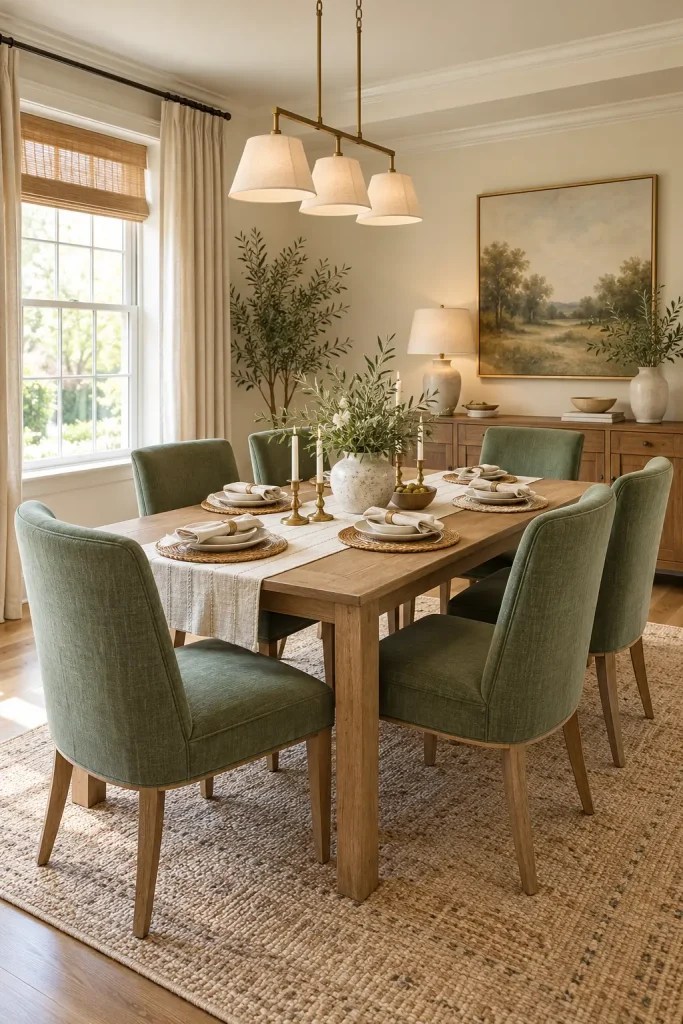
Dining chairs are an effective place to introduce color because they add personality without requiring you to repaint the entire room or replace large pieces of furniture.
Muted green, dusty blue, terracotta, and warm rust can all work beautifully with natural wood. The best choice depends on the existing finishes, the amount of natural light, and the atmosphere you want to create.
For a gentle, nature-inspired look, pair sage-green upholstery with an oak table and warm white walls. If you prefer a stronger contrast, deep blue chairs can stand out against a pale wood dining table.
Color combinations to consider:
| Chair Upholstery | Table Finish | Overall Effect |
|---|---|---|
| Sage green | Natural oak | Soft and organic |
| Dusty blue | Light ash | Fresh and relaxed |
| Terracotta | Medium walnut | Warm and earthy |
| Charcoal | Pale oak | Modern and defined |
| Cream | Dark walnut | Classic and balanced |
Think about maintenance before choosing a fabric. Performance upholstery or removable, washable covers may be useful for busy family dining rooms.
14. Make the Room Feel Special With a Table Runner
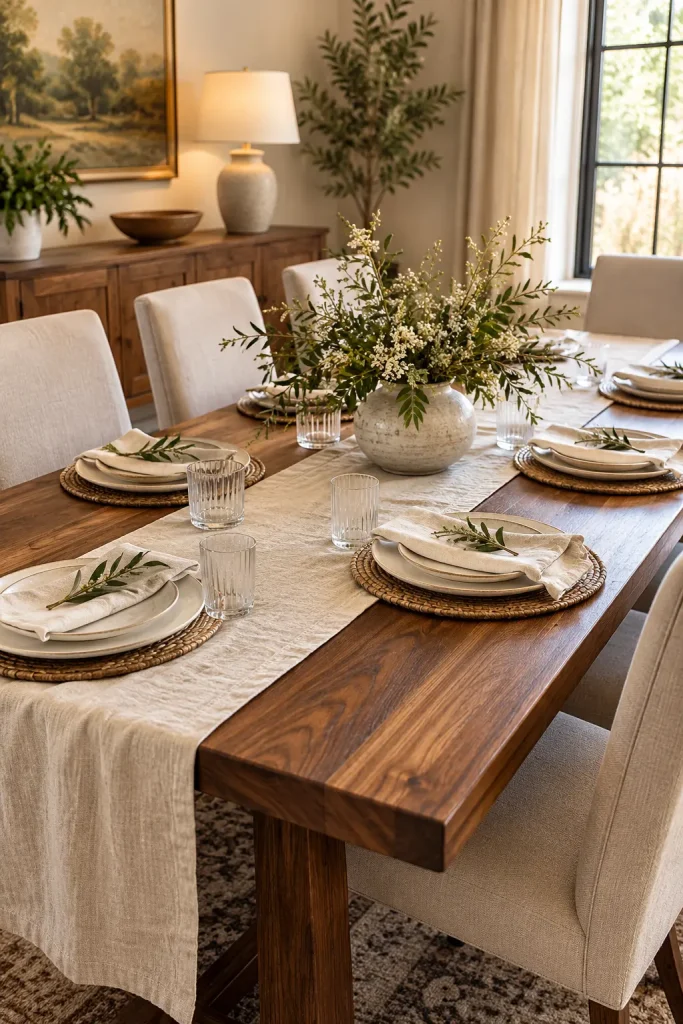
A table runner is a simple way to introduce color, pattern, or texture without covering the entire dining table. It can soften a wooden surface, help organize a centerpiece, and make an everyday dining arrangement feel more considered.
Linen runners are ideal for relaxed, natural interiors. A subtly patterned textile can bring character to a traditional room, while a darker runner can create contrast on a light oak table.
You can leave the runner in place for everyday styling or use it as the foundation for a more elaborate table setting when entertaining.
Easy table-runner styling:
- Choose a length and width that suit the table.
- Pair natural linen with ceramic plates and clear glassware.
- Add a low centerpiece that doesn’t obstruct conversation.
- Use complementary napkins rather than several competing patterns.
- Keep enough clear tabletop space for serving dishes.
For a casual look, a softly draped linen runner can feel more relaxed than a perfectly pressed one. For formal occasions, a neatly arranged runner and coordinated tableware create a cleaner appearance.
15. Create a Modern Farmhouse Dining Room
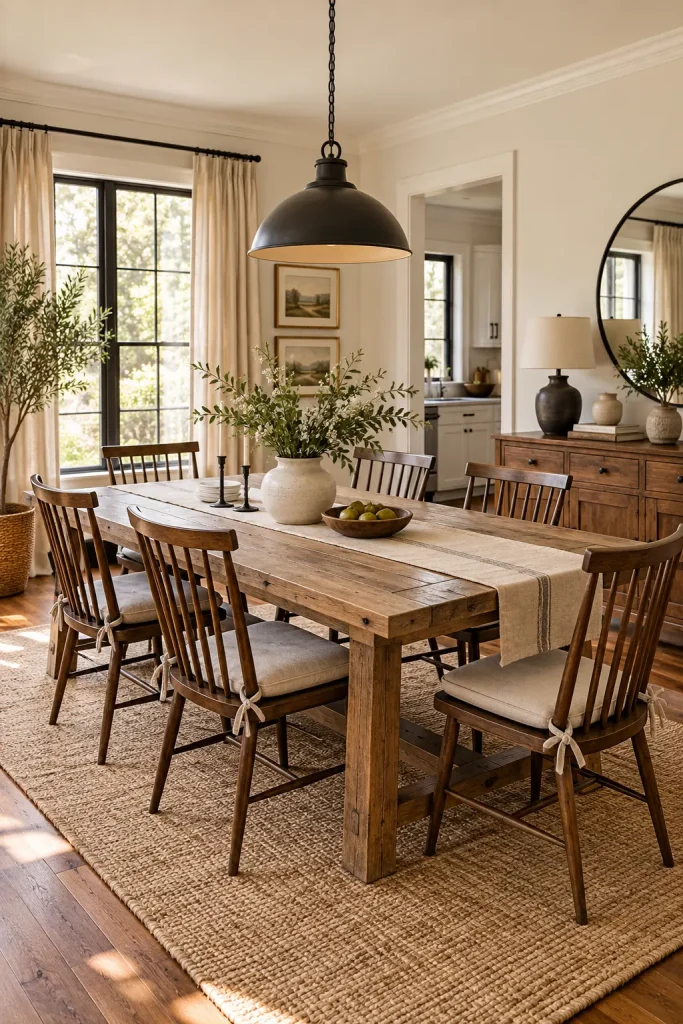
Modern farmhouse dining room decor combines the warmth of traditional materials with cleaner shapes and a less cluttered approach to styling. The result can feel relaxed and welcoming without relying on overly rustic furniture or excessive decorative signs.
Start with a substantial wooden table, simple upholstered or spindle-back chairs, and a restrained palette of warm white, natural oak, and soft gray. A black metal pendant or dark hardware can add definition.
The most successful modern farmhouse rooms balance old and new. A vintage-inspired sideboard may sit comfortably alongside a contemporary light fixture, while handmade ceramics add a touch of character.
Elements that work well together:
- A solid wood dining table with a natural finish.
- Simple chairs in wood, woven material, or neutral upholstery.
- Black or aged-metal lighting.
- Linen curtains and a textured rug.
- A restrained centerpiece using branches or seasonal flowers.
Avoid making every item look distressed or artificially aged. Natural materials, comfortable seating, and thoughtful proportions create a more convincing farmhouse atmosphere.
16. Use a Large Mirror to Reflect Light
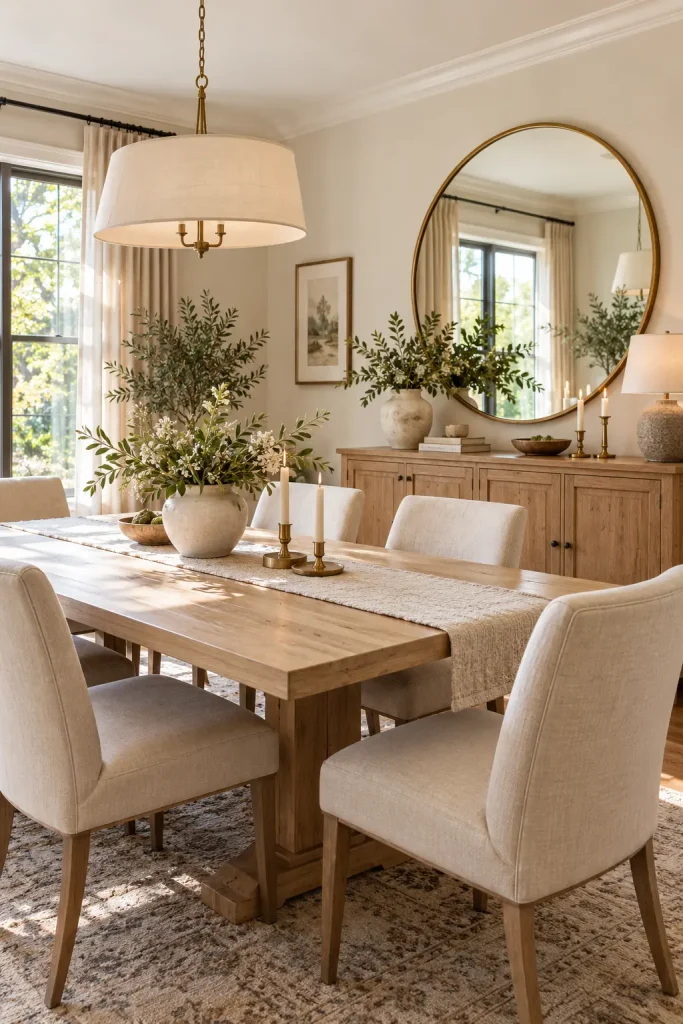
A mirror can make a dining room feel brighter and add another layer of visual interest. When positioned thoughtfully, it reflects window light and parts of the room, helping the space feel more open.
A large round mirror can soften the straight lines of a rectangular dining table, while a tall rectangular mirror may complement a traditional sideboard. An antique-style frame adds character, whereas a slim black frame suits contemporary interiors.
Placement matters more than size alone. A mirror should reflect something worth seeing, such as a window, a pendant light, or a carefully styled part of the room.
Before hanging a mirror:
- Check what it will reflect from the main seating positions.
- Choose a frame that relates to the furniture and lighting.
- Avoid placing it where reflections create distracting glare.
- Make sure the mounting system is appropriate for the mirror’s weight and wall type.
A mirror won’t physically increase the room’s size, but its reflection can create a greater sense of openness.
17. Add a Built-In Dining Bench
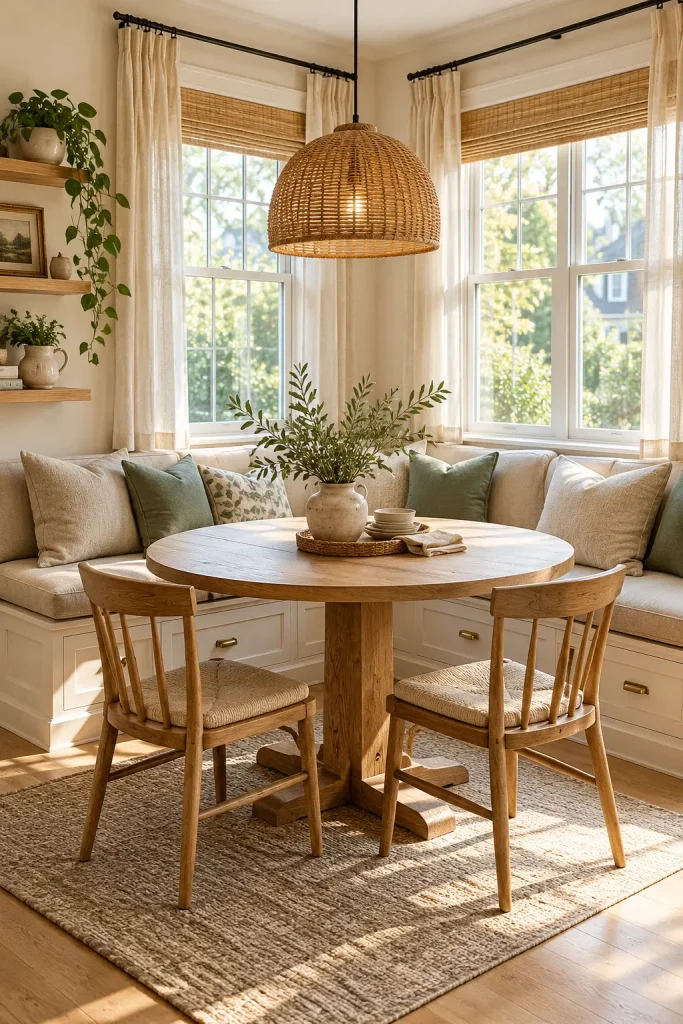
A built-in dining bench can make an awkward corner or breakfast nook more functional while creating a distinctive furniture arrangement. It’s especially useful when you want to fit seating along a wall without placing chairs on every side of the table.
A simple bench with a comfortable seat cushion can look inviting in a small dining area. In larger rooms, a custom L-shaped banquette can create a dedicated dining nook and make efficient use of a corner.
Depending on the design, the bench may also incorporate storage beneath the seat for table linens, board games, or other household items.
Plan the bench carefully:
- Make sure the seat height and depth work with the table.
- Choose upholstery that’s suitable for regular dining.
- Allow enough space for people to enter and leave comfortably.
- Consider storage access before adding drawers or lift-up seats.
- Keep nearby walkways clear.
A built-in bench is a more permanent solution than freestanding chairs, so measure the space and consider the layout carefully before installation.
18. Layer Lighting for a Warm Evening Atmosphere
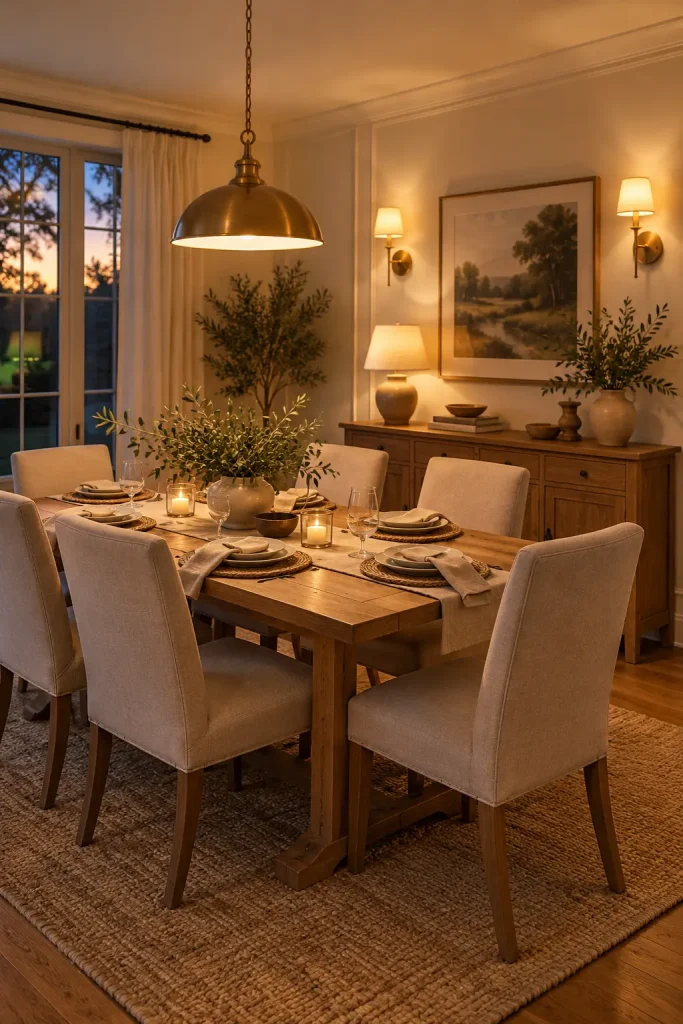
A dining room feels more versatile when it has more than one source of light. An overhead fixture provides general illumination, while a table lamp on a sideboard or a nearby wall light can add a softer glow in the evening.
Layered lighting also makes it easier to adjust the atmosphere for different occasions. Bright, balanced lighting can help with everyday meals and cleaning, while dimmer ambient lighting creates a more relaxed setting for dinner with friends.
The aim is to give the room enough light to remain practical without making it feel harsh.
A simple lighting plan:
- Use a pendant or chandelier as the main focal point above the table.
- Add a table lamp to a sideboard if the layout allows.
- Consider wall sconces for additional ambient lighting.
- Choose compatible warm-toned bulbs for a cohesive appearance.
- Use dimmers where the fixtures and electrical setup support them.
Avoid relying entirely on a single overhead light, particularly if the dining room also functions as a homework area, workspace, or place for other everyday activities.