
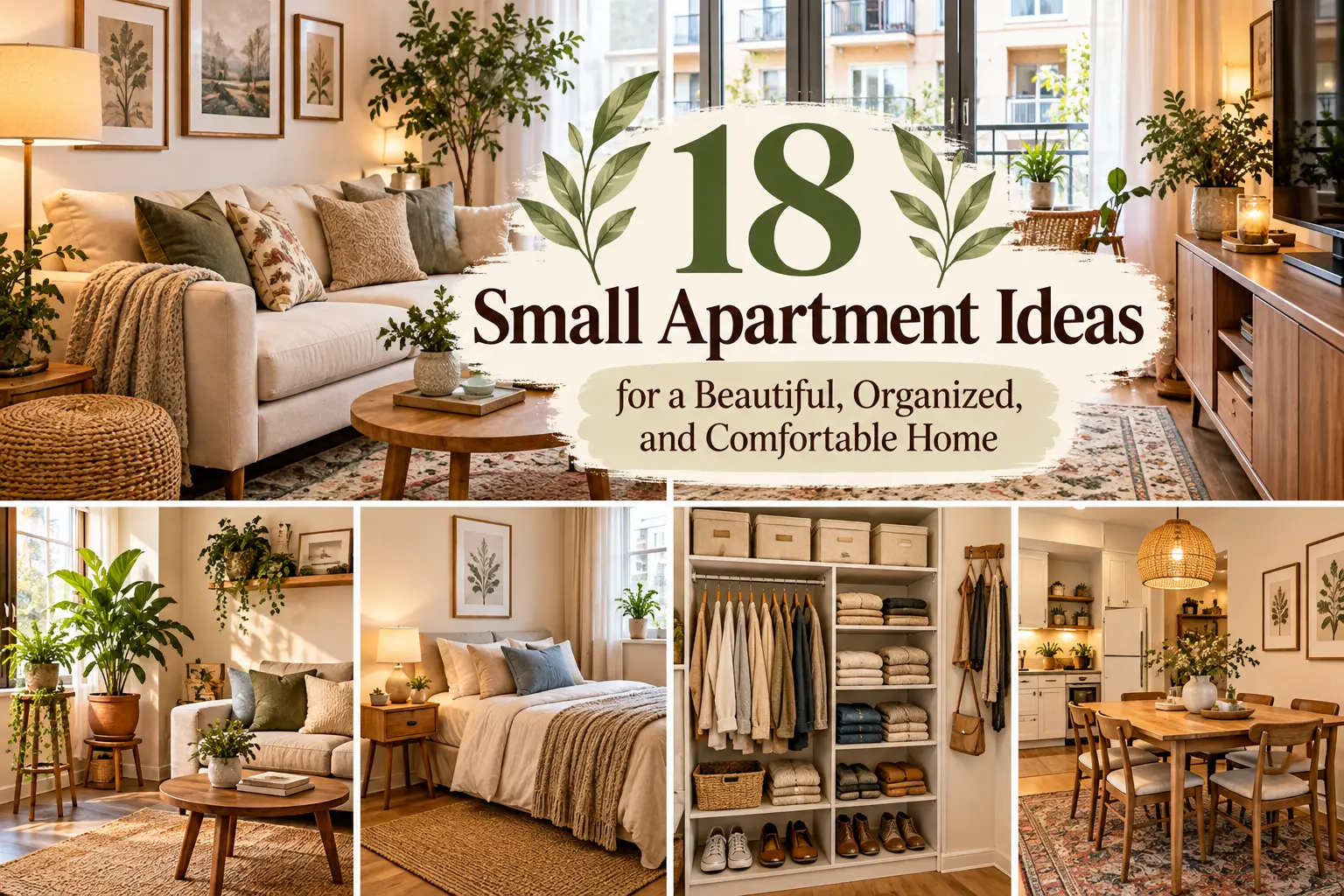
18 Small Apartment Ideas for a Beautiful, Organized, and Comfortable Home
Living in a small apartment doesn’t mean sacrificing comfort, style, or personality. With thoughtful furniture choices, smart storage, layered lighting, and a well-planned layout, even a compact space can feel welcoming and beautifully organized. The secret is making every area work a little harder without filling the apartment with unnecessary furniture or decorations.
The best small apartment ideas combine practical solutions with attractive design. A storage ottoman can double as extra seating, a wall-mounted desk can create a functional workspace, and a carefully placed mirror can help a room feel brighter. Even simple changes, such as using matching storage baskets or hanging curtains closer to the ceiling, can make a noticeable difference.
Whether you’re decorating a studio, renting your first apartment, or trying to make a small home more comfortable for everyday life, these 18 ideas offer realistic ways to improve your space. You’ll find inspiration for living rooms, bedrooms, kitchens, entryways, and multifunctional areas, with options for different budgets and decorating styles.
1. Choose Multifunctional Furniture That Saves Space
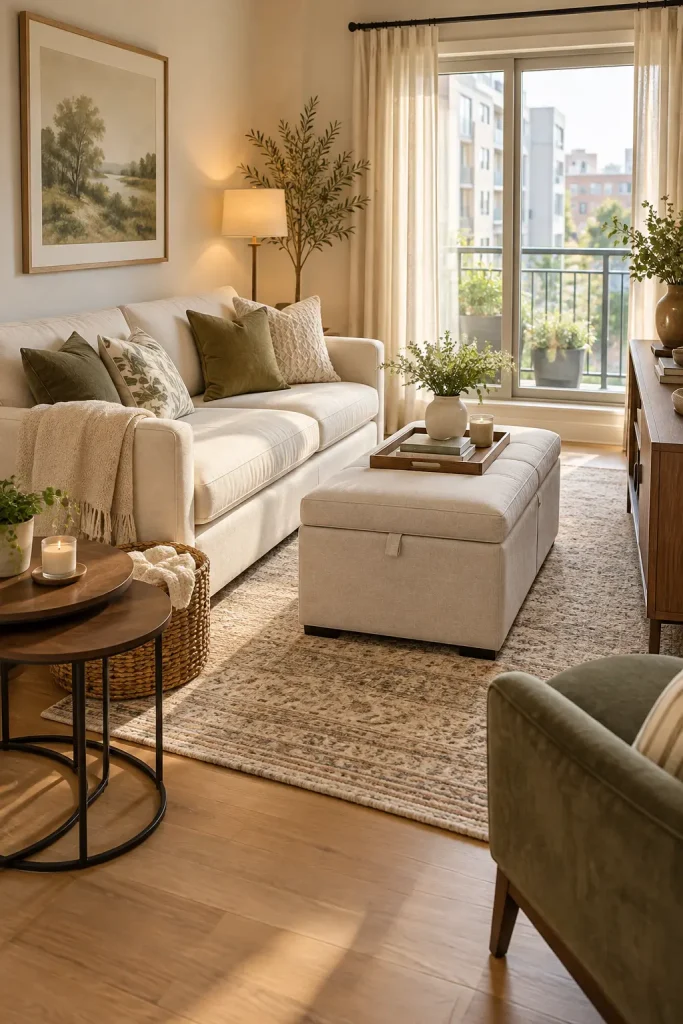
In a small apartment, furniture needs to do more than look attractive. Pieces that serve two purposes help reduce clutter while keeping the room comfortable and flexible. Instead of filling the living room with separate storage units, occasional chairs, and bulky tables, choose furniture that combines several functions.
A rectangular storage ottoman, for example, can serve as a footrest, an extra seat, and a place to keep spare blankets. A sofa bed can accommodate overnight guests without requiring a dedicated guest room. Nesting tables provide convenient surfaces when you need them and tuck away when you want more open floor space.
Smart multifunctional furniture choices include:
- A storage bench for seating and concealed shoe storage.
- A lift-top coffee table for working or eating comfortably.
- Nesting side tables that can be separated when guests visit.
- A compact dining table that doubles as a work surface.
Quick Tip: Before buying a multifunctional piece, measure the room and check how much clearance it needs when opened. A storage ottoman is less useful if it blocks the main walking path when extended.
2. Use Vertical Storage to Free Up Floor Space
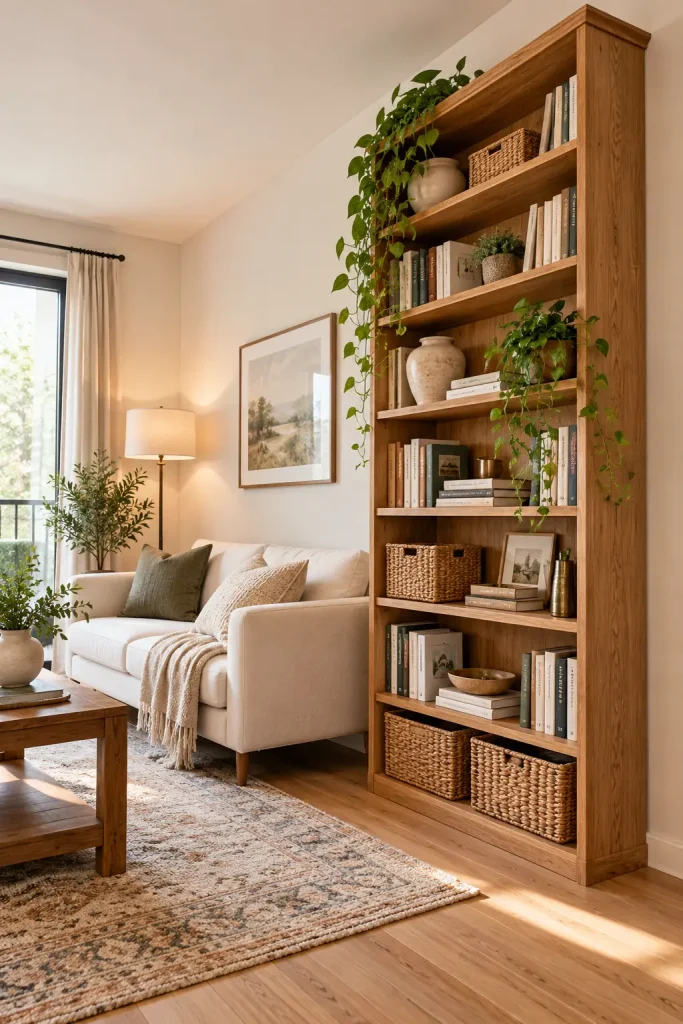
When floor space is limited, look upward. Vertical storage makes use of wall space that might otherwise remain empty, giving you somewhere to keep books, baskets, decorative objects, and everyday essentials without introducing another bulky cabinet.
A tall, narrow bookcase can fit beside a sofa or in an unused corner. Wall-mounted shelves work well above a desk, dresser, or compact dining area. In the kitchen, a short run of shelves can hold frequently used dishes or attractive jars, provided the installation is suitable for the wall and the items are securely supported.
For a balanced appearance, combine closed and open storage. Use baskets or boxes for small miscellaneous items, then reserve open shelves for books and a few carefully chosen accessories.
What works particularly well:
- Tall shelving units in narrow wall sections.
- Wall-mounted shelves above a desk.
- Stackable storage boxes inside closets.
- Hooks and hanging organizers on suitable walls or doors.
Common Mistake: Filling every shelf with small decorative objects. Too many items can make a compact room feel visually crowded. Leave some open space between groupings.
3. Create a Calm, Cohesive Color Palette
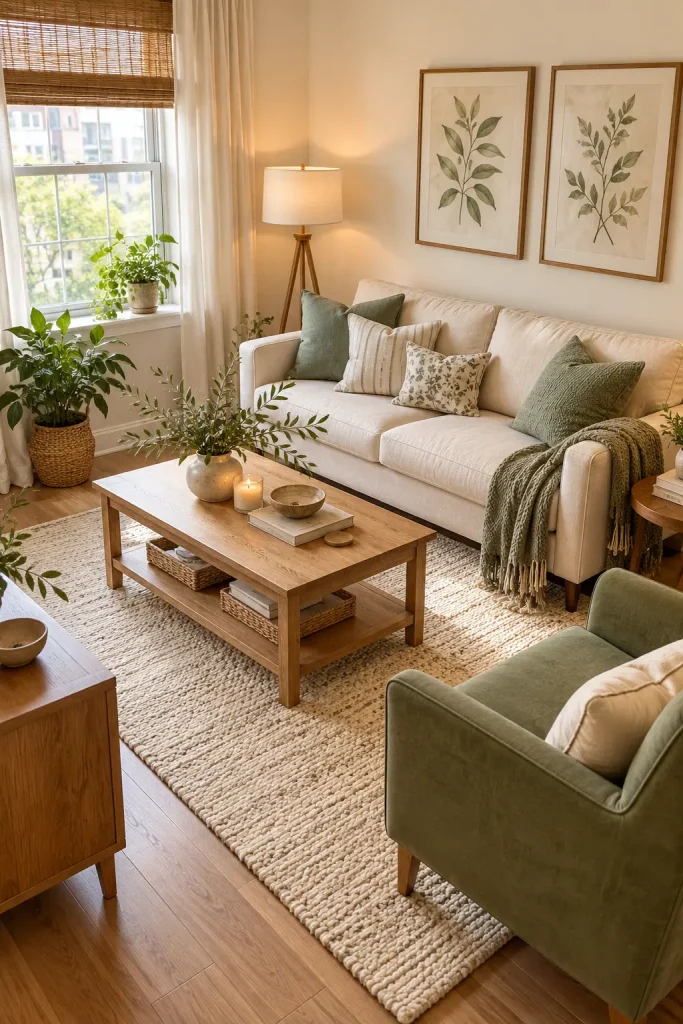
A coordinated color palette helps separate furniture and decorative objects feel as though they belong together. This can be especially useful in a studio apartment, where the living, sleeping, and dining areas may all be visible from one spot.
Start with two or three main colors. Warm white, natural wood, and muted sage create a relaxed atmosphere, while cream, light gray, and dusty blue offer a cooler alternative. You don’t need to eliminate strong colors; instead, use them intentionally through cushions, artwork, a chair, or a rug.
Repeat your chosen colors in different parts of the apartment. For instance, sage green cushions in the living room can relate to a green kitchen accessory or a small plant near the entryway.
| Color approach | Visual effect | Easy way to use it |
|---|---|---|
| Warm white and oak | Bright and inviting | Walls, larger furniture, and flooring |
| Cream and muted sage | Soft and natural | Upholstery, cushions, and plants |
| Light gray and dusty blue | Calm and contemporary | Rugs, accent chairs, and artwork |
| Sand and terracotta | Warm and earthy | Throws, ceramics, and small accessories |
4. Make a Small Living Room Feel Larger With a Round Coffee Table
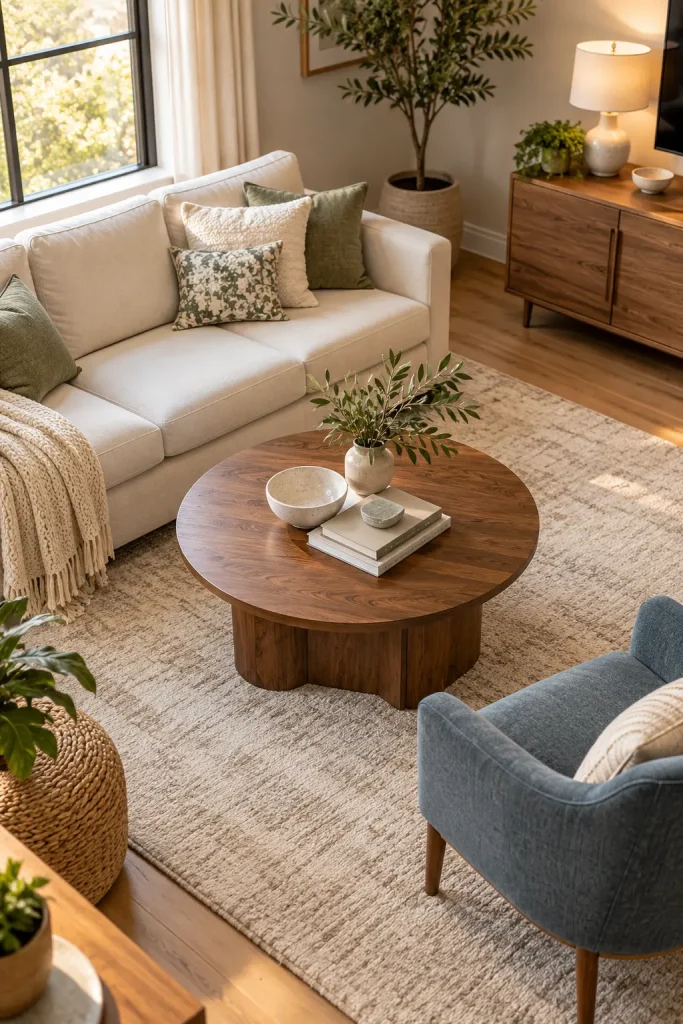
A round coffee table can make a compact living room easier to navigate. Unlike a table with sharp corners, its curved edges allow a smoother walking route around the furniture, especially when the sofa and chairs are positioned close together.
Choose a table that fits the seating arrangement rather than simply buying the largest one that will fit. A small round table in natural wood, for example, can provide enough surface space for a mug, a book, and a decorative bowl without dominating the room.
Glass or visually lightweight tables are another option when you want to preserve an open view across the floor. However, a solid wood table can offer useful warmth and durability if it has a compact footprint.
To get the proportions right:
- Keep the table low enough to work comfortably with the surrounding seating.
- Allow a practical walking gap between the table and sofa.
- Avoid pairing a very small table with an oversized sectional.
- Consider a pedestal base if four legs make the space feel crowded.
The aim is to make the seating area feel connected without creating an obstacle in the middle of the room.
5. Turn an Empty Corner Into a Functional Home Office
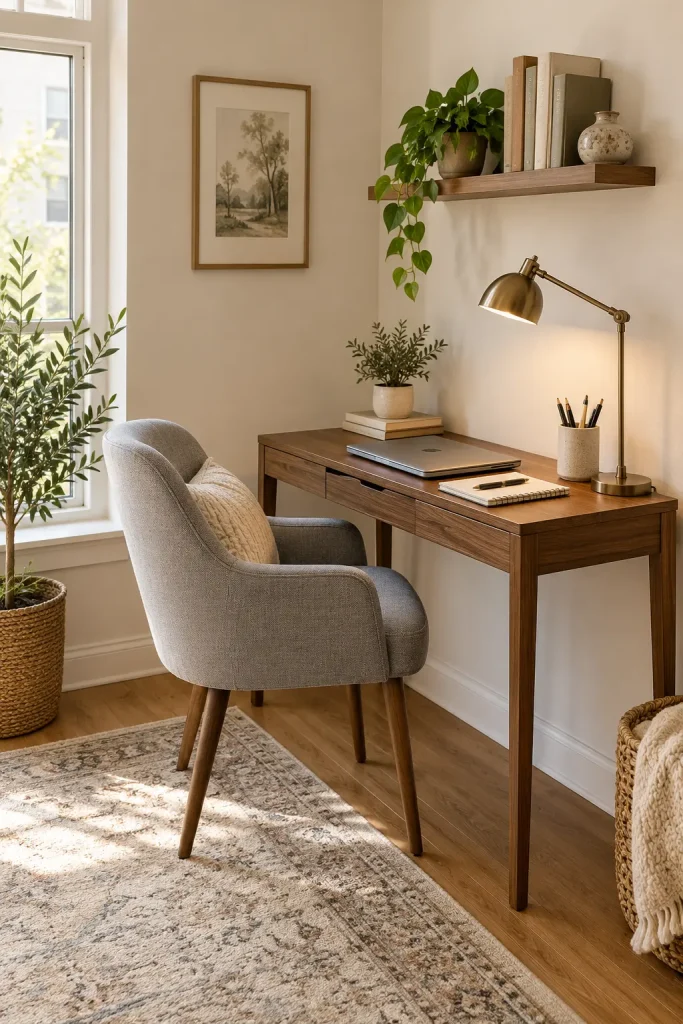
Not every apartment has room for a separate office, but an unused corner can often accommodate a compact workstation. A narrow desk, comfortable chair, and well-positioned lamp may be all you need to create a practical place to work, study, or manage household paperwork.
Choose a desk with enough depth for your everyday equipment without extending too far into the room. If space is especially tight, a properly installed wall-mounted desk or a slim writing table can provide a useful work surface.
Keep the surrounding area simple. A small shelf above the desk can hold notebooks and supplies, while a cable organizer keeps cords from collecting on the floor. If the workspace is visible from the living room, choose finishes that complement the existing furniture.
A compact office setup can include:
- A narrow walnut or oak desk.
- An adjustable task lamp.
- A chair that fits beneath the desk.
- One small drawer unit or wall shelf.
- A tray for paperwork and everyday supplies.
Quick Tip: Check the desk and chair dimensions together. A desk that looks compact on its own may still make the corner uncomfortable if the chair cannot slide back properly.
6. Use Mirrors to Reflect Light and Open Up the Room
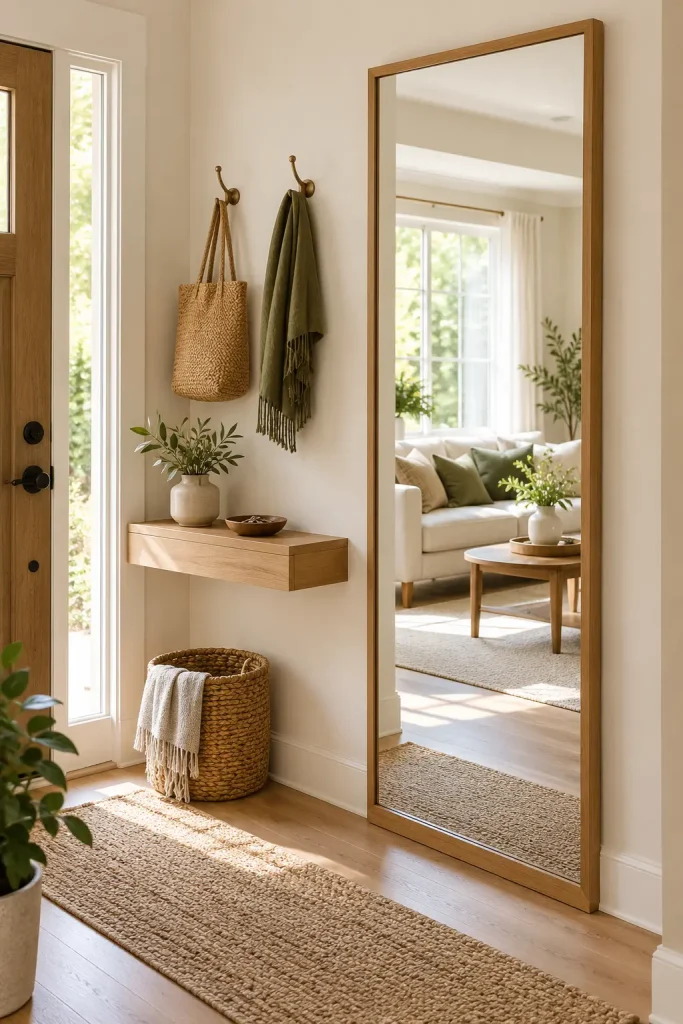
Mirrors can make a small apartment feel brighter by reflecting light and creating a stronger sense of visual depth. Their placement matters more than their size alone.
A full-length mirror leaning securely against a suitable wall can make a bedroom or entryway feel more open. A large rectangular mirror opposite or adjacent to a window may reflect daylight into a darker part of the room. In a narrow hallway, a mirror above a shallow console can provide both a practical last-minute check and a lighter visual effect.
Choose a frame that complements your existing finishes. A simple oak frame works well with natural interiors, while a slim black frame adds definition to a more contemporary space.
Be thoughtful about what the mirror reflects. A view of a window, artwork, or an uncluttered part of the room is usually more pleasing than a direct reflection of storage piles or a busy countertop.
7. Add a Storage Bed to Keep the Bedroom Organized
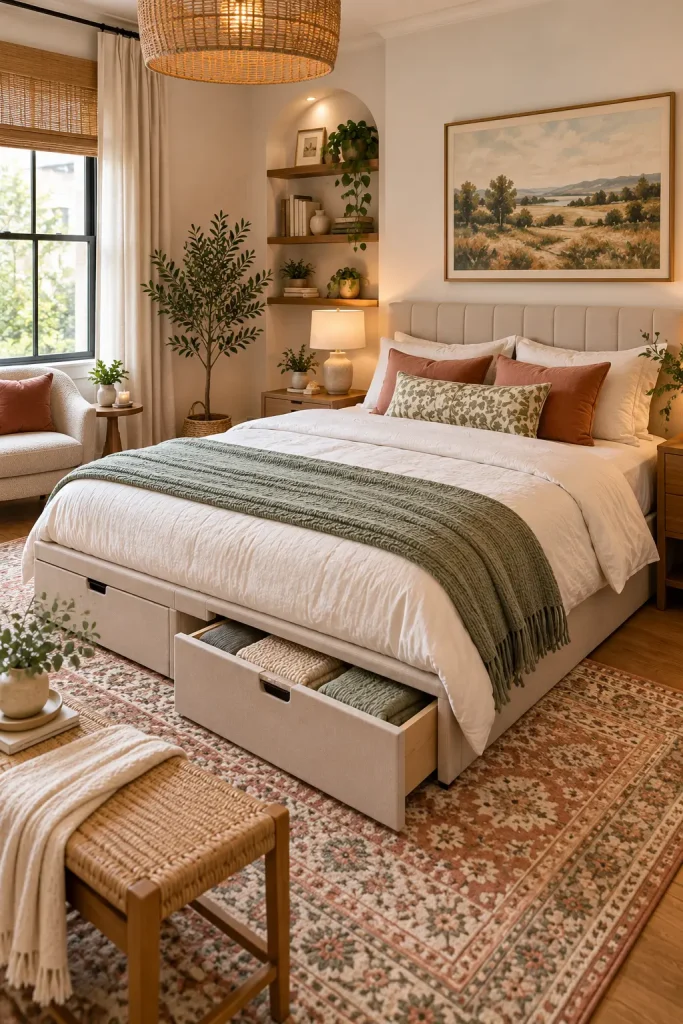
In a small apartment bedroom, the area beneath the bed represents valuable storage space. A bed with built-in drawers or a lift-up base can keep extra linens, seasonal clothing, and spare blankets out of sight without requiring another dresser.
The best choice depends on your room layout. Drawer storage works well when there is enough space beside the bed to pull the drawers open. A lift-up bed can provide access to a larger storage compartment, but you should check the mechanism and the clearance required to raise the mattress.
If replacing the bed isn’t practical, under-bed containers can offer a more affordable alternative. Choose containers that fit the available height and slide out easily. Keep frequently used belongings in the most accessible locations.
For a comfortable appearance, pair the bed with simple bedding, a compact nightstand, and wall-mounted reading lights if your rental’s installation rules allow them.
A useful organization system separates items into:
- Everyday bedding and pillowcases.
- Spare blankets and comforters.
- Seasonal clothing.
- Occasionally used bags or accessories.
Keep the contents labeled or grouped so that the storage space remains useful rather than becoming a place where everything disappears.
8. Separate Studio Apartment Zones With Rugs and Furniture
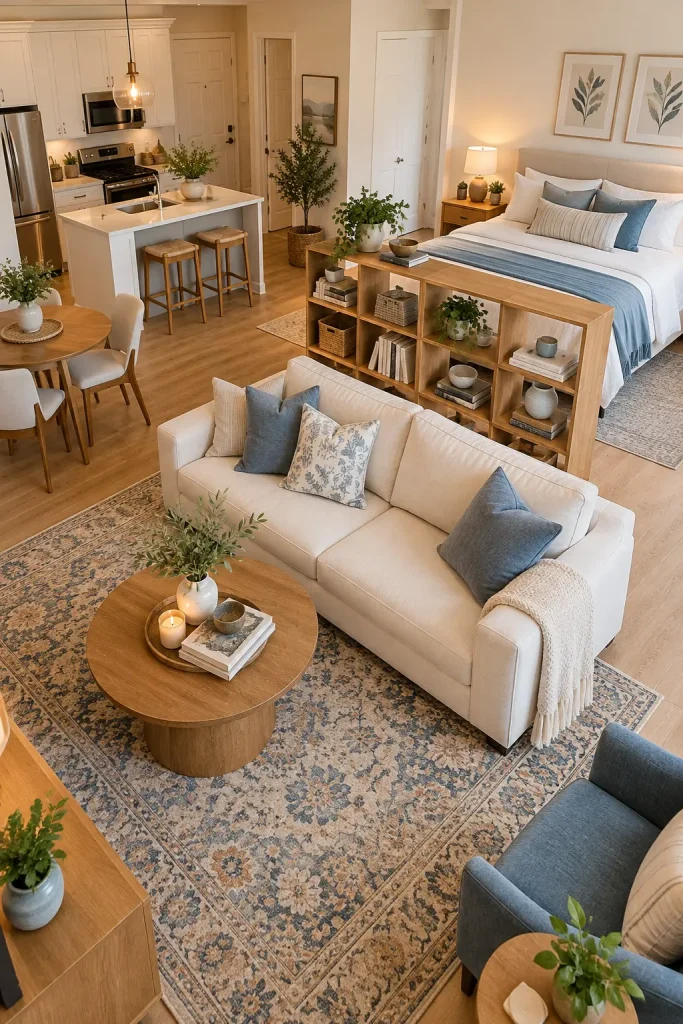
A studio apartment may have one main room serving as the living room, bedroom, dining area, and sometimes a workspace. The challenge is making these functions feel distinct without building walls that interrupt light and movement.
Use area rugs to define the living and sleeping areas. A sofa positioned with its back toward the bed can create a subtle division, while an open bookcase may offer additional separation if the room has sufficient space around it.
Keep the transitions light and practical. An open shelving unit allows light to pass through, while a low cabinet can provide storage without creating a tall visual barrier.
Three ways to define separate zones:
- Place a rug beneath the sofa and coffee table to establish the living area.
- Position the bed in a quieter part of the room, away from the main entrance where possible.
- Use a narrow console or open shelving unit to separate functions without blocking the entire view.
A studio doesn’t need a completely different color scheme for every zone. Repeating materials and accent colors helps the apartment feel like one home rather than several unrelated spaces.
9. Make the Most of a Small Kitchen With Wall-Mounted Storage
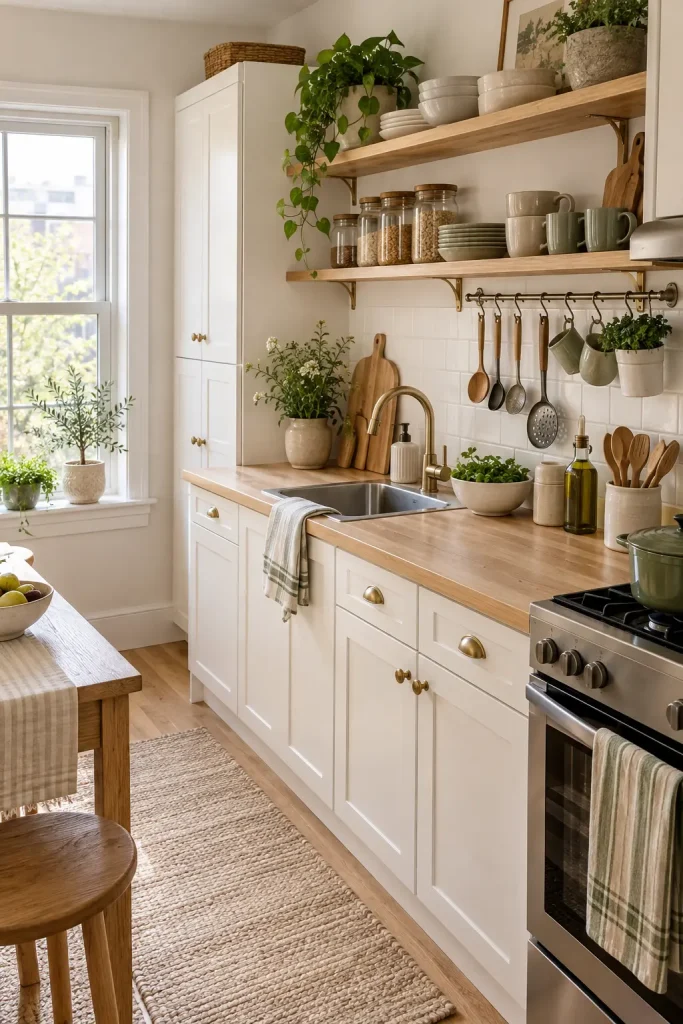
A small kitchen can become frustrating when countertops fill with utensils, jars, and appliances. Moving selected items onto suitable wall-mounted storage helps free the work surface while keeping everyday essentials within reach.
A rail with hooks can hold frequently used utensils, while a magnetic knife strip may be appropriate if it can be installed safely and kept out of children’s reach. A short shelf can display everyday mugs or jars, and a wall-mounted paper towel holder can free up valuable counter space.
Before adding anything, decide which items truly deserve a visible place. A kitchen rail should make cooking easier, not become another crowded display.
Try these practical changes:
- Store everyday utensils on a secure rail.
- Move infrequently used appliances into a cabinet.
- Use matching containers for dry goods where suitable.
- Keep the area around the sink and stove clear for food preparation.
- Use vertical dividers inside cabinets for trays and cutting boards.
Important: Keep wall-mounted items clear of heat sources and follow the manufacturer’s installation instructions. In a rental, check whether drilling or permanent hardware is permitted.
10. Create a Welcoming Entryway With a Slim Console
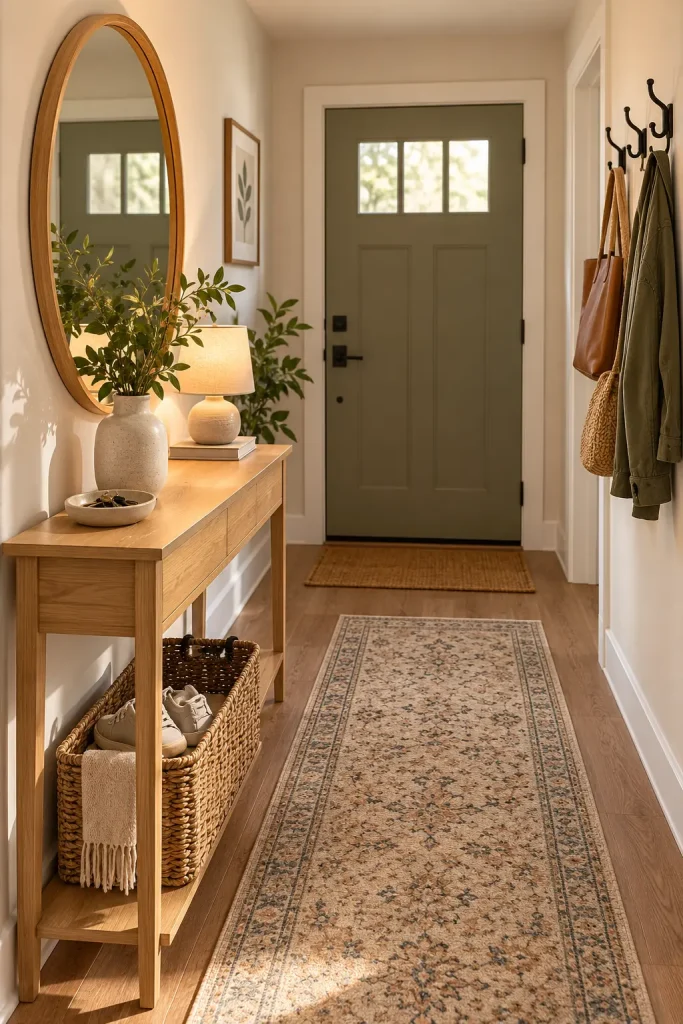
Even a small entrance deserves a little attention. A thoughtfully arranged entryway gives keys, shoes, bags, and coats a designated home instead of allowing them to spread into the living room.
If the entrance is narrow, a slim console table or floating shelf can provide a landing spot without taking up much floor space. Add a small dish for keys, a compact lamp if there is a suitable power outlet, and a basket underneath for everyday shoes or accessories.
Wall hooks can handle coats and bags, while a mirror makes the area useful when you’re leaving home. If you don’t have enough room for a console, a combination of hooks, a narrow shoe cabinet, and a small wall-mounted shelf may work better.
The most useful entryway essentials are:
- A shallow console or floating shelf.
- Hooks for frequently used coats and bags.
- A small basket or shoe cabinet.
- A mirror positioned at a comfortable viewing height.
Common Mistake: Choosing an entryway table that leaves too little room to walk past. Measure the narrowest part of the entrance before buying furniture, and prioritize clear access over decorative accessories.
11. Use Curtains to Make Ceilings Feel Taller
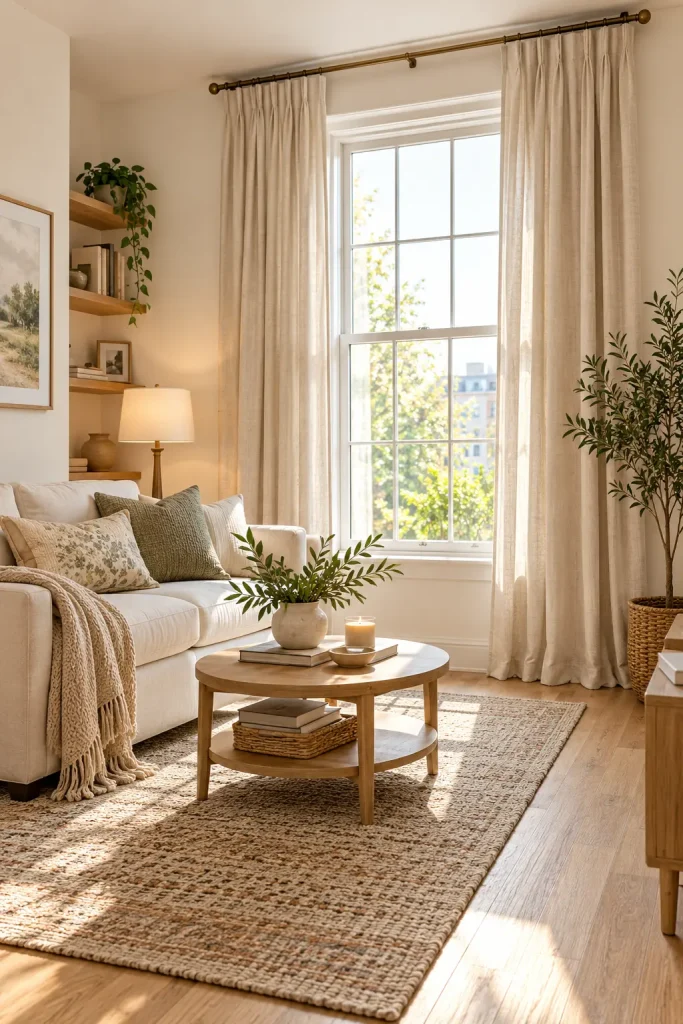
Window treatments can influence how spacious a room feels. Hanging curtains closer to the ceiling and allowing them to extend toward the floor creates a longer vertical line, drawing attention upward rather than emphasizing a low window frame.
Choose lightweight linen-look panels, cotton curtains, or another fabric that suits the amount of privacy and light control you need. Warm white, oatmeal, and soft gray are versatile choices, although a muted color can also add personality without overwhelming a small room.
For the best effect, measure carefully before purchasing. Panels that stop awkwardly above the floor can make the arrangement look unfinished, while excessively long curtains may collect dust or create a tripping hazard.
In a rental, tension rods or other suitable removable solutions may work for some windows, although their compatibility depends on the window frame, curtain weight, and manufacturer’s instructions.
Quick Tip: Use a curtain rod wide enough to allow the panels to sit mostly outside the window when open. This helps preserve the available daylight.
12. Add a Folding Dining Table for Everyday Flexibility
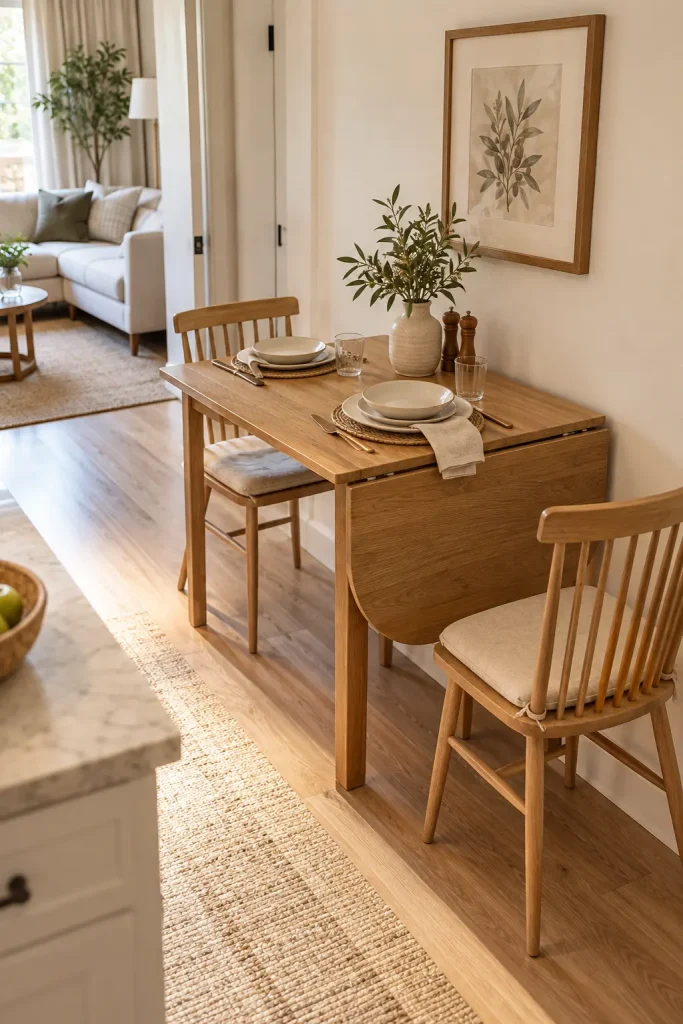
A traditional dining table can consume valuable floor space in a small apartment, particularly when only one or two people use it regularly. A folding or drop-leaf table offers a practical alternative because the surface can expand when needed and become more compact afterward.
A small drop-leaf table works well against a wall or in a kitchen corner. Keep one or two lightweight chairs nearby for everyday meals, and bring out additional seating when guests visit.
If you work from home, a compact dining table can also serve as a temporary workspace. Choose a design with a stable surface and enough legroom for comfortable sitting.
| Table style | Main advantage | Best use |
|---|---|---|
| Drop-leaf table | Expands when needed | Small dining nook |
| Wall-mounted folding table | Folds away after use | Very limited floor space |
| Compact round table | Allows flexible seating | Open-plan living and dining |
| Narrow rectangular table | Fits along a wall | Apartment kitchen or dining corner |
A folding table should still feel like part of the room’s design. Natural wood, simple legs, and coordinated chairs help it look intentional instead of purely utilitarian.
13. Brighten Dark Corners With Layered Lighting
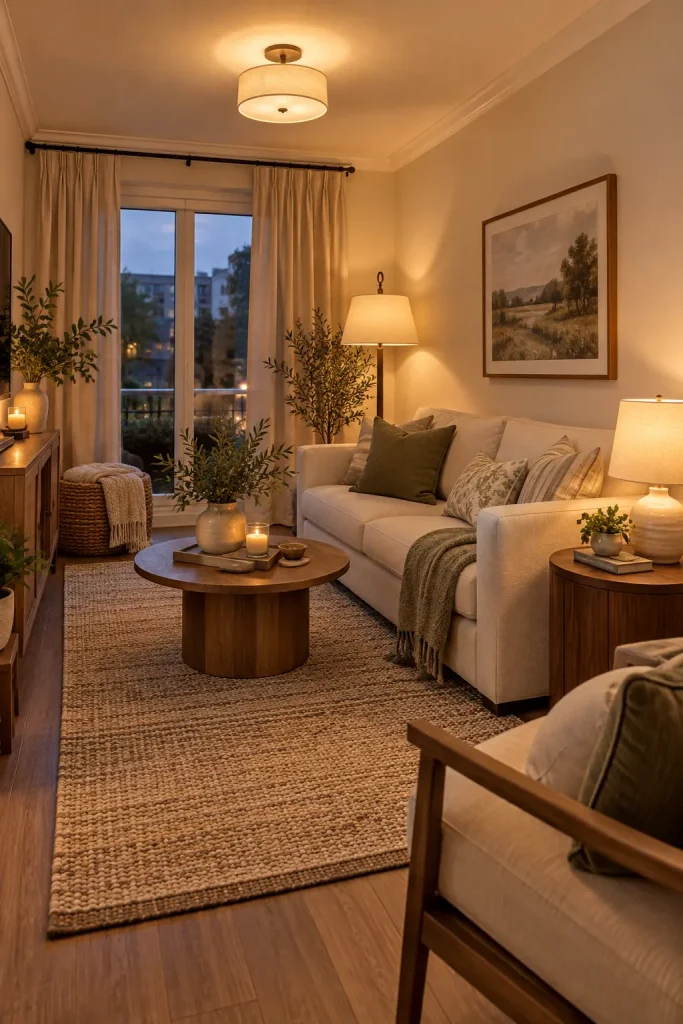
One overhead light rarely creates the most comfortable atmosphere in a small apartment. It may illuminate the center of a room while leaving corners, reading areas, and work surfaces feeling dim.
Layered lighting combines different sources to make the space more useful throughout the day. A floor lamp can brighten a seating corner, a table lamp can create a softer evening atmosphere, and a focused desk lamp can support reading or working.
You don’t need a large collection of fixtures. Start with the places where you spend the most time, then add lighting where it solves a genuine problem.
A simple apartment lighting plan:
- General lighting: Use the existing ceiling fixture or another suitable room-wide source.
- Task lighting: Add a reading lamp beside the sofa or bed.
- Accent lighting: Highlight artwork, a shelf, or a decorative corner.
- Evening lighting: Use softer lamps to create a relaxed atmosphere.
Choose bulbs with a consistent color appearance in areas that are visible together. For a warm, comfortable living space, many people prefer warm-white light, while work surfaces may benefit from lighting selected for the task.
Rental-friendly option: Plug-in floor and table lamps can improve lighting without requiring permanent electrical changes.
14. Organize Closets With Matching Bins and Dividers
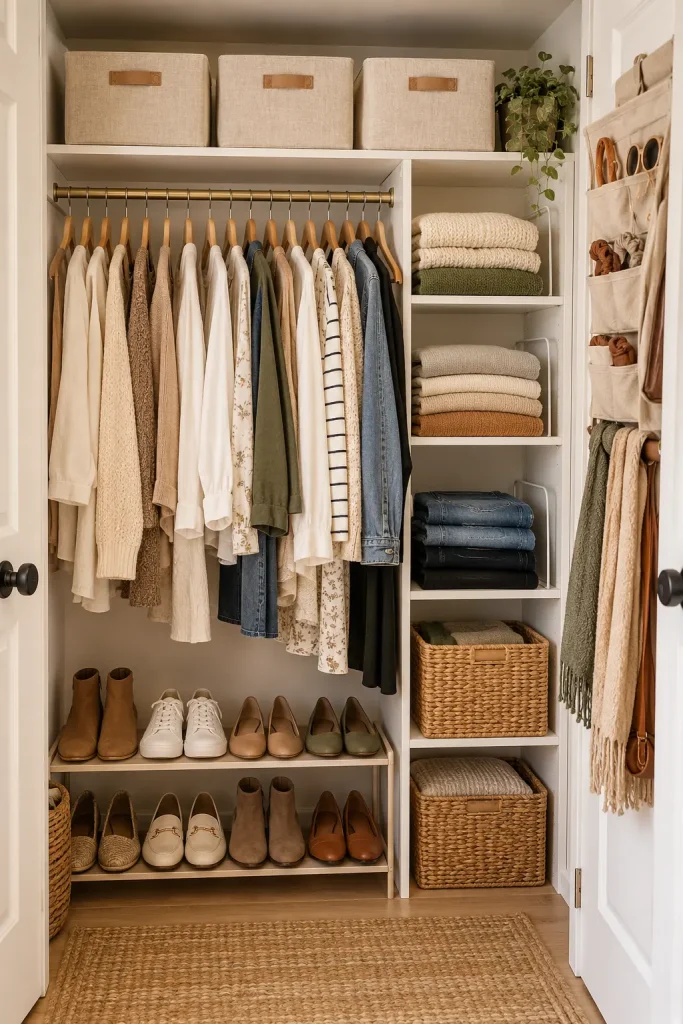
Closets in small apartments often need to accommodate more than clothing. Shoes, bags, extra bedding, cleaning supplies, and seasonal accessories may all compete for the same limited space.
The solution begins with using the available storage more deliberately. Shelf dividers can keep folded clothing from toppling over, stackable bins can organize accessories, and hanging organizers can make use of vertical space beneath a clothing rod.
You don’t need to purchase an entirely new closet system. Start by sorting belongings into categories and identifying which items you reach for most often.
A practical closet organization method:
- Remove items you no longer need or use.
- Group the remaining belongings by type.
- Place frequently used items at accessible heights.
- Store seasonal or occasional items on higher shelves when safe and practical.
- Use clearly labeled containers for smaller accessories.
Matching bins can make the closet look calmer, but consistent containers are not essential. Reusing suitable boxes you already own can be just as practical.
Common Mistake: Buying storage containers before measuring the shelves. Check the width, depth, and height of the available space first so that the bins fit without wasting room.
15. Bring in Plants Without Crowding the Floor
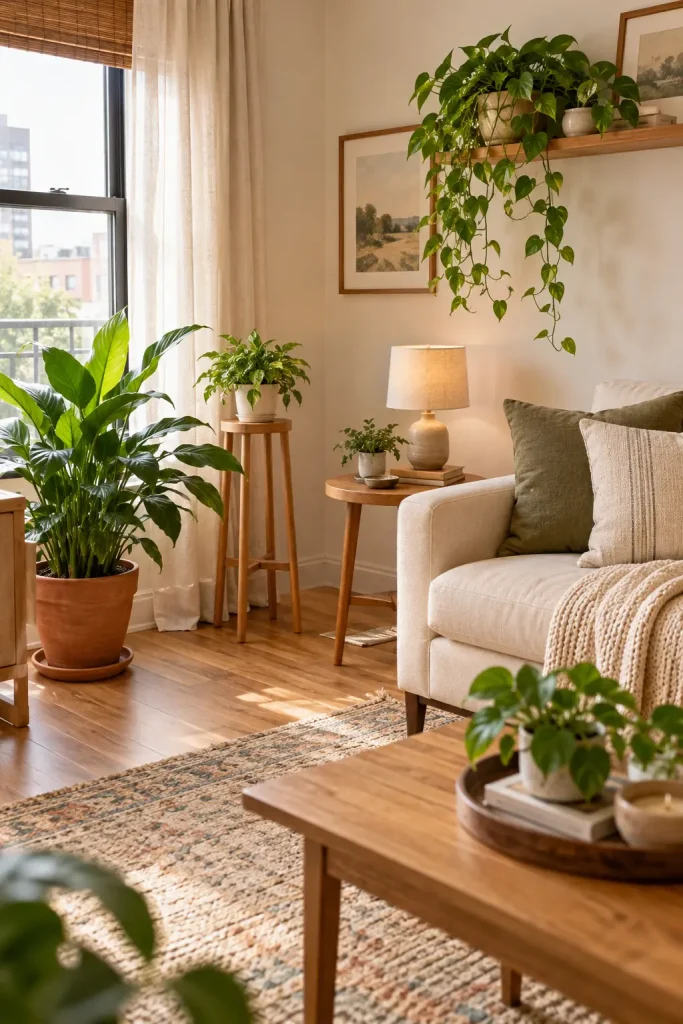
Houseplants add color, texture, and a natural element to apartment interiors. However, placing several pots across the floor can make a compact room feel more crowded than it needs to be.
Instead, vary the height and placement of your plants. A small plant can sit on a shelf, a medium-sized specimen can occupy an unused corner, and a trailing plant can add greenery to a suitable high shelf. A narrow plant stand may work in a bright corner that doesn’t interrupt the main walking route.
Choose plants according to the light conditions in your apartment rather than selecting them for appearance alone. A sunny window and a dim hallway will not suit the same varieties equally well.
Small-apartment plant styling ideas:
- Place a compact plant on a kitchen shelf away from heat and food-preparation hazards.
- Use a narrow plant stand beside a bright window.
- Display a trailing plant on a stable shelf with adequate light.
- Group two or three pots of different heights on a side table.
Use saucers or suitable protective trays to help prevent water from damaging floors and furniture. Also check whether a plant is appropriate for your household if pets or young children may come into contact with it.
16. Create a Cozy Bedroom With a Limited Number of Textures
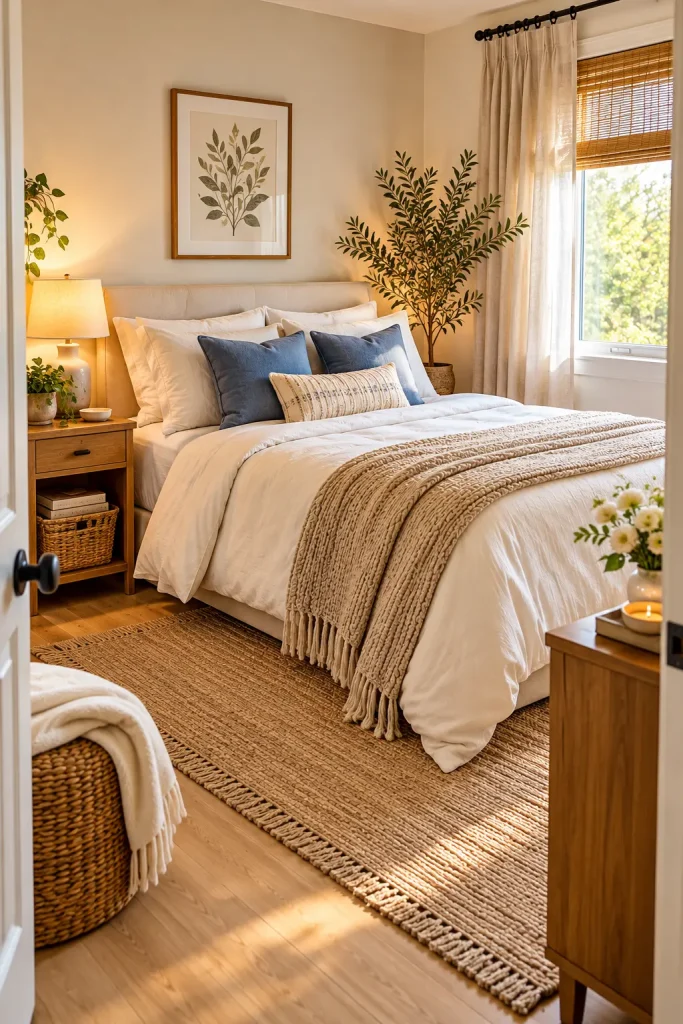
A small bedroom can feel comfortable and thoughtfully decorated without accumulating lots of pillows, accessories, or furniture. Texture is an effective way to add visual interest while keeping the overall design simple.
Combine a few materials that work well together: cotton bedding, a knitted throw, a woven rug, and a natural wood nightstand. These surfaces create contrast without requiring a large number of decorative objects.
Keep the larger elements relatively simple so the room remains restful. A neutral bedspread can provide a flexible base, while a dusty-blue blanket, muted-green cushion, or patterned pillow introduces a little personality.
A balanced bedroom palette might include:
- Crisp ivory cotton bedding.
- A textured oatmeal throw.
- A small woven bedside rug.
- Natural oak furniture.
- One or two accent cushions in a muted color.
If the room is particularly tight, use wall-mounted reading lights or a narrow bedside shelf where suitable. Avoid adding a large bench at the foot of the bed if it reduces access to the wardrobe or leaves too little room to move.
17. Use Baskets to Hide Everyday Clutter
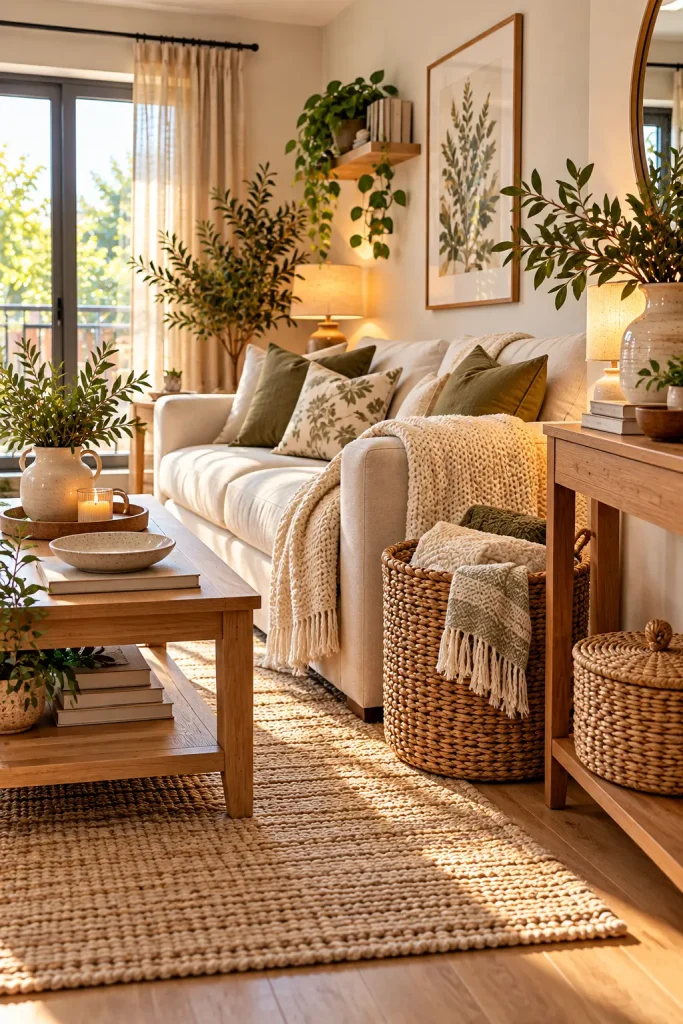
Not everything in an apartment needs to be displayed on a shelf. Remote controls, charging cables, children’s toys, spare blankets, and miscellaneous accessories can make a room feel busy when they don’t have a designated home.
Baskets provide a simple way to contain these items while contributing texture to the decor. Place one beside the sofa for throws, use a smaller basket on a shelf for accessories, or keep a lidded container near the entrance for items you regularly carry outside.
Choose the size and material according to the contents. Woven baskets work well for blankets and lightweight accessories, while sturdy bins may be more suitable for heavier items. Lidded containers can help conceal visually busy contents.
Where baskets are most useful:
- Beside the sofa for blankets and magazines.
- Under a console table for shoes or bags.
- Inside open shelving for miscellaneous items.
- On closet shelves for seasonal accessories.
- In the bathroom for spare towels, where the material suits the room’s moisture conditions.
A basket should make tidying easier, not become a place where clutter accumulates indefinitely. Give each container a clear purpose and review its contents occasionally.
18. Personalize the Apartment With a Simple Gallery Wall
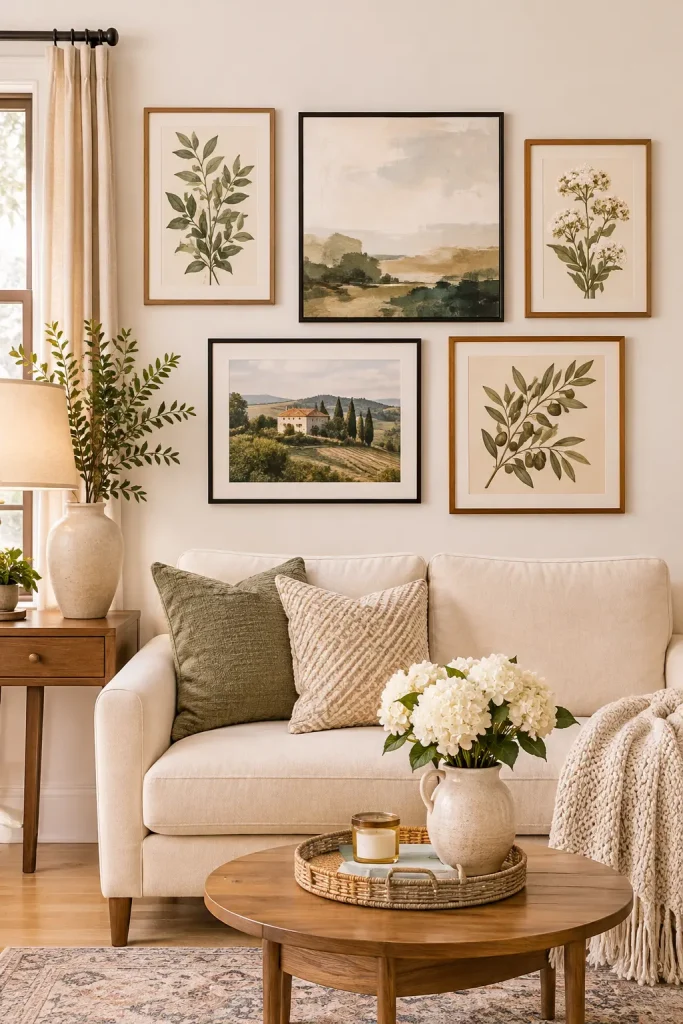
A small apartment should reflect the people who live in it. Artwork, photographs, and meaningful decorative pieces add personality without requiring extra floor space.
A gallery wall makes use of vertical space and can turn a blank wall above a sofa, desk, or bed into a focal point. You can create a coordinated look with matching frames or mix different frame finishes for a more collected appearance.
For a balanced arrangement, plan the layout before hanging anything. Arrange the frames on the floor first, or create paper templates to test the spacing on the wall. Keep the overall grouping proportional to the furniture beneath it.
If you’re renting, removable picture-hanging products may be an option when compatible with the wall surface, frame weight, and lease requirements. Always follow the product instructions and check whether the proposed arrangement is suitable.
For a cohesive gallery wall, combine:
- One larger print to anchor the arrangement.
- Two or three smaller complementary pieces.
- A restrained mix of photography, illustrations, or personal photographs.
- Frames that share a finish, color family, or visual style.
You don’t need to cover an entire wall. A thoughtfully sized arrangement can make a compact apartment feel more personal while preserving a sense of visual space.