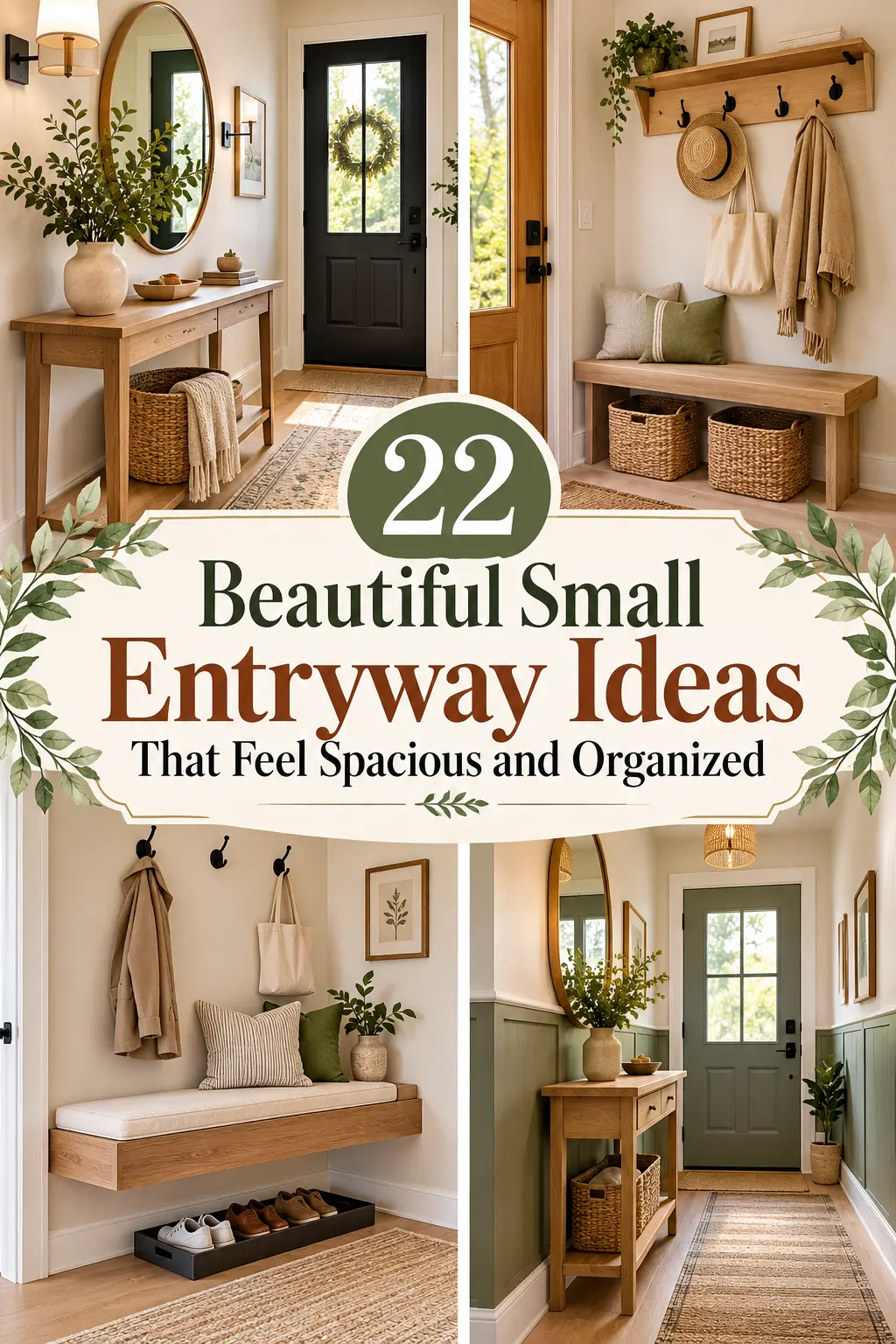
22 Beautiful Small Entryway Ideas That Feel Spacious and Organized
A small entryway has to do a lot with very little space. It’s the first thing you see when you walk through the front door, but it may also need to hold shoes, coats, keys, bags, and all the everyday items that tend to accumulate near the entrance. Without a thoughtful layout, even a lovely foyer can quickly feel cramped and cluttered.
The good news is that you don’t need a large foyer or a complete renovation to create a welcoming entrance. The right furniture proportions, a few smart storage solutions, lighter colors, and carefully chosen accessories can make a noticeable difference.
These 22 small entryway ideas combine attractive styling with practical organization. From floating shelves and round mirrors to narrow benches and concealed shoe storage, each idea offers a different way to make a compact entrance feel more open, comfortable, and put together. Whether you live in an apartment, a townhouse, or a smaller suburban home, you’ll find inspiration you can adapt to your available space and budget.
1. Choose a Slim Console Table to Keep the Floor Open
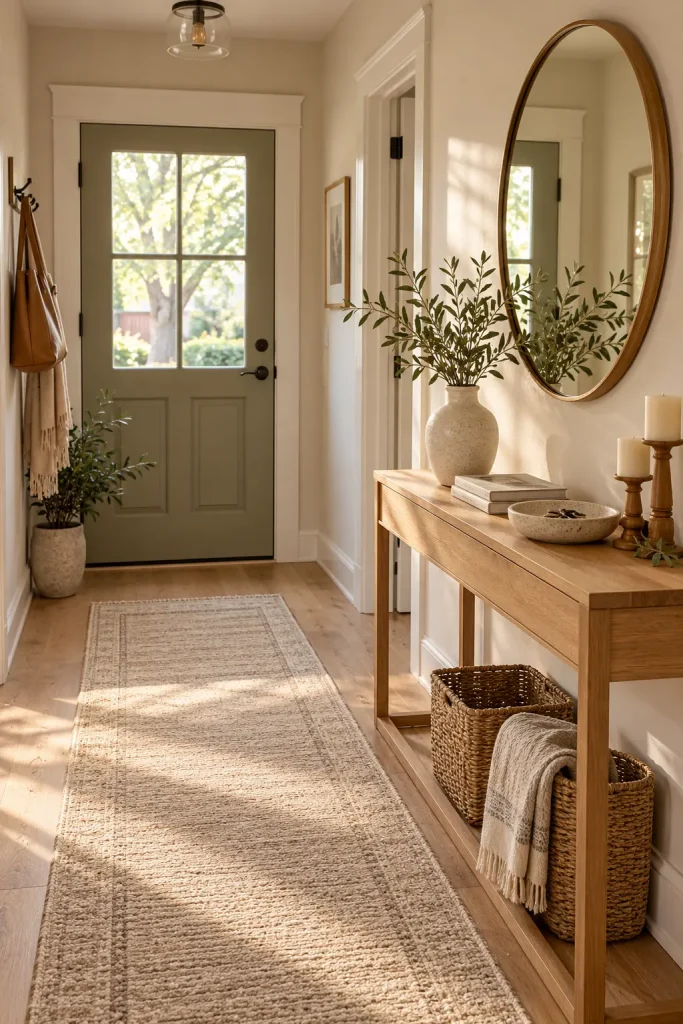
A slim console table gives a small entryway a defined focal point without taking over the room. Look for a design with a narrow top, open legs, and a simple silhouette that allows more of the floor to remain visible. Natural oak, warm white, and light walnut are excellent choices for a welcoming, understated entrance.
Style the surface with just a few useful accessories: a small ceramic vase, a shallow dish for keys, and perhaps a framed print leaning against the wall. Keeping the tabletop relatively clear makes the arrangement feel intentional rather than crowded.
How to make it work:
- Measure the available depth before purchasing furniture.
- Leave a comfortable, unobstructed walking path.
- Choose open legs instead of a bulky, solid base.
- Use one decorative accent rather than several small objects.
A console is especially useful in a narrow foyer where a full-size cabinet would interfere with movement.
2. Install a Floating Shelf Instead of a Full Table
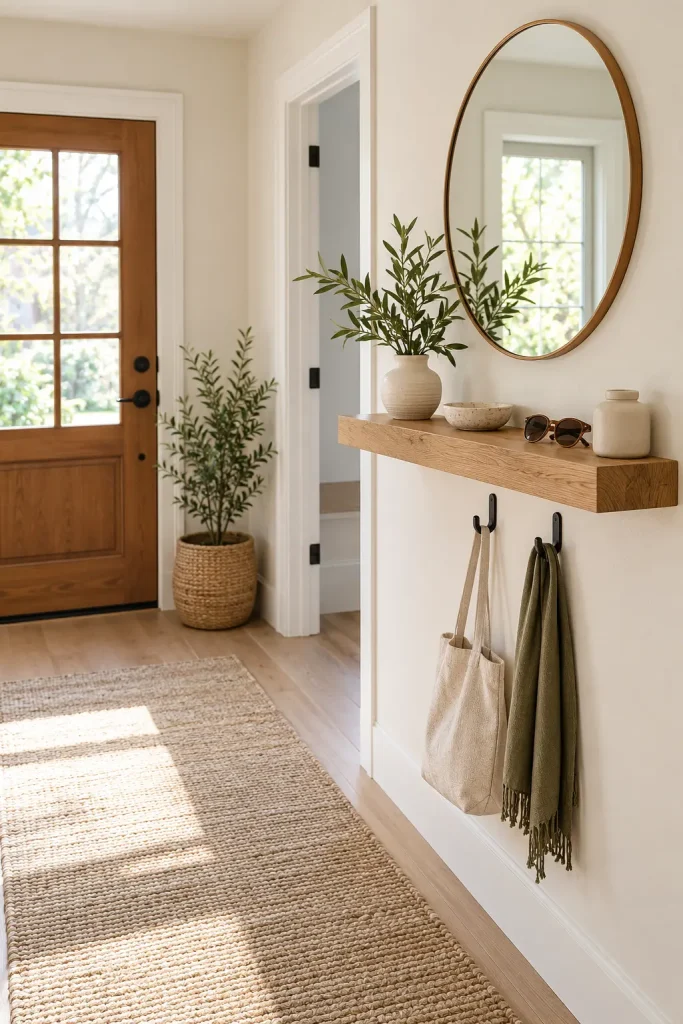
When floor space is extremely limited, a floating shelf can provide the convenience of an entryway table without adding another piece of furniture. Mounted directly to the wall, it creates a compact landing spot for keys, sunglasses, mail, and other everyday essentials.
A simple oak shelf looks warm against white walls, while a painted shelf can blend into the wall for a quieter appearance. Pair it with a small mirror or a single framed print, but avoid placing so many accessories on the shelf that it becomes difficult to use.
For an especially practical setup, install a few hooks underneath for keys or a lightweight everyday bag. Check the wall construction and use suitable anchors or secure the shelf into studs according to the installation instructions.
Quick Tip: In a very narrow entrance, a shallow shelf is often more useful than a deep table because it keeps the walking area clear.
3. Use a Large Round Mirror to Open Up the Space

A mirror is one of the simplest ways to make a small entryway feel brighter and more visually open. It reflects light and introduces another view of the room, helping a confined entrance feel less enclosed.
A large round mirror is particularly appealing because its curved outline softens the straight lines of door frames, walls, and rectangular furniture. Choose a thin black frame for contrast, a light oak frame for warmth, or a frameless design for a subtle contemporary look.
Position the mirror where it can reflect a window, a bright doorway, or an attractive part of the home. A mirror that reflects a crowded coat rack or an untidy corner may simply emphasize the clutter.
Do: Select a mirror with a size that relates comfortably to the furniture below it.
Don’t: Assume that the biggest possible mirror will always look best. Leave enough wall space around the frame to keep the arrangement balanced.
4. Add a Narrow Bench With Hidden Shoe Storage
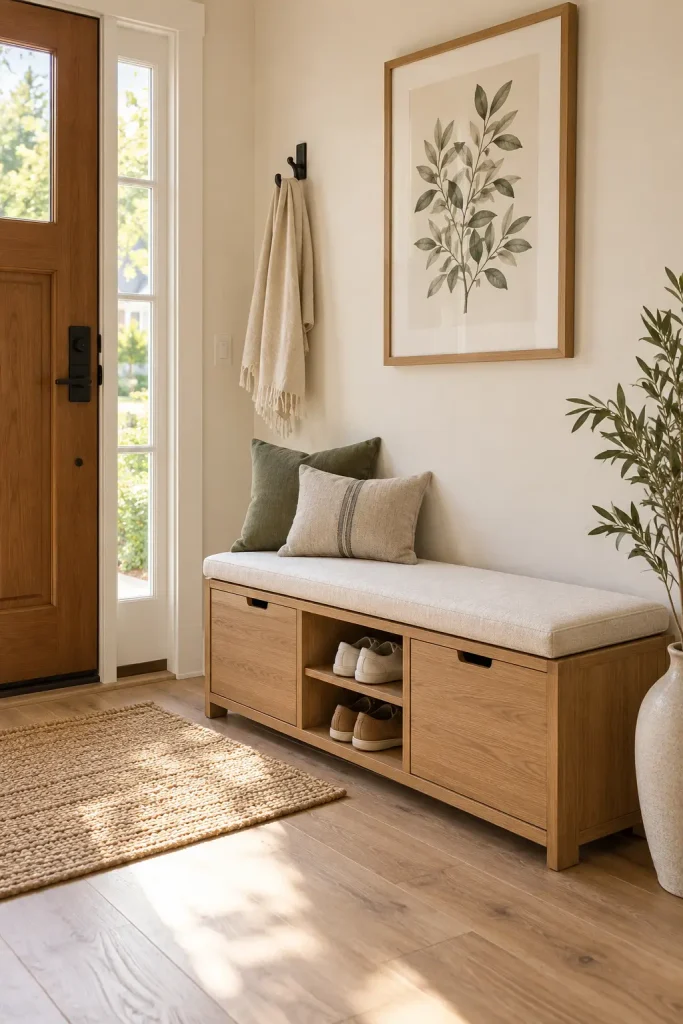
A small entryway often becomes cluttered because shoes have nowhere convenient to go. A narrow storage bench solves two problems at once: it provides a place to sit while putting on shoes and creates a designated area for keeping footwear organized.
Choose a bench with lift-up storage, enclosed compartments, or a discreet lower cabinet. A neutral upholstered cushion makes it comfortable, while a wood finish introduces warmth.
For households with several people, assign each person a compartment or basket. This simple arrangement makes it easier to return shoes to their proper place rather than leaving them scattered near the door.
Pay attention to the bench’s depth and the direction in which its doors or lid open. In a tight passage, a compact design with front-facing access may be easier to use than a large storage chest.
5. Create a Simple Wall-Mounted Drop Zone
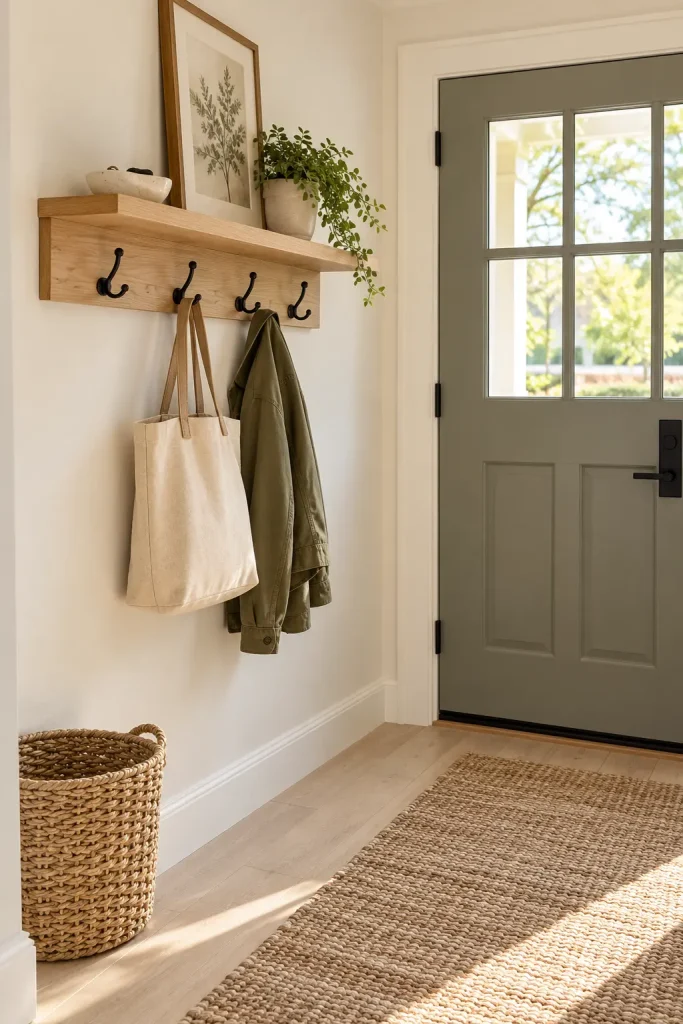
Not every entryway needs a table. A thoughtfully arranged drop zone can use a small section of wall to keep everyday essentials organized without taking up valuable floor space.
Combine a few sturdy hooks with a compact shelf and a small key holder. The shelf can hold sunglasses or a wallet, while hooks accommodate a handbag, a lightweight jacket, or a tote bag. Keep the number of items on display limited so the arrangement remains tidy.
This setup works especially well in apartments, narrow hallways, and homes where the front door opens directly into a shared living area.
What to include:
- Three or four hooks for frequently used items.
- A shallow shelf for keys and small accessories.
- A small tray to contain loose objects.
- A designated hook or basket for each household member, if space allows.
The goal is to make putting things away easier than leaving them on a chair or countertop.
6. Paint the Entryway in Warm White or Soft Ivory

Color can influence how open a small entrance feels. Warm white, soft ivory, and pale neutral shades create a bright backdrop that works with many furniture styles and decorative finishes.
Painting the walls and trim in closely related tones can also reduce visual interruptions. Rather than drawing attention to every corner, the consistent color allows the eye to move more smoothly through the space.
To keep the result from feeling flat, introduce subtle differences through natural materials. A woven basket, oak bench, textured runner, or handmade ceramic vase can add depth without requiring strong color contrasts.
If your entryway receives very little daylight, test paint samples under the lighting you actually use. Some whites appear creamy, gray, or yellow depending on the light and neighboring materials.
7. Hang a Full-Length Mirror Near the Door
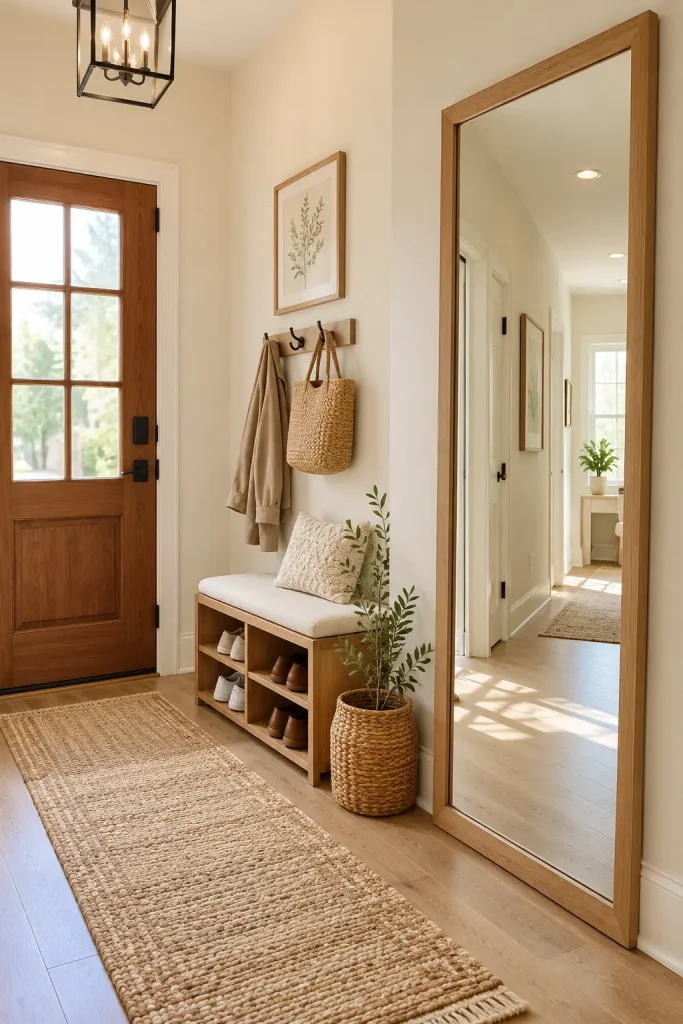
A full-length mirror can make a narrow entrance feel taller while giving you a convenient place to check your outfit before leaving home. Unlike a small decorative mirror, it introduces a larger reflective surface that can brighten the room and visually extend the floor.
If you own your home, consider a slim wall-mounted mirror. Renters can often achieve a similar look with a freestanding design, provided there is enough room to position it safely without obstructing the walkway.
Choose a narrow frame in black, light wood, or brushed metal. Avoid surrounding the mirror with too many decorative objects, as the reflected view already contributes visual detail.
Best placement: A side wall near the front door or the end of a short hallway, provided the mirror does not interfere with doors or circulation.
8. Install Hooks on the Back of the Front Door
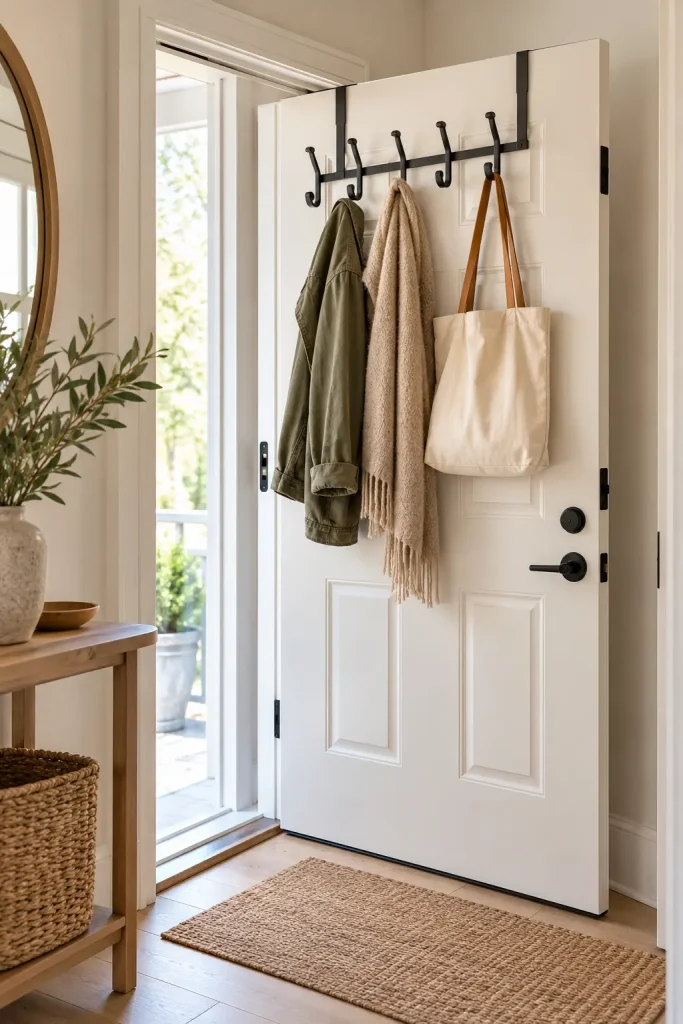
When the entryway walls are already occupied, the back of the front door can provide additional storage. A suitable over-the-door hook rack makes room for lightweight jackets, scarves, hats, and everyday bags without requiring a separate coat stand.
This is particularly useful in apartments and rental homes where permanent wall-mounted storage may not be practical.
Choose a rack designed for your particular door thickness and check that it allows the door to close properly. Some doors have limited clearance around the frame, so measure before buying.
Keep the arrangement selective. Hanging every coat and bag on the same rack can make the entrance feel crowded, even when the floor is completely clear.
Quick Tip: Reserve the most accessible hooks for items you use daily. Store seasonal accessories elsewhere to prevent the door from becoming a catchall.
9. Use a Runner to Guide the Eye Through the Entryway
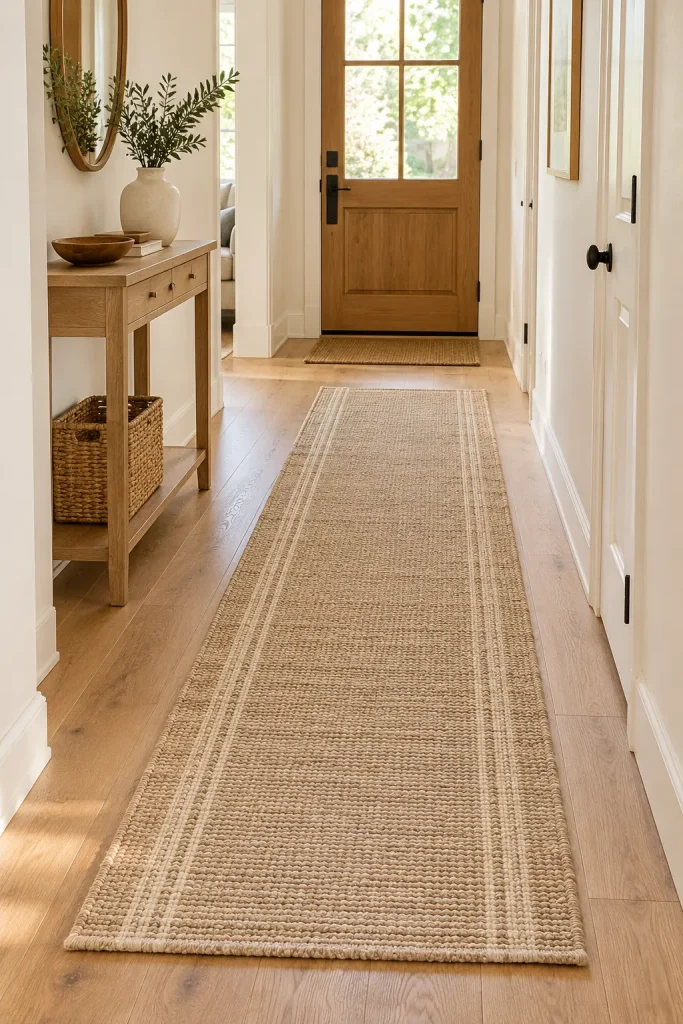
A runner can make a narrow entryway feel more intentional by creating a clear visual path from the front door into the home. It adds texture and warmth without taking up any additional furniture space.
For a light and airy look, consider a beige, oatmeal, or softly patterned runner. If your entrance receives frequent foot traffic, a durable, easy-to-clean option may be more practical than a delicate decorative rug.
Proportion matters. A runner that is too wide can make a narrow hallway feel crowded, while one that is too short may look disconnected from the surrounding space.
When choosing a runner, consider:
- The width of the walkway.
- Whether the door can open without catching the rug.
- How easily the material can be cleaned.
- Whether a suitable nonslip backing or rug pad is needed.
The runner should complement the entrance rather than compete with the furniture and wall decor.
10. Choose a Closed Shoe Cabinet for a Clutter-Free Look
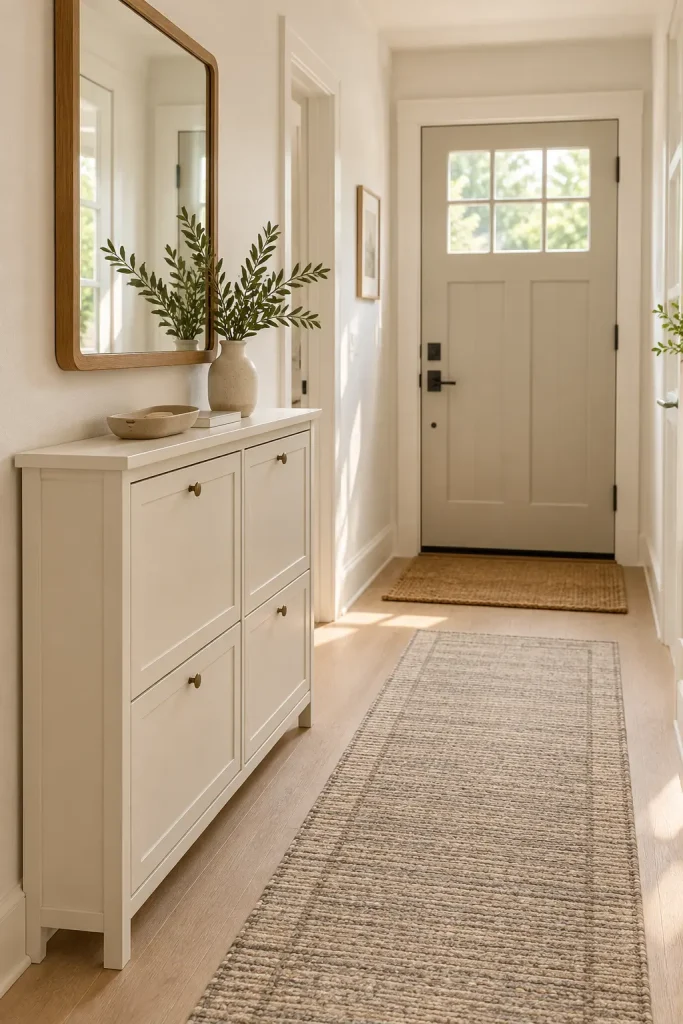
Open shoe racks are convenient, but they can make a small entrance look busy when several pairs of shoes are visible at once. A shallow, closed shoe cabinet offers a cleaner alternative by concealing everyday footwear behind simple doors or tilt-out compartments.
Look for a cabinet designed specifically for narrow spaces. Many conventional storage cabinets are too deep for a tight hallway, so check the dimensions carefully before committing to a purchase.
A white or cream cabinet can blend into a light-colored wall, while pale oak adds warmth without creating a heavy visual block.
How to style it
- Place the cabinet against a wall that does not interfere with the door swing.
- Add a small tray for keys or a wallet if the top is usable.
- Hang a modest framed print or mirror above it.
- Keep the floor around the cabinet clear.
Choose a design with adequate ventilation and storage capacity for the types of shoes you actually own. Very tall boots, for example, may not fit in shallow tilt-out compartments.
11. Add a Built-In Bench With Wall Hooks
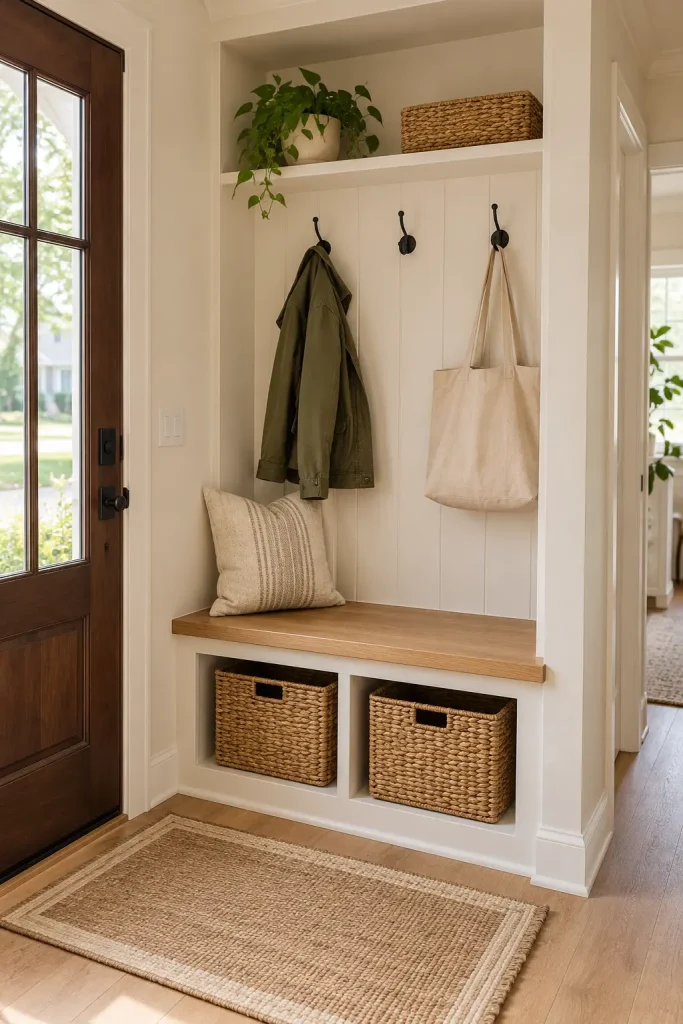
If your entryway has a small recess or an unused section of wall, a built-in bench can turn it into a compact mudroom-style area.
A bench fitted between two walls makes efficient use of the available width. Above it, a short row of hooks provides a designated place for coats and bags. Baskets beneath the seat can hold shoes, gloves, or seasonal accessories.
Paint the bench and surrounding cabinetry in a light neutral shade for a unified appearance. A wood seat or simple cushion can introduce warmth and make the space more comfortable.
This solution can be particularly useful for families, but it doesn’t need to be elaborate. Even a short bench with two baskets and a few hooks can create a useful landing zone.
Common Mistake: Installing too many hooks in a narrow recess.
Better Approach: Leave enough room between hanging items so coats do not overlap excessively or spill into the walking area.
12. Use Vertical Storage to Make the Most of Wall Space
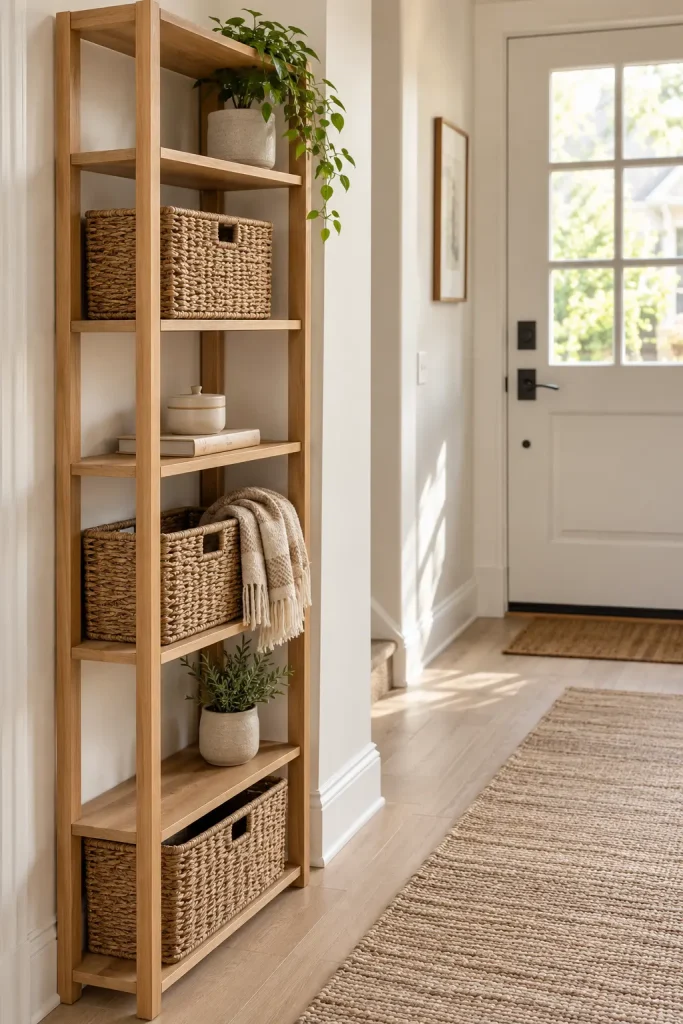
In a small entryway, the floor is valuable real estate. Moving storage upward can free that area while giving everyday belongings a more organized home.
A tall, narrow shelving unit can hold baskets, hats, gloves, and small accessories without requiring the width of a conventional cabinet. Wall-mounted shelves offer another option when a freestanding unit would interfere with the walkway.
The trick is to balance accessibility with appearance. Frequently used items belong at a comfortable height, while seasonal accessories can occupy higher shelves. Use matching or coordinating baskets to keep smaller belongings contained.
For a rental, consider a freestanding vertical unit or shelves installed using an appropriate mounting system approved for the wall and expected load.
13. Hang a Small Gallery Wall With Matching Frames

A small entryway doesn’t have to be purely functional. A carefully planned gallery wall can give the entrance personality without using any floor space.
For a cohesive appearance, choose three or four prints with a related color palette. Botanical illustrations, understated landscapes, architectural sketches, and black-and-white photography all work well with neutral entryway decor.
Use matching frames to create visual consistency. Light oak frames suit a warm, natural interior, while thin black frames provide a sharper contrast against ivory walls.
In a particularly narrow hallway, arrange the artwork vertically rather than spreading it across the entire wall. This can create a more deliberate focal point without making the passage feel busy.
Styling tip: Leave enough space between the frames to distinguish each piece. A small gallery wall usually looks more intentional when the arrangement has a clear shape rather than following an improvised pattern.
14. Create a Minimalist Entryway With Just the Essentials
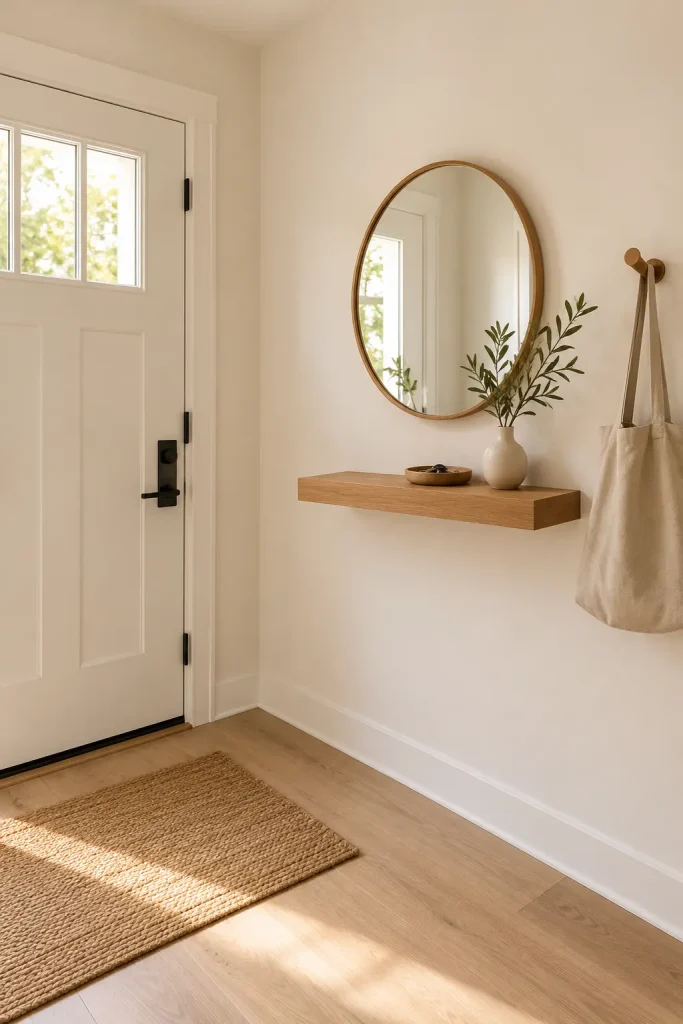
Sometimes the most effective way to make a small entryway feel larger is to remove unnecessary objects rather than add new furniture.
A minimalist entrance focuses on a few useful pieces: perhaps a small shelf, one mirror, a hook for a frequently used bag, and a simple runner. Each item has a clear purpose, and the surrounding space remains open.
This approach is especially suitable for studio apartments, narrow townhouses, and entrances that open directly into the living room.
Minimalism doesn’t have to mean a completely empty room. Natural textures, warm lighting, and one thoughtful decorative object can keep the entrance from feeling cold or unfinished.
Try this simple editing process:
- Remove everything that doesn’t belong in the entryway.
- Identify the everyday items that genuinely need to stay.
- Give each item a designated storage location.
- Add one or two decorative elements that complement the room.
- Keep the floor and primary walking path clear.
The result should feel comfortable and personal, not like a space where you’re afraid to put anything down.
15. Use a Corner for a Compact Entryway Arrangement
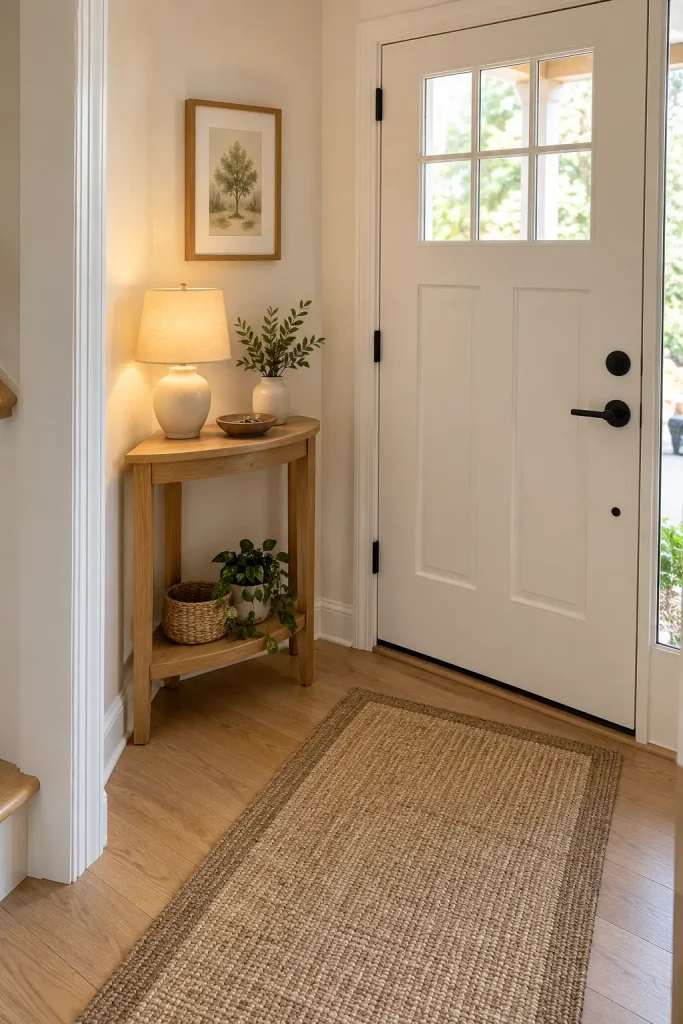
An awkward corner near the front door can become useful with a little planning. Instead of filling it with a large cabinet, choose a small corner shelf, a compact triangular console, or a narrow vertical storage unit designed to fit the available footprint.
This arrangement can work well in older homes where the entrance isn’t a separate room and the front door opens into a living or dining area.
Keep the styling simple. A small lamp, a ceramic bowl, or a petite plant can make the corner feel intentional without overwhelming it.
Before choosing furniture, check the door swing and the direction people naturally walk through the entrance. A corner arrangement should make the room more functional, not create a new obstacle.
16. Add a Small Accent Chair When Space Allows
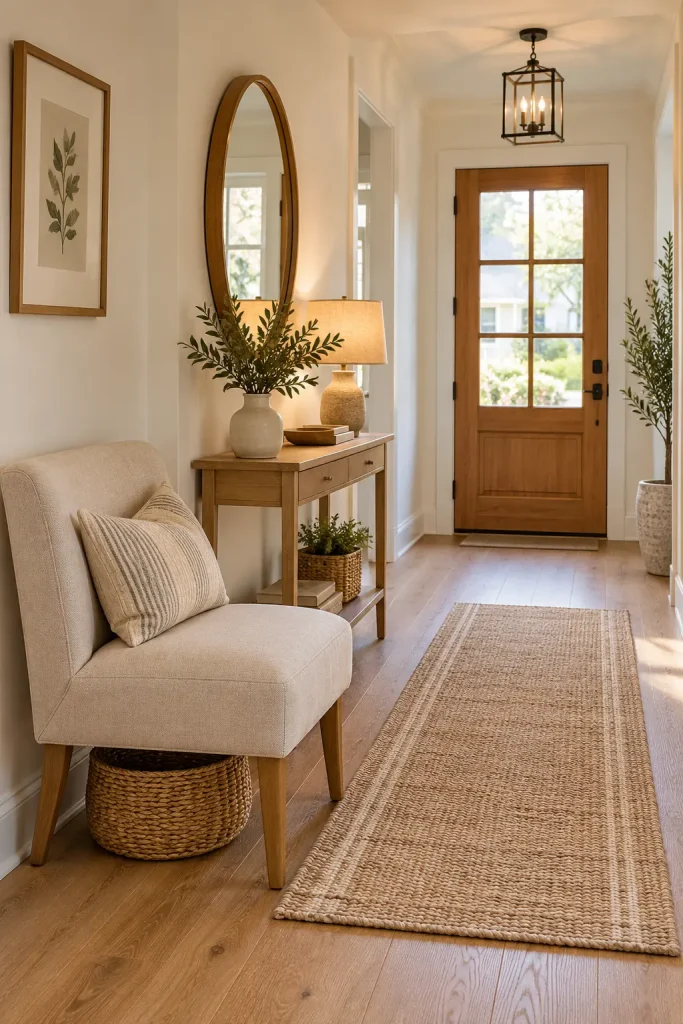
If your entrance is slightly wider than a typical narrow hallway, a small accent chair can create a comfortable place to sit while putting on shoes.
The key is selecting a chair with a compact footprint. A lightweight wooden chair, a simple armless design, or a small upholstered seat can provide function without visually dominating the space.
Choose a fabric that coordinates with the surrounding colors. Cream, oatmeal, muted sage, and soft gray can all work well with natural wood and warm white walls.
Avoid placing a large armchair in a tight entrance simply because it looks attractive. The chair should fit naturally into the layout, leaving enough room for the front door to open and for people to pass comfortably.
Do / Don’t
- Do: Choose a chair with a narrow profile and visible legs.
- Don’t: Add an oversized side table, floor lamp, and several cushions around it.
- Do: Pair the chair with a small basket if you need a place for slippers.
- Don’t: Let the seating area become a storage pile for bags and clothing.
17. Choose a Wall-Mounted Coat Rack With a Shelf
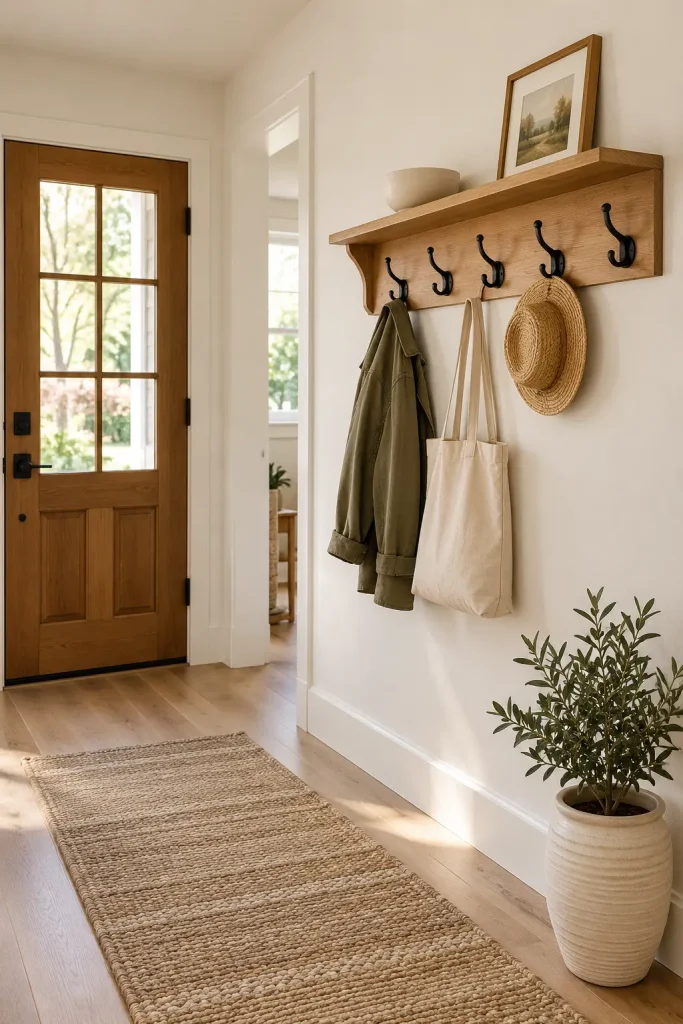
A wall-mounted coat rack with an integrated shelf combines two useful functions in one compact piece. The hooks hold coats, hats, and bags, while the shelf provides a small space for accessories or a few decorative objects.
This arrangement is ideal when you need more organization than a row of hooks can offer but don’t have room for a coat closet.
Choose a design with a relatively shallow shelf and hooks that don’t project too far into the passage. Natural oak creates a warm, relaxed look, while a painted white rack can blend into the wall.
For a family entrance, assign individual hooks to household members. Keeping each person’s belongings together can make the area easier to maintain.
Quick Tip: Avoid placing fragile decor on a shelf directly above frequently used hooks if coats and bags could knock the objects off.
18. Use Baskets to Keep Everyday Clutter Under Control
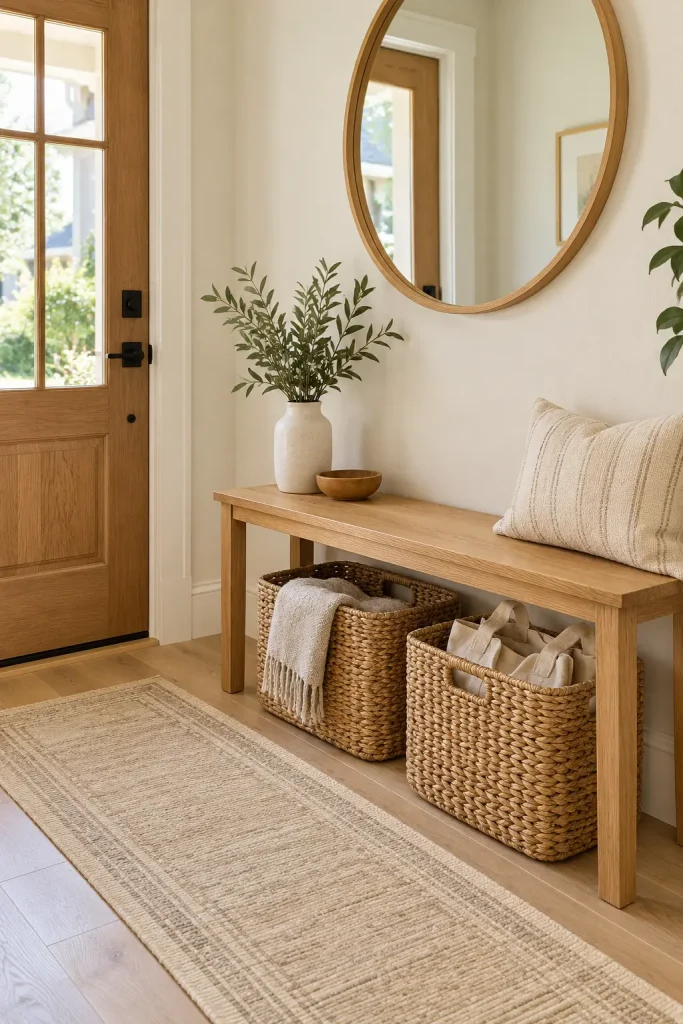
Baskets are a practical way to organize the smaller items that tend to accumulate near the entrance. Gloves, scarves, dog-walking accessories, reusable shopping bags, and other everyday belongings can all have a designated place.
In a small entryway, choose baskets that fit neatly beneath an existing bench or console rather than introducing a separate storage unit.
Natural woven baskets add texture to neutral interiors. Fabric bins can offer a softer appearance, while lidded baskets help conceal contents when the storage area is visible from the living room.
The most useful arrangement depends on what your household actually needs. A basket for frequently used items should remain easy to reach, while seasonal accessories can be stored elsewhere.
A simple basket system:
- One basket for everyday accessories.
- One basket for reusable shopping bags.
- One smaller container for pet-walking essentials, if needed.
Don’t fill every available corner with baskets. A few appropriately sized containers usually look better and are easier to maintain than a collection of mismatched storage pieces.
19. Install Simple Wall Sconces to Free Up Surface Space
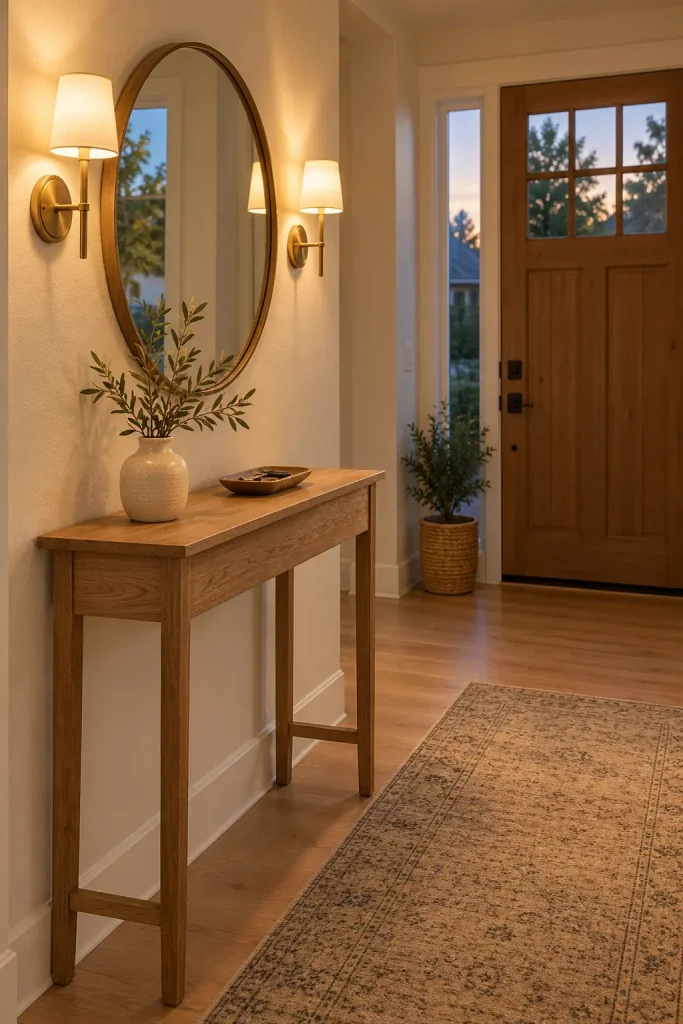
Lighting can improve a small entryway without adding furniture. Wall sconces are particularly useful when a narrow console has little room for a table lamp or when the entrance lacks sufficient natural light.
A pair of compact sconces can frame a mirror or artwork, while a single fixture may be enough for a very small foyer. Choose a style that suits the rest of the home, such as understated black metal, warm brass, or a simple white shade.
If the entryway is part of a rental, plug-in sconces may offer an alternative to hardwired fixtures, provided cords can be routed safely without crossing the walking path.
Think about how the lighting will be used. A warm, comfortable glow can make the entrance more welcoming in the evening, while adequate general illumination helps people find keys and navigate the doorway.
For hardwired installations, use a qualified electrician where appropriate and follow applicable electrical requirements.
20. Add a Narrow Vertical Coat Stand
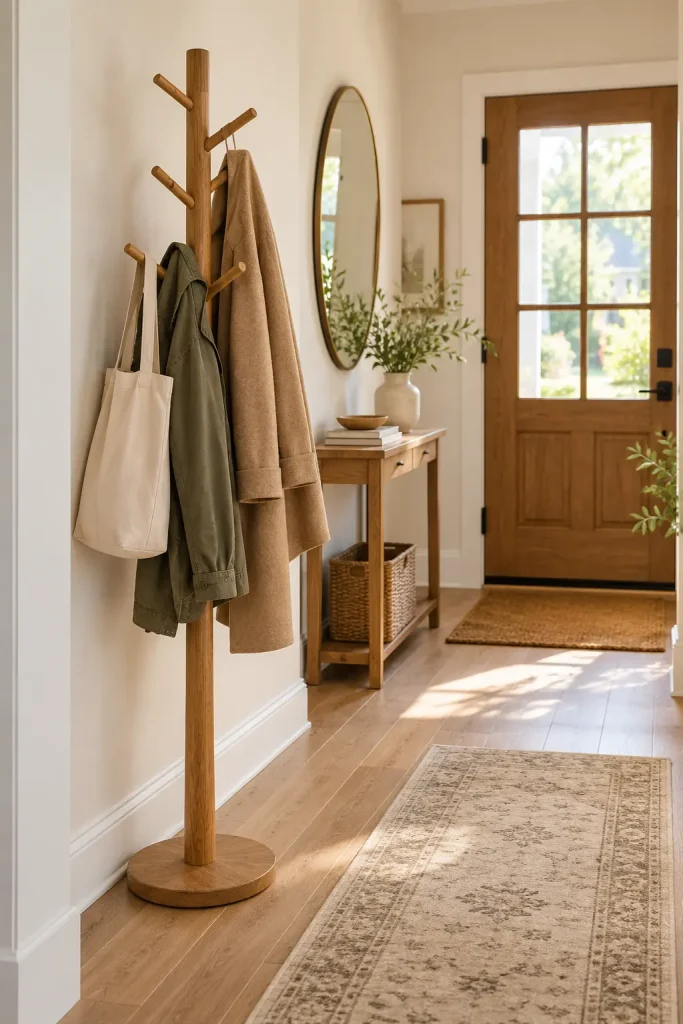
A freestanding coat stand can be useful when you cannot install hooks on the walls or prefer a flexible storage solution. It can move with you when you rearrange the entrance or relocate to another room when needed.
Choose a design with a small footprint and a stable base. Natural wood creates a softer, more traditional look, while a slim black metal stand suits contemporary interiors.
The main consideration is how much space the stand occupies once coats and bags are hanging from it. Even a narrow stand can feel bulky when every hook is filled.
Position it near a wall or in an unused corner, leaving enough room to walk past comfortably. For a particularly small entrance, keep only the most frequently used outerwear on display.
21. Use a Two-Tone Entryway for Subtle Visual Interest
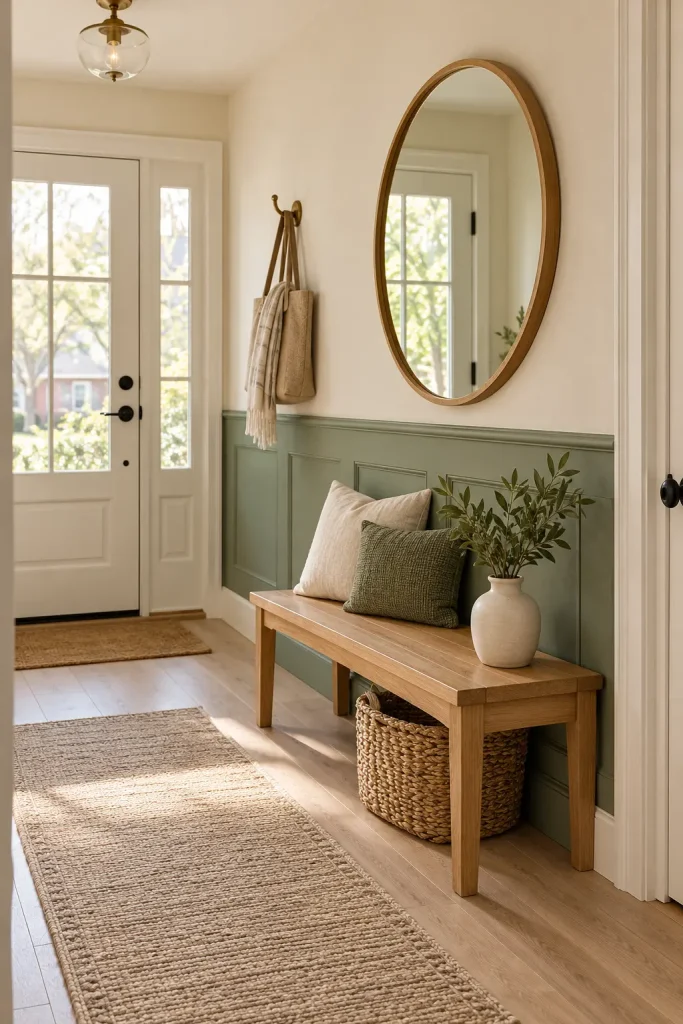
A two-tone wall treatment can give a small entrance character without requiring additional accessories. Pairing a light upper wall with a slightly deeper lower section creates a defined architectural detail while maintaining an airy overall appearance.
For example, warm white above muted sage green, soft taupe, or pale greige can produce a gentle contrast. The darker lower section can also help visually distinguish the entryway from an adjoining room.
Another option is to paint the door and trim in a complementary shade while keeping the walls light.
The important thing is to choose colors that work with the existing flooring, furniture, and natural light. A dramatic dark color can be attractive, but it may feel overpowering in an entrance with very little daylight.
For renters, removable wall treatments or artwork can provide a similar sense of contrast without permanent painting.
Styling tip: Keep furniture finishes simple when the walls already provide a strong visual feature. A slim oak bench or a small black-framed mirror may be all the additional decoration you need.
22. Keep the Floor Clear With a Floating Entryway Bench
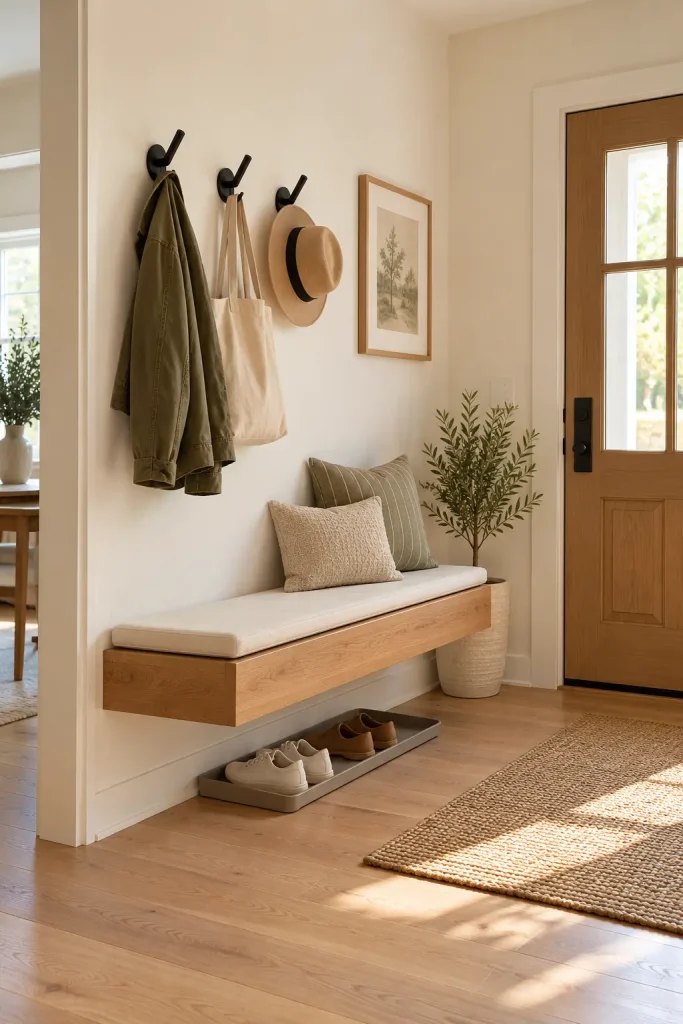
A floating bench creates a light, contemporary look by leaving the floor visible beneath the seat. Because it doesn’t have conventional legs reaching the ground, the arrangement can feel less visually heavy than a solid storage bench.
This design works particularly well in a modern apartment or a small entryway with clean lines and limited decorative space.
Choose a sturdy wall-mounted bench designed for the expected load, and ensure that it is securely attached to suitable structural support. A floating appearance should never come at the expense of safe installation.
Keep the styling understated. A slim seat cushion, a few wall hooks, and a small shoe tray below may provide all the functionality the space needs.
Unlike a large cabinet, a floating bench allows more of the floor to remain visible, helping the entrance feel less crowded. The space beneath it can also provide a designated location for a few pairs of everyday shoes.