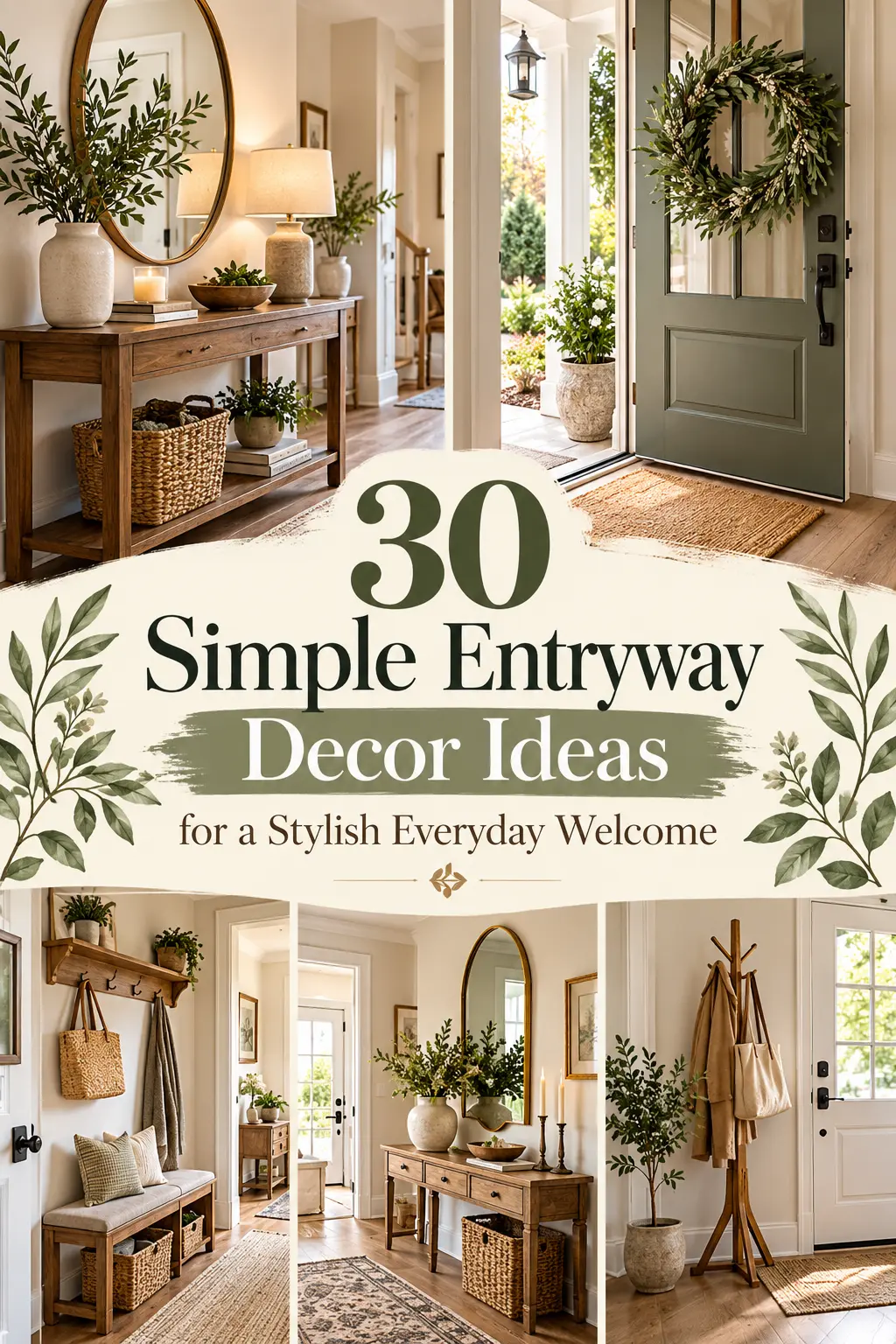
30 Simple Entryway Decor Ideas for a Stylish Everyday Welcome
Your entryway sets the tone for the rest of your home. It’s the first space you see when you walk through the door and the last place you pass before heading out, so it deserves more attention than a pile of shoes and a collection of keys. The good news is that creating a welcoming entrance doesn’t require a major renovation or an expensive furniture makeover.
With a few thoughtful choices, even a narrow hallway, small apartment entrance, or compact foyer can feel organized and inviting. A well-placed mirror can brighten the space, a slim console can provide a practical landing spot, and a textured runner can make a plain hallway feel more finished.
These 30 simple entryway decor ideas combine everyday functionality with approachable style. From natural wood furniture and woven baskets to statement lighting and easy seasonal updates, you’ll find inspiration for creating an entrance that looks beautiful while working for your daily routine.
1. Style a Slim Console Table With Everyday Essentials
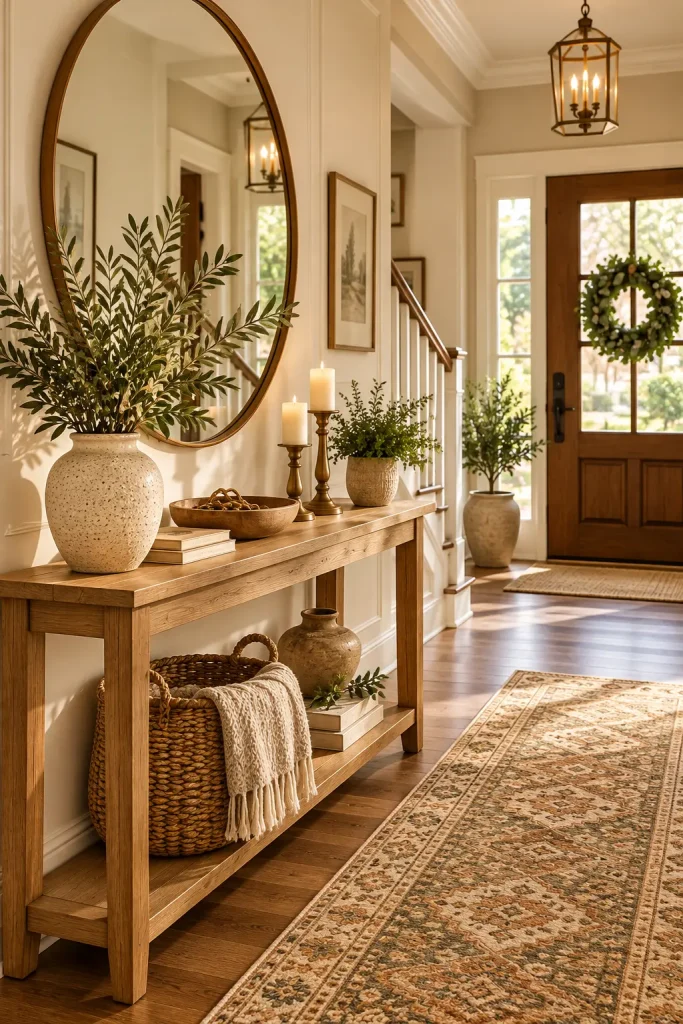
A slim console table is one of the easiest ways to make an entryway feel intentional. It creates a dedicated place for keys, mail, sunglasses, and decorative accessories without requiring a large foyer.
Choose a narrow table in natural oak, walnut, or painted wood, depending on the rest of your home’s style. Above it, hang a mirror or a piece of artwork to establish a clear focal point. A ceramic vase, a small catchall bowl, and one attractive decorative object are usually enough to complete the arrangement.
How to recreate the look:
- Choose a table that leaves a comfortable walking path.
- Use a shallow tray to keep everyday essentials together.
- Add one taller object, such as a vase with leafy branches.
- Keep the remaining surface relatively uncluttered.
For a rental or apartment, a freestanding console is especially useful because it doesn’t require permanent installation.
2. Hang a Round Mirror to Open Up the Space
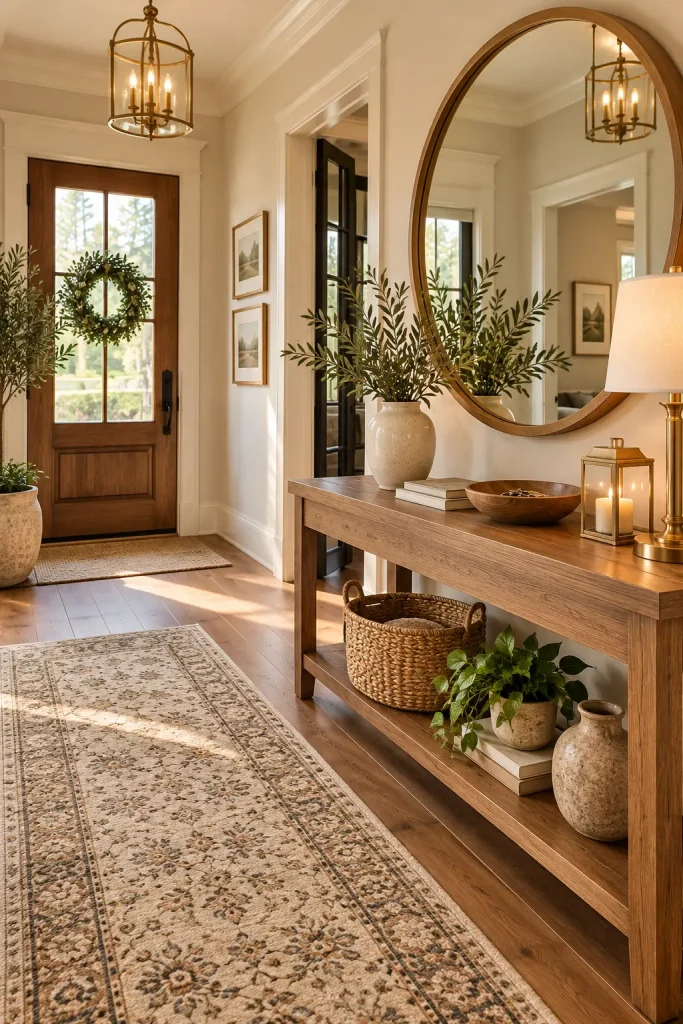
A round mirror introduces a softer shape into an entryway filled with straight doorframes, rectangular doors, and horizontal furniture. It can also reflect natural light from a nearby window, helping the entrance feel brighter.
For a relaxed, organic look, choose a frameless mirror or one with a light oak frame. A thin black frame works well in modern spaces, while antique brass adds warmth to traditional interiors.
Position the mirror above a console or on a wall where it can be used comfortably before leaving home. If the entryway is narrow, avoid pairing an oversized mirror with bulky furniture.
Quick Tip: A mirror reflects whatever sits opposite it, so consider the view before choosing its location. Reflecting a window or an attractive part of the room can be more effective than reflecting a cluttered corner.
3. Add a Small Bench for Comfortable Everyday Use
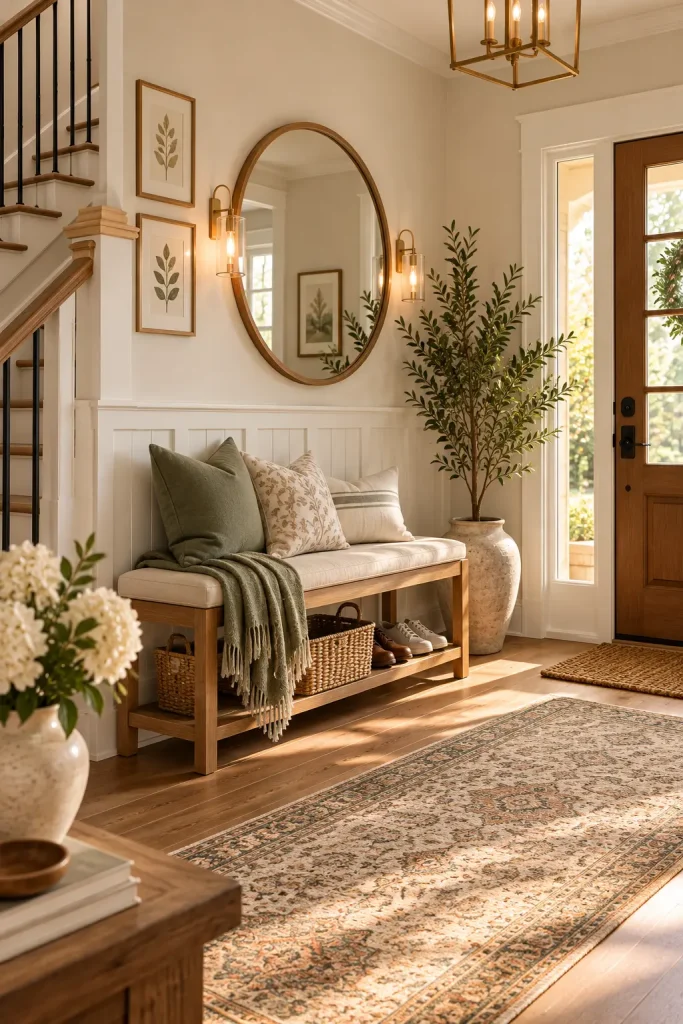
A bench makes an entrance more practical, especially for households where people regularly change shoes near the door. It also introduces a welcoming furniture element without requiring the footprint of a full console table.
Look for a narrow wooden bench, a simple upholstered seat, or a compact design with a lower shelf. A cream cushion softens a wooden bench, while a striped cushion adds a little pattern without overwhelming the space.
If you have room underneath, slide in a pair of woven baskets for shoes, reusable shopping bags, or seasonal accessories.
Before buying, measure the available wall and check how far the door swings open. The bench should make getting ready easier, not turn the entrance into an obstacle course.
4. Use Wall Hooks to Keep Bags and Coats Organized

Wall hooks are an easy alternative to bulky coat racks. They’re particularly helpful in small homes, apartments, and narrow hallways where floor space is limited.
Choose hooks that suit the room’s style: matte black for a modern entrance, brass for a warmer traditional look, or natural wood for a relaxed Scandinavian feel. Arrange them in a neat horizontal line or use a short row of individual hooks.
A useful arrangement might include:
- One hook for a frequently used coat.
- Another for a handbag or tote.
- Lower hooks for children’s backpacks, if appropriate.
- A separate spot for a lightweight umbrella or dog leash.
Common Mistake: Installing hooks without accounting for the length of hanging coats. Check that garments won’t drag on the floor or interfere with nearby furniture.
5. Lay Down a Runner to Define the Entryway
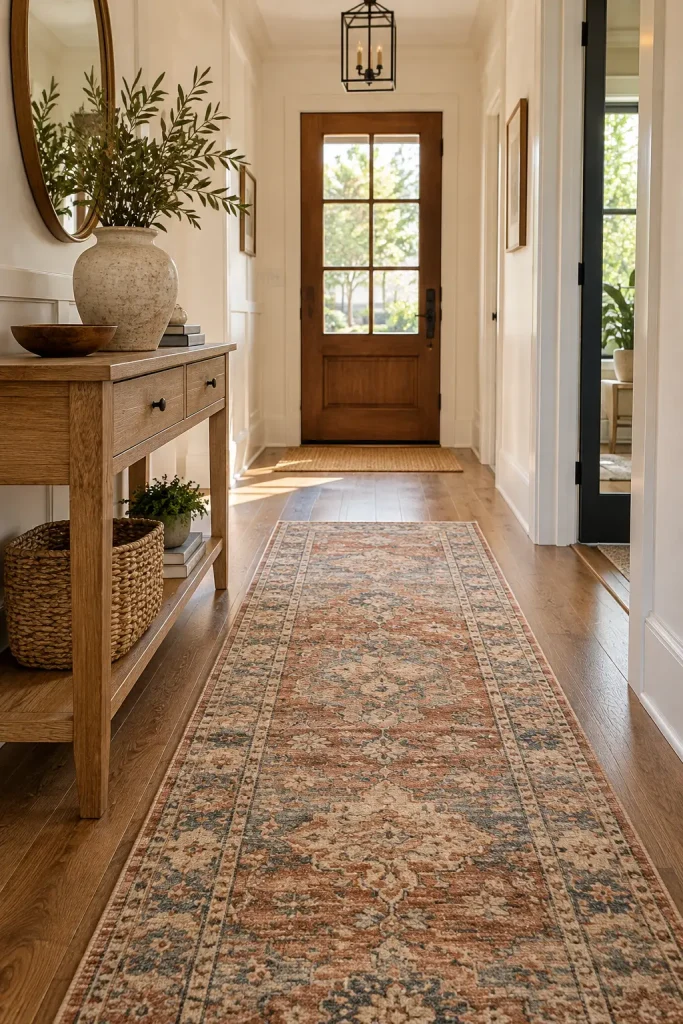
A runner can make an entryway feel like a finished part of the home rather than an overlooked passage. It introduces color, pattern, and texture while visually connecting the front door to the adjoining rooms.
For a calm interior, consider a muted vintage-style pattern in faded blue, rust, beige, or sage. A simple striped runner works well in a coastal or farmhouse-inspired home, while a low-pile geometric design suits a contemporary space.
Practicality matters as much as appearance. Choose a rug that’s appropriate for the amount of foot traffic the entrance receives and easy to clean. Use a suitable nonslip rug pad, especially on smooth flooring, and make sure the runner doesn’t interfere with door clearance.
For a very short entry, a small rectangular mat may be more proportionate than a long runner.
6. Introduce Woven Baskets for Hidden Storage
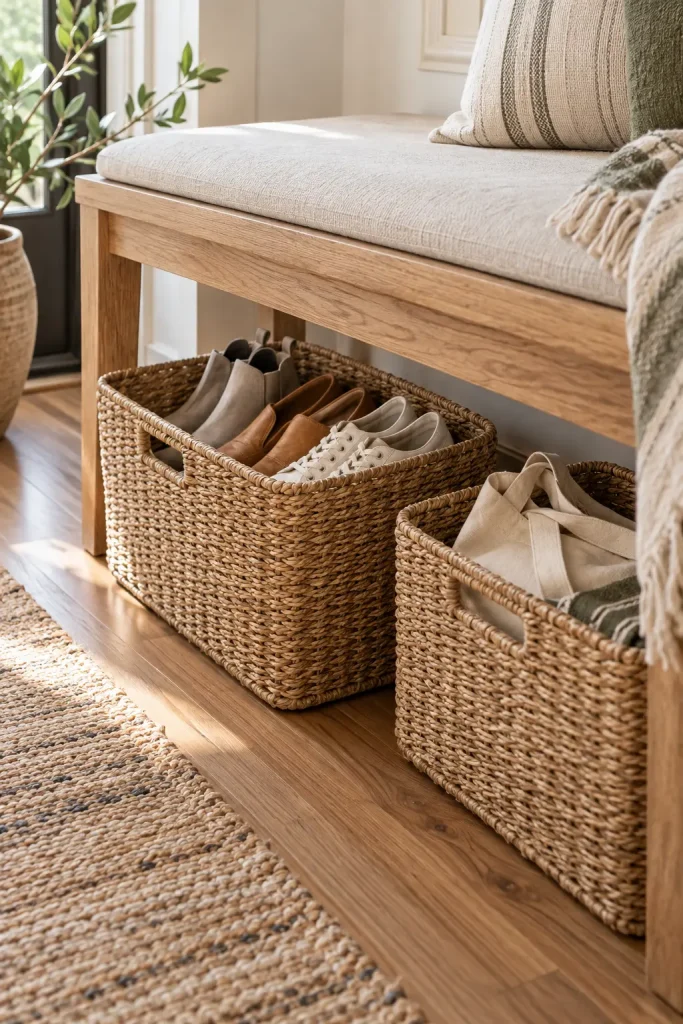
Woven baskets bring natural texture to an entryway while concealing the everyday items that can make the space look messy. They’re especially useful beneath a bench, beside a console, or inside an open cubby.
Use one larger basket for shoes and a smaller one for hats, gloves, or reusable shopping bags. Natural seagrass, water hyacinth, and similar woven materials create a relaxed appearance, while structured fabric bins offer a cleaner look in modern interiors.
For a coordinated arrangement, choose baskets with similar tones but different sizes. You don’t need a matching set; two or three complementary pieces can look more natural.
7. Decorate With a Tall Vase and Fresh-Looking Branches
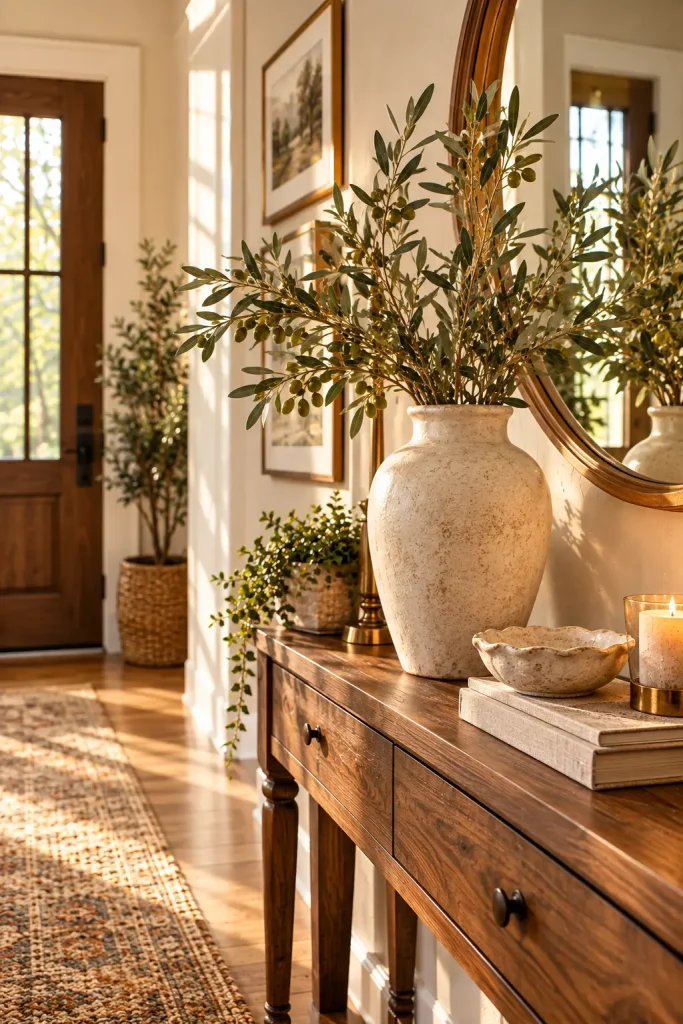
You don’t need a large collection of accessories to give an entrance personality. A single tall vase with branches can create a strong focal point while keeping the rest of the surface clear.
Choose a matte ceramic vase, a handmade stoneware vessel, or a simple glass container. Olive branches, leafy stems, or other suitable seasonal greenery can introduce movement and a natural touch.
On a console, position the vase slightly to one side rather than placing it precisely in the center. This leaves room for a small bowl or another useful object.
For a lower-maintenance arrangement, use realistic faux branches. Keep their scale appropriate to the space, particularly if the console sits beneath a low mirror or artwork.
8. Create a Simple Gallery Wall
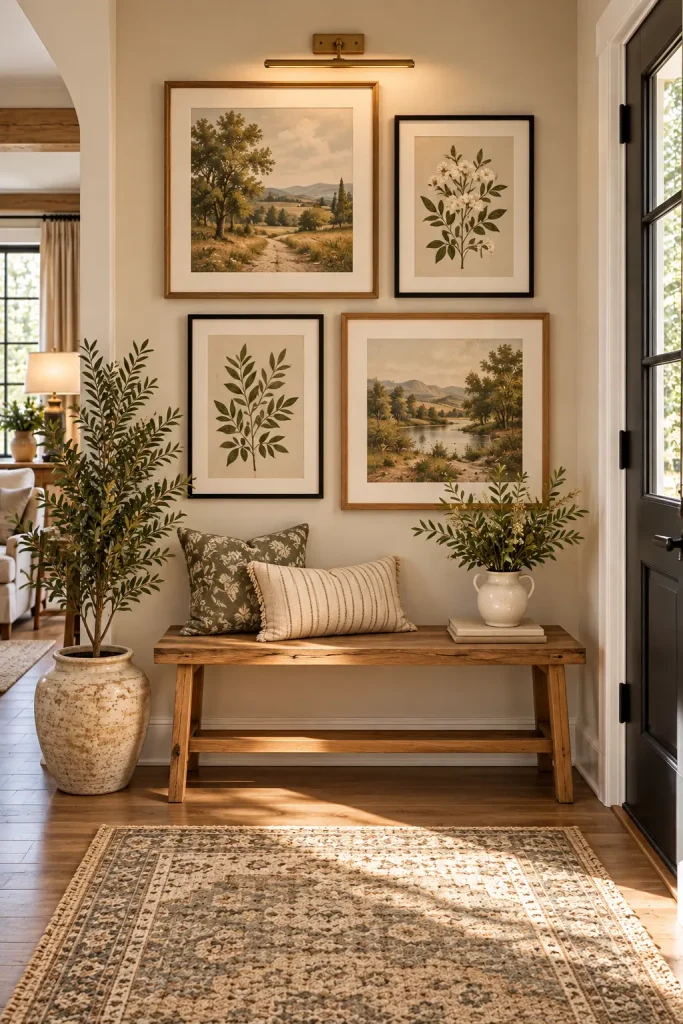
A gallery wall can give a plain entryway a personal, collected appearance. It’s a useful option when you don’t have room for additional furniture but want the entrance to feel decorated.
Choose two to five pieces depending on the available wall space. Botanical prints, landscape photography, abstract artwork, and family photographs can work together when they share a consistent color palette.
For a relaxed arrangement, mix a few frame sizes while keeping the gaps between frames reasonably consistent. Light wood frames create warmth, black frames provide contrast, and thin brass frames add a traditional touch.
If you’re renting, removable picture-hanging solutions may be suitable for some lightweight frames. Check the product’s weight limits and your lease requirements before installation.
Quick Tip: Lay the arrangement out on the floor first. This makes it easier to adjust the spacing before putting anything on the wall.
9. Make the Front Door a Decorative Feature
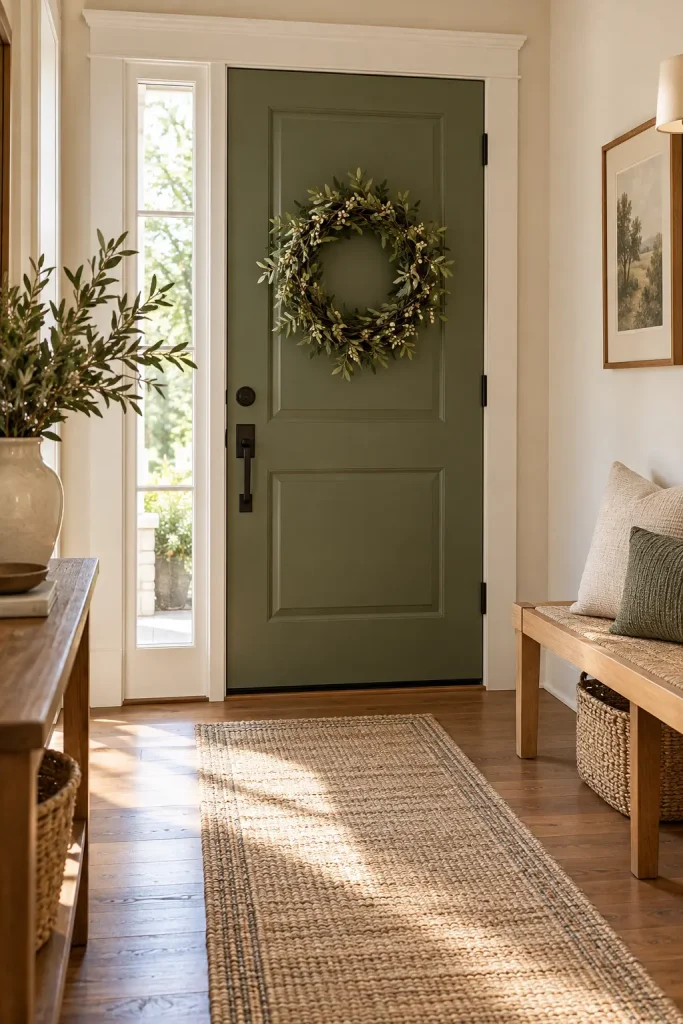
The front door itself can become an important part of your entryway design. A fresh coat of paint, updated hardware, or a simple wreath can make the entrance feel more considered without changing the entire room.
Inside the house, a painted door in deep olive, muted navy, charcoal, or warm white can create a focal point. Choose a color that works with the adjoining walls and flooring rather than treating the door as an isolated feature.
If painting isn’t an option, focus on the hardware and surrounding details. A coordinated door handle, clean trim, and a simple natural wreath can make a noticeable difference.
For renters, removable seasonal decorations and easy-to-reverse styling changes may be the better choice.
10. Use a Small Tray to Control Everyday Clutter
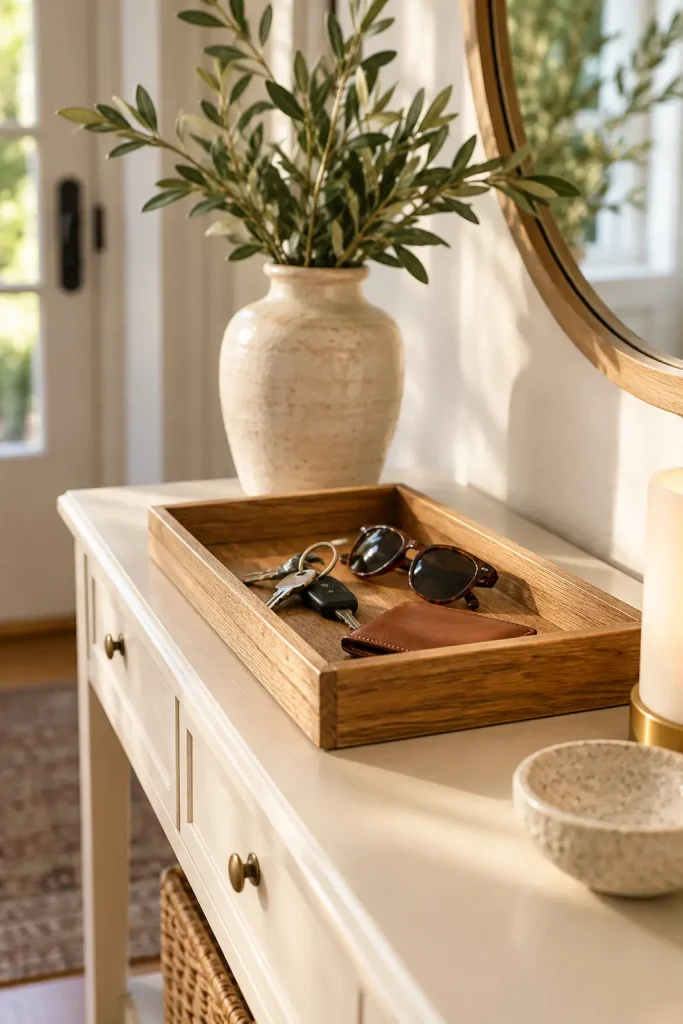
Sometimes the most useful entryway upgrade is a small accessory rather than a new piece of furniture. A tray gives keys, sunglasses, earbuds, and other pocket-sized belongings a designated home.
Choose a shallow tray in wood, ceramic, stone, or metal. A wooden tray works naturally with oak furniture, while a dark metal tray creates contrast against a pale console.
The trick is to limit what goes inside. A tray should collect a few frequently used items rather than become a container for receipts, loose change, mail, and everything else that passes through the door.
If several people share the entrance, use separate small bowls or compartments to make belongings easier to find.
11. Add a Floating Shelf to a Narrow Entry
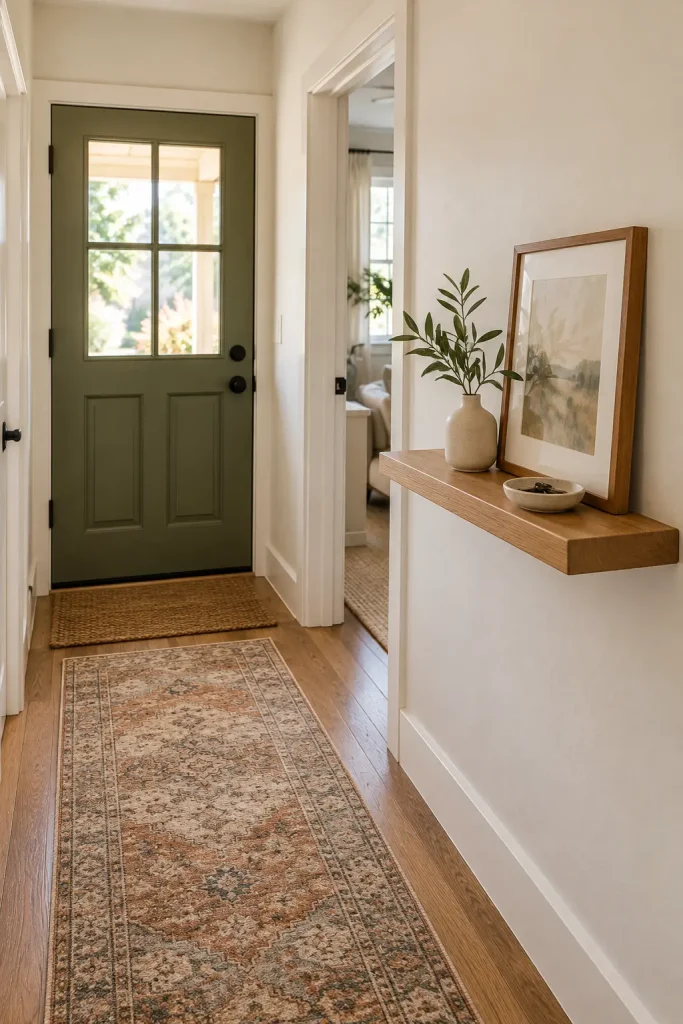
A narrow entrance may not have enough room for a traditional console, but a floating shelf can provide a similar decorative and practical surface without taking up floor space.
Choose a slim shelf in natural oak for warmth or painted white for a subtle appearance. Keep the styling simple: a small catchall dish, one framed print leaning against the wall, or a compact vase can be enough.
Floating shelves work particularly well in apartments and older homes with narrow hallways. Before installing one, consider how far it projects into the walkway and whether its placement will interfere with the door or nearby light switches.
For a rental, a freestanding narrow shelf or a suitable removable alternative may be more appropriate.
12. Choose a Shoe Cabinet With a Clean Silhouette
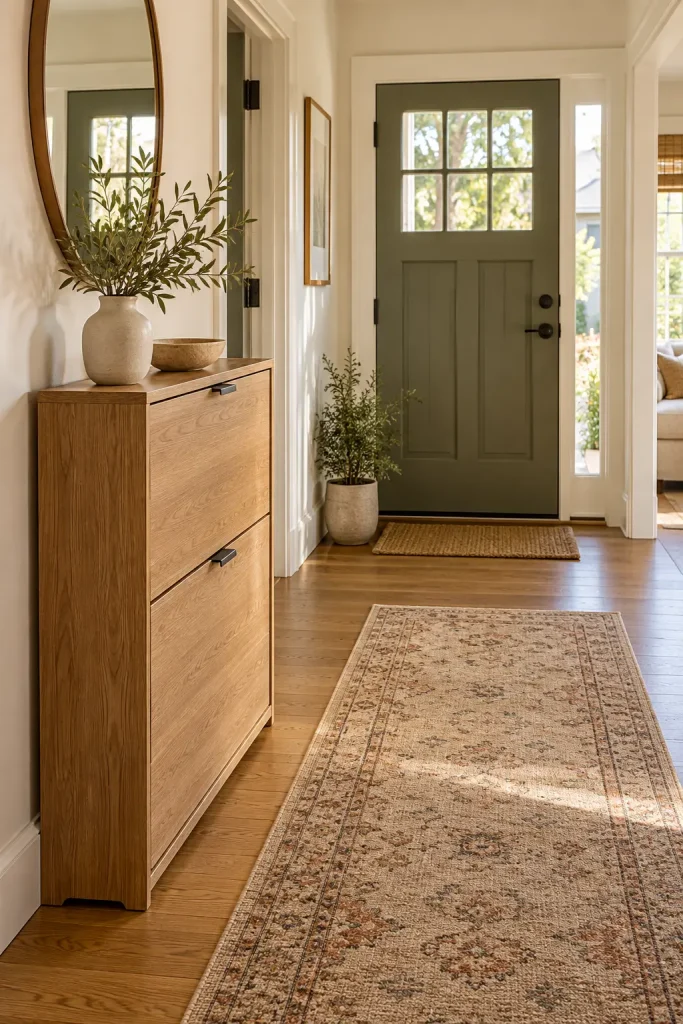
Shoes are often the biggest source of visible clutter near the front door. A closed shoe cabinet offers a practical solution while providing a finished furniture surface for a few decorative accents.
Look for a shallow cabinet with doors that conceal footwear. Simple oak fronts suit Scandinavian-inspired interiors, while painted white cabinets blend into light walls. Reeded or cane-style fronts can introduce texture without requiring additional accessories.
Before buying, check the cabinet’s actual storage capacity, interior dimensions, and required door clearance. Some designs accommodate fewer pairs of shoes than their exterior size suggests.
Top the cabinet with a small bowl, a framed print, or a compact lamp if there’s enough room. Keeping the surface relatively clear prevents the storage unit from becoming another clutter collection point.
13. Bring in Warmth With a Table Lamp
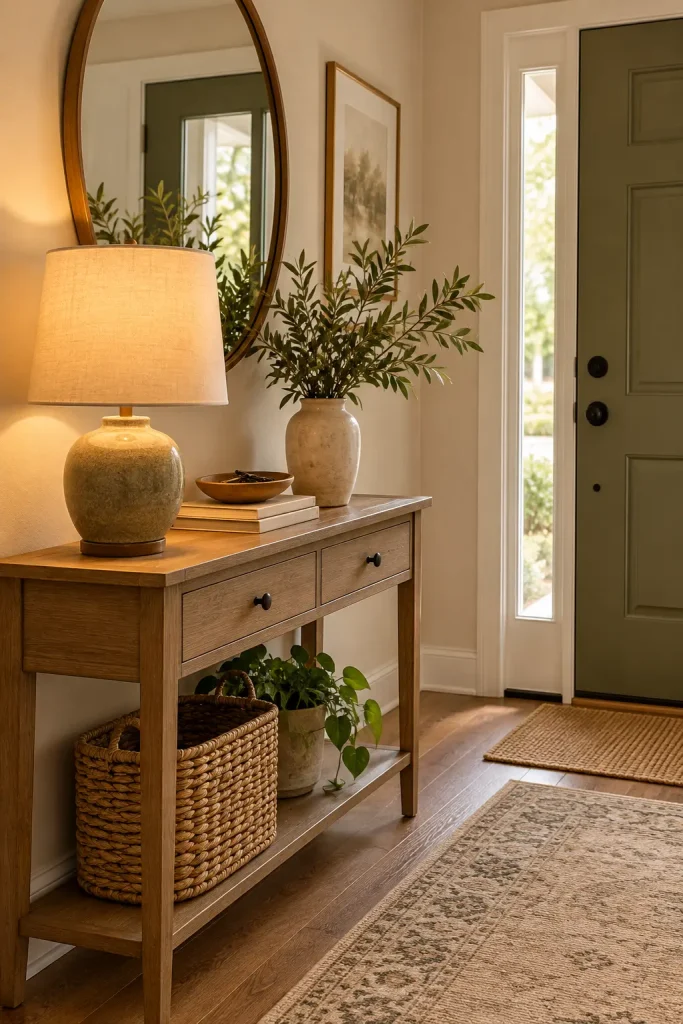
An entryway can feel more inviting when it has a softer light source in addition to overhead lighting. A small table lamp creates a warm pool of light that makes the entrance feel connected to the rest of the home, particularly in the evening.
Choose a lamp with a ceramic base, linen shade, or understated metal finish. A warm white shade works with most neutral interiors, while a muted green or terracotta base can introduce a little color.
The lamp needs a stable surface and a suitable power source. If the console is very narrow, choose a compact design that leaves enough room for everyday essentials.
Do / Don’t
- Do: Use a lamp with a base and shade proportionate to the console.
- Don’t: Crowd a small table with a large lamp, tall vase, multiple frames, and storage bowls all at once.
14. Style the Entryway With a Wooden Stool
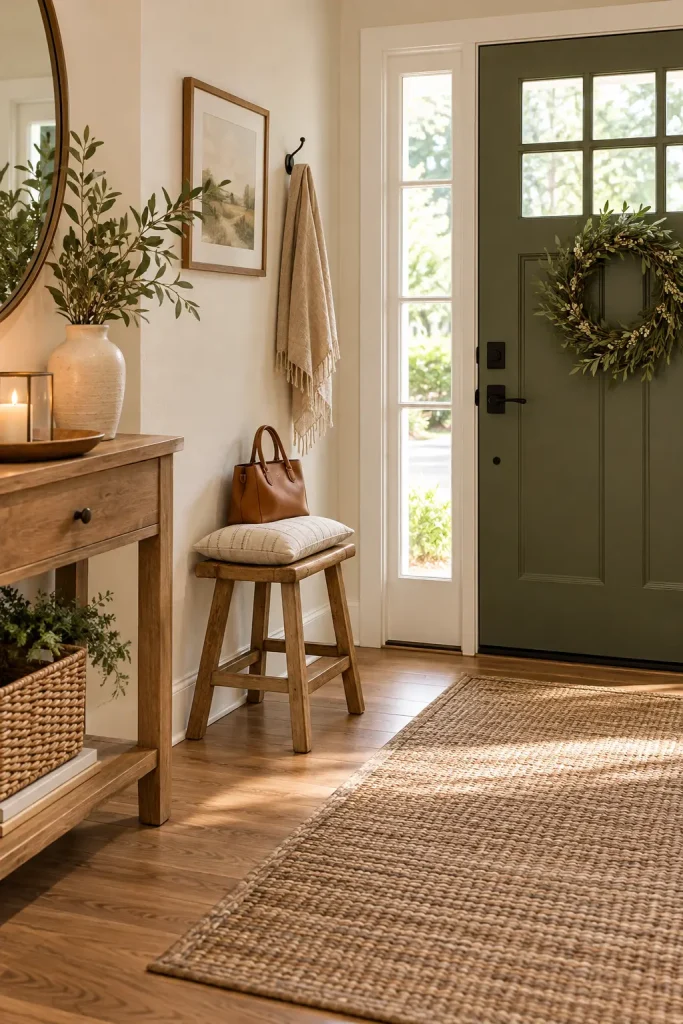
A wooden stool is a flexible alternative to a traditional entryway bench. It can serve as a compact seat, a place to set a handbag temporarily, or a small display surface for a decorative basket.
Choose a sturdy stool with a simple silhouette. A light oak design suits Scandinavian and contemporary spaces, while a slightly weathered wooden stool works well in a farmhouse-style home.
Because stools are smaller than most benches, they’re particularly useful beside a door where a larger piece would feel crowded. Keep the seat clear when you need it for everyday use, and avoid treating it as permanent storage for piles of accessories.
For an extra layer of softness, add a small cushion in a durable neutral fabric.
15. Introduce Color With a Painted Accent Wall
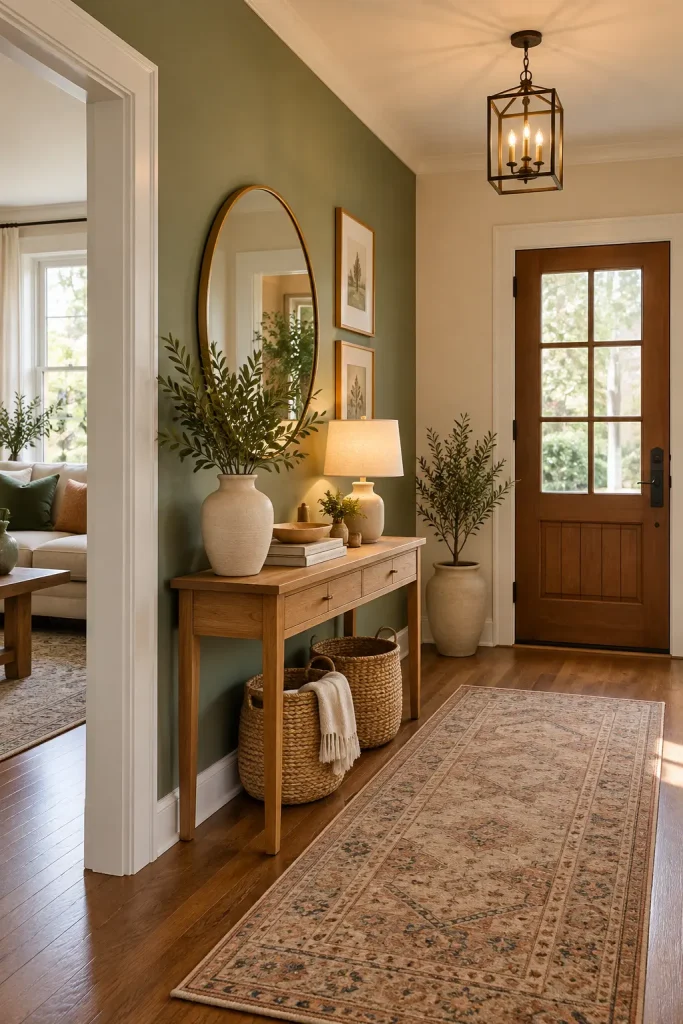
An accent wall can give an otherwise plain entrance a distinct identity. It’s especially useful when the entryway opens directly into a living room and needs a subtle visual boundary.
Consider muted sage, dusty blue, warm taupe, soft terracotta, or a deeper olive tone. The right choice depends on the adjoining rooms, natural light, flooring, and the colors already present in your home.
You don’t need to paint the entire hallway. A single wall behind a console or bench may be enough to establish a focal point.
If the entrance is very small, compare paint samples in the actual space at different times of day. A color that looks soft in bright daylight may appear much darker in a dim hallway.
For renters, removable wallpaper or artwork can provide a similar decorative accent without permanent paint changes.
16. Use a Pair of Wall Sconces for Balanced Lighting
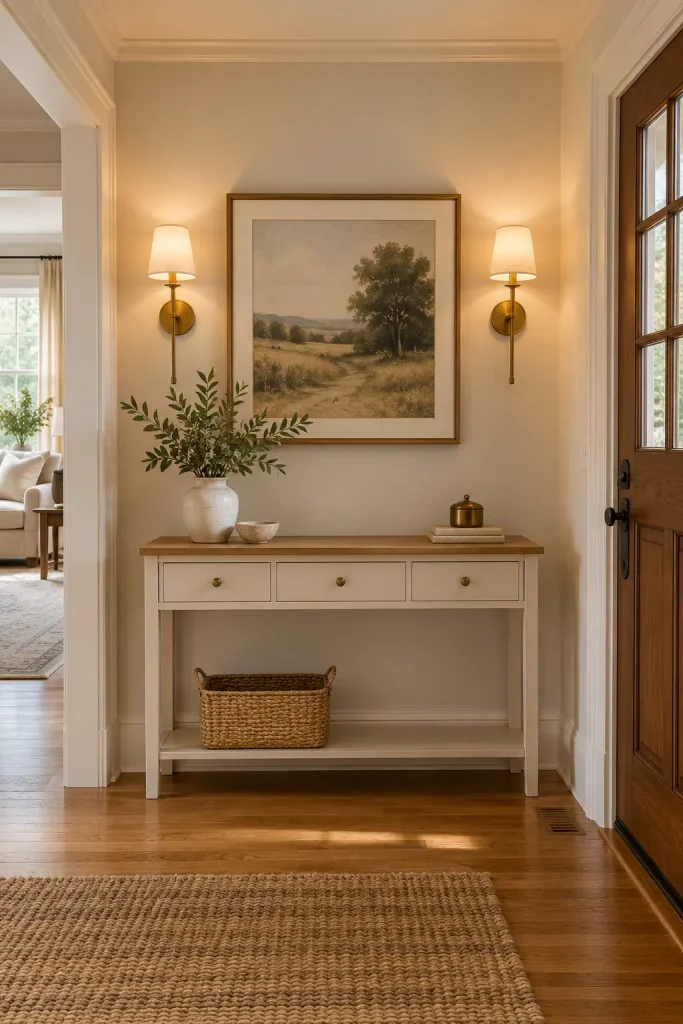
Wall sconces can make an entryway feel more considered, especially when placed on either side of a mirror or artwork. They provide visual balance while drawing attention to a focal point.
For a traditional entrance, consider simple brass sconces with fabric shades. Matte-black fixtures work well in modern spaces, while understated ceramic or plaster designs suit organic interiors.
A pair isn’t necessary for every entryway. In a narrow hallway, one well-placed sconce may be more appropriate than two fixtures competing for limited wall space.
If you’re installing hardwired lighting, plan the electrical work carefully and use a qualified professional where required. Plug-in sconces can be an alternative when their cords can be routed safely and neatly.
17. Add a Small Plant for a Natural Touch
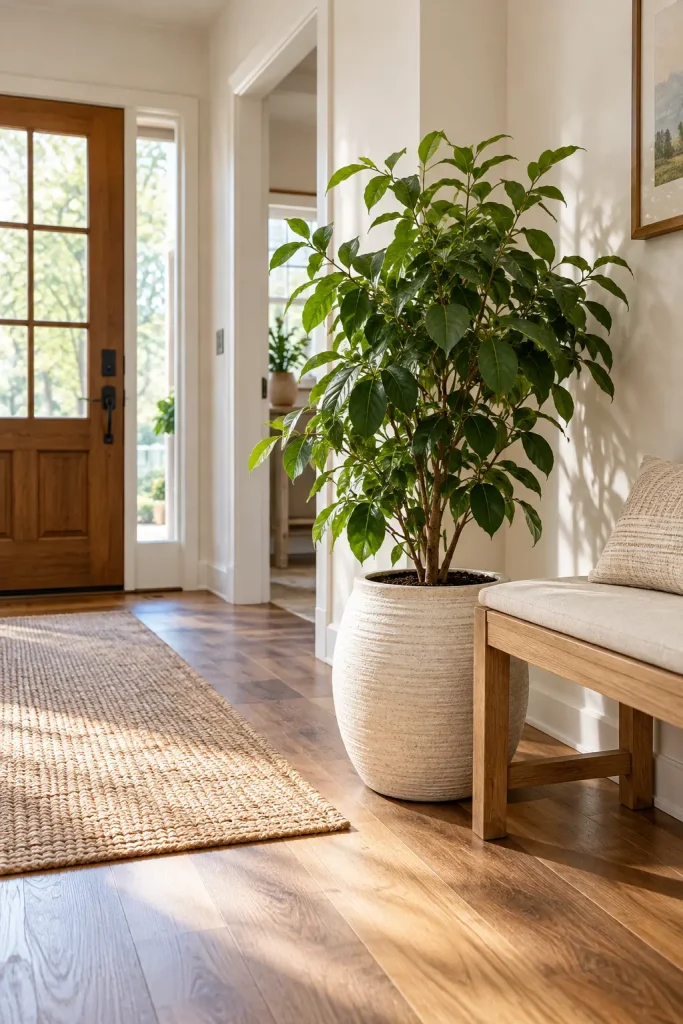
A living plant can soften the hard surfaces of an entryway and bring a little greenery into the space. The key is choosing a plant that suits the actual light conditions rather than selecting one based only on appearance.
A compact foliage plant may work on a console near a bright window, while a suitable larger plant can occupy an empty corner in a room with adequate light. If the entrance is dim, consider a realistic artificial plant or place a living plant elsewhere.
Use a pot that complements the room’s materials. Terracotta introduces warmth, textured ceramic creates a handmade look, and a simple woven planter can suit a relaxed interior.
Remember that a front door can expose plants to drafts and temperature changes. Check the plant’s requirements before positioning it directly beside the entrance.
18. Decorate With a Large Framed Artwork

If you prefer a simpler alternative to a gallery wall, one larger piece of artwork can give the entryway a clear focal point.
A landscape print, abstract painting, botanical illustration, or understated photographic print can work beautifully above a console or bench. Choose a piece that relates to the room’s color palette without matching every accessory exactly.
The artwork should be proportionate to the wall and furniture beneath it. A very small print above a long console can feel disconnected, while an oversized piece may overwhelm a narrow entrance.
A natural oak frame brings warmth, a black frame adds definition, and a slim metallic frame can introduce a more traditional note.
Quick Tip: Use the artwork as a starting point for choosing one or two accent colors elsewhere in the entryway, such as a runner or cushion.
19. Make Use of the Space Beneath a Console

The area beneath a console can provide storage without adding another piece of furniture. It’s an especially useful detail in small homes where every bit of space needs to work harder.
Depending on the table’s design, you might place a pair of woven baskets underneath, arrange a few frequently used shoes neatly, or slide in a small upholstered stool.
The visual effect depends on how much you place there. An open console with generous empty space feels light, while a lower shelf with coordinated baskets looks more organized and practical.
Common Mistake: Filling every open space with storage boxes can make a narrow entrance feel heavy. Leave some visible floor space whenever possible.
20. Choose a Two-Tone Entryway Palette

A two-tone color scheme is a simple way to give an entryway more depth without adding lots of decoration.
Pair warm white walls with natural oak, soft beige with muted black accents, or pale sage with cream furniture. The contrast creates visual interest while keeping the room cohesive.
You can introduce the second color through furniture, artwork, a runner, or a painted door rather than committing to a permanent wall treatment.
For example, a warm white hallway with a dark walnut console and a muted blue runner feels more layered than a space where every surface is the same shade. The colors don’t need to match exactly; they simply need to work together.
When the entrance opens into another room, repeat at least one color or material from the adjoining space to create a smoother transition.
21. Add a Small Upholstered Bench for a Softer Look

An upholstered bench gives an entryway a more comfortable, finished appearance than a bare wooden seat. It works particularly well in homes where the entrance is part of a larger foyer rather than a narrow passage.
Choose cream or oatmeal upholstery for a light, relaxed look, or consider a muted olive or charcoal fabric if you want a little more depth. A simple wood frame keeps the design grounded, while tapered legs help the bench feel less bulky.
For a busy household, prioritize a fabric that’s appropriate for frequent use and practical to clean. If the bench sits close to the door, consider how dirt, wet clothing, and everyday wear may affect the upholstery.
You can keep the styling minimal with a single cushion or leave the bench bare so it’s ready whenever someone needs to sit down.
22. Use a Decorative Bowl as a Catchall

A decorative bowl is a small detail that can make an entryway console feel complete while providing a useful place for everyday essentials.
Choose a shallow bowl in handmade ceramic, natural stone, wood, or matte metal. The material should complement the furniture rather than compete with it. A textured ivory bowl looks understated on a dark console, while a darker stoneware piece creates contrast against pale wood.
Keep the bowl accessible and avoid filling it with too many objects. Keys, a ring, or a few frequently used small items are enough.
For a cohesive arrangement, pair the bowl with one taller accessory, such as a vase, while leaving the rest of the console open.
23. Create a Farmhouse-Inspired Entry With Simple Details
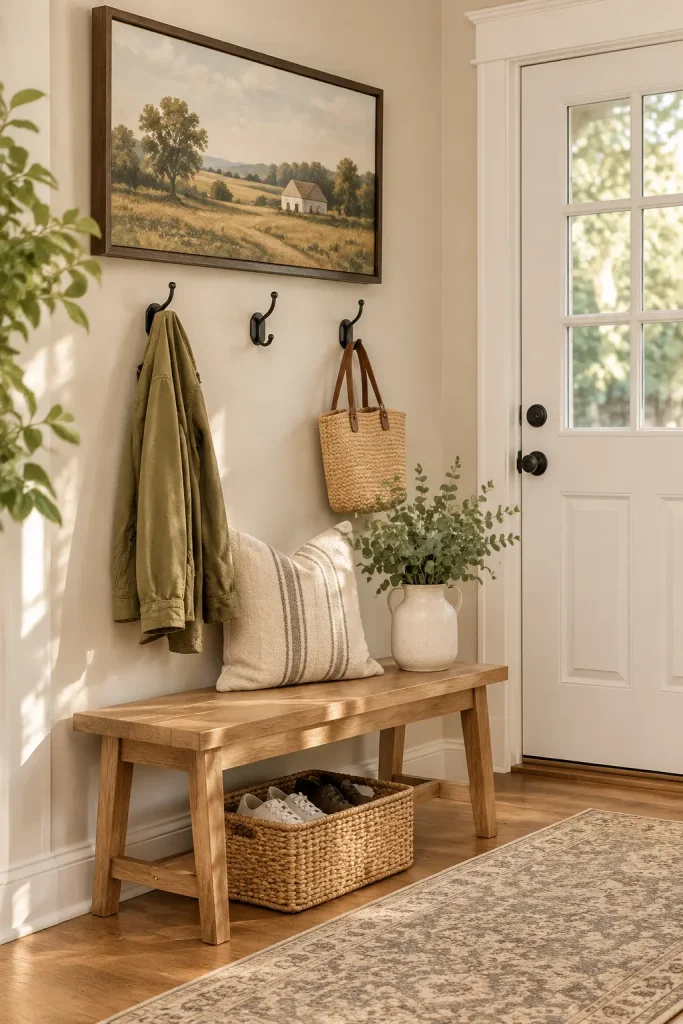
Farmhouse entryways often combine natural wood, practical storage, simple hardware, and comfortable textures. You can borrow these elements without filling the room with signs, distressed furniture, or overly themed accessories.
Start with a wooden bench or a modest console. Add black metal hooks, a neutral runner, and a woven basket for shoes. A framed landscape or botanical print introduces a decorative touch without making the space feel busy.
The balance matters more than the number of farmhouse accessories. Natural materials and a few contrasting finishes usually communicate the style more effectively than a collection of matching decorative pieces.
If your home is contemporary, you can adapt the look with cleaner furniture lines and fewer rustic details.
24. Keep a Minimalist Entryway With Just a Few Pieces
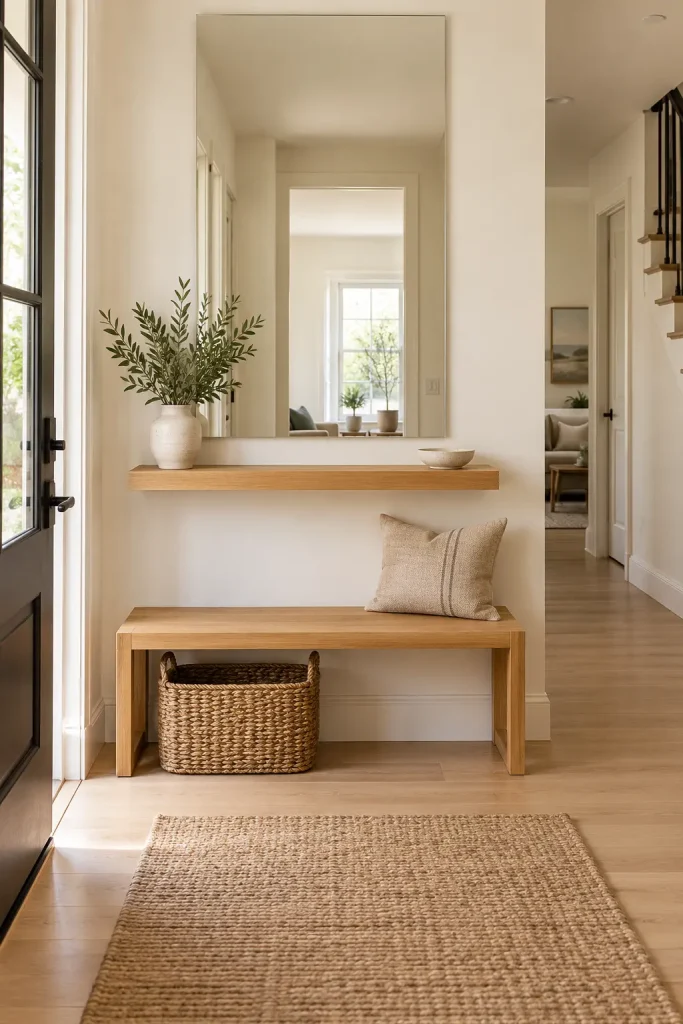
A minimalist entryway relies on thoughtful choices rather than an abundance of decoration. This approach is particularly effective in small homes, contemporary interiors, and hallways where visual clutter quickly becomes noticeable.
Choose one or two functional furniture pieces, such as a slim bench and a small wall-mounted mirror. Limit accessories to items that serve a purpose or contribute meaningfully to the overall look.
A restrained palette of warm white, natural wood, and soft gray creates a quiet backdrop. You can introduce texture through a woven runner, linen cushion, or ceramic vessel rather than adding more colors.
Minimalism doesn’t mean removing everything useful. The aim is to keep everyday belongings organized and the walking path clear while allowing the few decorative elements to stand out.
25. Introduce Vintage Finds for Character

An entryway doesn’t need to look as though every piece was purchased from the same collection. A vintage mirror, secondhand console, or old wooden stool can add character and make the space feel more personal.
Try pairing a vintage wood table with a simple modern lamp, or hang an antique-style mirror above a clean-lined bench. The contrast keeps the room from feeling overly themed.
When shopping secondhand, pay attention to proportions, stability, surface condition, and the amount of maintenance a piece may need. A beautiful vintage cabinet isn’t a useful choice if it’s too deep for the hallway.
Quick Tip: Let one vintage piece take the lead. Pairing it with simpler contemporary accessories helps its shape, patina, or craftsmanship stand out.
26. Make a Small Entry Feel Bigger With Light Colors
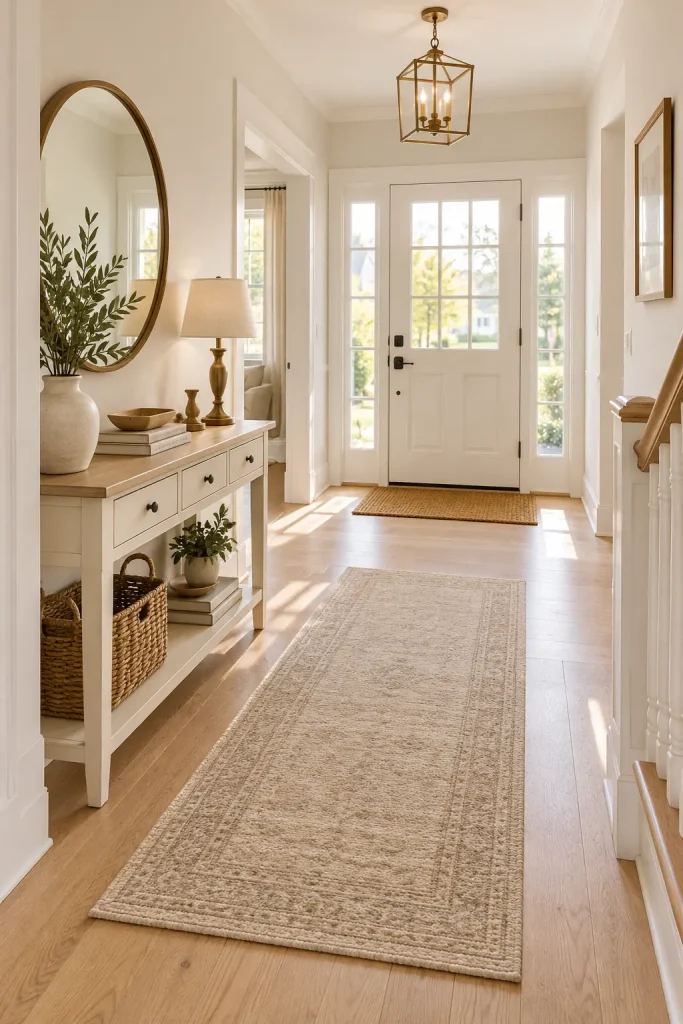
Light colors can help a compact entryway feel open and visually connected to adjoining rooms. Warm white walls, pale wood, cream upholstery, and soft beige accents create a calm foundation without making the space feel stark.
You don’t have to keep everything the same shade. Introduce subtle contrast through natural wood grain, black hardware, a textured runner, or one muted accent color.
Mirrors can complement this approach by reflecting available light, while furniture with open legs allows more of the floor to remain visible.
Common Mistake: Using light colors while overcrowding the room with furniture. A pale console still takes up physical space, so scale and layout matter just as much as the palette.
27. Use Vertical Space With a Tall Coat Rack
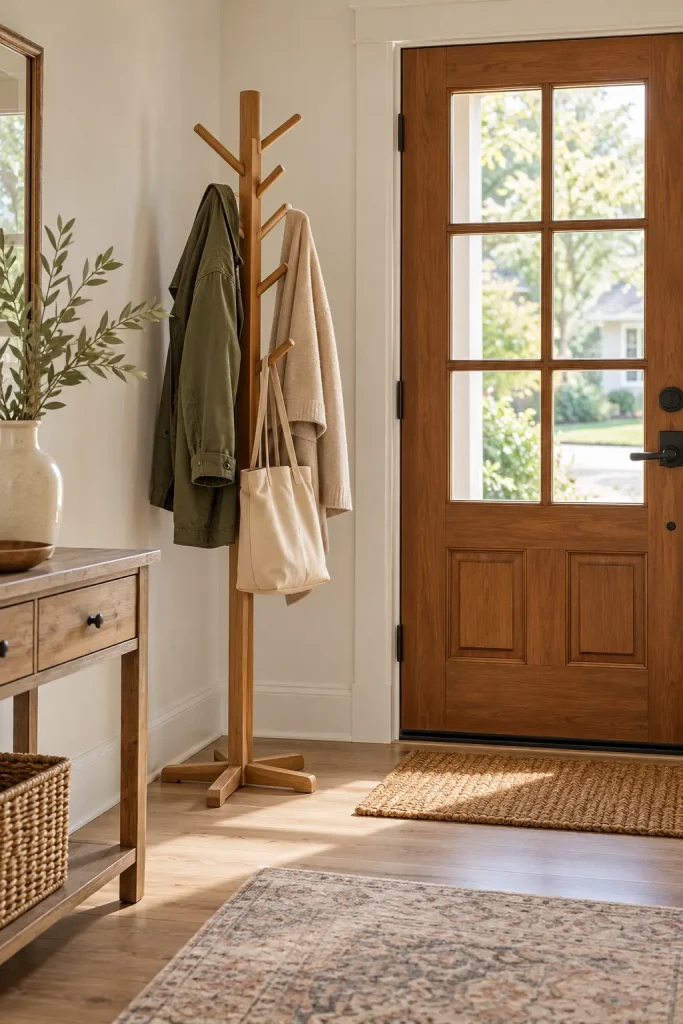
A freestanding coat rack can provide hanging space without requiring multiple wall hooks or a large storage cabinet. Its vertical shape is particularly useful when the entryway has a little open floor space but limited wall space.
Choose a simple wooden design for a natural interior or a slim black metal rack for a contemporary home. Place it where coats and bags can hang without blocking the door or narrowing the walking path.
A coat rack works best when it holds a manageable number of items. Too many jackets can make even a spacious entrance look crowded.
If your entryway is extremely narrow, wall-mounted hooks may be a better option because they leave the floor clear.
28. Add a Seasonal Wreath for an Easy Refresh
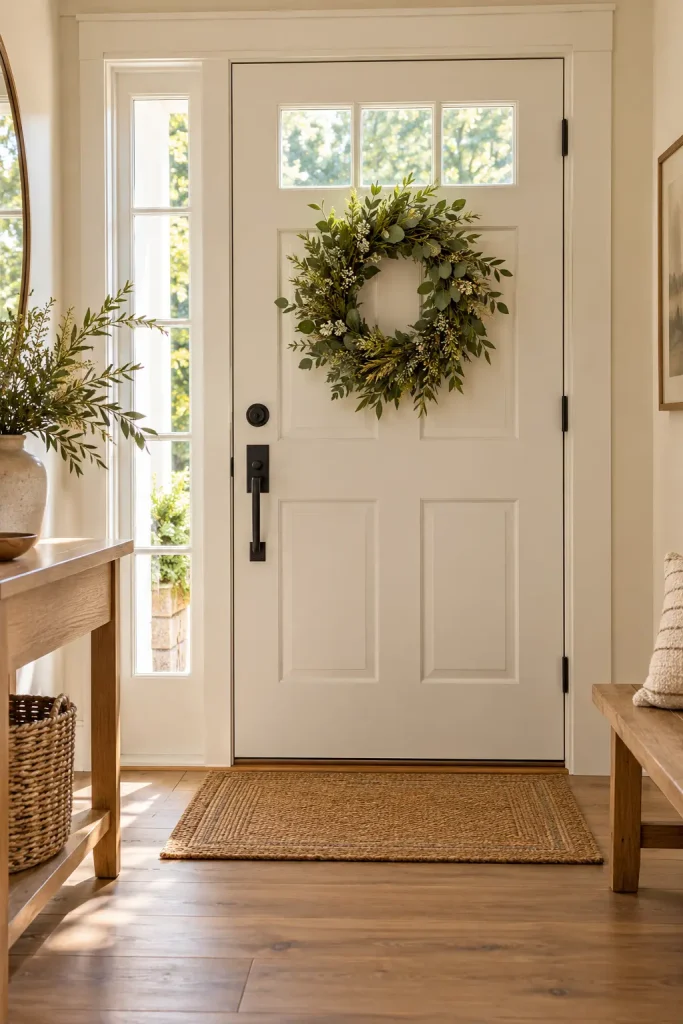
A wreath is a simple way to change the look of your entryway throughout the year without replacing the furniture or rearranging the entire room.
For everyday decorating, consider a restrained wreath made from greenery, eucalyptus-style leaves, or understated dried botanicals. In fall, muted foliage can introduce warmer colors; in winter, evergreen branches offer a seasonal touch.
Choose a wreath that suits the size of your door. An oversized design may overwhelm a small entrance, while a very small wreath can disappear against a large door.
If you prefer a year-round look, select a neutral botanical design that works with your existing decor. For renters, use a suitable removable hanging method that won’t damage the door’s finish.
29. Create a Practical Entryway Drop Zone
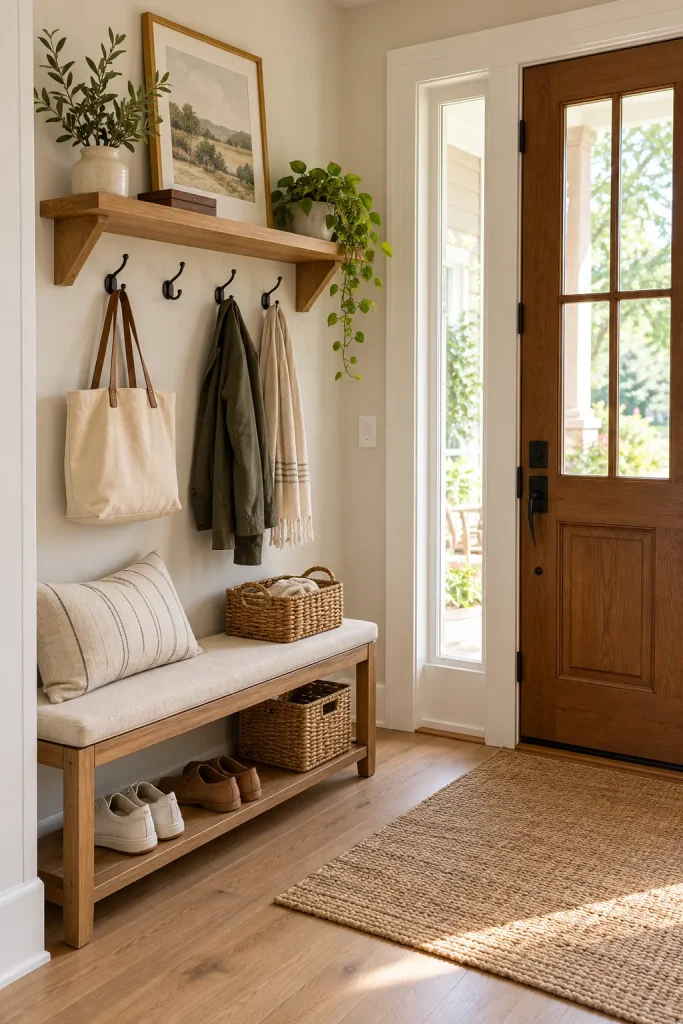
A drop zone is a designated place for the things you regularly carry in and out of the house. It can be as simple as a small wall shelf, a row of hooks, or a compact cabinet near the front door.
The most useful arrangement depends on your routine. A household with children may need space for backpacks and shoes, while someone living alone might only need a key bowl, a bag hook, and a place for sunglasses.
To create a functional drop zone:
- Identify the belongings you use almost every day.
- Give each category a specific place near the entrance.
- Keep frequently used items within easy reach.
- Move occasional items to a separate storage location.
- Leave enough clear space to enter and exit comfortably.
The goal is to make putting things away as easy as picking them up. A well-organized drop zone should support your routine rather than add another task to it.
30. Finish With a Cohesive Mix of Textures

Sometimes an entryway doesn’t need a new furniture arrangement or a dramatic accent wall. It simply needs a more thoughtful mix of materials.
Combining wood, woven fibers, ceramic, linen, and a little metal creates visual depth without requiring many decorative objects. The trick is to let each material serve a purpose.
For example, a natural oak console can provide warmth, a woven runner can soften the floor, a ceramic vase can add an organic shape, and a matte-black hook can introduce contrast. Together, these details create a finished appearance while keeping the entrance functional.
You can use this approach with almost any style, from modern and Scandinavian to farmhouse and traditional.
A simple styling formula:
- One natural material: oak, walnut, or another wood.
- One soft texture: linen, cotton, or a woven rug.
- One handcrafted accent: ceramic or stoneware.
- One contrasting detail: black metal, dark wood, or muted color.
You don’t need to use every material in the room. Start with what you already own and add only the pieces that improve the balance.