
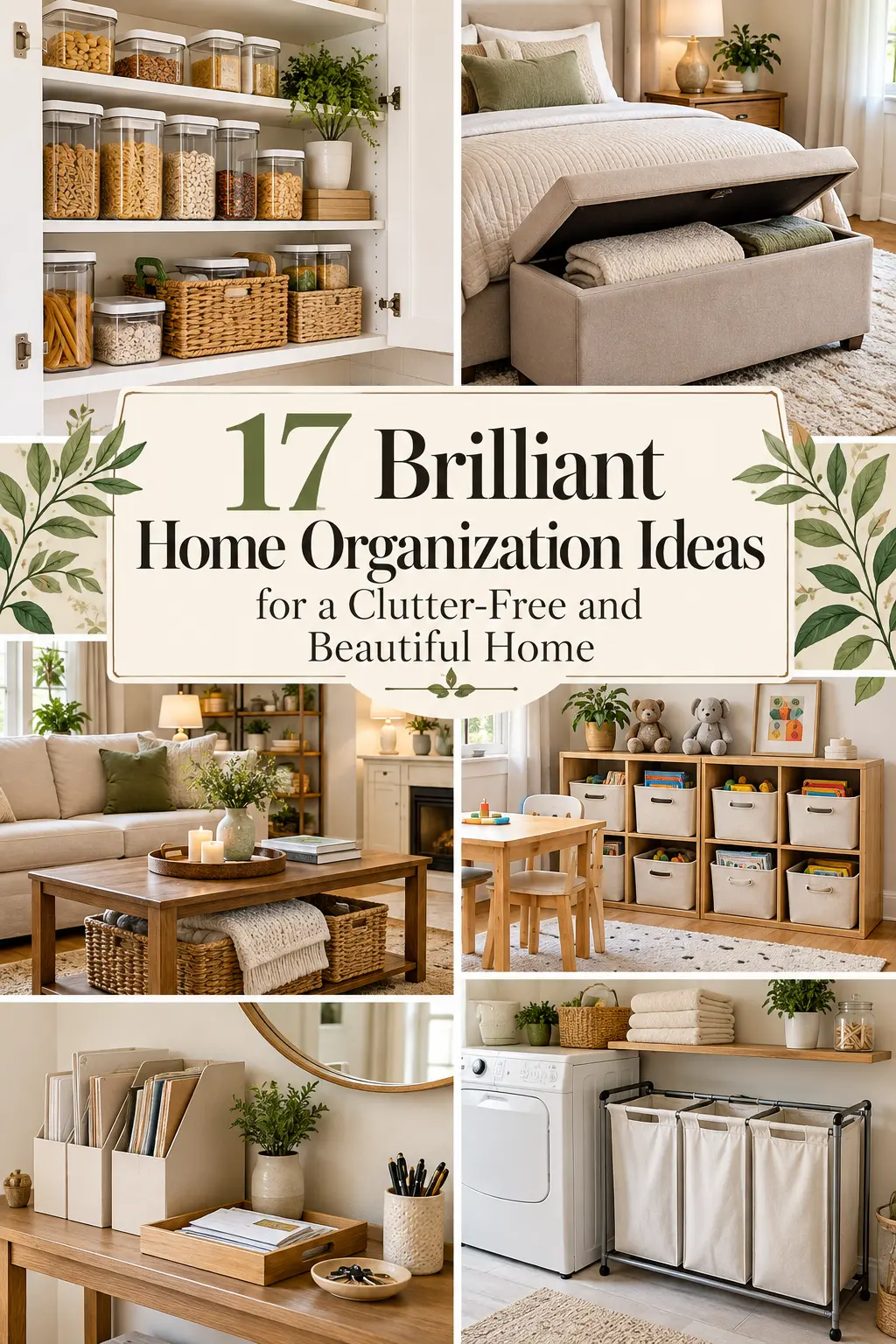
17 Brilliant Home Organization Ideas for a Clutter-Free and Beautiful Home
A beautiful home doesn’t have to be perfectly styled or filled with expensive storage furniture. Often, the biggest difference comes from giving everyday belongings a designated place, making frequently used items easy to reach, and creating simple routines that keep clutter from building up.
The best home organization ideas combine practicality with thoughtful design. A few woven baskets, a well-arranged kitchen drawer, a streamlined entryway, or a thoughtfully organized closet can make everyday life feel more manageable while helping your home look calmer and more inviting.
Whether you live in a small apartment, a busy family home, or a spacious house with plenty of storage, these 17 home organization ideas offer practical ways to make better use of the space you already have. From hidden storage solutions to attractive open shelving, each approach can be adapted to your needs, budget, and decorating style.
The goal isn’t to hide everything you own. It’s to create a home where belongings are easy to find, surfaces are easier to maintain, and every room feels more comfortable to use.
1. Use Matching Baskets to Organize Open Shelving
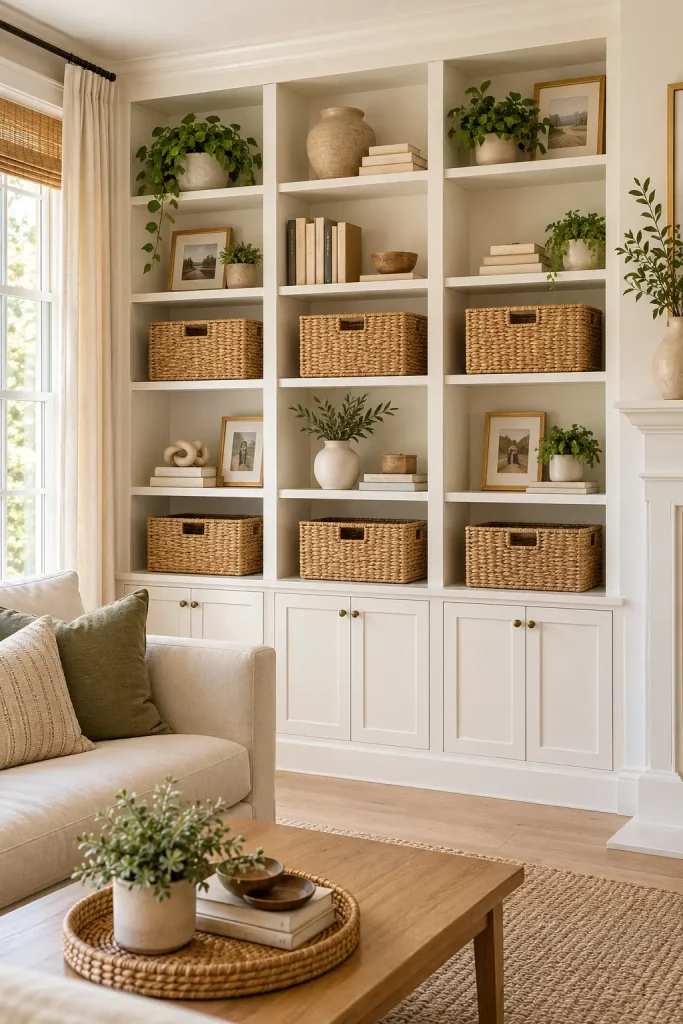
Open shelving can look beautiful, but it quickly becomes distracting when filled with loose papers, miscellaneous accessories, and everyday necessities. Matching storage baskets provide a simple way to group those items while creating a more consistent appearance.
Choose woven seagrass baskets for a warm, natural look, or opt for fabric bins when you prefer a softer, more contemporary style. Neutral shades such as ivory, oatmeal, beige, and light brown work particularly well with traditional, farmhouse, Scandinavian, and transitional interiors.
How to make it work:
- Assign each basket a specific purpose, such as electronics, children’s toys, mail, or household supplies.
- Measure shelf openings before buying baskets to avoid wasted space.
- Place frequently used items on accessible shelves.
- Use discreet labels if several baskets look alike.
Keep a few decorative objects, books, or framed photographs outside the baskets to prevent the shelving from looking overly uniform.
Common mistake: Buying attractive baskets before deciding what they need to hold. Start by sorting your belongings, then select containers that accommodate them without forcing items inside.
2. Create a Functional Entryway Drop Zone
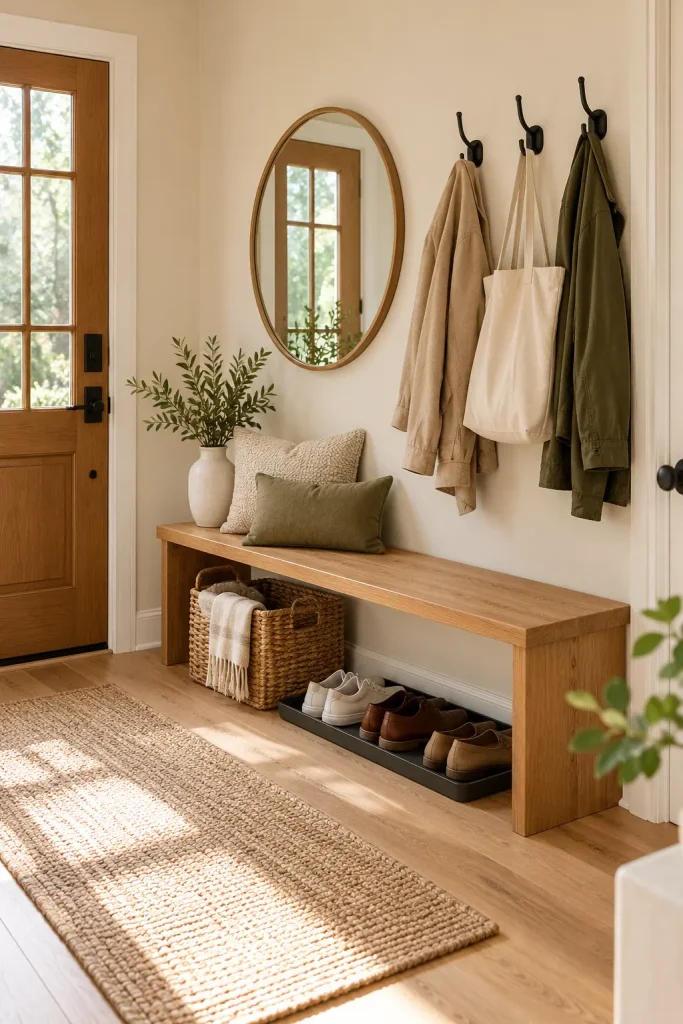
The entryway is often where clutter begins. Keys, shoes, bags, jackets, and incoming mail tend to accumulate near the door because there isn’t an obvious place to put them.
A dedicated drop zone makes it easier for everyone in the household to put belongings away as soon as they arrive. You don’t need a separate mudroom to make this work. A narrow wall, a small corner, or even the space behind a door can provide enough room for a simple organization station.
Consider including:
- Wall hooks: Hang coats, everyday bags, and reusable shopping totes.
- A slim bench: Provide a convenient place to sit while putting on shoes.
- A shoe tray: Keep footwear grouped in one washable area.
- A small catchall: Collect keys, sunglasses, and other pocket-sized essentials.
If your entryway is narrow, choose wall-mounted hooks and shallow furniture to preserve the walking path. Renters can use removable hooks where appropriate, following the manufacturer’s weight limits and surface requirements.
Give each household member a designated hook or basket if several people share the space. A simple arrangement is more likely to stay organized when everyone knows where their belongings belong.
3. Divide Kitchen Drawers With Adjustable Organizers
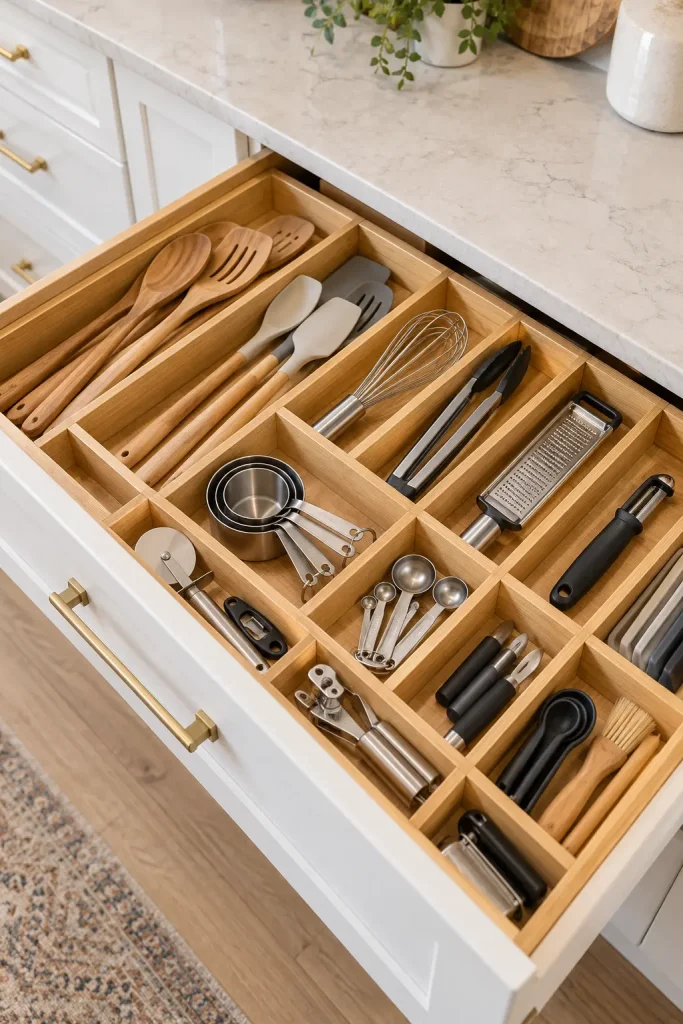
Kitchen drawers become difficult to use when utensils, measuring spoons, gadgets, and miscellaneous tools are mixed together. Adjustable drawer dividers create separate compartments, making it easier to find what you need without searching through a pile of objects.
Start with the drawers you use most often, particularly those near the stove or food preparation area. Empty each drawer, remove items you no longer need, and group the remaining tools by function.
A practical drawer organization system:
- Everyday utensils: Keep spatulas, wooden spoons, and tongs together.
- Measuring tools: Group measuring cups, spoons, and small kitchen scales.
- Food preparation tools: Store peelers, graters, and similar accessories in one compartment.
- Occasional gadgets: Move specialty tools to a less accessible drawer.
Bamboo dividers add natural warmth to a kitchen, while clear or white organizers create a cleaner, more contemporary look. Adjustable options are especially useful when drawer dimensions aren’t standard.
Quick Tip: Measure the inside dimensions of each drawer before purchasing organizers. Remember to account for drawer depth and any handles or hardware that interfere with opening and closing.
4. Maximize Closet Space With Coordinated Storage
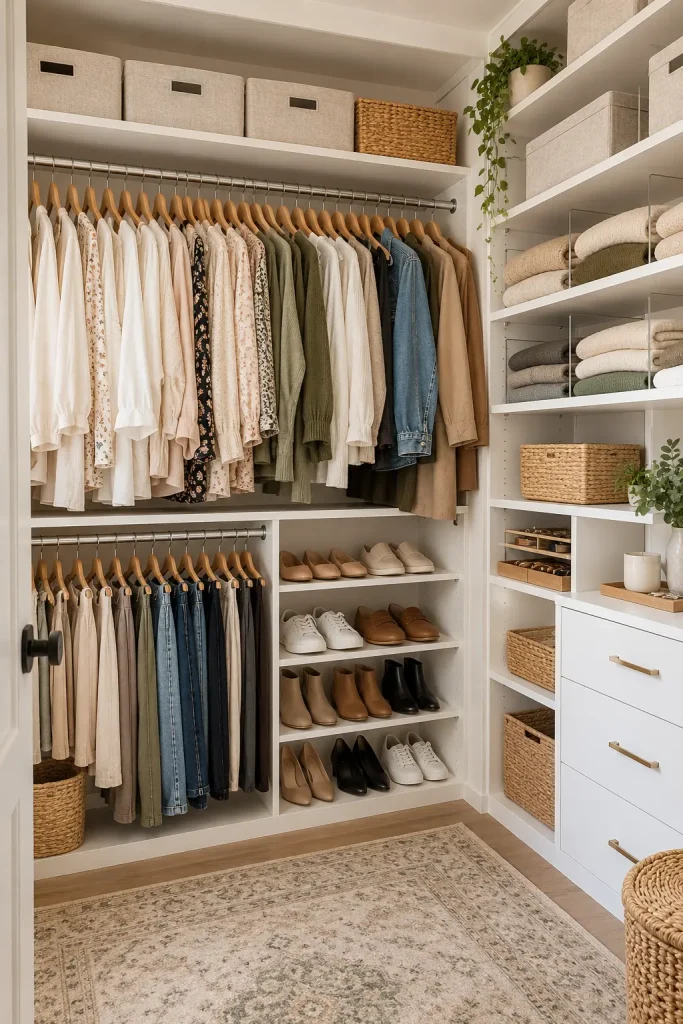
A crowded closet doesn’t necessarily mean you need a larger wardrobe. Sometimes the real problem is that clothing, accessories, shoes, and seasonal items aren’t arranged in a way that makes the available space useful.
Begin by removing items that no longer fit your needs. Then group the remaining belongings by category and arrange them according to how frequently you use them.
Matching hangers can create a more consistent appearance while helping you make better use of the hanging rod. Shelf dividers keep folded sweaters and jeans from toppling over, while fabric bins are useful for accessories and smaller items.
For a more functional closet, try this arrangement:
- Keep everyday clothing at eye level.
- Store seasonal clothing on higher shelves in clearly labeled containers.
- Place frequently worn shoes on accessible shelves or a shoe rack.
- Use drawer organizers for belts, socks, and smaller accessories.
- Reserve the most convenient storage locations for items you reach for regularly.
Avoid overcrowding hangers or stacking folded clothing too high. Even a beautifully organized closet becomes frustrating when you have to move several items to reach one shirt.
5. Turn the Space Under Your Bed Into Hidden Storage
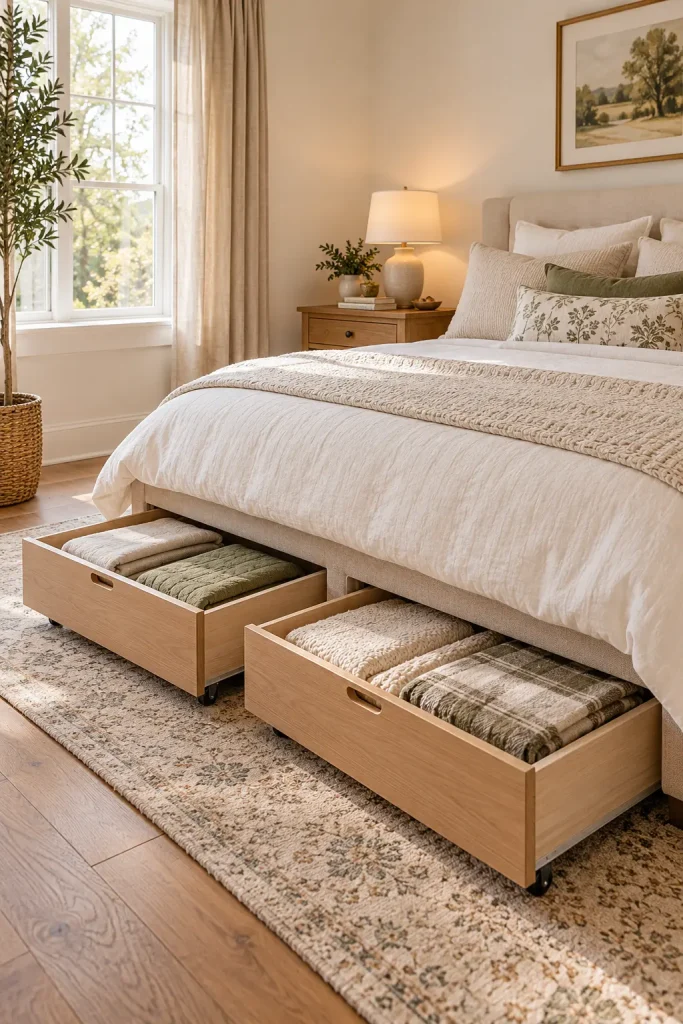
The area beneath your bed can provide valuable storage without taking up additional floor space. It’s especially useful in apartments, small bedrooms, and homes with limited closet capacity.
The best approach depends on the height of your bed frame and the items you need to store. Low-profile rolling containers work well beneath raised beds, while zippered fabric bags can protect seasonal clothing from dust. Beds with built-in drawers provide a more integrated solution if you’re considering new furniture.
Use under-bed storage for items you don’t need every day, such as:
- Extra sheets and pillowcases.
- Seasonal clothing and blankets.
- Spare cushions or lightweight bedding.
- Occasionally used accessories.
Before choosing containers, measure the available height and clearance around the bed frame. Leave enough room to pull containers out comfortably.
Avoid storing damp textiles or placing belongings directly on a dusty floor. Clean and dry everything before putting it away, and use suitable containers to keep items protected.
Common Mistake: Using the space as a place to hide miscellaneous clutter. Under-bed storage works best when every container has a defined category and its contents are easy to identify.
6. Organize Your Pantry With Clear, Labeled Containers
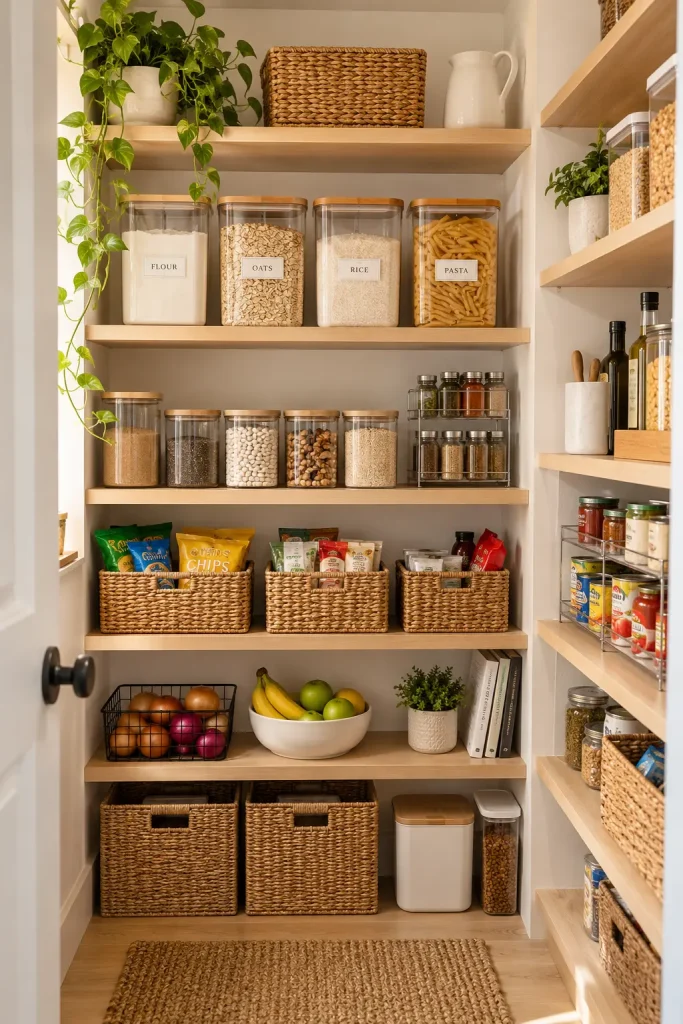
A well-organized pantry makes meal preparation easier and helps you see what you already have before buying groceries. Clear containers can be particularly useful for dry ingredients because their contents are visible without opening every package.
Start by grouping food into categories such as baking ingredients, breakfast foods, snacks, pasta, grains, and canned goods. Place frequently used products on shelves that are easy to reach, and reserve higher shelves for lighter or less frequently used items.
For a cohesive appearance, choose a consistent style of container rather than mixing numerous shapes and sizes.
Useful pantry organization choices include:
- Airtight containers for suitable dry goods.
- Small bins for snack packets and seasoning sachets.
- Tiered shelf organizers for jars and cans.
- Baskets for grouped items that don’t need to be transferred into containers.
- Labels that identify ingredients and, when useful, expiration or opening dates.
Keep original packaging when it contains important allergen information, cooking instructions, or other details you need. If you transfer an ingredient, make sure its identity remains clear.
Also, match the container to the food. Not every product requires an airtight jar, and some foods are best kept in their original packaging.
7. Create a Dedicated Home Office Organization Station
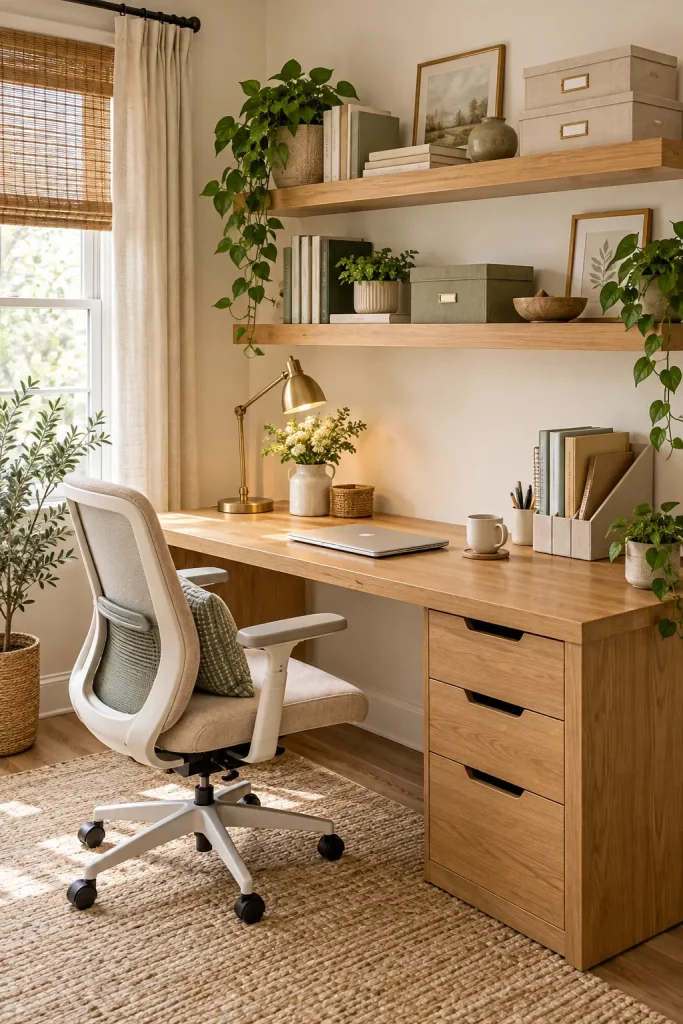
A home office can become cluttered surprisingly quickly. Loose paperwork, charging cables, notebooks, pens, and miscellaneous supplies compete for the same desk space, making it harder to focus.
The solution is to separate your work surface from your storage system. Keep the desk available for the task at hand and move supporting supplies into drawers, file organizers, or nearby shelving.
A functional home office might include:
- A vertical file organizer for documents that need attention.
- A small drawer tray for pens, clips, and other stationery.
- A charging station that keeps frequently used devices together.
- A desktop tray for current projects.
- A nearby shelf or cabinet for reference materials.
Cable management can also make a noticeable difference. Use suitable cable clips or a cable tray to keep cords grouped together, ensuring that ventilation openings remain unobstructed and electrical connections stay accessible.
If you work from a small bedroom or living room, consider a compact desk with drawers or a wall-mounted work surface.
8. Make the Most of Vertical Wall Space
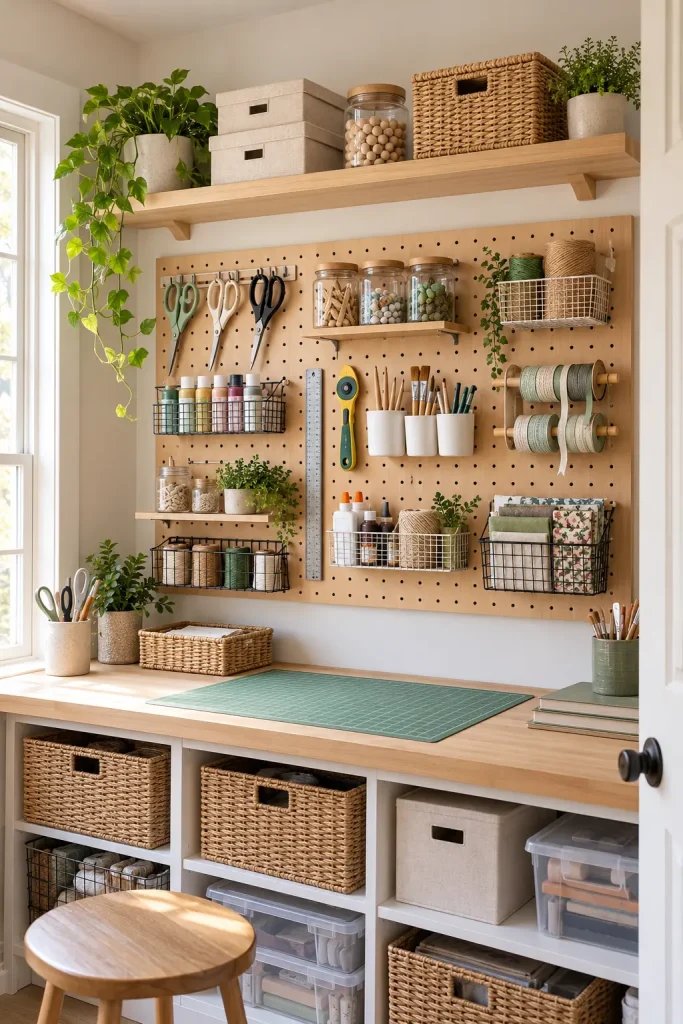
When floor space is limited, the walls can provide valuable additional storage. Vertical organization is especially helpful in small kitchens, laundry rooms, craft areas, bathrooms, and compact apartments.
The key is to select storage that suits the items you’re organizing rather than filling every available wall with shelves.
For example, a pegboard can hold lightweight craft tools, a wall-mounted rail can organize kitchen utensils, and a narrow shelving unit can keep everyday bathroom essentials accessible. In a laundry room, wall-mounted shelves can hold detergent and cleaning supplies above the work area.
Consider these options:
| Storage solution | Best use | Main advantage |
|---|---|---|
| Floating shelves | Books, baskets, and small accessories | Uses wall space without floor-standing furniture |
| Pegboard | Craft tools and lightweight supplies | Allows flexible arrangement |
| Wall hooks | Bags, towels, and frequently used items | Keeps belongings accessible |
| Hanging rail | Kitchen utensils and selected accessories | Makes frequently used items easy to reach |
Always check wall construction, weight limits, and the appropriate mounting hardware before installing shelves or heavy objects. Renters should choose permitted, removable options when possible.
Quick Tip: Keep frequently used items within comfortable reach. High shelves are better suited to lightweight belongings that you don’t need to access every day.
9. Use Drawer Dividers to Simplify Bathroom Storage
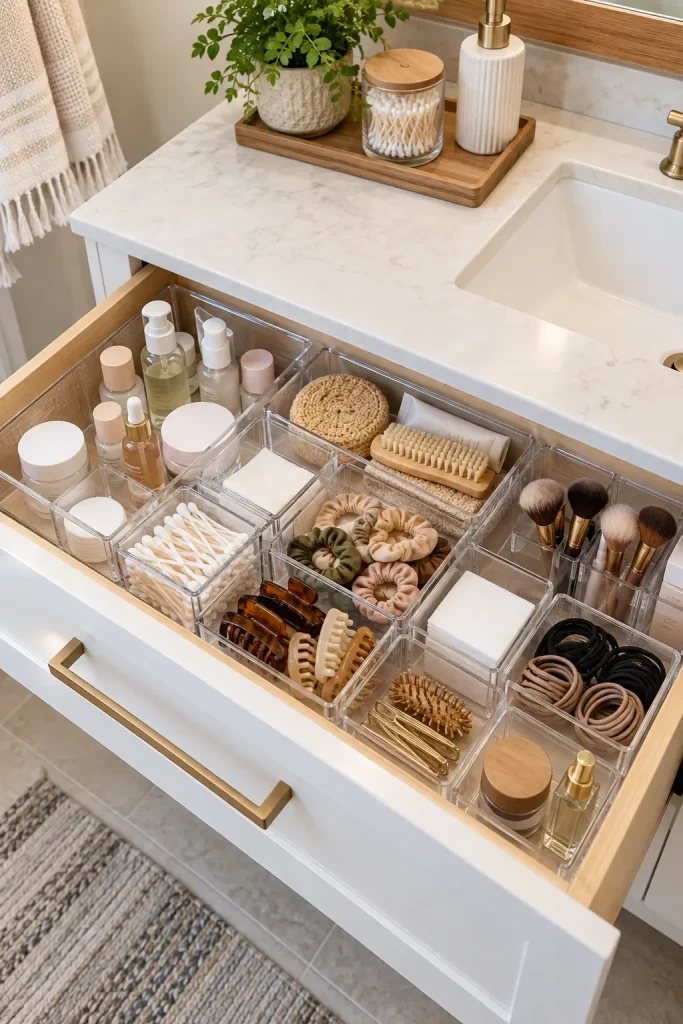
Bathroom drawers often collect a mixture of skincare products, hair accessories, cosmetics, grooming tools, and everyday essentials. Without compartments, small items can disappear beneath larger products.
Drawer dividers make it easier to establish a consistent arrangement. Separate daily necessities from occasional-use products, and keep the items you reach for every morning near the front.
Clear acrylic organizers work well when you want to see the contents at a glance. Bamboo dividers provide a warmer look, while washable plastic compartments can be practical for areas where spills are common.
A simple bathroom drawer system might include:
- One compartment for everyday skincare.
- Another for hair ties, clips, and small accessories.
- A separate area for grooming tools.
- A designated space for travel-sized products.
- A small container for items that need to be used soon.
Keep medications and other products according to their storage instructions, and avoid storing items in areas exposed to excessive moisture or heat.
If the bathroom has limited drawer space, use a shallow countertop tray for the few products you use every day and store the rest in a nearby cabinet.
10. Give Every Item in the Living Room a Home
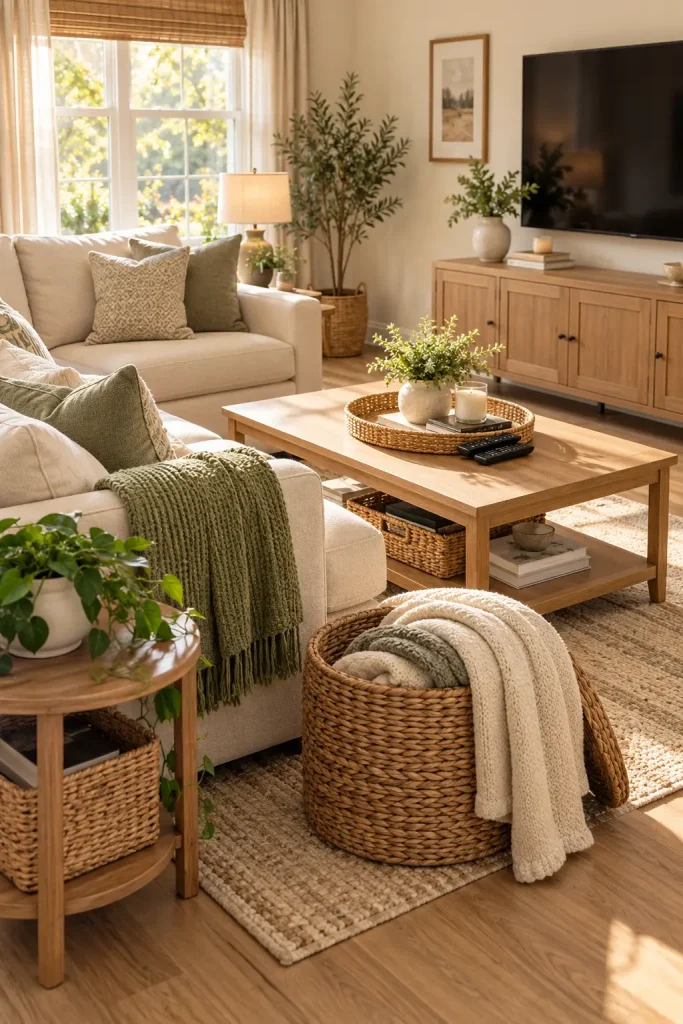
The living room serves many purposes. It’s where people relax, entertain guests, read, watch television, and sometimes work or play. That variety makes it particularly easy for clutter to accumulate.
Rather than expecting the room to remain perfectly tidy, create simple storage systems for the belongings that naturally belong there.
A lidded basket near the sofa can hold blankets. A storage ottoman can accommodate board games or extra cushions. A media cabinet can hide cables, remote controls, and electronic accessories.
Think about the items that routinely end up on your coffee table or sofa. If they don’t have an obvious home, they’re likely to return to those surfaces.
Practical living room storage ideas:
- Use a lidded basket for throws and spare cushions.
- Keep remotes together in a small tray.
- Store board games in a cabinet or dedicated shelf.
- Use a side table with drawers for reading glasses and notebooks.
- Arrange children’s toys in accessible baskets that are easy to return to.
Choose containers that complement the furniture instead of introducing too many unrelated colors and textures. A few well-placed storage pieces usually work better than numerous small organizers scattered throughout the room.
11. Organize Cleaning Supplies in One Convenient Location
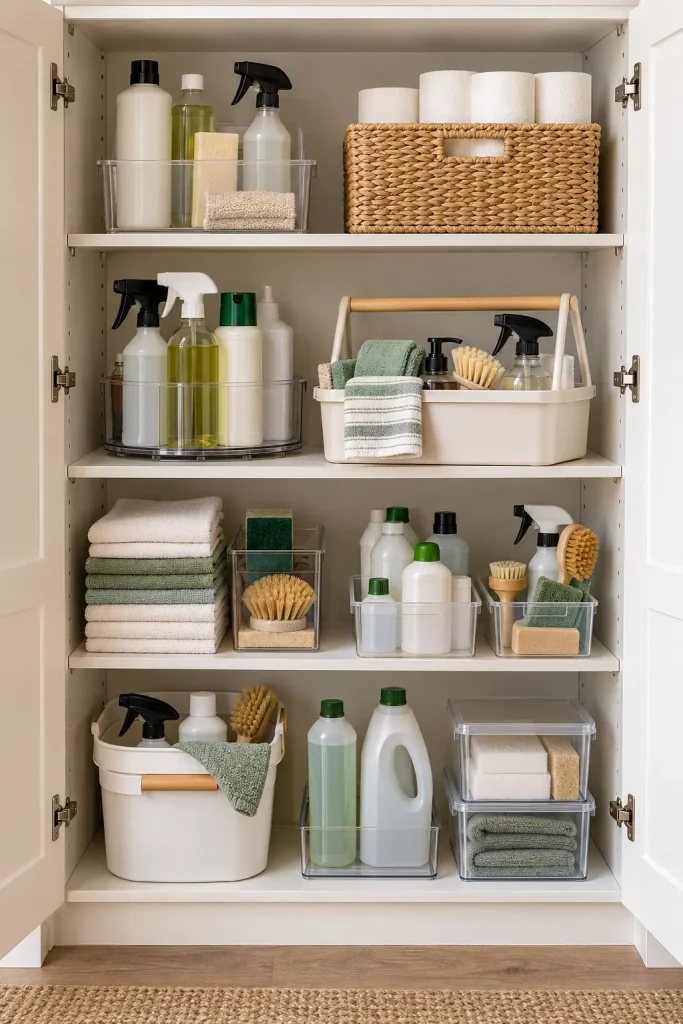
Cleaning products are easier to manage when they’re stored in a designated place rather than scattered across several rooms. A well-organized cleaning cabinet also makes it easier to notice when supplies are running low.
Start by grouping products according to their purpose. Keep suitable bathroom cleaners together, organize laundry products in the laundry area, and place general household cleaning supplies in a dedicated cabinet.
A handled caddy can be useful for carrying supplies between rooms, while small bins help separate cloths, sponges, and brushes.
A practical cleaning cupboard can include:
- A bin for cleaning cloths and reusable sponges.
- A caddy for frequently used cleaning products.
- A separate container for spare gloves and scrub brushes.
- A designated shelf for unopened refills.
- A small inventory list to help prevent unnecessary duplicate purchases.
Store products in their original containers and follow their labels. Keep cleaning chemicals secured away from children and pets, and never mix products unless their labels explicitly permit the combination.
If you don’t have a utility closet, a small cabinet beneath the sink or a suitable storage area in the laundry room may be enough.
12. Make Laundry Day Easier With Sorting Baskets
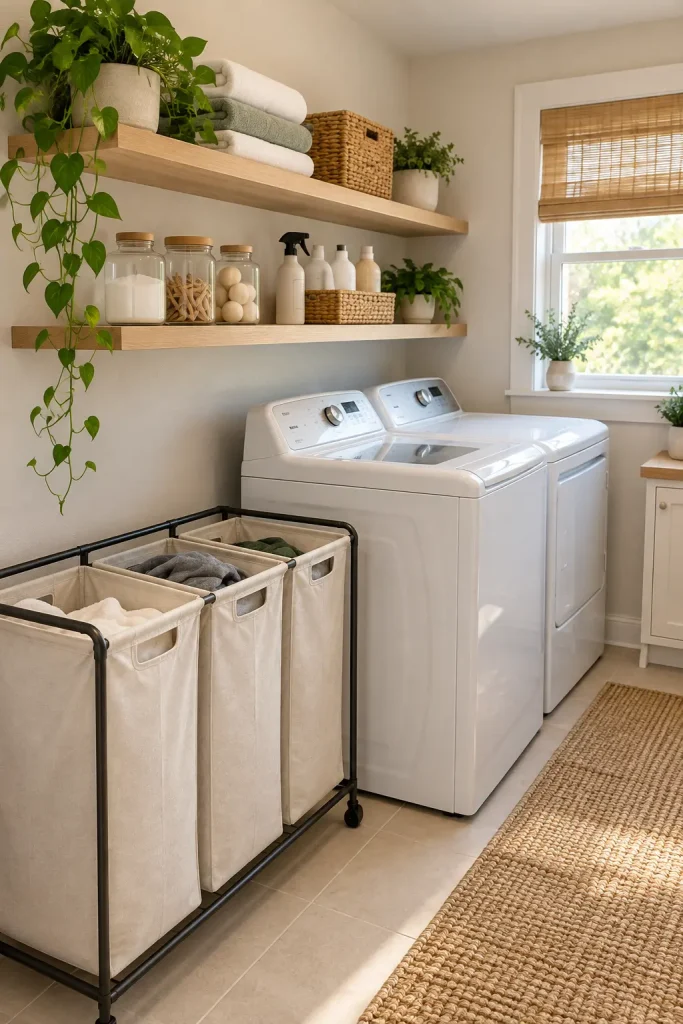
Laundry becomes more manageable when dirty clothes are sorted before washing rather than collected in one overflowing hamper.
A multi-section laundry sorter can help separate lights, darks, and other loads according to your household’s washing routine. If you have limited space, two simple hampers may be more practical than a large sorting station.
Choose a system that fits your available floor area and is comfortable to use. Breathable fabric hampers work well for many households, while plastic or washable containers may be preferable in areas where moisture is a concern.
For a family laundry room, consider:
- Separate compartments for different loads.
- A small basket for socks that need matching.
- A shelf for laundry essentials.
- A designated place for clothes that need special attention.
- Individual baskets for clean laundry that is ready to return to bedrooms.
If several people share the laundry area, simple labels can make sorting easier. The system should be intuitive enough that everyone can use it without having to ask where items belong.
Common Mistake: Choosing a sorter that occupies so much space that you can no longer move comfortably around the washer and dryer. Measure the area and preserve access to appliance doors and controls.
13. Use the Inside of Cabinet Doors for Extra Storage
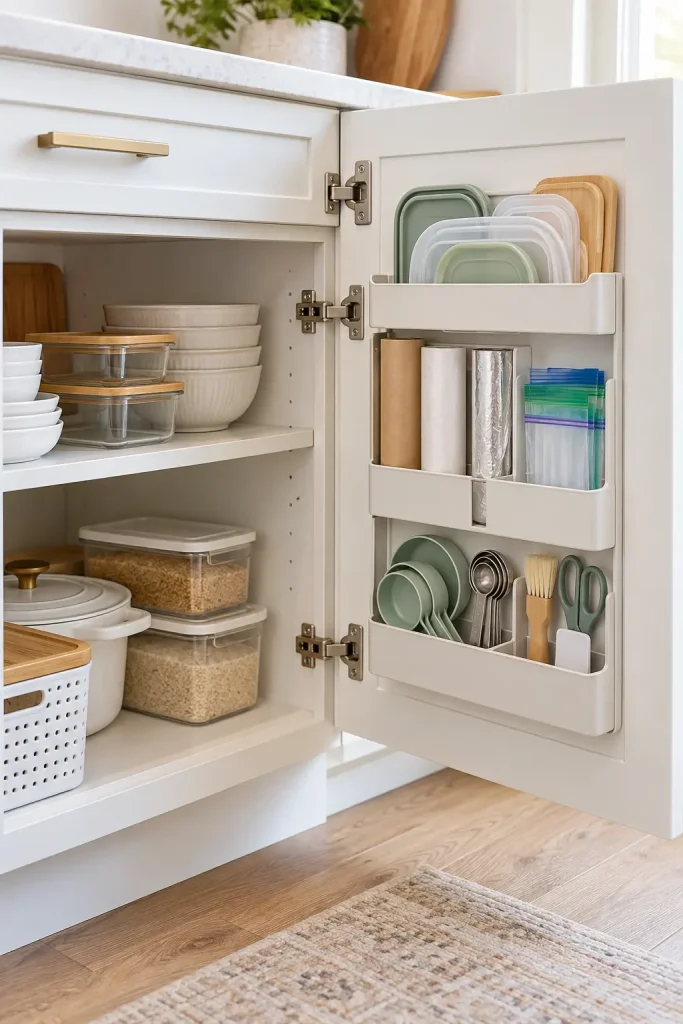
Cabinet doors offer an often-overlooked opportunity to organize small household items. When the installation is appropriate for the cabinet and its contents, the inside surface can hold lightweight accessories without taking up valuable shelf space.
This approach works particularly well in kitchens, bathrooms, and utility rooms.
In the kitchen, a suitable door-mounted organizer may hold wraps, bags, or lightweight accessories. In a bathroom vanity, a small organizer can keep selected grooming tools together. A utility cabinet may benefit from a shallow holder for cleaning cloths or other lightweight supplies.
Before installing anything, check the following:
- The door can close fully without hitting the stored items.
- The mounting method is suitable for the cabinet material.
- The organizer does not interfere with hinges or drawer operation.
- Stored items are appropriate for the organizer’s weight limits.
- The installation won’t damage the cabinet finish.
For renters, removable options may be useful, but adhesive products should only be used on compatible surfaces and within their stated weight limits.
Quick Tip: Choose shallow organizers. Bulky items attached to cabinet doors can make the doors difficult to close or interfere with neighboring cabinets.
14. Create a Paperwork and Mail Management Station
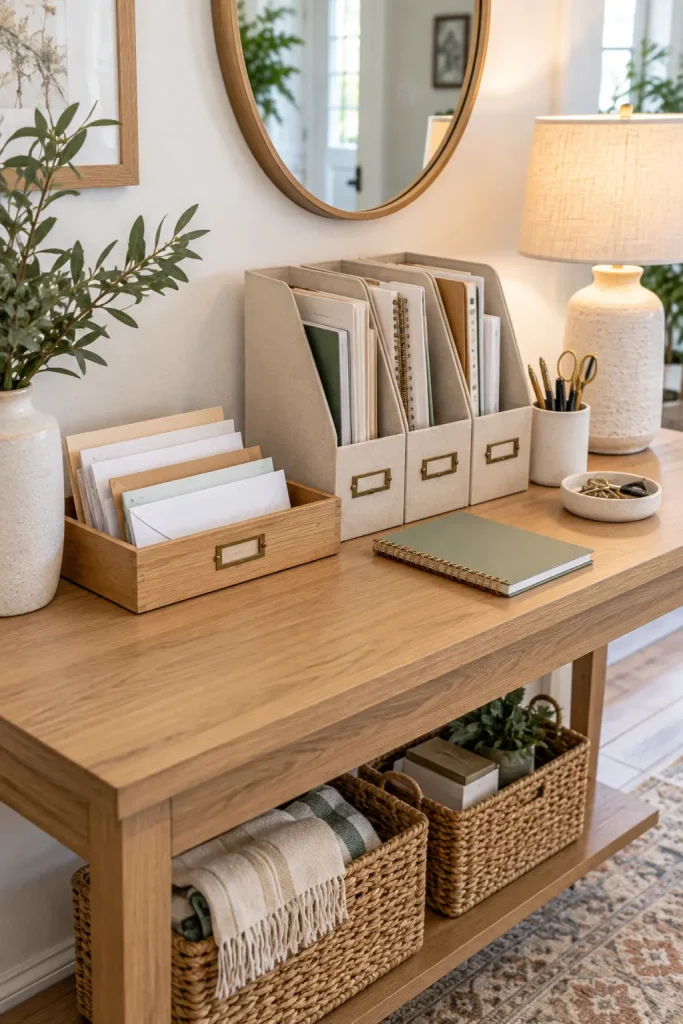
Mail, school notices, receipts, warranties, and household documents can quickly overwhelm a kitchen counter or entryway table. A dedicated paperwork station helps prevent important documents from getting lost among everyday clutter.
Choose a location where incoming mail naturally arrives. This might be a small desk, a section of a kitchen counter, or a shelf near the entryway.
Use a few clearly defined categories instead of creating a complicated filing system.
A simple paperwork system:
- Incoming: Place new mail and documents in one tray.
- Action needed: Move bills, forms, or notices requiring attention to a separate folder.
- To file: Keep documents that need long-term storage in a designated folder or filing cabinet.
- To discard securely: Separate sensitive paperwork that no longer needs to be kept.
Review the station regularly so that temporary piles don’t become permanent. Shred documents containing sensitive personal or financial information when appropriate, and retain important records according to their requirements.
For a small home, a wall-mounted file organizer or compact desktop tray may provide enough storage. You don’t necessarily need a full filing cabinet to keep household paperwork under control.
15. Organize Children’s Toys With Accessible Storage
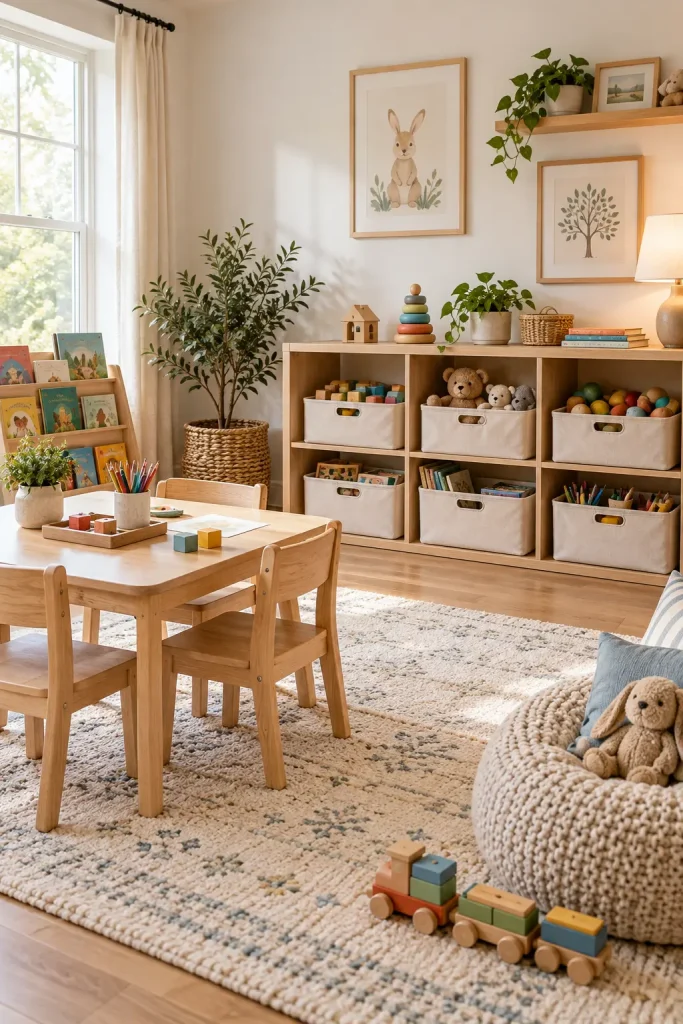
A child’s play area is easier to maintain when toys have obvious homes and children can reach the storage themselves.
Instead of using one oversized toy box for everything, divide toys into manageable categories. Open bins, low shelves, and labeled baskets can help children understand where different belongings belong.
For younger children, simple visual labels may be easier to recognize than written categories. Older children may prefer separate containers for building toys, art supplies, games, and favorite collections.
Try organizing toys by activity:
- Building blocks and construction toys.
- Dolls, action figures, and pretend-play accessories.
- Books and puzzles.
- Art materials and craft projects.
- Balls, outdoor toys, and larger play equipment.
Keep heavier items on lower shelves and store small objects that present choking hazards out of reach of young children. Choose sturdy furniture, secure tall shelving to the wall, and use age-appropriate containers.
Rotating some toys into storage can also help reduce visual clutter without requiring you to discard belongings your child still enjoys.
The most important principle is accessibility. If children can retrieve and return their toys without assistance, maintaining the room becomes a more realistic part of everyday life.
16. Use a Storage Ottoman to Reduce Bedroom Clutter
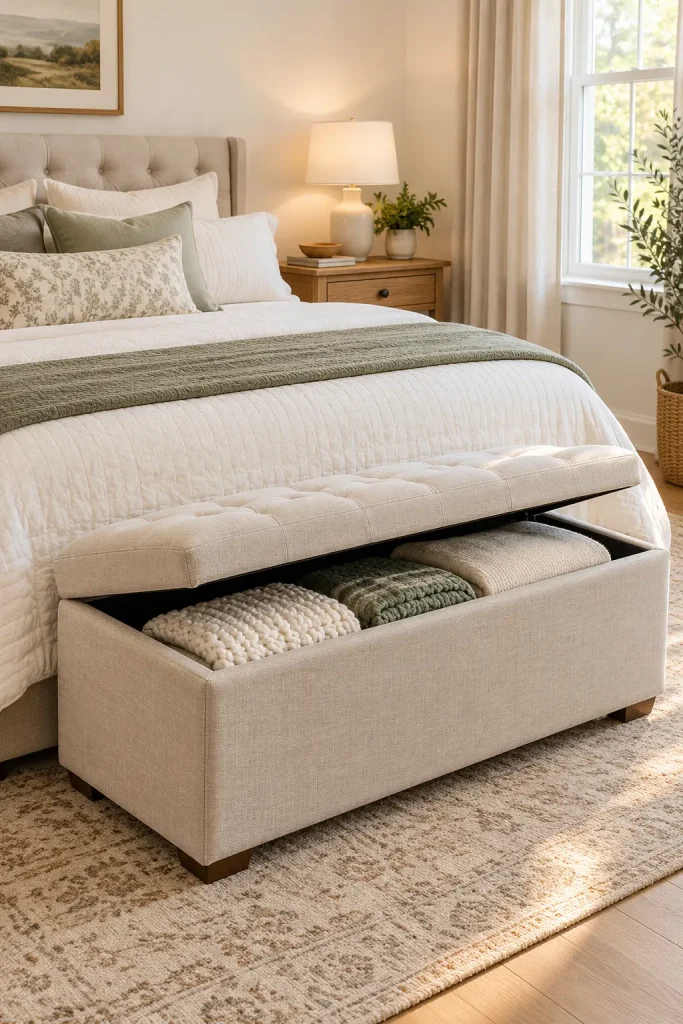
A storage ottoman combines seating, a footrest, and concealed storage in one piece of furniture. It’s a useful option for bedrooms where extra furniture would make the room feel crowded.
Place one at the foot of the bed, beside a bedroom chair, or in a suitable corner. Choose a size that complements the bed and leaves enough room to walk around it comfortably.
Inside, store items that are useful but don’t need to remain visible, such as spare blankets, seasonal accessories, or extra pillow covers.
When choosing a storage ottoman, consider:
- Size: It should fit the room without obstructing drawers or walkways.
- Material: Upholstery should suit your cleaning and maintenance needs.
- Opening mechanism: The lid should be easy and safe to operate.
- Interior capacity: Check whether the shape accommodates the items you plan to store.
A neutral fabric ottoman can blend into a calm bedroom, while a textured or colored option can introduce contrast.
Avoid filling it with miscellaneous belongings simply because the storage space is available. Keeping a clear purpose for the ottoman makes it easier to find things later.
17. Establish a Simple Daily Reset Routine

Even the best storage system won’t stay useful if belongings are repeatedly left wherever they’re last used. A short daily reset helps maintain the organization you’ve created without requiring a major cleaning session every weekend.
The idea is to return items to their designated homes before clutter becomes overwhelming. You don’t need to reorganize every drawer each day or make every room look staged.
Instead, choose a handful of small tasks that fit naturally into your routine.
A practical 10-minute home reset
- Clear the main surfaces. Put away cups, loose papers, and miscellaneous objects from kitchen counters and coffee tables.
- Return belongings to their homes. Hang up coats, put away shoes, return remotes to their tray, and place toys in their bins.
- Reset the kitchen. Put away clean dishes, deal with obvious food-preparation clutter, and leave the main work surface ready for the next meal.
- Check the entryway. Return bags, keys, and other everyday items to their designated places.
- Prepare for tomorrow. Gather anything you need for the next morning and place it where you’ll find it easily.
Adjust the routine to suit your household. A family with young children may benefit from a shared evening reset, while someone living alone might prefer a quick tidy before bed.
The important distinction: A reset is for maintaining an existing system, not for putting away an unlimited amount of accumulated clutter. If a room repeatedly becomes messy, reconsider whether the storage is convenient enough or whether you own more items than the space can comfortably accommodate.