

27 Beautiful Bedroom Decor Ideas for a Cozy and Stylish Retreat
Your bedroom should feel like a place where you can slow down, relax, and recharge at the end of a busy day. The right bedroom decor can make that space feel more inviting without requiring a complete renovation or an expensive furniture makeover. Sometimes, a few thoughtful changes, softer bedding, warmer lighting, a better furniture arrangement, or a carefully chosen color palette, make all the difference.
These 27 beautiful bedroom decor ideas explore a range of styles, from relaxed neutral interiors and modern minimalist spaces to charming cottage-inspired rooms and rich, moody retreats. You’ll find inspiration for large primary bedrooms, compact apartments, guest rooms, and rental-friendly spaces. Each idea includes practical styling advice to help you recreate the look in a way that suits your room, budget, and everyday routine.
1. Layer Neutral Bedding for a Relaxed Look
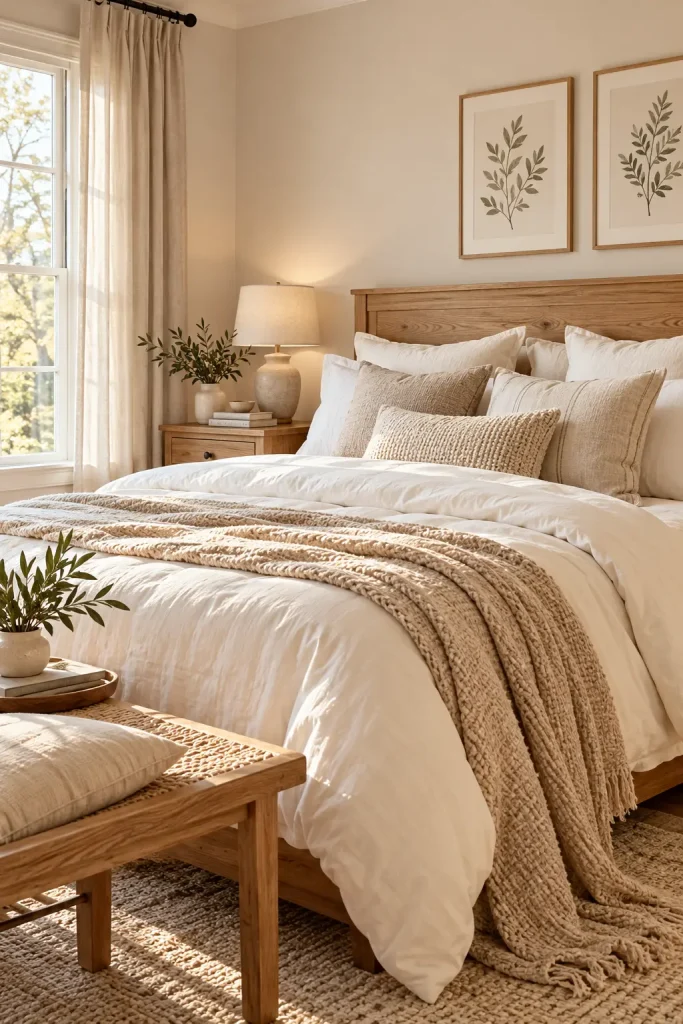
Neutral bedding creates a calm foundation that works with almost any bedroom style. Combine an ivory duvet, oatmeal linen sheets, cream pillowcases, and a soft beige throw to create depth without relying on bold colors.
The secret is to mix textures rather than use exactly the same fabric throughout the bed. Cotton percale, washed linen, quilted cotton, and a chunky knit blanket each add a different visual quality.
For a polished arrangement:
- Use two or three complementary neutral shades.
- Place larger sleeping pillows behind smaller decorative cushions.
- Fold a textured throw across the foot of the bed.
- Keep patterns subtle so the room feels restful rather than busy.
2. Create a Cozy Bedroom With Warm Wood Accents
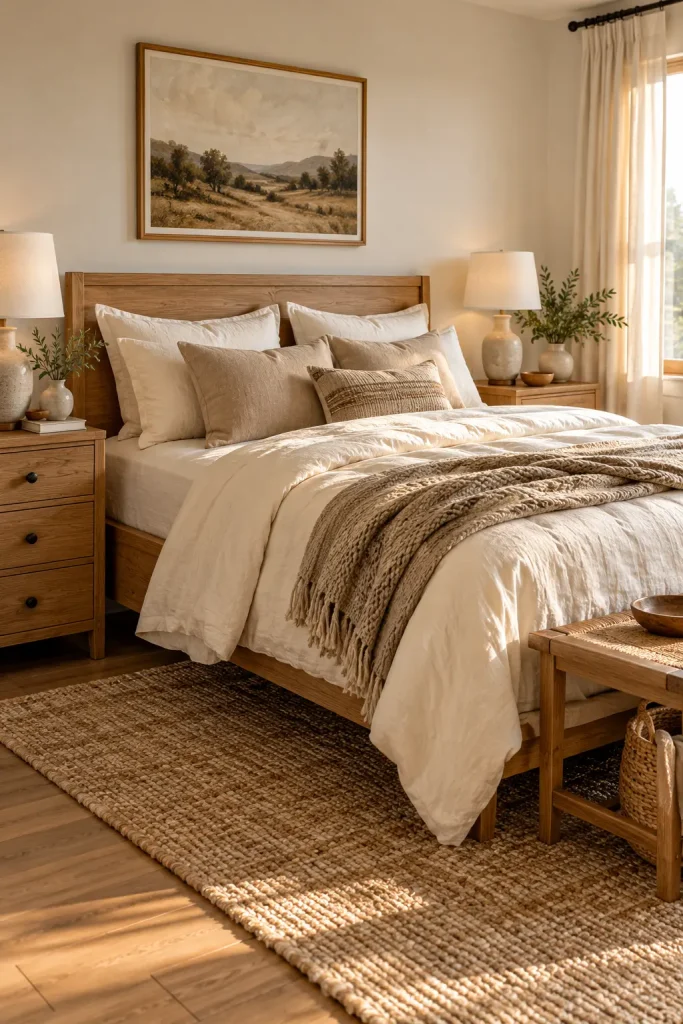
Natural wood introduces warmth that balances cool walls, white bedding, and simple contemporary furniture. An oak bed frame, wooden nightstands, or a small bench can make a bedroom feel grounded and welcoming.
You don’t need matching furniture throughout the room. Mixing light oak with a slightly deeper walnut accent can create a more collected, personal look, provided the finishes share a compatible undertone.
For a budget-conscious update, replace one or two decorative accessories with wood, such as a bedside tray, picture frame, or small stool. Renters can achieve a similar effect without replacing permanent fixtures.
3. Add a Statement Headboard
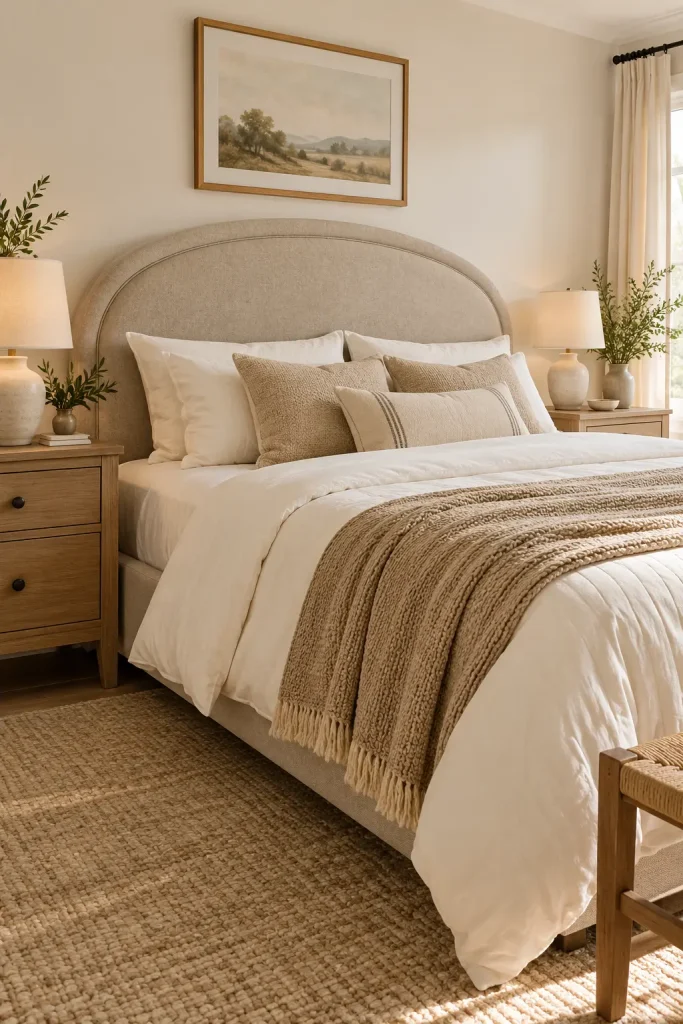
A statement headboard gives the bed a clear focal point and helps the entire room feel more intentionally designed. An upholstered headboard with a curved silhouette softens straight furniture lines, while a tall rectangular design creates a more tailored, contemporary effect.
Choose the scale according to your room. A wide headboard can anchor a large bed against an expansive wall, while a slim profile works better in a compact bedroom.
Consider these options:
- Channel upholstery: adds vertical lines and a tailored appearance.
- Curved upholstery: introduces a softer, sculptural shape.
- Wood slats: bring natural texture and a modern architectural feel.
- Simple padded panels: create a clean backdrop for layered pillows.
Keep nearby wall decor relatively restrained so the headboard remains the main feature.
4. Use Soft, Warm Bedside Lighting
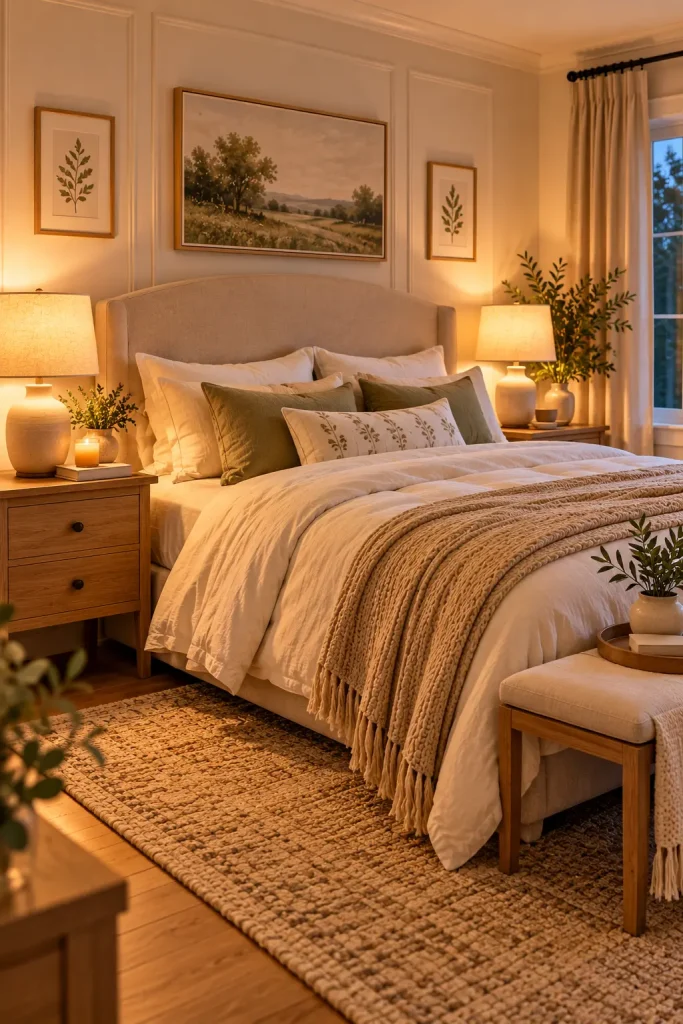
Lighting changes how a bedroom feels throughout the day. A bright overhead fixture can be useful for cleaning and getting dressed, but softer bedside lighting makes the room feel more comfortable in the evening.
Place a table lamp on each side of the bed when space allows. In a smaller bedroom, wall-mounted reading lights or compact plug-in sconces free up the nightstand surface.
Look for lampshades that diffuse light rather than producing harsh glare. Warm-white bulbs are generally a good starting point for a relaxing atmosphere, and dimmable fixtures offer flexibility for reading, winding down, or waking up.
5. Bring Nature Indoors With Greenery
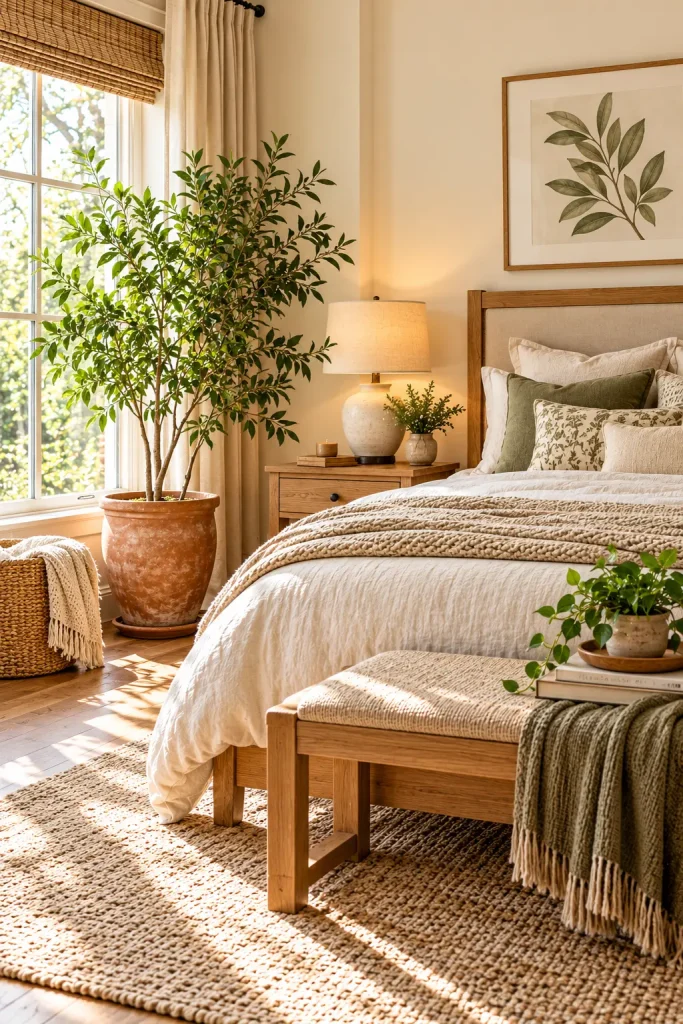
A little greenery can make bedroom decor feel fresher and more connected to nature. A leafy plant beside a sunny window, a small arrangement on a dresser, or a simple branch in a ceramic vase introduces organic shapes that contrast beautifully with rectangular furniture.
Choose plants according to the light and care you can realistically provide. If your bedroom receives limited daylight, select a suitable low-light plant or use quality faux greenery rather than placing a sun-loving plant in an unsuitable location.
Avoid overcrowding the bedside table. One well-proportioned plant often looks more intentional than several small pots competing for attention.
6. Paint the Walls a Soft Sage Green
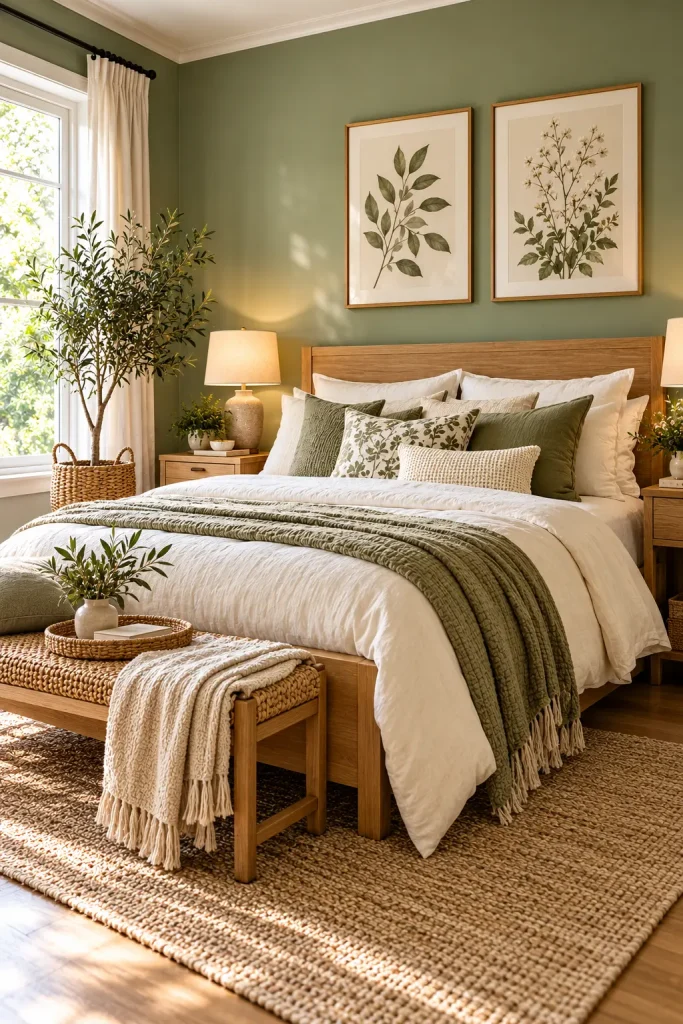
Sage green is a lovely choice for a bedroom because it brings a muted botanical tone into the room without overwhelming the furnishings. Pair it with warm white, natural oak, and linen for a relaxed look, or introduce charcoal accents for a more contemporary finish.
Before painting every wall, test a sample in different lighting conditions. Sage can appear gray, yellow-green, or more saturated depending on the daylight and surrounding finishes.
For a smaller or darker bedroom, consider using sage on the wall behind the bed and keeping the remaining walls a lighter shade. This creates a defined focal point while maintaining a sense of openness.
7. Style a Beautiful Bedroom Gallery Wall
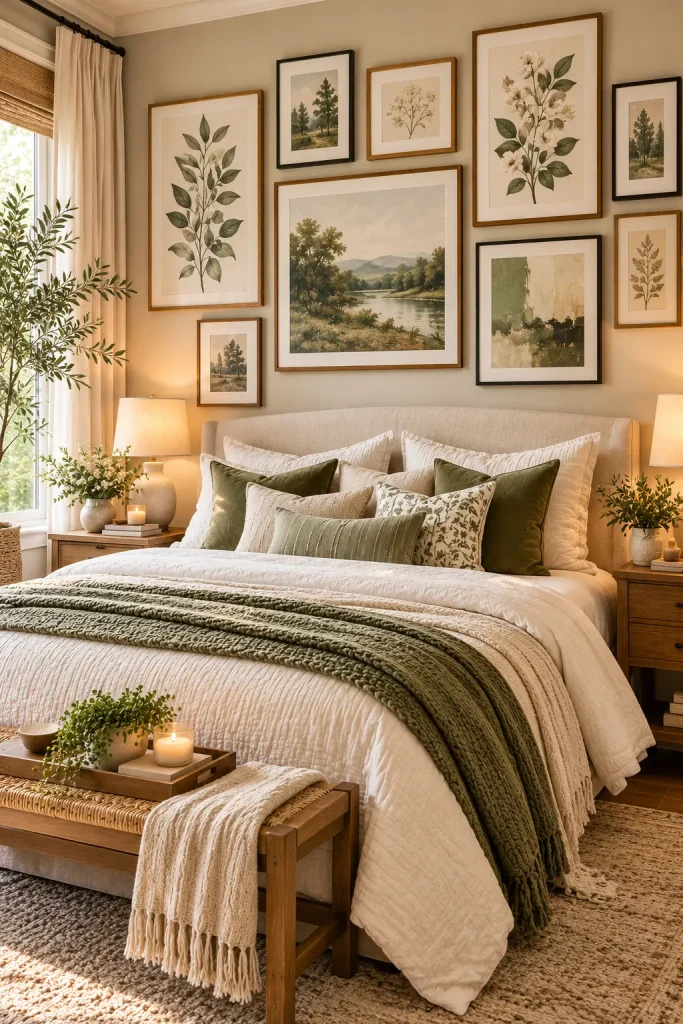
A gallery wall adds personality to a bedroom and makes the space feel less like a furniture showroom. Above the bed, a thoughtful collection of botanical prints, abstract artwork, landscapes, or personal photographs can create a focal point without requiring architectural changes.
For a cohesive arrangement, choose artwork that shares a common thread, such as similar frame finishes or a limited color palette. The images themselves can vary in subject and size.
Lay out the arrangement on the floor before hanging anything. Keep the grouping visually centered over the bed and leave enough space around the headboard so the artwork doesn’t feel cramped.
8. Add Floor-to-Ceiling Curtains
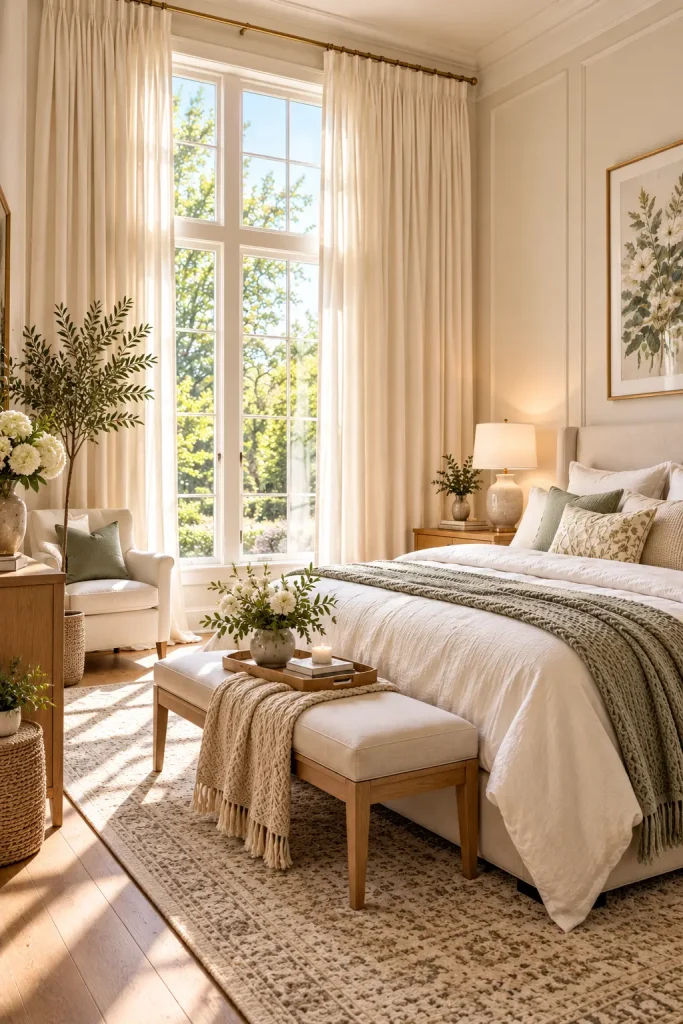
Long curtains can make a bedroom feel taller and more finished. Mounting the curtain rod closer to the ceiling rather than directly above the window draws the eye upward, while panels that extend to the floor create a graceful vertical line.
Linen-look curtains suit relaxed, natural interiors, while heavier lined drapes can provide more privacy and light control. In bedrooms that receive strong morning sunlight, check the fabric’s opacity before choosing a treatment.
For a layered approach, combine a discreet shade with decorative curtain panels. This allows you to control daylight without sacrificing the softness that curtains bring to the room.
9. Choose a Textured Bedroom Rug
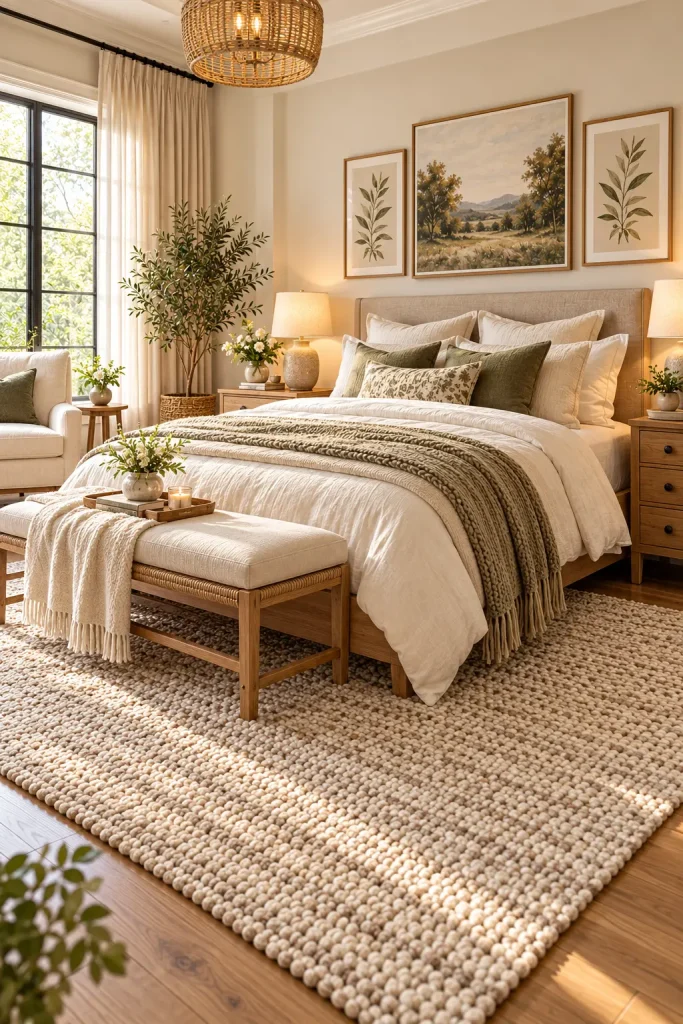
A bedroom rug helps visually connect the bed, nightstands, and other furniture. It also adds texture underfoot and can soften the appearance of hard flooring.
A generously sized rug placed beneath the bed usually looks more balanced than a small rug floating in front of it. Aim to leave visible rug space on the sides where you step out of bed, while accounting for the dimensions of the room and furniture.
Consider the material as carefully as the color. Wool offers a soft, substantial feel; cotton and washable options can be practical for everyday use; and low-pile designs are often easier to fit beneath doors and furniture.
Quick Tip: Measure the bed and surrounding walking areas before buying a rug. The right placement matters as much as the pattern.
10. Create a Moody Bedroom With Deep Colors
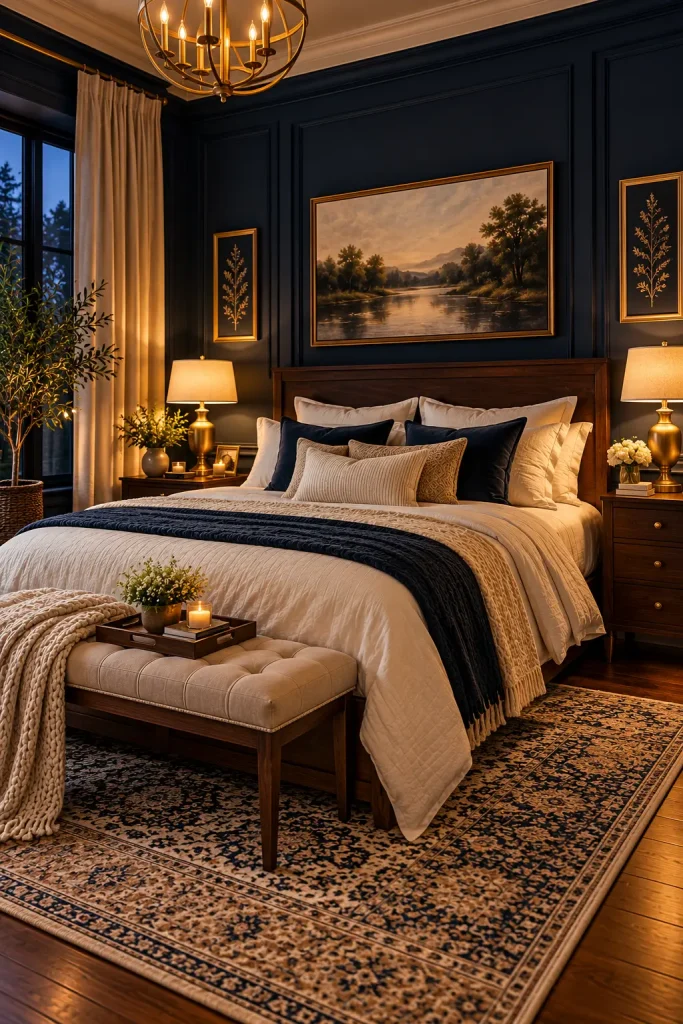
Not every cozy bedroom needs pale walls. Deep navy, forest green, charcoal, and rich chocolate brown can create an enveloping atmosphere, particularly when paired with warm lighting and tactile fabrics.
For a balanced look, combine a dark wall color with lighter bedding and a few reflective or natural finishes. Walnut furniture, brushed brass details, cream cushions, and a softly glowing lamp help prevent the space from feeling flat.
If you’re uncertain about committing to dark paint, begin with a single accent wall or introduce deeper colors through curtains, bedding, and artwork.
Do: Use a few contrasting light elements to establish depth.
Don’t: Add multiple competing dark patterns and heavy furniture in a room that already feels crowded.
11. Make the Bed the Main Focal Point
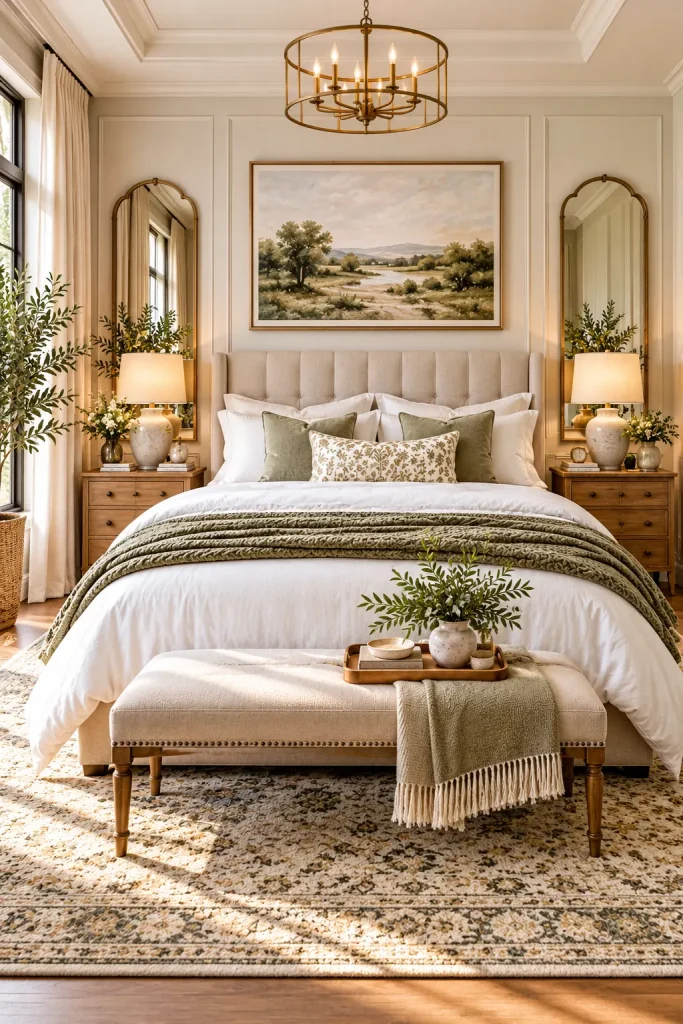
A balanced furniture arrangement makes a bedroom feel orderly and intentional. Positioning the bed on a suitable central wall, with a nightstand on either side, creates a natural focal point and a comfortable visual rhythm.
Matching bedside tables and lamps are one way to achieve symmetry, but they aren’t essential. Two different tables can still look cohesive when their heights, visual weight, or finishes relate to one another.
Leave practical walking space around the bed and make sure drawers, doors, and closet access remain usable. A beautiful arrangement should work just as well in everyday life as it does in a photograph.
12. Introduce Cottage-Inspired Bedroom Charm
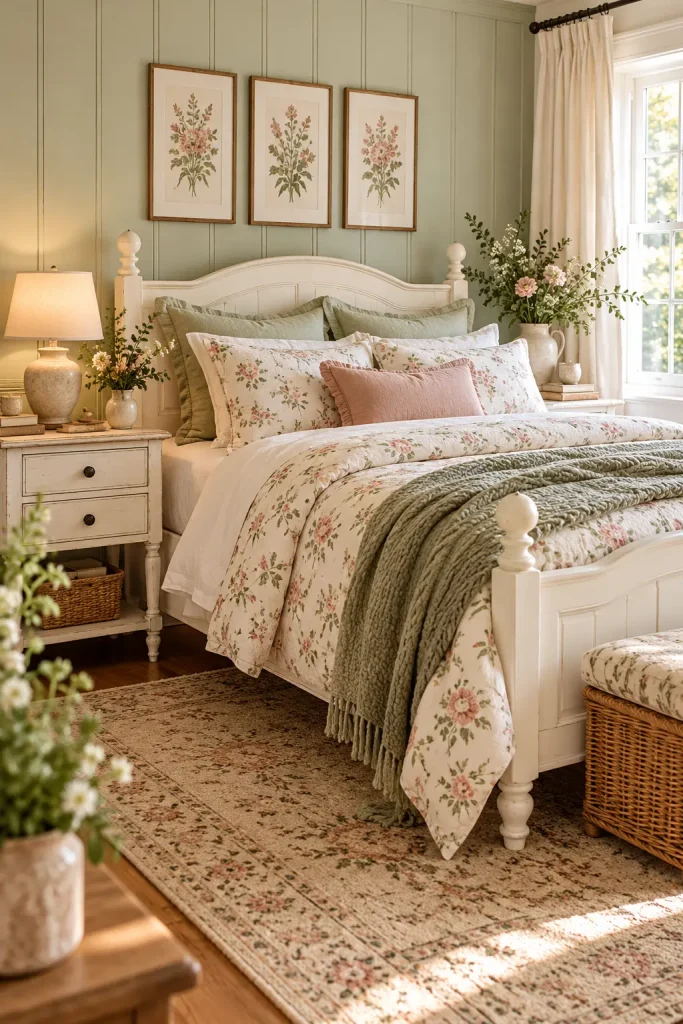
Cottage-inspired bedroom decor combines soft colors, natural materials, and details that feel collected over time. A painted wood bed, small floral patterns, vintage-style nightstands, and delicate lamps create a relaxed setting with plenty of personality.
The key is to balance decorative pieces with quiet surfaces. If the bedding features a noticeable floral print, choose simpler curtains and solid-colored cushions to keep the room from becoming visually crowded.
A few secondhand finds can give this style character without requiring a full furniture set. Look for a distinctive bedside table, an old wooden stool, or a framed botanical print.
13. Use Mirrors to Reflect Light
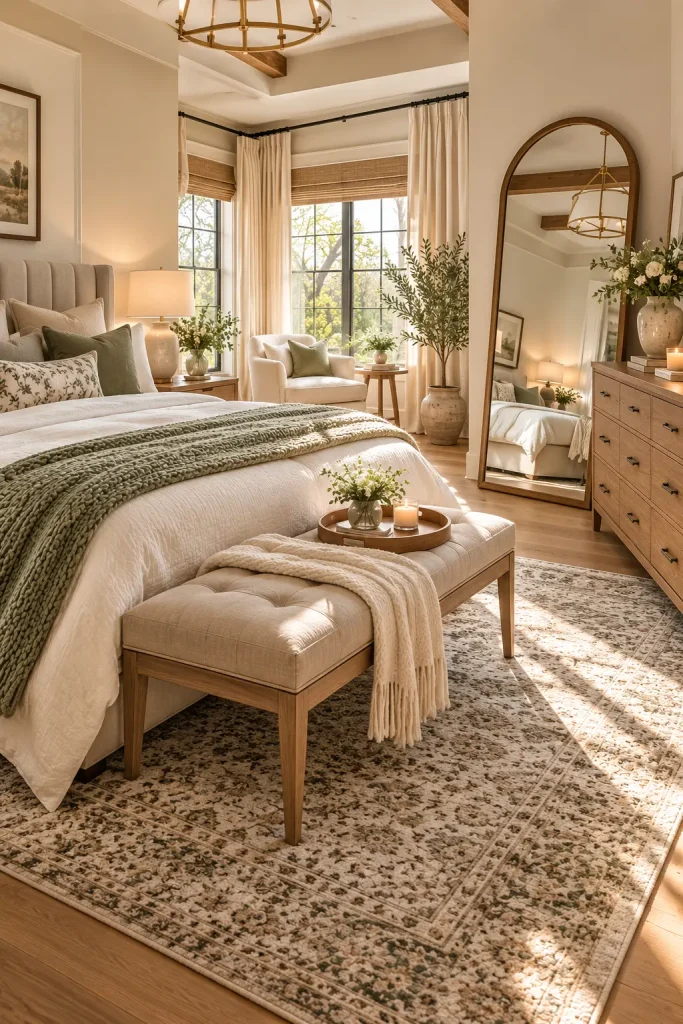
A well-placed mirror can make a bedroom feel brighter by reflecting light from a nearby window. It can also provide a useful dressing area and add an architectural shape to a plain wall.
A tall arched mirror works well beside a dresser or in an unused corner. A rectangular mirror above a vanity creates a more structured look, while a smaller decorative mirror can bring light to a narrow wall.
Pay attention to what the mirror reflects. Position it to capture a window, artwork, or attractive part of the room rather than an open closet or an untidy storage area.
For safety, secure leaning mirrors according to the manufacturer’s instructions, especially in homes with children or pets.
14. Add a Bench at the Foot of the Bed
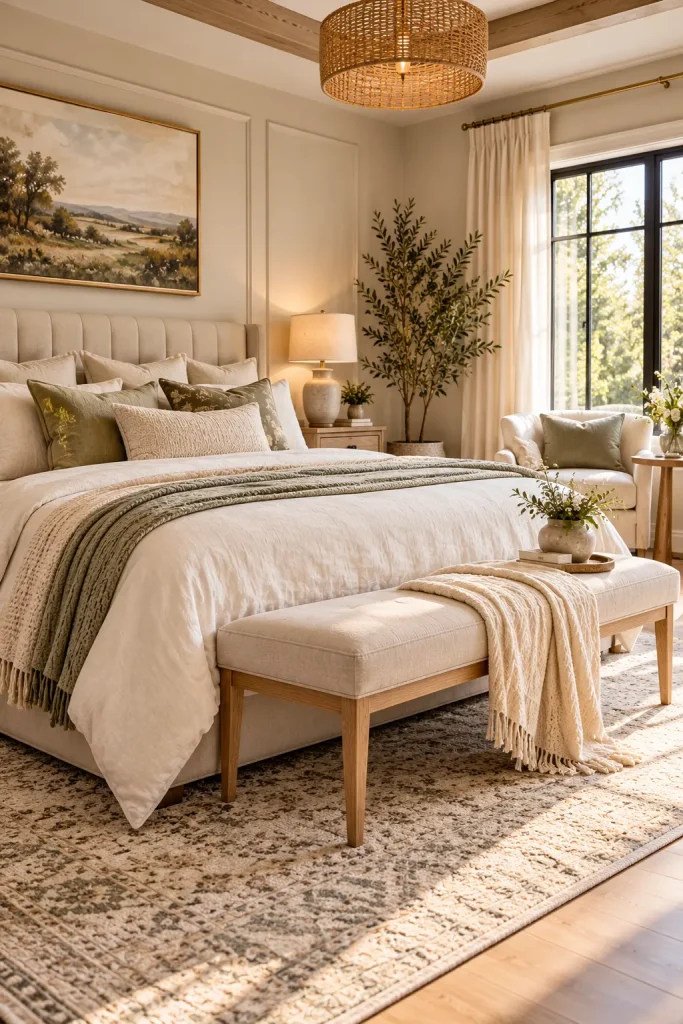
A bench at the foot of the bed gives the room a finished appearance and provides a convenient place to set a folded blanket or prepare clothing for the next morning.
Choose a design that suits the bed’s proportions. An upholstered bench introduces softness, a wooden bench brings natural warmth, and a storage bench can help keep extra linens organized.
In smaller bedrooms, make sure the bench doesn’t interfere with the main walking path or block drawers. A narrow design can offer the same visual benefit without making the room difficult to navigate.
15. Decorate With Natural Linen Textiles
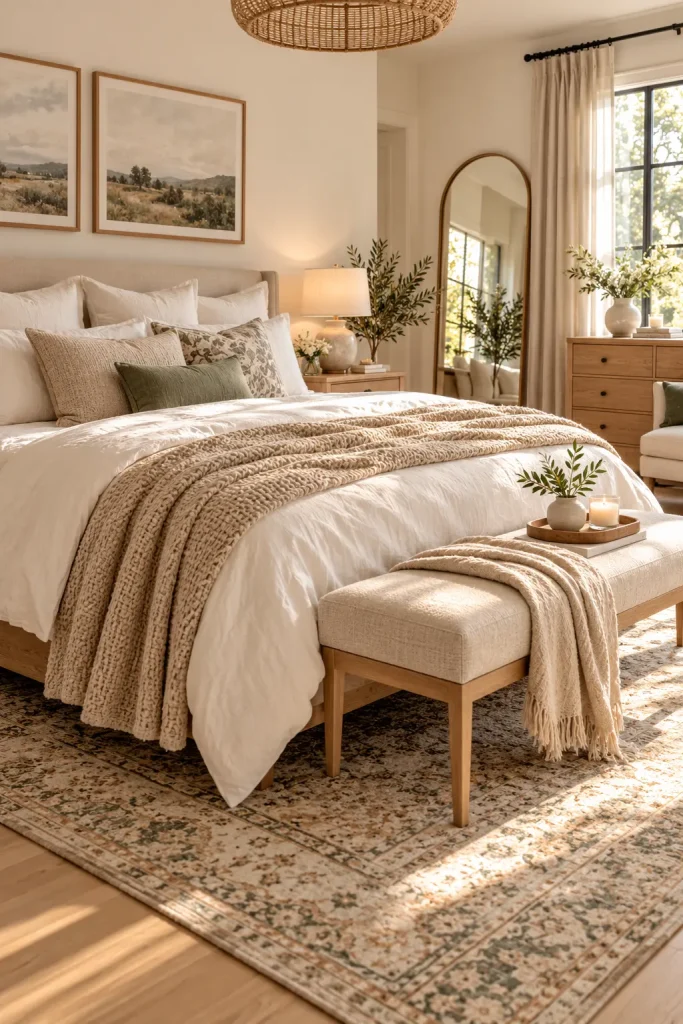
Linen brings a relaxed, slightly imperfect texture that suits both modern and traditional bedrooms. Its natural creases keep neutral bedding from looking too formal, while its understated appearance pairs well with wood, woven accessories, and simple ceramics.
You can introduce linen gradually rather than replacing all your bedding at once. Start with pillowcases, a duvet cover, or a lightweight throw in a shade that complements your existing sheets.
For a coordinated finish, combine warm ivory linen with oatmeal cushions and a slightly darker beige blanket. Keep the colors related but allow the fabrics to provide the variation.
16. Design a Minimalist Bedroom With Hidden Storage
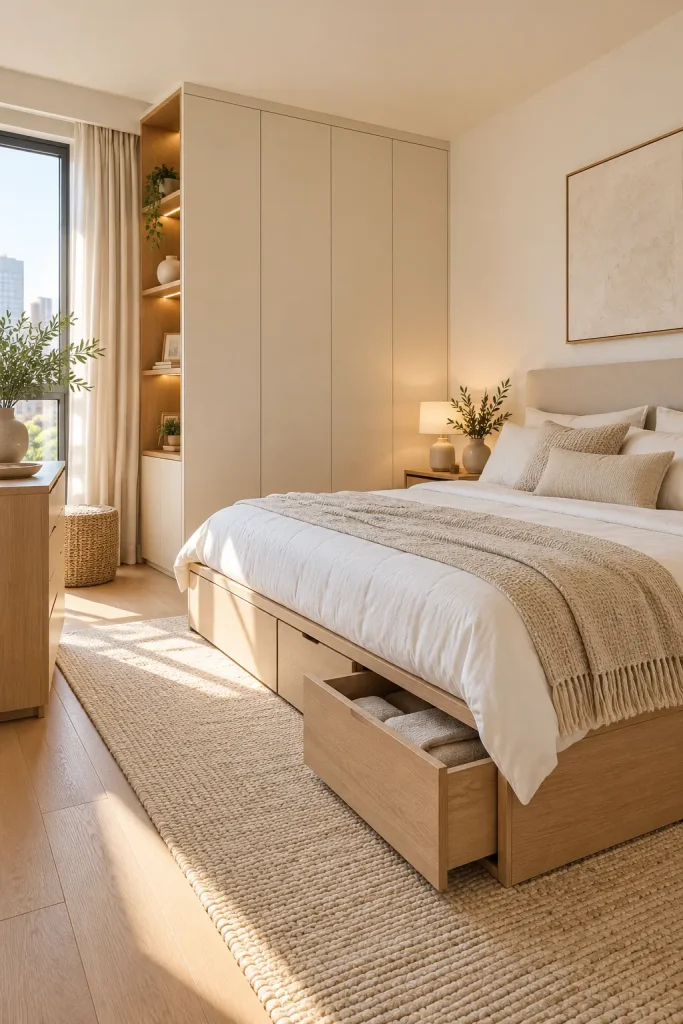
A minimalist bedroom doesn’t have to feel empty. The goal is to keep the room functional while reducing visual clutter, allowing a few carefully chosen materials and furnishings to stand out.
Start with furniture that serves more than one purpose. A bed with built-in drawers, a nightstand with closed storage, or a wardrobe with simple fronts can keep everyday items out of sight.
A restrained palette of warm white, pale oak, and soft gray helps create visual continuity. Instead of displaying many small accessories, choose one or two meaningful objects for the dresser or bedside table.
Practical approach:
- Remove items that don’t belong in the bedroom.
- Give frequently used belongings a convenient storage location.
- Keep the most visible surfaces relatively clear.
- Add texture through bedding, a rug, or curtains.
The result is a room that looks calm and remains easy to maintain.
17. Add a Canopy Bed for Soft Drama
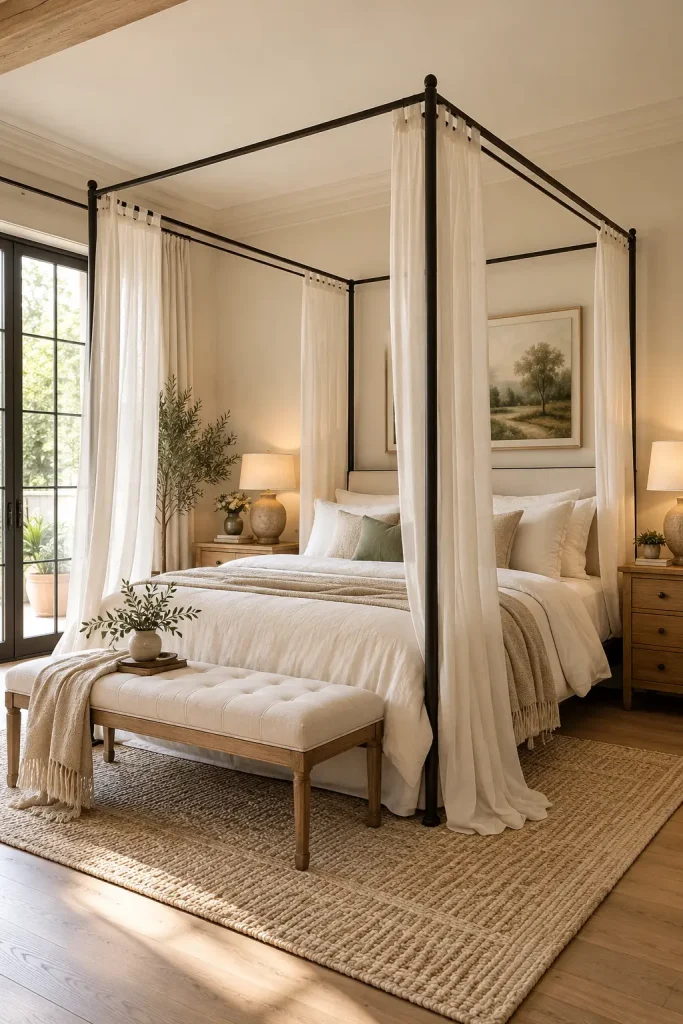
A canopy bed creates a strong architectural feature and gives the sleeping area a sense of enclosure. It can suit both spacious primary bedrooms and carefully planned guest rooms, provided the frame fits comfortably beneath the ceiling.
For a contemporary interpretation, choose a slim black or dark bronze frame with clean lines. Sheer ivory curtains soften the structure, while leaving the frame bare creates a simpler, more modern appearance.
Before buying a canopy bed, measure the ceiling height and account for ceiling fans, light fixtures, and curtain clearance. The frame should complement the room rather than dominate it.
18. Create a Reading Corner in an Unused Bedroom Corner
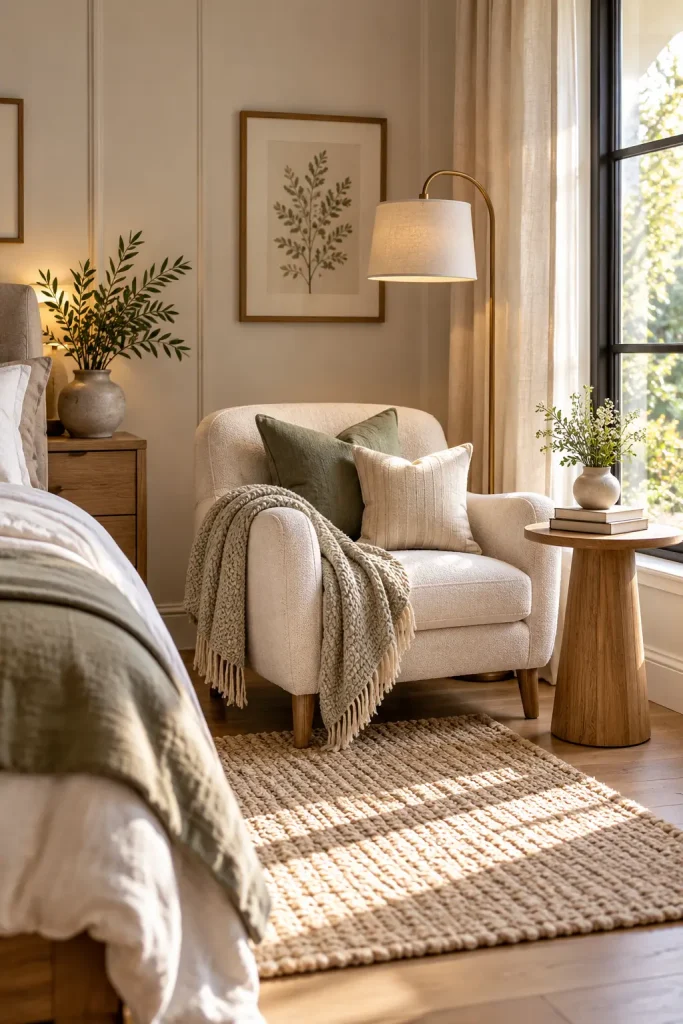
If your bedroom has an unused corner, turn it into a comfortable reading spot. An upholstered accent chair, a small side table, and a focused reading lamp can create a useful retreat without requiring a separate room.
Place the chair near a window when possible, but make sure the arrangement doesn’t obstruct curtains, heating vents, or walking paths. A compact chair and round side table work particularly well in smaller bedrooms.
Keep the styling simple: a cushion, a soft throw, and a small stack of books are often enough. If floor space is limited, a narrow upholstered chair or a wall-mounted reading light may be a better choice.
19. Make a Small Bedroom Feel More Spacious
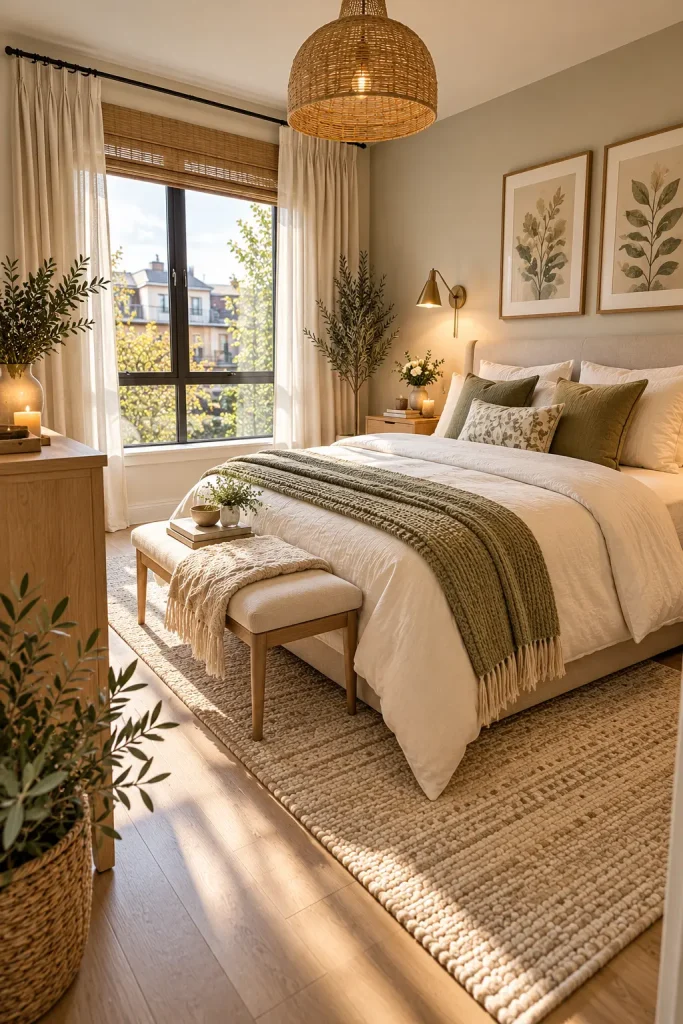
Small bedroom decor works best when every piece has a clear purpose. Oversized furniture, deep bedside tables, and too many decorative objects can make a compact room feel harder to move around in.
Choose a bed frame with a slim profile and consider floating nightstands if floor space is limited. Keep the palette relatively light, but use texture and subtle contrast so the room doesn’t feel plain.
Mirrors and well-placed lighting can also help the space feel brighter. If the room doubles as a work area, prioritize storage that keeps office supplies separate from bedside essentials.
| Design choice | Why it helps |
|---|---|
| Floating nightstands | Free up visible floor space |
| Wall-mounted lights | Reduce bedside-table clutter |
| Under-bed drawers | Make use of otherwise unused space |
| Floor-to-ceiling curtains | Draw the eye upward |
| A limited color palette | Creates a more unified appearance |
20. Bring in Vintage Bedroom Furniture
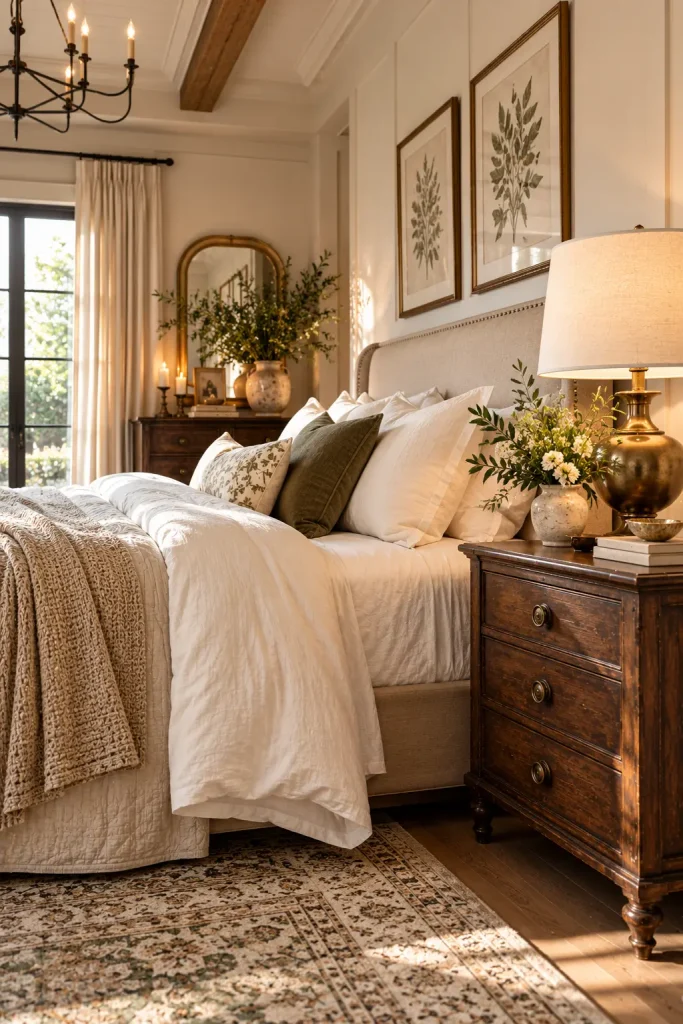
Vintage furniture gives a bedroom a sense of individuality that can be difficult to achieve with a matching furniture set. An antique nightstand, a weathered wooden dresser, or a distinctive bedside lamp can add character to an otherwise simple room.
The easiest way to make older pieces feel current is to pair them with uncomplicated bedding and contemporary lighting. For example, a dark wood bedside table looks especially inviting beside cream linen and a simple ceramic vase.
Look for pieces with useful proportions and sound construction. If you buy secondhand furniture, check drawers, joints, stability, and any signs of pests before bringing it into your home.
21. Add Architectural Interest With Wall Molding
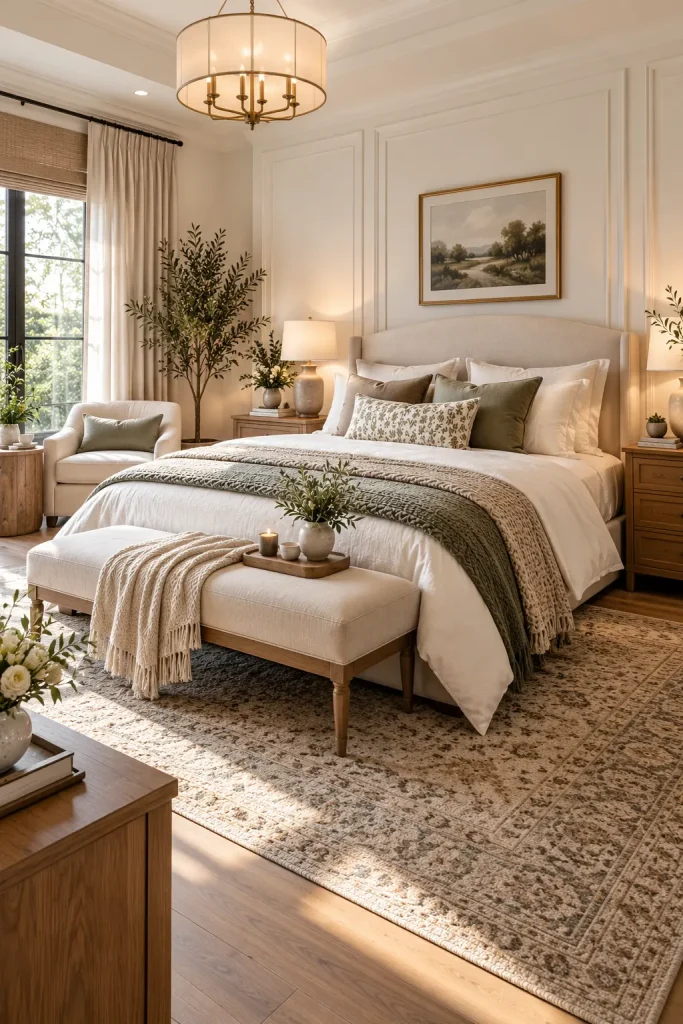
Wall molding creates architectural detail without requiring dramatic colors or elaborate decoration. Simple rectangular panels behind the bed can make a plain wall feel more considered and give the headboard a defined setting.
For a contemporary bedroom, use understated molding painted the same color as the wall. This creates subtle shadows and depth without introducing a competing accent color.
Applied molding can be a moderate DIY project, depending on the wall condition, tools, and material chosen. Measure the entire arrangement before installation, allowing consistent spacing around the bed and any nearby doors or windows. Renters may prefer framed artwork or removable wall treatments instead.
22. Use a Bold Accent Color in a Neutral Room
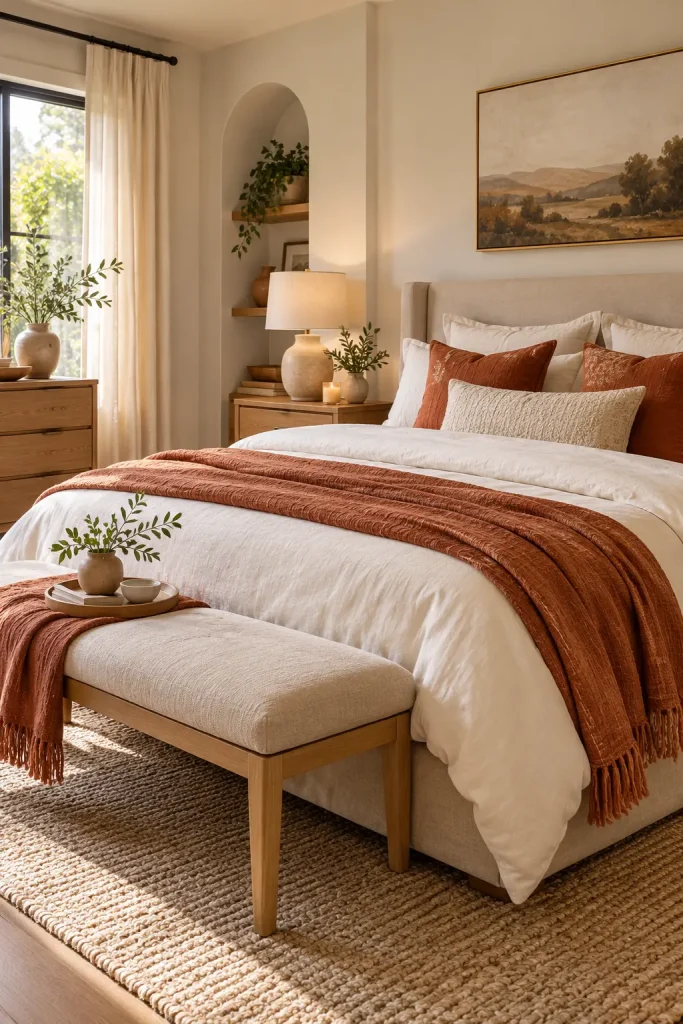
A neutral bedroom can benefit from one confident accent color. Terracotta, rust, dusty blue, olive, or muted burgundy can add personality without requiring a complete redesign.
Begin with removable items such as cushions, a throw, artwork, or a lampshade. This approach makes it easy to experiment with color before committing to painted walls or new furniture.
The most cohesive results usually come from repeating the accent shade in a few places rather than scattering several unrelated colors around the room.
Color combinations to consider:
- Terracotta and cream: warm, earthy, and inviting.
- Dusty blue and oatmeal: quiet and slightly coastal.
- Olive and warm white: natural and grounded.
- Burgundy and soft beige: rich without feeling overly dark.
23. Decorate With Woven Baskets and Natural Textures
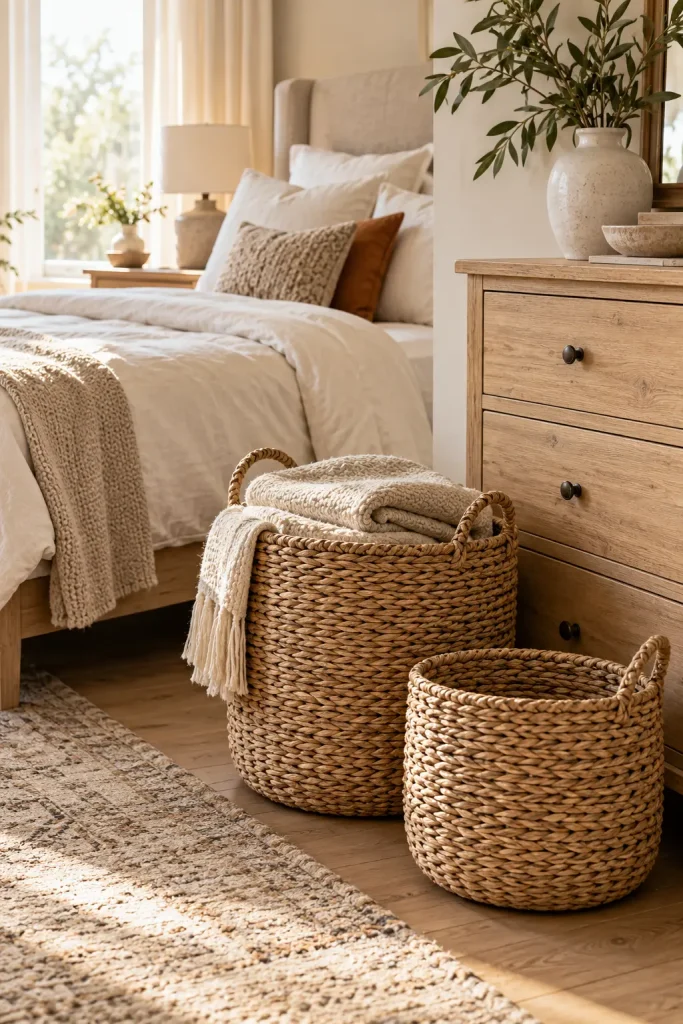
Woven baskets introduce texture while helping keep everyday belongings organized. A large basket beside the dresser can hold spare blankets, while smaller baskets on shelves can corral accessories and other bedroom essentials.
Seagrass, rattan, and water hyacinth each have a distinctive woven appearance. Choose a finish that complements the room’s existing materials rather than adding several competing basket styles.
Think about what each basket will hold before choosing its size. A blanket basket needs enough height and width for bulky textiles, while a bedside basket should be easy to reach without interfering with walking space.
24. Choose Coordinated Nightstands With Personal Details
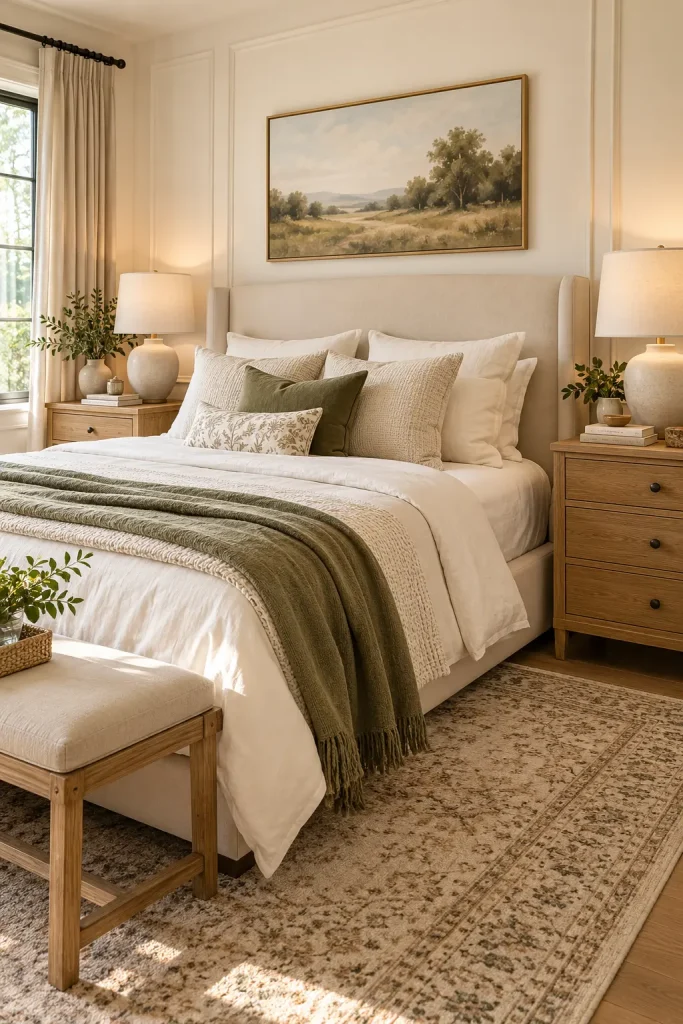
Nightstands provide a useful opportunity to combine everyday function with thoughtful styling. Matching tables can establish symmetry, while a few personal objects keep the room from feeling too staged.
Start with the essentials: a lamp, a place for a phone or book, and enough clear surface area for items you use at night. Then add one or two decorative details, such as a ceramic dish, a framed photograph, or a small vase.
Avoid filling every inch of the tabletop. The most attractive bedside arrangements leave room for practical use and make cleaning easier.
25. Try a Modern Black-and-White Bedroom
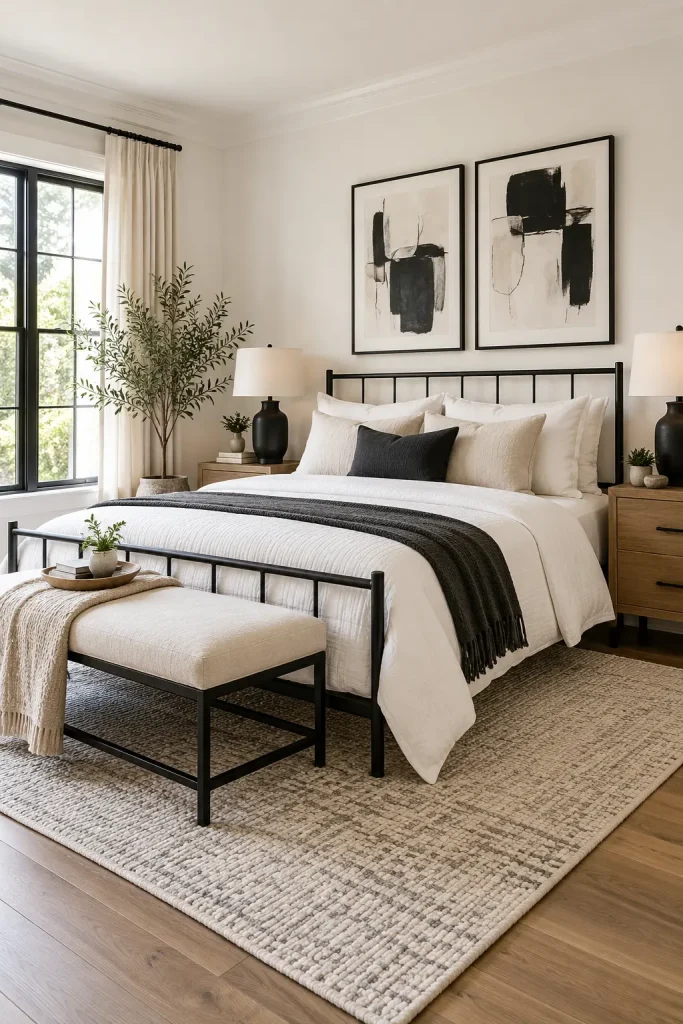
Black-and-white bedroom decor offers a clean, graphic look that can feel contemporary without being cold. White bedding and pale walls keep the space bright, while black furniture, lamps, or picture frames create definition.
The trick is to introduce texture so the room doesn’t become a collection of flat, contrasting surfaces. A quilted coverlet, a wool rug, a matte-black lamp, and natural wood flooring add variety while preserving the monochrome palette.
For a softer version, introduce warm gray or a small amount of beige. These transitional tones bridge the black and white and help the bedroom feel more comfortable.
26. Make the Bedroom Feel Like a Boutique Hotel
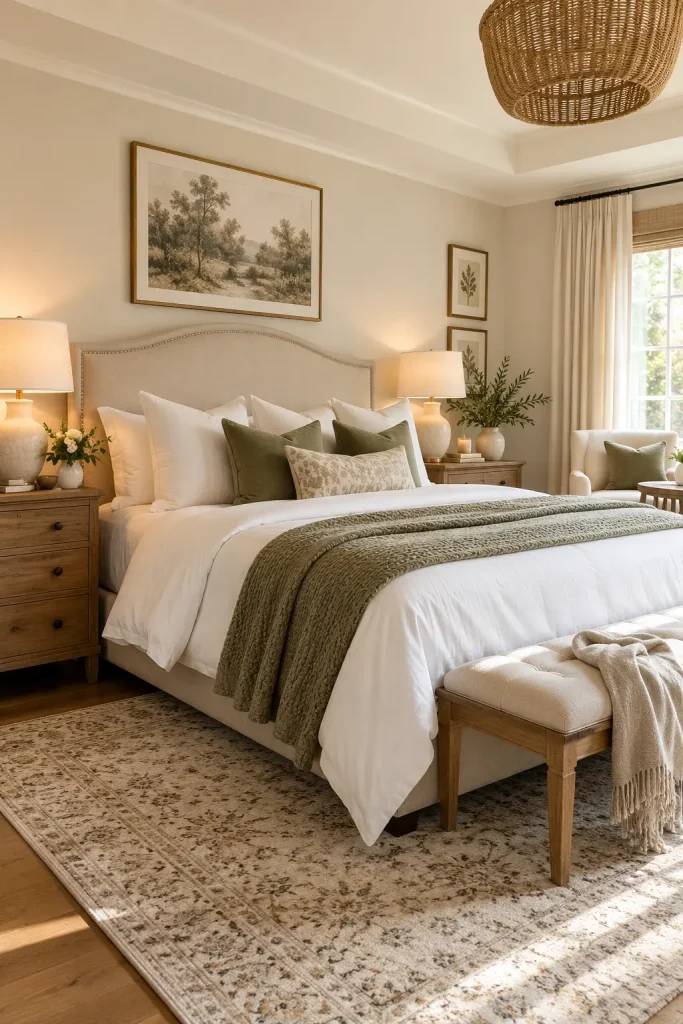
A boutique-hotel-inspired bedroom is less about expensive furniture and more about thoughtful presentation. Smoothly arranged bedding, a coordinated color palette, comfortable lighting, and uncluttered surfaces can make an everyday bedroom feel more polished.
Start by giving the bed a tidy, layered appearance. Use a duvet with enough drape, arrange the pillows neatly, and fold a coverlet or throw at the foot of the bed. Add matching or complementary lamps, and keep nightstands organized.
If you want a more elevated finish, invest in one or two pieces that receive daily use, such as quality sheets, supportive pillows, or a well-made bedside lamp. There’s no need to replace everything at once.
27. Create a Personal Bedroom With Meaningful Decor
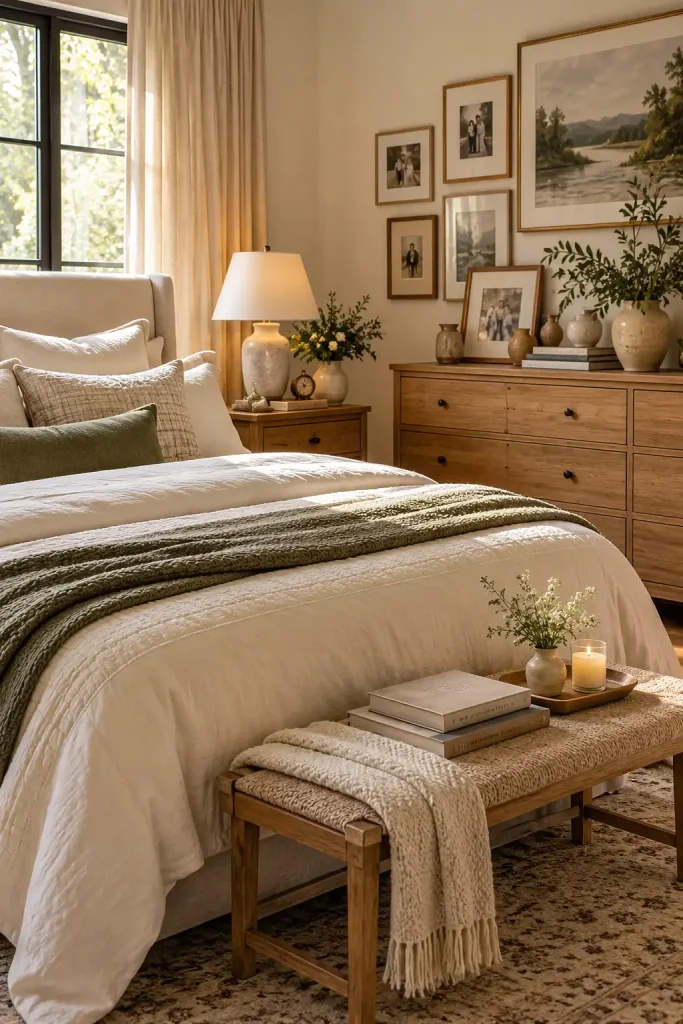
The most inviting bedroom isn’t necessarily the one with the newest furniture or the most carefully coordinated accessories. It’s the one that reflects the person who uses it.
Display a few meaningful photographs, a favorite piece of art, books you enjoy, or a small keepsake collected during a memorable trip. These details give the room personality and help it feel distinct from a generic catalog interior.
To keep the arrangement visually cohesive, group smaller objects together and repeat a few materials or colors. A collection of framed photographs can share similar frame finishes, while souvenirs look more intentional when displayed on one shelf rather than scattered throughout the room.