
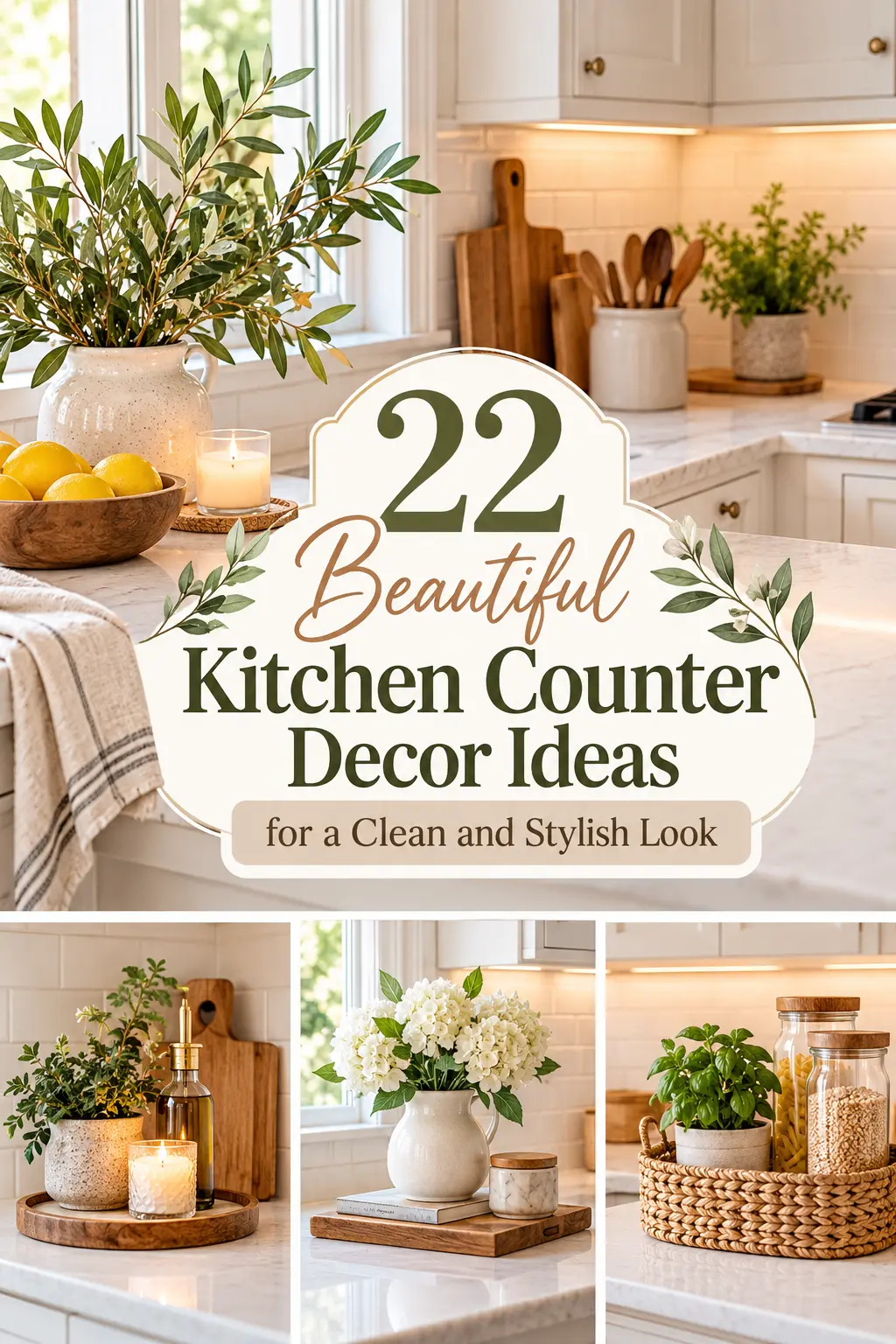
22 Beautiful Kitchen Decor Ideas for a Clean and Stylish Look
Kitchen countertops work hard every day, from preparing breakfast and making coffee to chopping vegetables and serving meals. Because these surfaces are so frequently used, decorating them can feel like a balancing act. You want your kitchen to look warm and welcoming without sacrificing the clear workspace you need.
The best kitchen counter decor ideas combine beauty with everyday function. A small potted herb, a wooden cutting board, a thoughtfully arranged tray, or a simple ceramic vase can add character without making the room feel crowded. The key is to choose a few pieces that complement your cabinets, backsplash, and hardware while leaving enough open counter space for cooking.
These 22 kitchen counter decorating ideas explore different styles, from organic modern and farmhouse to minimalist and colorful. Each offers a practical way to create a kitchen that feels polished, personal, and easy to maintain.
1. Style a Wooden Tray With Everyday Essentials
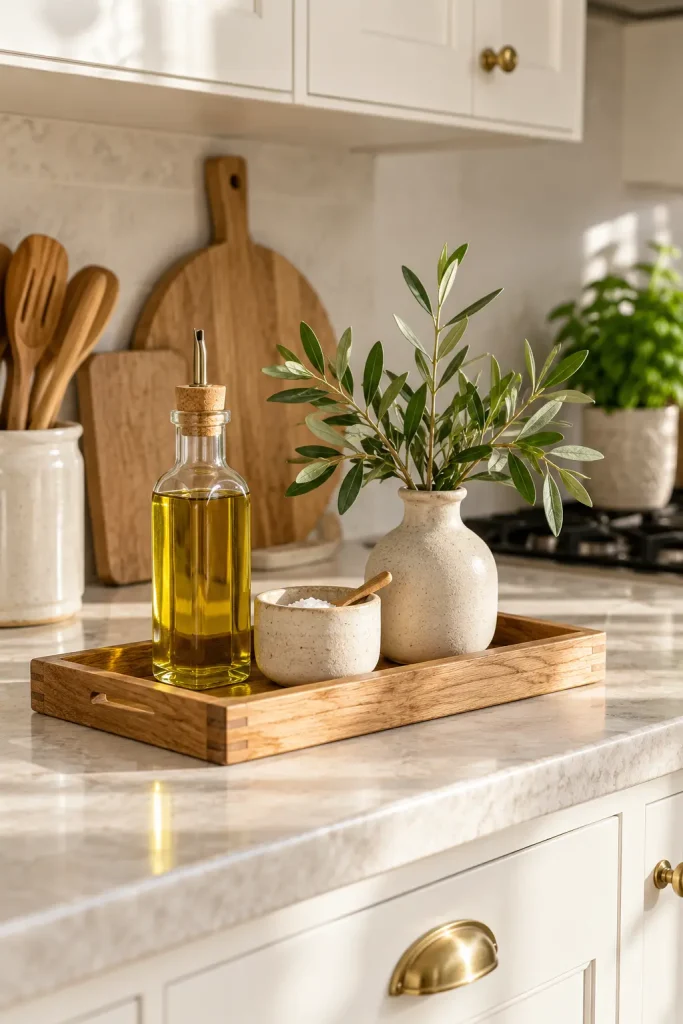
A wooden tray is one of the easiest ways to make kitchen counter decor look intentional. Instead of scattering frequently used items across the countertop, group them on a rectangular oak or walnut tray. The natural wood adds warmth, while the tray creates a visual boundary that keeps the arrangement looking organized.
For a practical everyday setup, include a glass bottle of olive oil, a small salt cellar, and a ceramic container for your favorite seasonings. In a larger kitchen, you can add a tiny vase with fresh greenery. In a smaller kitchen, keep the arrangement to two or three items.
Choose a tray that complements your cabinetry or cutting boards. Leave the surrounding countertop clear so the display feels like a purposeful accent rather than another collection of things to clean around.
2. Display Wooden Cutting Boards Against the Backsplash
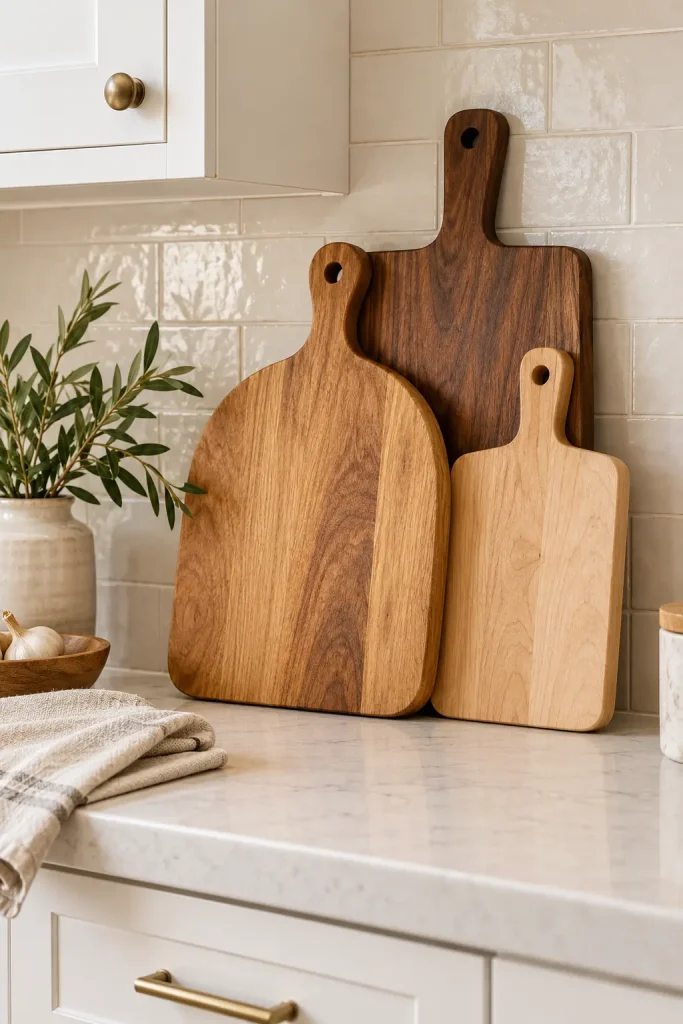
Wooden cutting boards can serve as both useful kitchen tools and decorative accents. Their natural grain breaks up the smooth surfaces of stone countertops, painted cabinets, and tiled backsplashes. A layered arrangement of two or three boards also adds height without requiring extra countertop accessories.
Mix board shapes for a more interesting display. Pair a large rectangular board with a smaller round board or one with a gently curved handle. Oak, walnut, and maple each bring a different tone to the kitchen.
Styling tip: Lean the boards securely against the backsplash in a spot away from the sink and stovetop. Keep decorative boards separate from boards used for raw meat, and allow washed boards to dry properly before storing them upright.
3. Add a Small Vase of Fresh Flowers
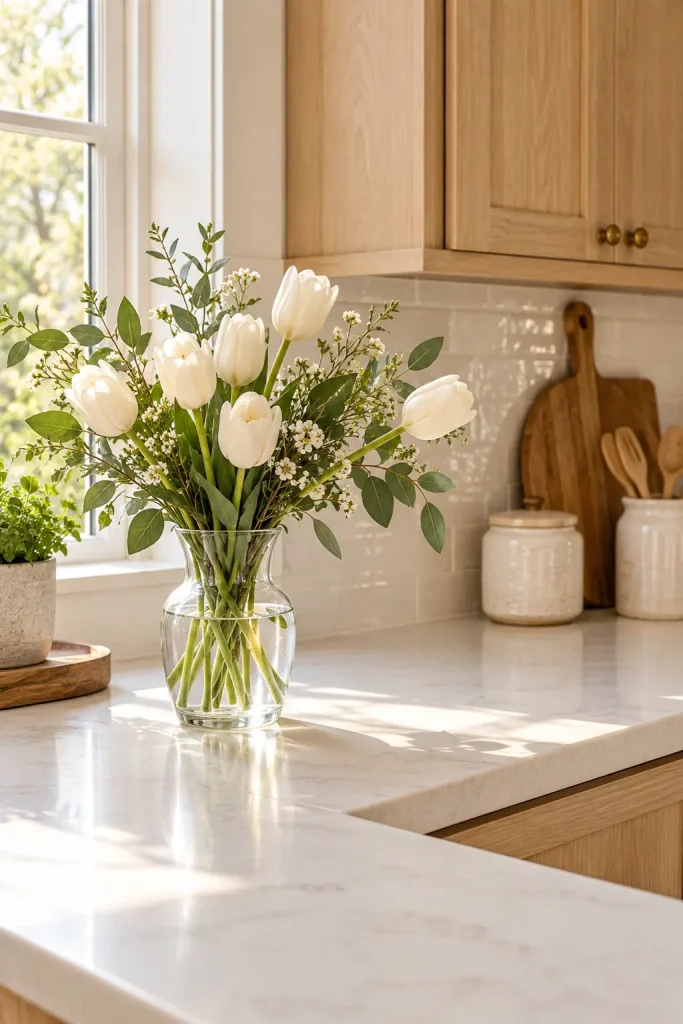
Fresh flowers introduce color and softness to a kitchen filled with hard surfaces. A modest arrangement of white tulips, daisies, or seasonal garden flowers can make a countertop feel more inviting without overwhelming the room.
Choose a vase that suits the overall style. Clear glass looks light and understated, while a handmade ceramic vase creates a more rustic focal point. Keep the arrangement relatively low if it sits near a food-preparation area, and place it where it will not obstruct a frequently used appliance.
For a longer-lasting display, change the water regularly, trim the stems as needed, and remove flowers that begin to wilt. If fresh flowers aren’t practical, a few leafy branches can provide a similar natural touch.
4. Create a Minimalist Coffee Station
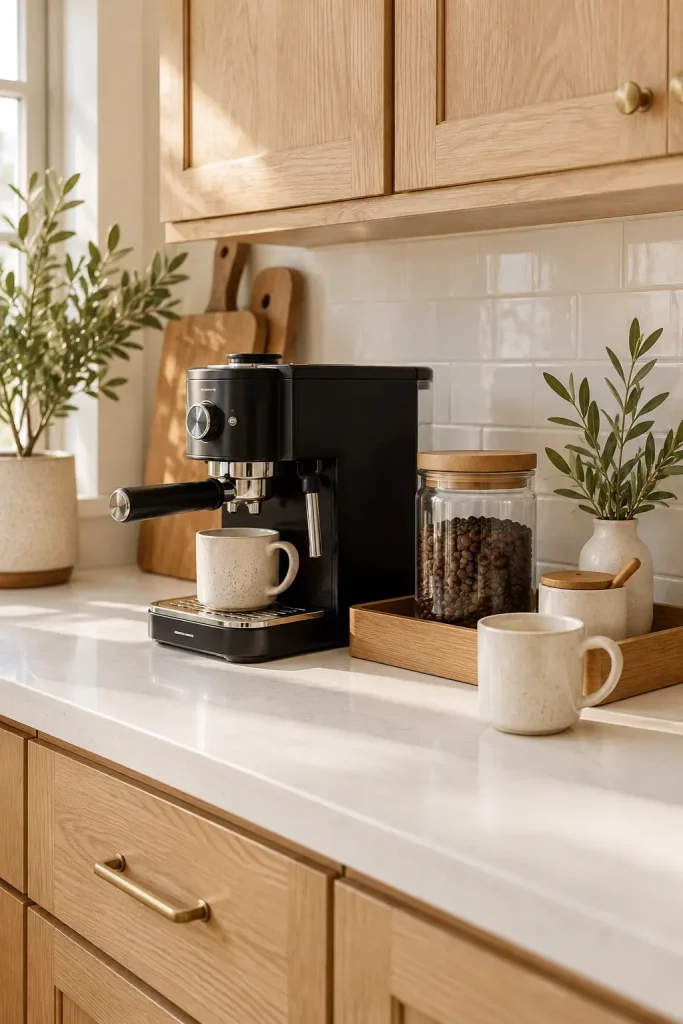
A coffee station gives one section of your countertop a clear purpose. Rather than keeping coffee supplies spread across the kitchen, arrange them together in a designated corner. This works particularly well for morning routines and can make even a modest kitchen feel thoughtfully organized.
Include only the items you use regularly:
- A compact coffee maker or espresso machine.
- Two or three matching ceramic mugs.
- An airtight container for coffee beans or grounds.
- A small spoon rest or sugar bowl, if needed.
Choose a consistent palette, such as cream, black, and oak, to make the arrangement feel cohesive. If you have limited counter space, use a slim shelf above the station for mugs, provided it is safely installed and does not interfere with cabinets.
5. Bring in Fresh Potted Herbs
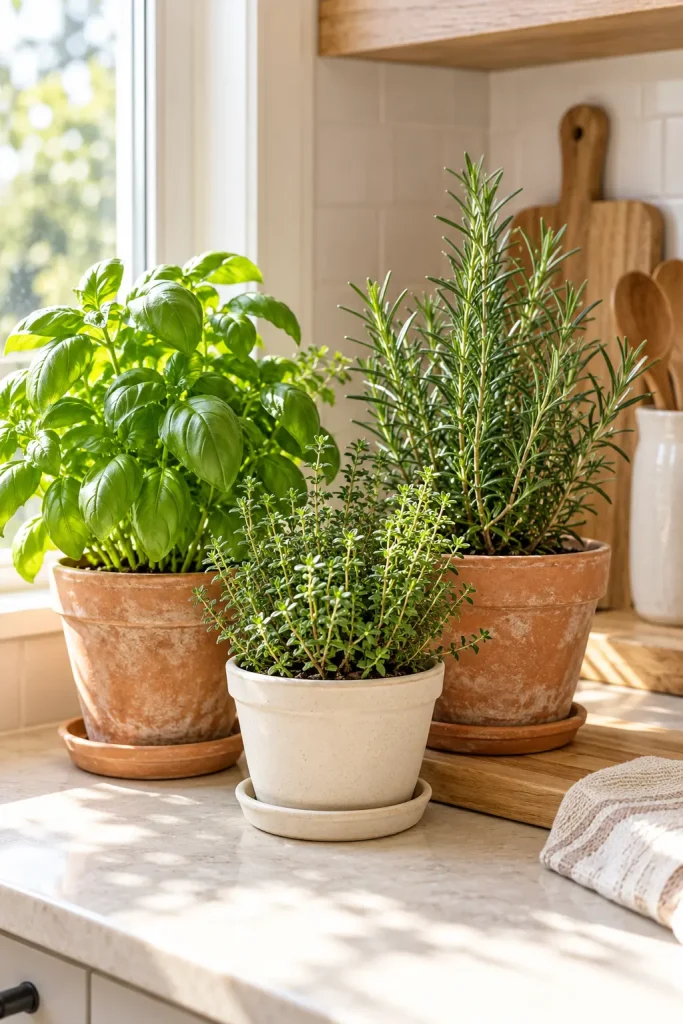
Fresh herbs bring living greenery into the kitchen while keeping useful ingredients within reach. Basil, thyme, parsley, and rosemary can look lovely in small terracotta pots or coordinating ceramic planters.
Arrange two or three pots near a bright window when the available light suits the herbs you choose. A shallow tray beneath the pots helps contain soil and water, while a little variation in pot height prevents the display from looking too uniform.
Remember that herbs have different light and watering needs. Basil generally appreciates warmer conditions and consistent moisture, while rosemary prefers well-drained soil and should not remain waterlogged. Choose plants according to your kitchen’s actual light rather than appearance alone.
6. Use Matching Ceramic Canisters
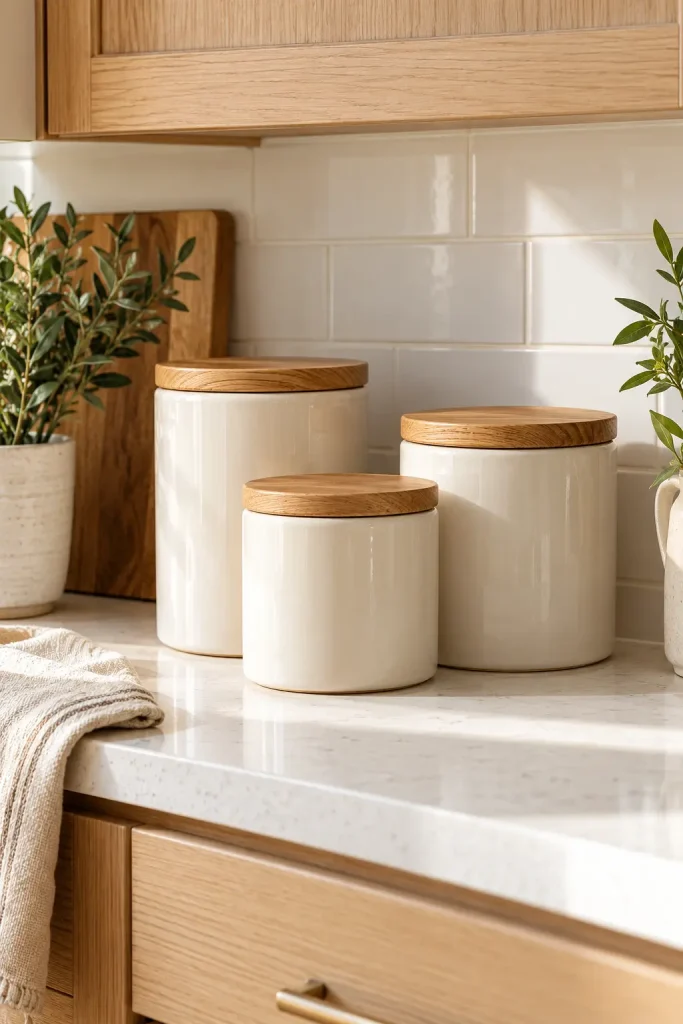
Ceramic canisters provide practical storage while adding a coordinated decorative element. They’re useful for keeping frequently used dry ingredients such as coffee, tea, sugar, or baking supplies close at hand.
Choose two or three containers in complementary shapes and finishes. Cream, warm white, muted sage, and soft taupe work well with natural wood and stone. Matching wooden lids can introduce texture, while a mix of smooth and lightly textured ceramics creates subtle variation.
Keep the canisters grouped near the area where you use their contents. If your kitchen has limited space, select a compact set rather than filling an entire counter with containers.
For everyday convenience, make sure each container is easy to identify and that the lids close securely.
7. Add a Marble or Stone Serving Board
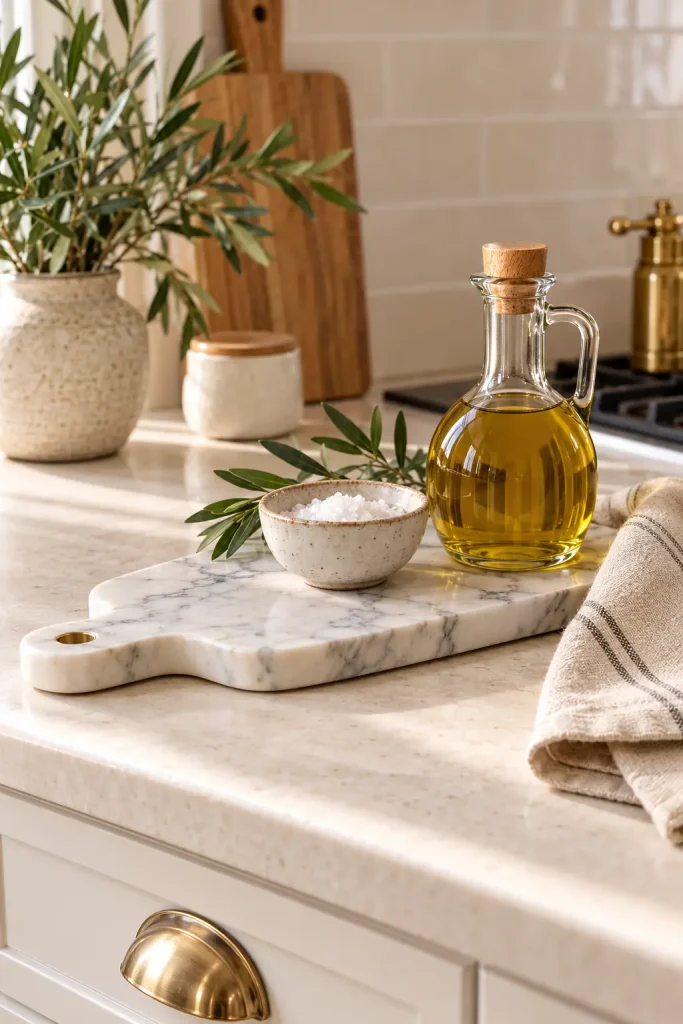
A marble or stone serving board creates a cooler, more refined contrast against warm wood cabinets and neutral countertops. Its natural veining adds visual interest without the need for bright colors or elaborate accessories.
For a simple arrangement, place a small stone board near the backsplash and style it with a ceramic salt bowl and one attractive bottle of olive oil. Alternatively, leave the board mostly bare so its material and shape become the focal point.
White marble suits light, airy kitchens, while darker stone can work beautifully in spaces with black hardware or deep-colored cabinetry. Keep stone boards away from edges where they could be knocked to the floor, and follow the care recommendations for the particular material.
8. Make a Statement With a Sculptural Fruit Bowl
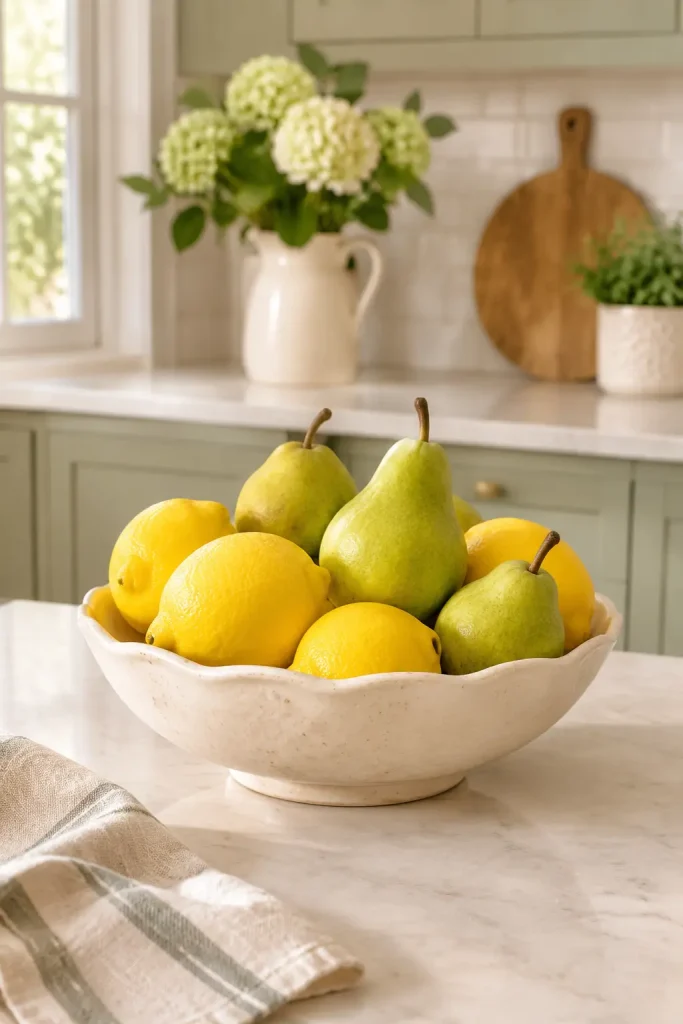
A fruit bowl is an ideal combination of useful storage and kitchen counter decor. Instead of hiding fresh produce away, use a thoughtfully shaped bowl to introduce a natural pop of color.
A wide ceramic bowl in ivory, sand, or muted green suits a neutral kitchen, while a dark wood bowl creates a richer, more organic look. Lemons, pears, apples, and oranges add seasonal color, but avoid overfilling the bowl until the fruit becomes a mound.
Place the bowl on an island or an open stretch of countertop where it won’t interrupt food preparation. Keep it away from the stove and other warm areas, and store produce according to its individual needs.
Quick Tip: Choose a bowl with a broad base so it sits securely on smooth stone.
9. Display a Small Leaning Art Print
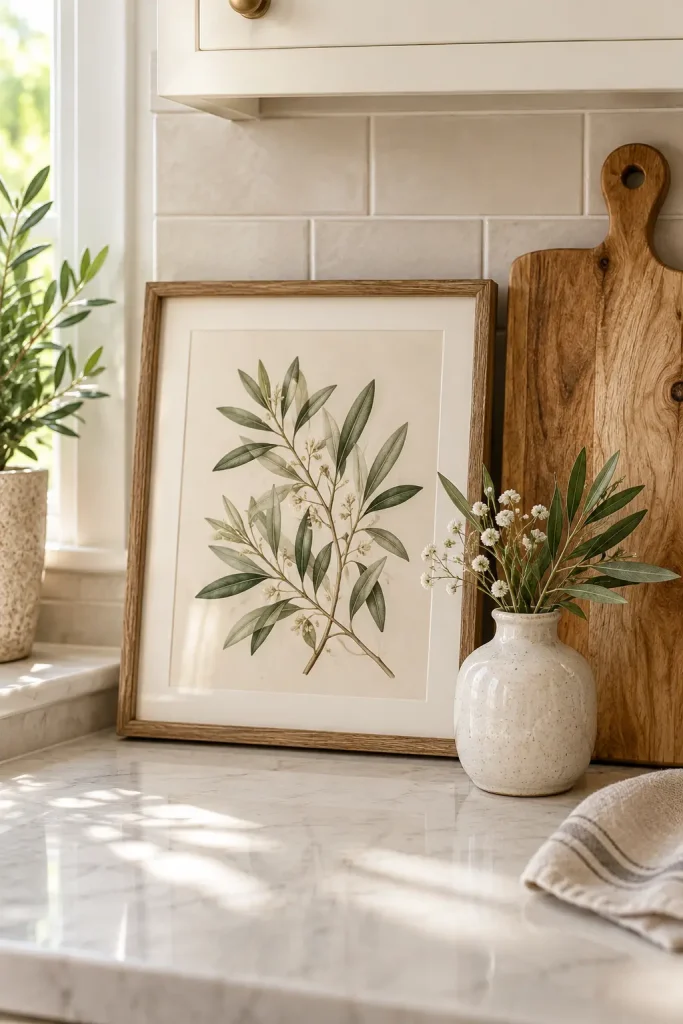
Artwork can make a kitchen feel more personal, particularly when the room has simple cabinets and a plain backsplash. A small botanical print, vintage-style still life, or understated landscape introduces character without requiring a permanent wall installation.
Choose a frame in oak, walnut, black, or muted brass to complement the other finishes. Leaning a frame against the backsplash creates a relaxed look, while a securely mounted piece is better if the counter is frequently used for cooking or cleaning.
Keep the artwork away from direct splashes, steam, and heat. A protected print in a frame with a suitable front covering is generally more practical than an unprotected paper print in a busy cooking area.
10. Layer a Neutral Runner or Linen Towel
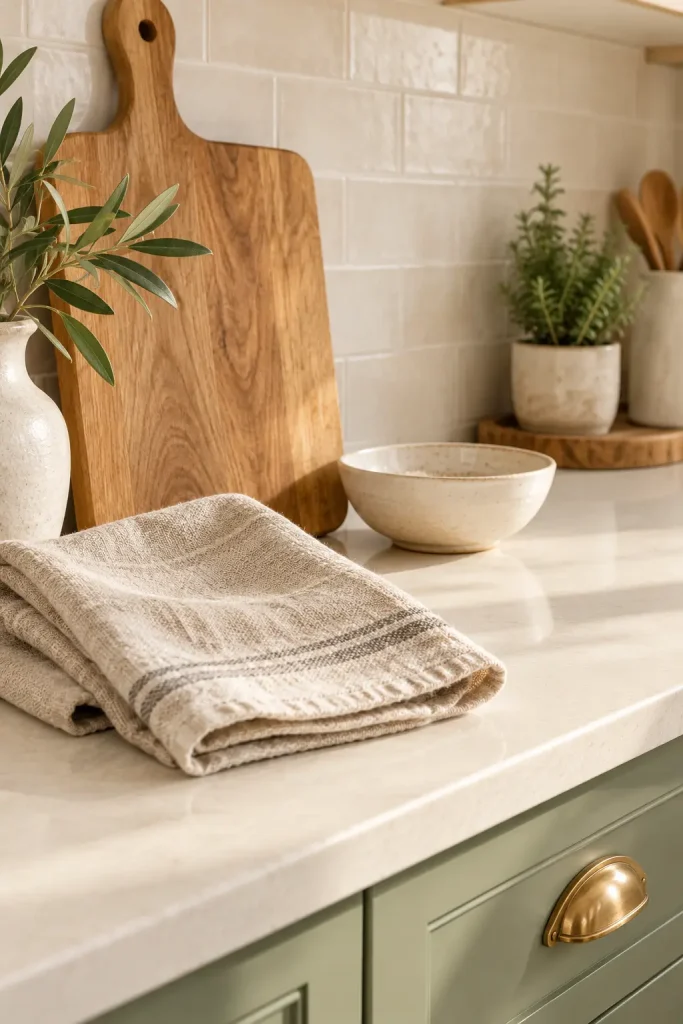
Textiles add softness to countertops that might otherwise feel dominated by stone, metal, and cabinetry. A natural-linen towel in oatmeal, cream, or muted sage creates a subtle decorative layer while remaining useful for drying hands or handling everyday kitchen tasks.
Fold the towel neatly beside a cutting board or place it over a small section of the counter near the sink. A restrained stripe or simple woven texture can add interest without competing with a patterned backsplash.
A full-length fabric runner is best reserved for a counter or island where it won’t interfere with cooking, appliances, or food preparation. Keep all textiles away from burners, hot pans, and other heat sources, and wash them regularly.
11. Create a Warm Farmhouse Counter Display
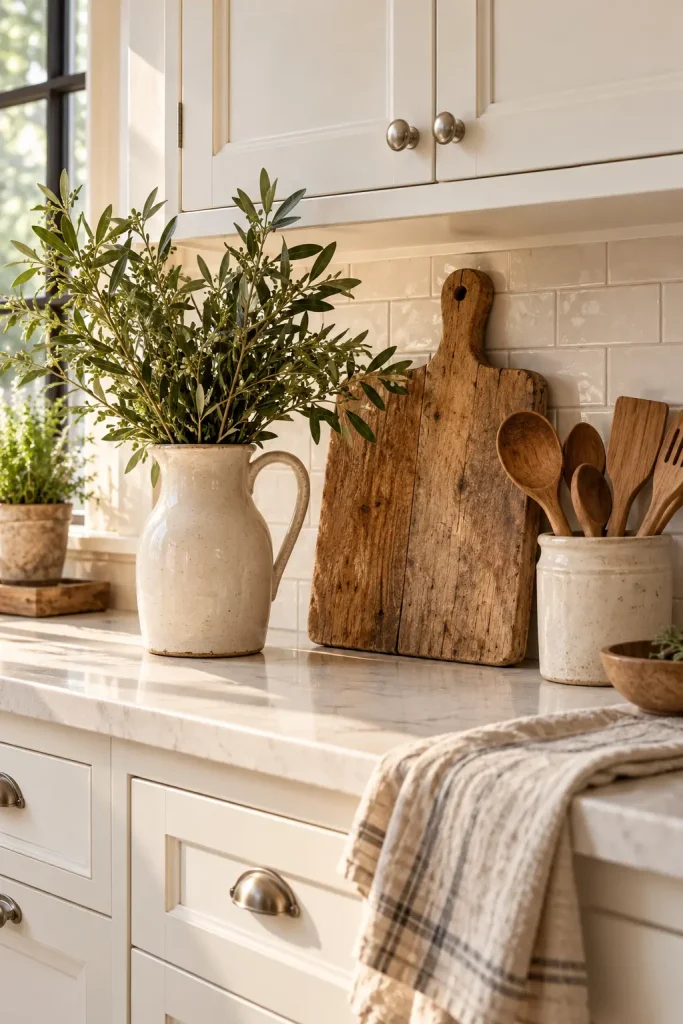
Farmhouse kitchen counter decor works best when it combines natural materials with a few understated vintage-inspired accents. You don’t need a collection of signs or decorative objects to achieve the look. A weathered wooden board, a cream ceramic pitcher, and a small stoneware crock can provide plenty of character.
Start with one substantial wooden element, then add one or two smaller pieces in complementary finishes. Warm white cabinetry, brushed-nickel hardware, and a simple backsplash create a quiet backdrop that allows the natural textures to stand out.
For a modern farmhouse kitchen, keep the palette restrained and avoid making every item look distressed. A mixture of well-made new pieces and one authentic vintage accent often feels more balanced.
12. Introduce Muted Sage Green Accessories
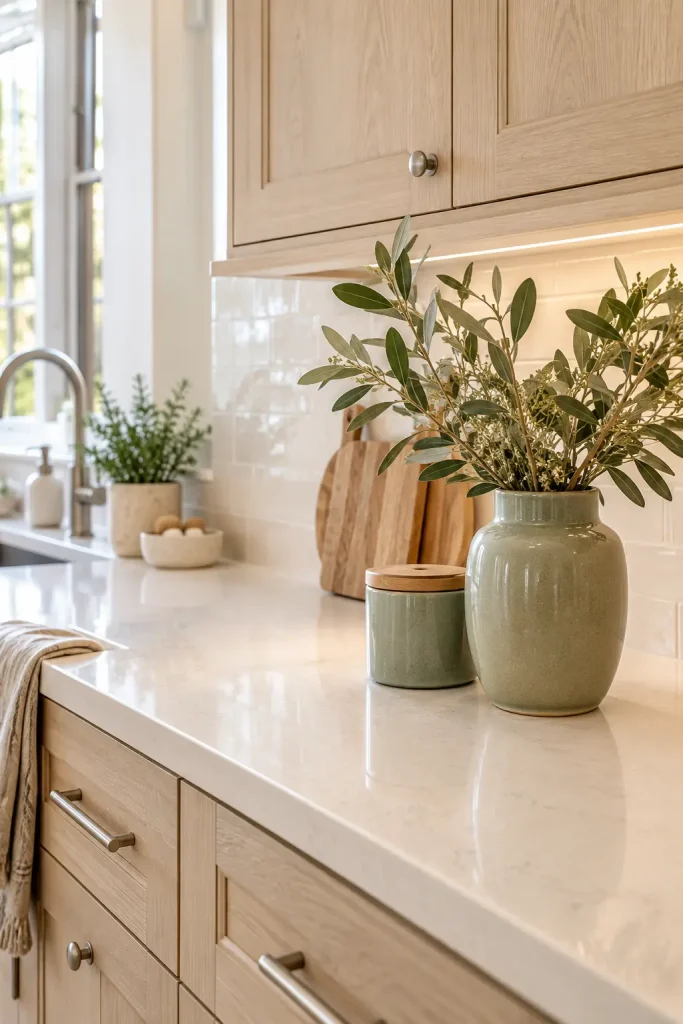
If your kitchen is dominated by white, cream, or natural wood, sage-green accessories can introduce color without making the space feel busy. The soft green tone works especially well with warm neutrals, light oak, and brushed-metal hardware.
Try a sage ceramic vase, a matching utensil holder, or a small planter. You don’t need all three; even one carefully chosen accent can establish the color palette.
To keep the look cohesive, repeat sage green in a small detail elsewhere, such as a tea towel or a ceramic bowl. This creates a subtle connection across the room without turning every accessory green.
Common Mistake: Mixing too many unrelated green shades can make the countertop arrangement look accidental. Choose one main shade and let the natural materials provide variation.
13. Style a Countertop With a Wooden Utensil Crock
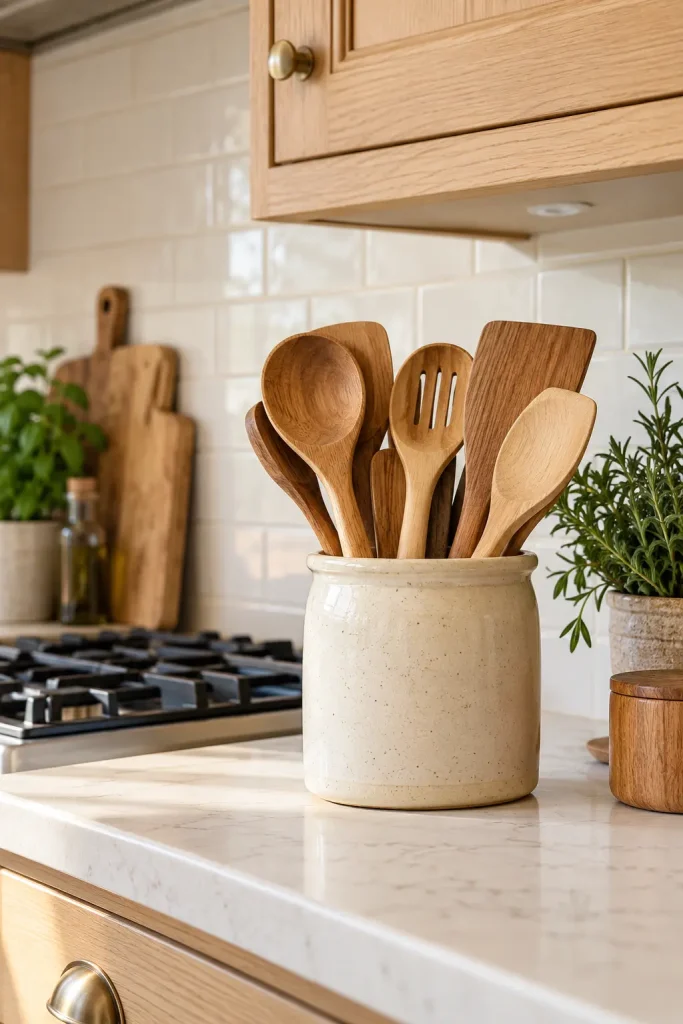
A utensil crock is a practical way to keep frequently used cooking tools organized while adding texture to your kitchen. Choose a ceramic holder in cream, charcoal, or muted green, then fill it with a few wooden spoons, spatulas, and other heat-safe utensils you regularly use.
The arrangement works particularly well near the cooking area, provided it remains at a safe distance from burners and hot cookware. A crock with a wide base is less likely to tip over when you reach for a utensil.
For a cleaner look, remove duplicate tools and anything you rarely use. A small, carefully selected collection will appear more intentional than an overflowing container.
14. Add a Small Lamp for a Cozy Glow
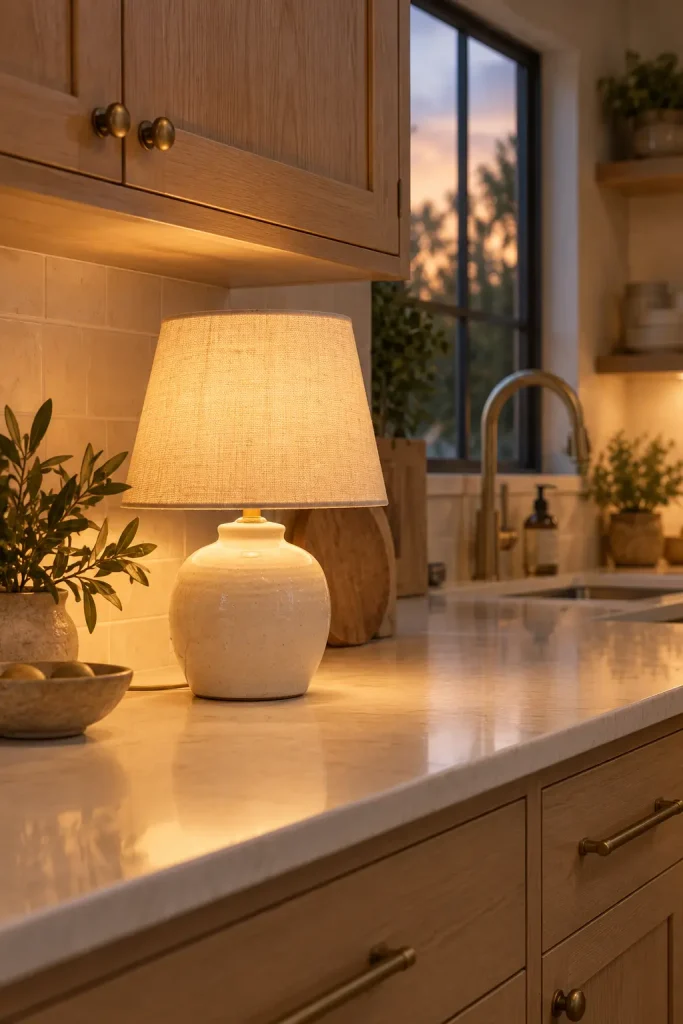
A small countertop lamp can give a kitchen a softer atmosphere, particularly in the evening when bright overhead lighting feels less inviting. A compact lamp with a linen shade, ceramic base, or simple metal stem introduces a residential touch that feels different from typical task lighting.
Place it on a dedicated stretch of counter away from the sink, stove, splashes, and other hazards. Choose a lamp and bulb intended for the location, and keep cords secured away from water and heat.
Warm light pairs beautifully with wood cabinets, creamy walls, and muted green accents. If counter space is limited, a properly installed under-cabinet light can provide a similar sense of warmth without occupying the work surface.
15. Keep It Clean With a Minimalist Two-Item Arrangement
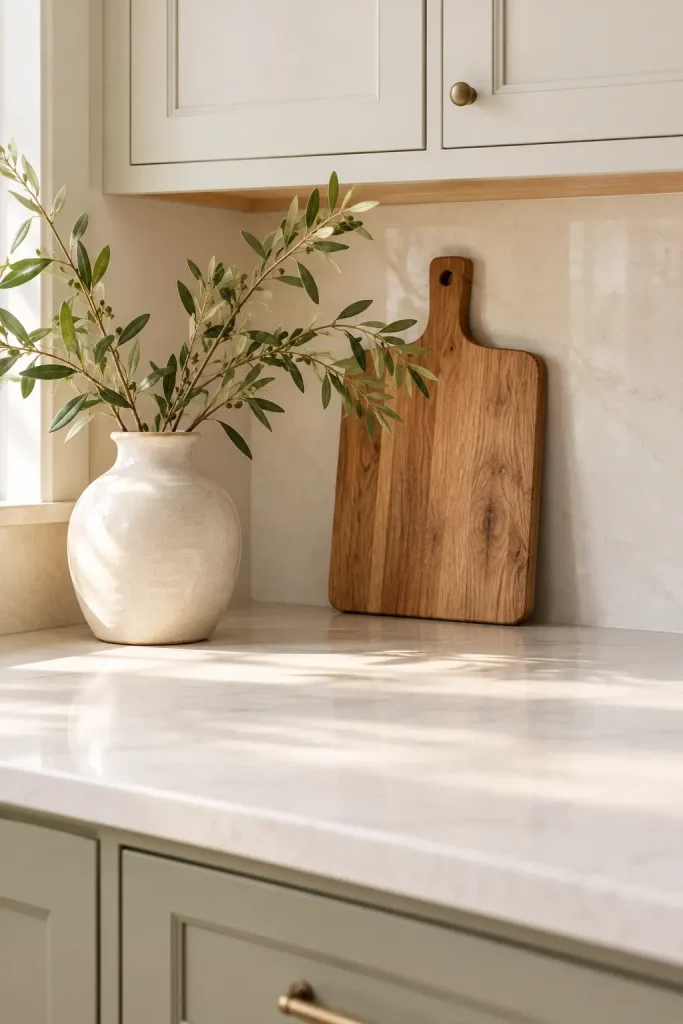
Sometimes the most effective kitchen counter decor consists of only two objects. A simple vase paired with a wooden cutting board gives the eye something interesting to focus on while preserving the open, uncluttered appearance of the kitchen.
This approach is particularly useful in small kitchens, rental apartments, and spaces with patterned backsplashes or visually prominent countertops. It allows the existing finishes to remain the main feature.
Try one tall element and one lower, wider element to create a little contrast in shape. Keep the colors related but not necessarily identical; for example, a cream vase and a medium-oak board offer enough variation without looking mismatched.
The practical benefit is just as important as the appearance: fewer objects mean fewer items to move when cleaning or preparing food.
16. Display a Decorative Bowl of Lemons
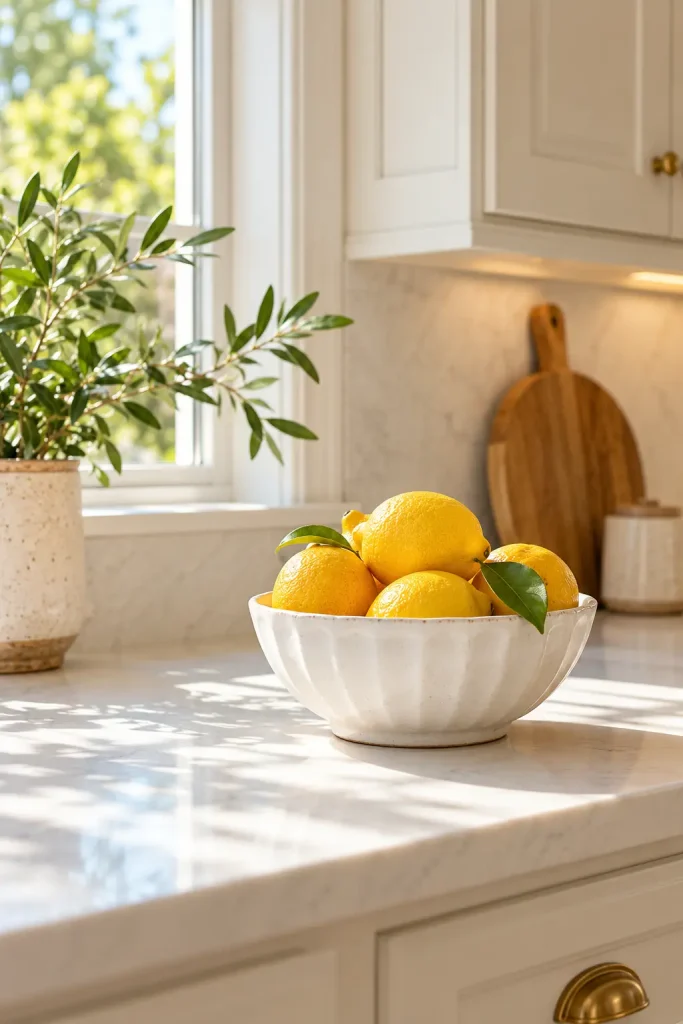
Lemons add a cheerful burst of yellow to a neutral kitchen. A bowl of fresh citrus can look especially appealing against white quartz, pale stone, natural oak, or muted green cabinetry.
For a classic arrangement, choose a white ceramic bowl and let the fruit provide most of the color. In a warmer kitchen, a wooden bowl can create a more rustic effect. Keep the arrangement modest enough that it doesn’t occupy valuable workspace.
If you prefer a more seasonal look, rotate the produce according to what’s available: green pears in autumn, oranges in winter, or a combination of apples and citrus throughout the year. Fresh fruit makes the counter feel lived-in without requiring permanent decorative purchases.
Keep fruit clean and remove any pieces that soften or spoil.
17. Bring in Natural Texture With Woven Baskets
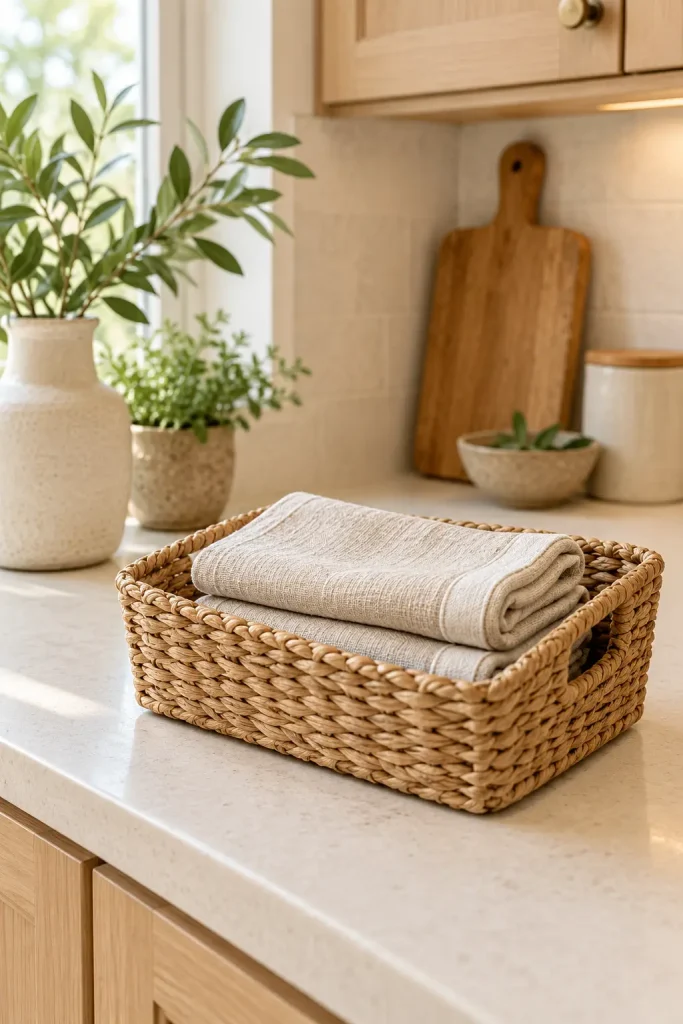
Woven baskets can soften a kitchen’s hard surfaces and provide attractive storage for a few suitable everyday items. A small seagrass or rattan basket might hold folded kitchen towels, wrapped bread, or lightweight supplies that benefit from being kept together.
The natural weave works especially well alongside oak cabinets, stone countertops, and linen textiles. Keep the basket relatively shallow and choose a size that fits comfortably beneath your upper cabinets.
Not everything belongs in an open basket, however. Avoid storing items that need an airtight container, and keep woven materials away from stovetops, splashes, and persistent moisture. If you use a basket for food, make sure it is appropriate for that purpose.
18. Create an Elegant Oil and Vinegar Station
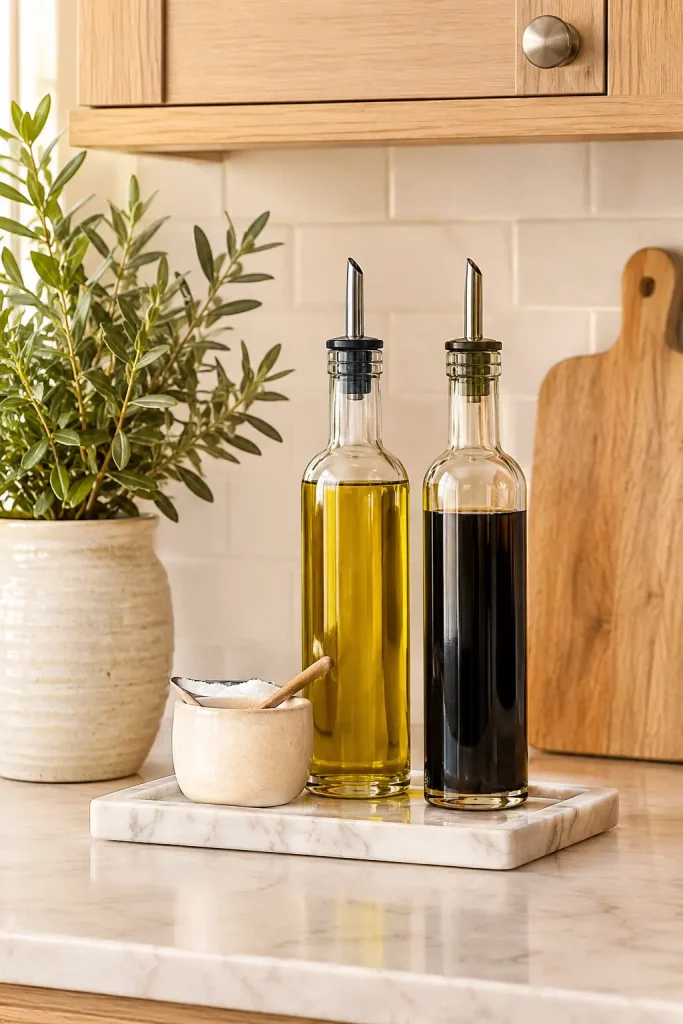
If you cook frequently, an oil and vinegar station can make the kitchen feel organized while keeping useful ingredients close by. The secret is choosing attractive containers and placing them together instead of leaving assorted bottles scattered around the counter.
Use two matching glass or ceramic dispensers on a small stone tray. A compact salt cellar or pepper mill can complete the grouping if there is room. Clear glass suits a light, modern kitchen, while dark bottles or amber glass create a richer, more traditional appearance.
Position the station away from direct heat and strong sunlight, which can affect the quality of some oils. Clean the bottle exteriors regularly, and make sure the containers are easy to refill.
19. Use a Dark Accent for Modern Contrast
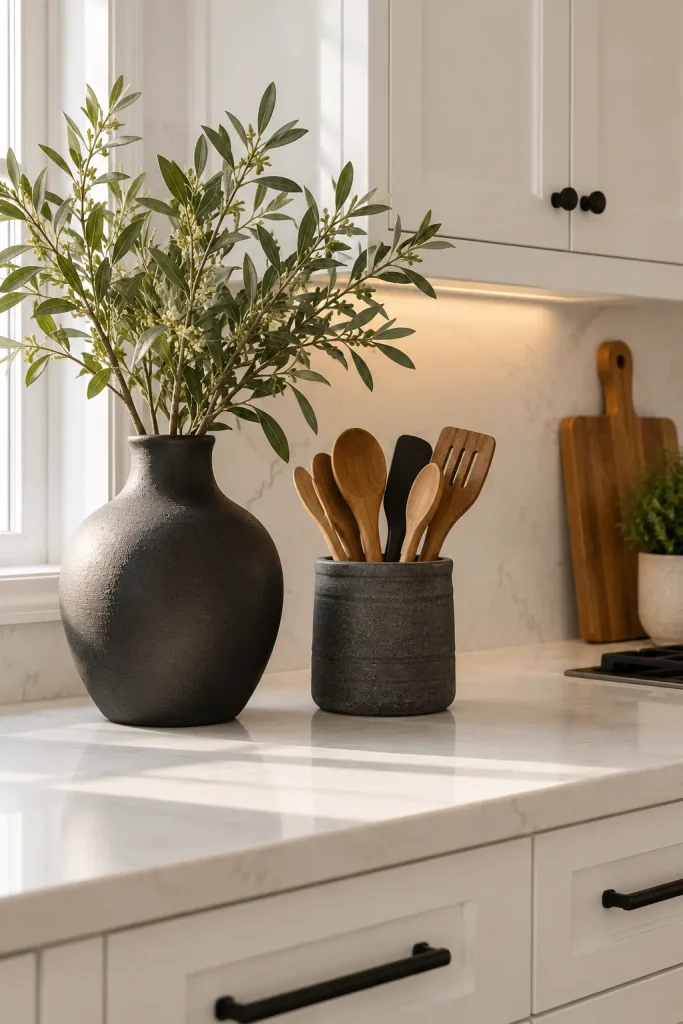
A dark decorative accent can give a light kitchen a more defined, contemporary appearance. Matte-black ceramics, charcoal stoneware, and dark wood stand out against white cabinets and pale countertops without requiring a dramatic renovation.
Start with one focal piece, such as a black vase or a charcoal utensil holder. Repeat the dark finish in a small detail elsewhere, perhaps the cabinet pulls or faucet, to create a visual connection.
This technique works in both modern and transitional kitchens. In a darker kitchen, reverse the contrast by choosing a light ceramic vessel against deep cabinetry.
Avoid filling the entire counter with dark accessories. One or two contrasting objects usually have more impact than a collection of competing accents.
20. Layer Warm Wood With Cream Ceramics
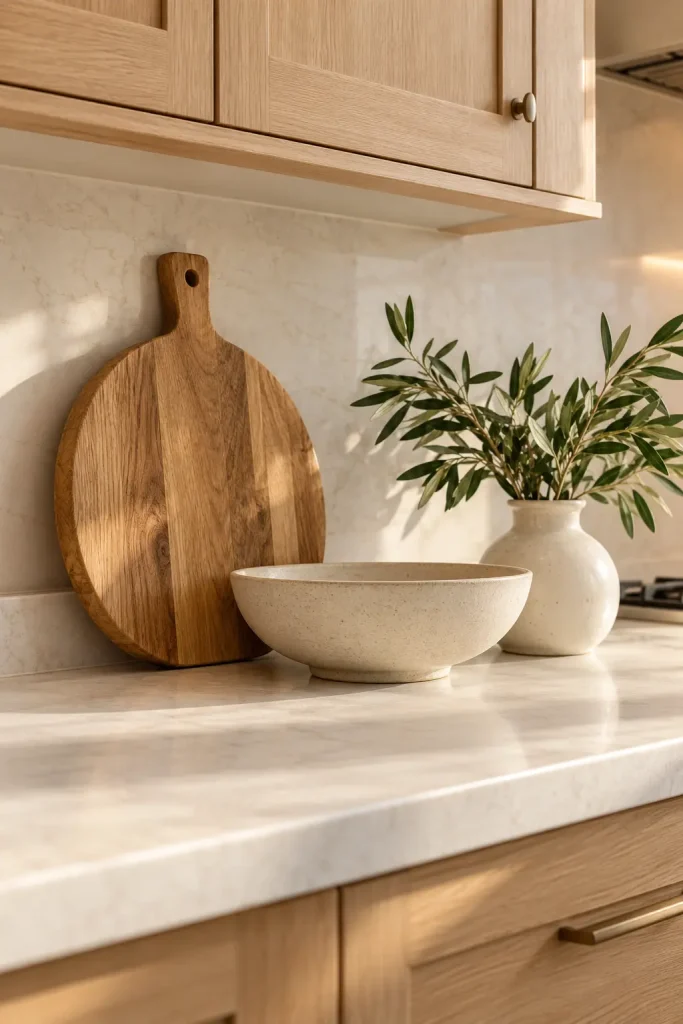
Warm wood and cream ceramics are a reliable combination for a kitchen that feels calm rather than stark. Wood introduces visible grain and warmth, while creamy ceramics soften the overall palette.
To create the arrangement, pair a large oak cutting board with a low cream bowl and a small ceramic vase. The different heights and shapes give the display dimension without adding a large number of objects.
This combination suits organic-modern, Scandinavian-inspired, and contemporary farmhouse kitchens. It can also work in a rental where the main finishes cannot be changed, because the look depends on portable accessories rather than permanent alterations.
If your cabinets are already strongly yellow-toned, choose a more neutral wood finish so the different wood colors don’t compete.
21. Add a Small Seasonal Counter Display
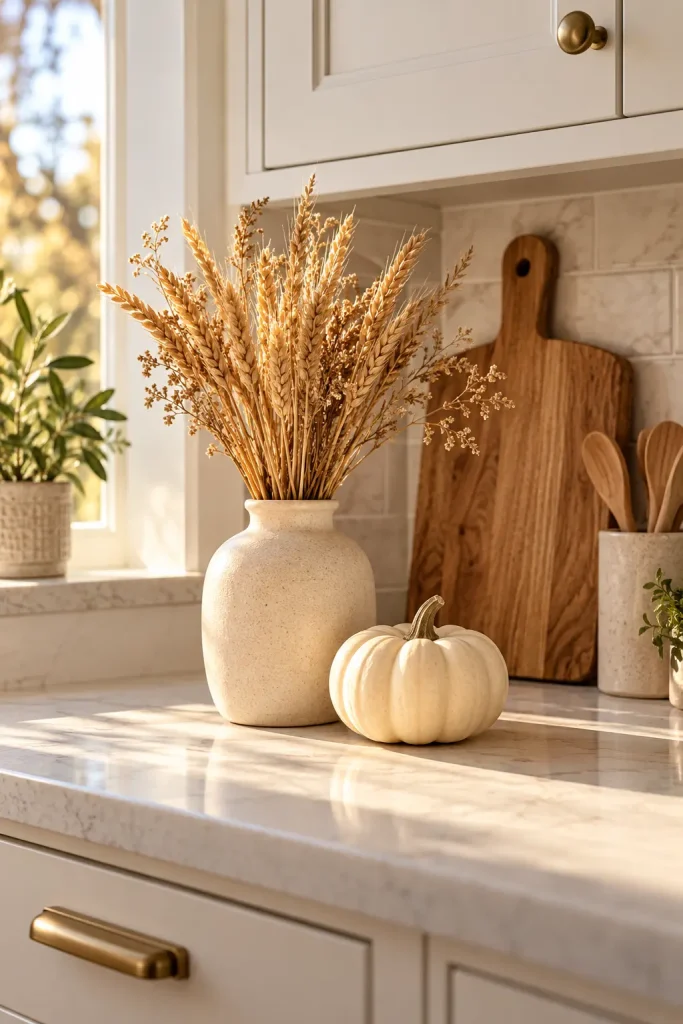
Seasonal kitchen counter decor lets you refresh your space without buying a new collection of accessories every few months. The easiest method is to keep the basic arrangement consistent and switch out one or two details.
For autumn, try a small ceramic vase with dried stems and a miniature neutral pumpkin. In winter, replace them with a simple evergreen clipping. Spring might call for fresh flowers, while summer works well with citrus or a small herb plant.
Use a tray to keep the seasonal objects together, and leave the main work surface open. This approach is especially useful for smaller kitchens, where a large seasonal display could quickly become an obstacle.
Choose materials that suit your kitchen’s existing palette rather than introducing a completely unrelated color scheme each season.
22. Keep the Counter Beautiful With Hidden Storage
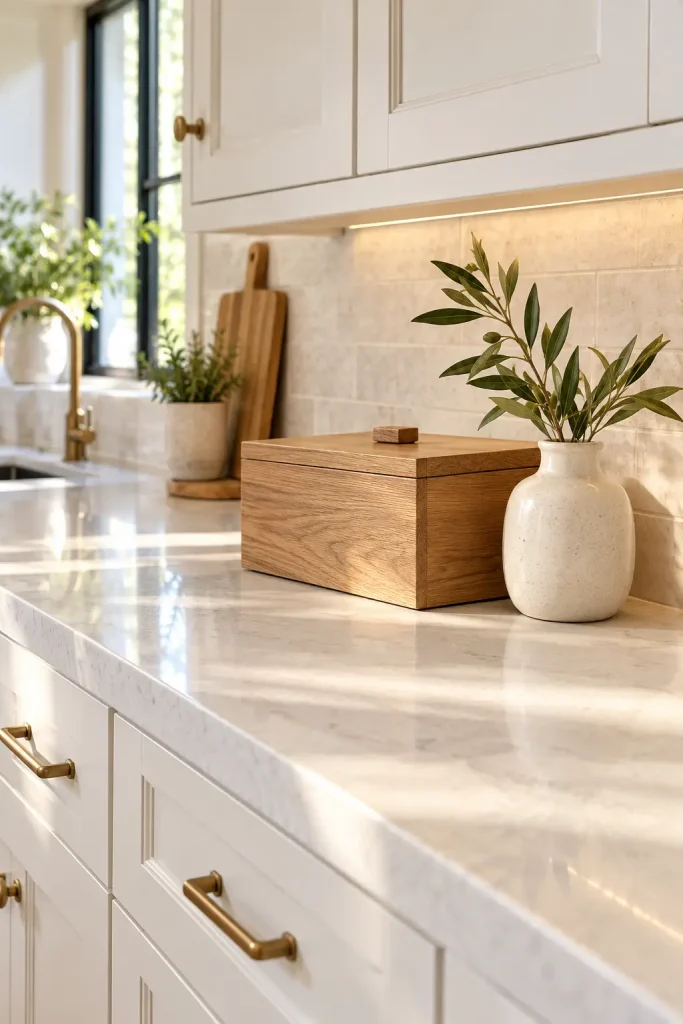
Sometimes the best kitchen counter decor idea is to make everyday clutter less visible. A small lidded wooden box, a drawer organizer, or a concealed appliance cabinet can help keep miscellaneous items from taking over the workspace.
On the counter itself, use one compact storage box for suitable small supplies and pair it with a single decorative accent. Choose a box that fits beneath the upper cabinets and is easy to open when needed.
For larger items, consider relocating rarely used appliances to a pantry or cabinet rather than adding more countertop storage. Keep frequently used appliances accessible if moving them would make your routine less convenient.
The aim isn’t to hide everything. It’s to give everyday items a designated home while leaving enough open surface for the kitchen to function comfortably.