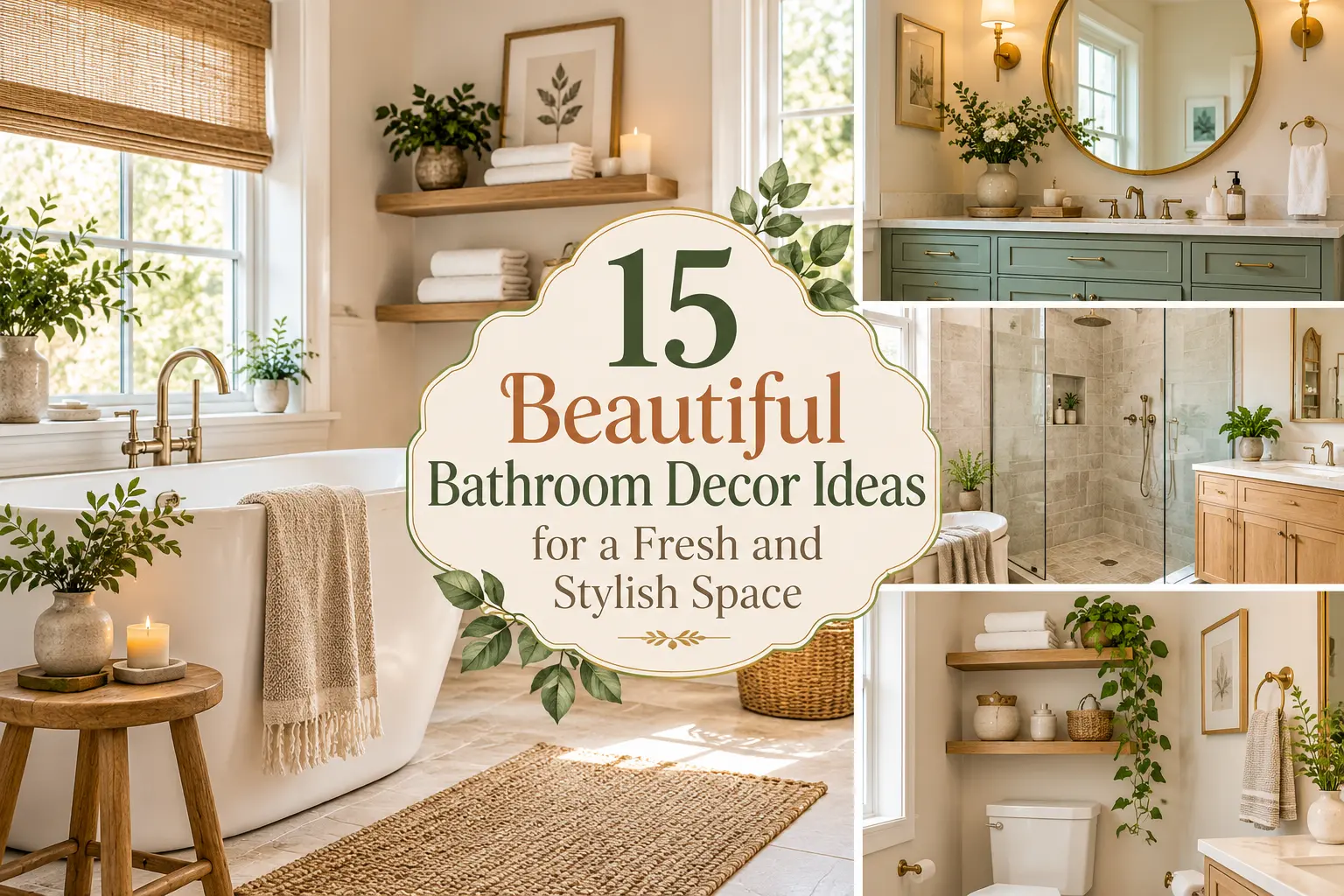
15 Beautiful Bathroom Decor Ideas for a Fresh and Stylish Space
A beautiful bathroom doesn’t need a complete renovation to feel fresh, organized, and inviting. Sometimes, the biggest difference comes from thoughtful details: a well-framed mirror, soft towels, natural wood accents, attractive storage, or a calming color palette that makes the entire room feel more cohesive.
The best bathroom decor ideas balance appearance with everyday practicality. You want a space that looks polished but still has room for toiletries, comfortable lighting, and easy-to-clean surfaces. Whether you’re decorating a small apartment bathroom, refreshing a guest bath, or styling a spacious primary bathroom, there are plenty of ways to create a look that suits your home.
These 15 bathroom decorating ideas cover a range of styles, from warm organic interiors to modern black-and-white details. Each offers practical ways to bring more character into your bathroom without sacrificing comfort or functionality.
1. Create a Spa-Like Bathroom With Soft Neutral Colors
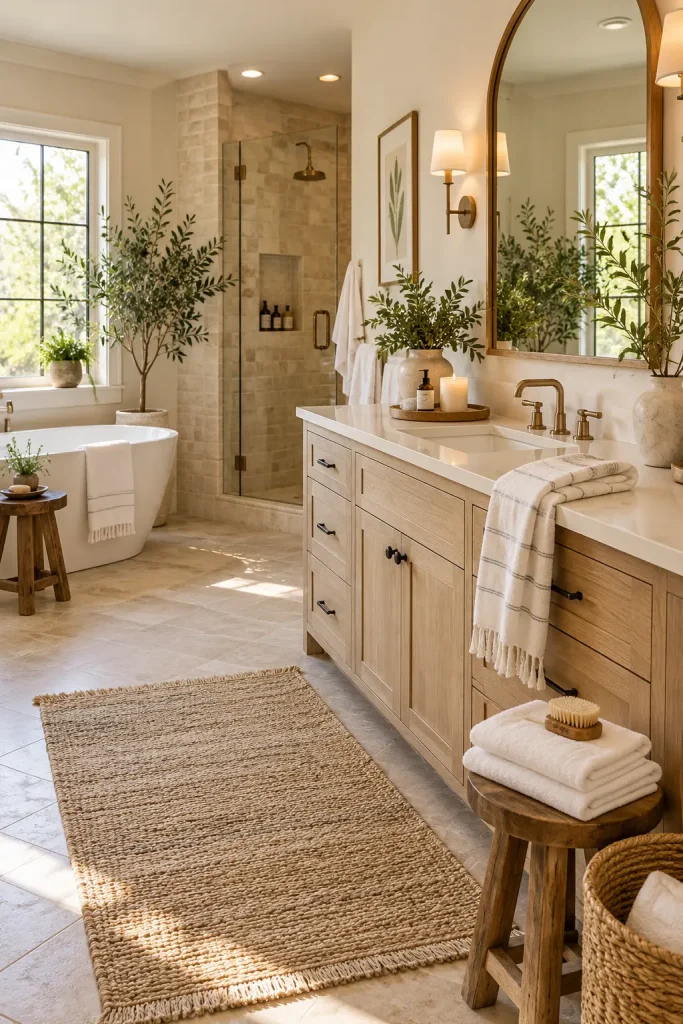
A spa-inspired bathroom creates a sense of calm through simple colors, natural textures, and uncluttered surfaces. Start with a foundation of warm white, ivory, sand, or soft beige. These shades work particularly well with pale wood, stone-look tiles, and brushed-metal fixtures.
You don’t need to replace every surface to achieve this look. Fresh white towels, a neutral bath mat, matching countertop accessories, and a small wooden stool can make an existing bathroom feel more coordinated.
For a more layered finish, combine different textures rather than introducing lots of colors.
- Soft textiles: Plush towels and a thick cotton bath mat.
- Natural materials: Wood trays, woven baskets, or stone-look accessories.
- Simple accents: A ceramic soap dispenser and a small vase of greenery.
Quick Tip: Choose warm whites and creamy neutrals if you want a softer atmosphere than a stark, all-white bathroom.
2. Add a Round Mirror for a Softer Look
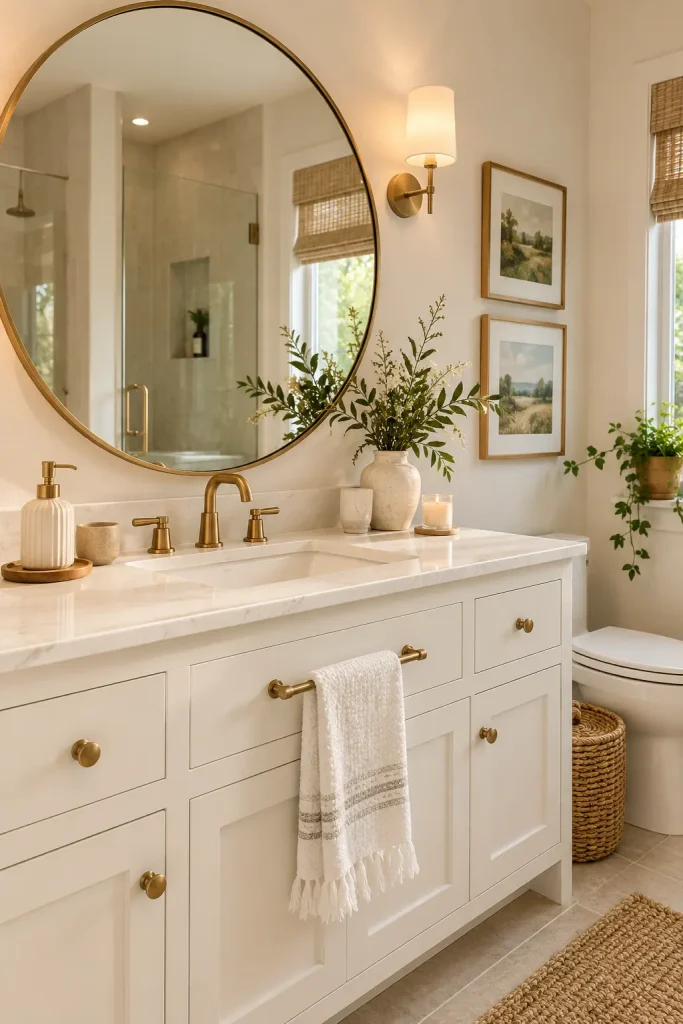
A round bathroom mirror introduces a gentle curve against the straight lines of a vanity, tilework, and cabinetry. It can make a bathroom feel more thoughtfully designed without requiring a major change.
A thin brass frame brings warmth to cream or white interiors, while a black frame creates a sharper contrast against pale walls. For an organic look, choose a frameless round mirror above a natural wood vanity.
Pay attention to scale. A tiny mirror can look disconnected from a wide vanity, while an oversized mirror may crowd nearby sconces or shelving. Before purchasing, measure the available wall space and consider how the mirror will work with your lighting.
If you’re updating a rental bathroom, a mirror swap may be possible, but check the mounting method and get permission before altering permanent fixtures.
3. Bring in Natural Wood Accents
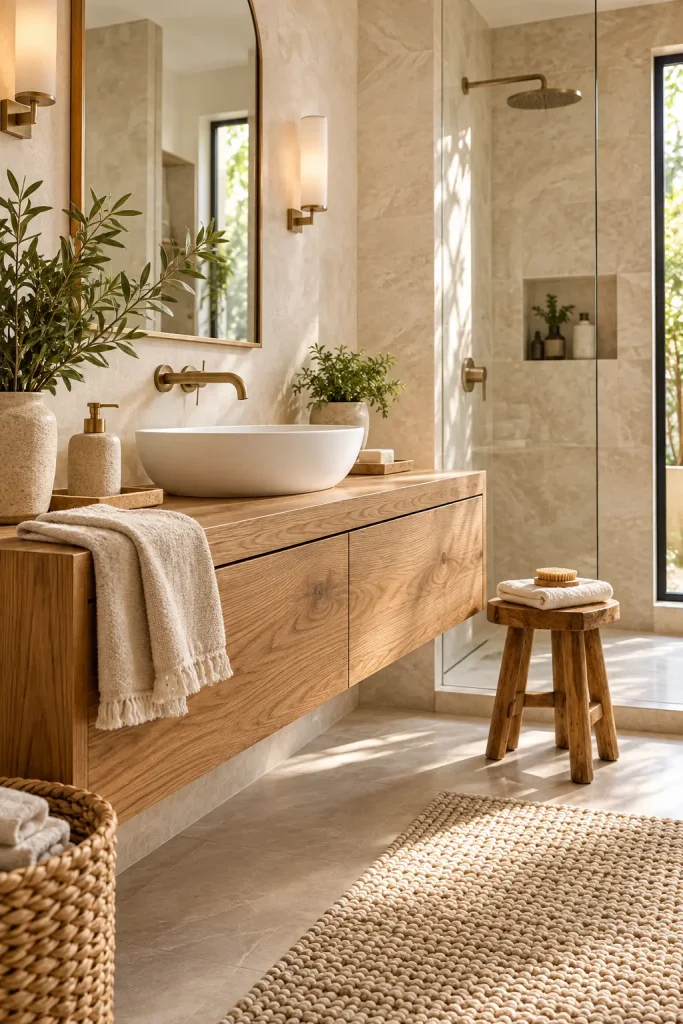
Natural wood adds warmth to bathrooms that might otherwise feel dominated by glossy tile, porcelain, glass, and metal. A pale oak vanity, teak bath stool, or wooden shelf introduces visible grain and a more relaxed residential feel.
For a simple update, work with smaller accessories rather than replacing the cabinetry. A wooden tray can organize everyday products, while a stool near the bathtub offers a convenient place for a folded towel.
Consider the location carefully. Bathrooms experience moisture and temperature changes, so choose materials and finishes suitable for the intended environment. Wipe away standing water and follow the manufacturer’s care recommendations.
A balanced combination: Pair oak with creamy walls, white ceramics, and one darker accent such as a charcoal towel or bronze fixture.
4. Style the Countertop With a Coordinated Accessory Set
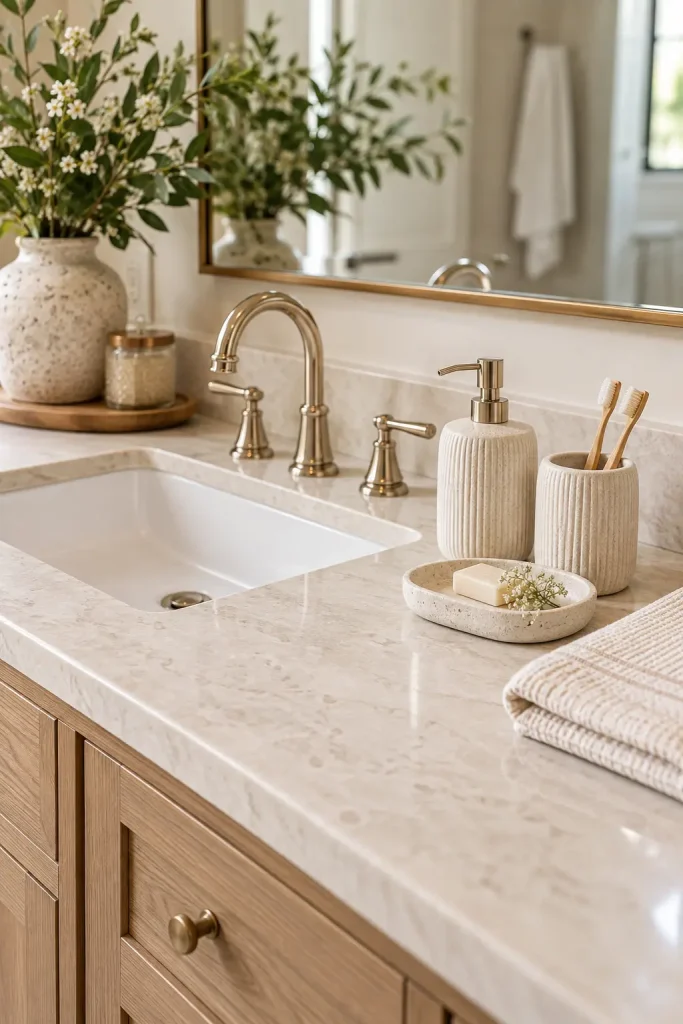
Bathroom countertops often collect everyday essentials, which can make even an attractive room feel untidy. A coordinated accessory set gives those necessities a deliberate place while creating a more finished appearance.
Choose a tray or a small collection of matching containers in ceramic, amber glass, stone, or brushed metal. Keep frequently used products within reach and store less attractive packaging inside drawers or cabinets.
A practical countertop arrangement might include:
- A soap dispenser beside the sink.
- A small container for toothbrushes.
- A tray for two or three daily skincare products.
- One decorative detail, such as a bud vase, if space allows.
Avoid filling every available corner. Leaving some clear countertop around the sink makes cleaning easier and keeps the arrangement from feeling crowded.
5. Use Greenery to Add a Fresh Natural Touch
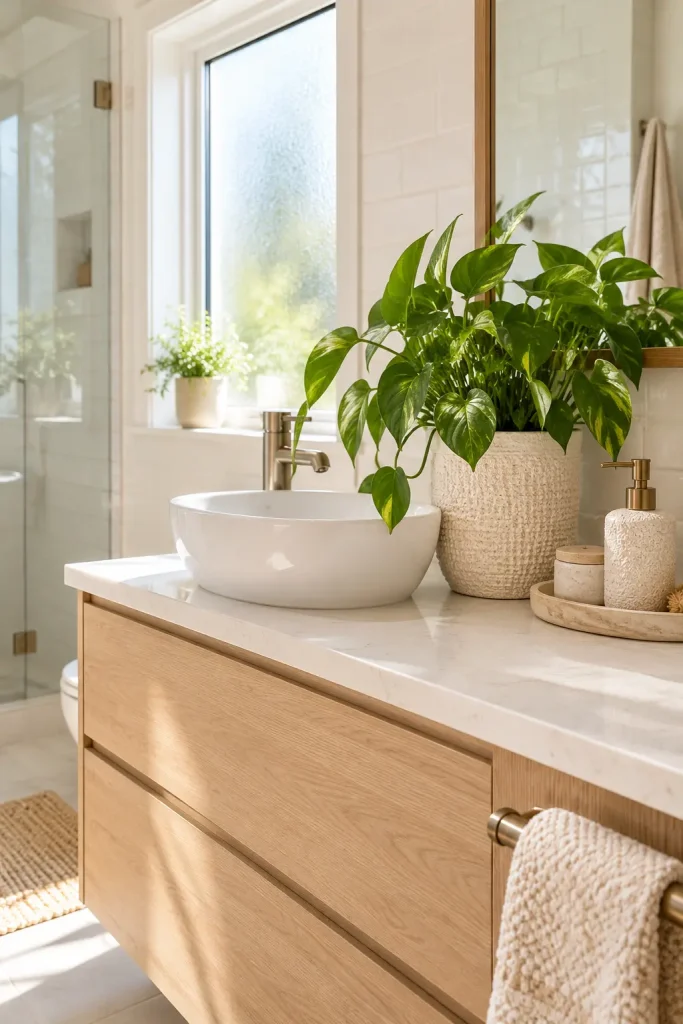
A little greenery can bring life and color to a bathroom filled with hard surfaces. A leafy plant on a vanity, a small arrangement on a shelf, or a simple branch in a ceramic vase can soften the room without introducing visual clutter.
Choose plants according to the actual light and humidity conditions in your bathroom. A windowless room may not provide enough natural light for many living plants, even if it feels humid. In that case, a high-quality artificial plant or occasional fresh foliage can be a more practical choice.
For smaller bathrooms, keep greenery away from faucet splash zones and choose a pot with appropriate drainage or a waterproof inner container.
Styling idea: Use one medium-sized plant as a focal point instead of scattering several tiny pots around the room.
6. Upgrade the Lighting With Elegant Wall Sconces
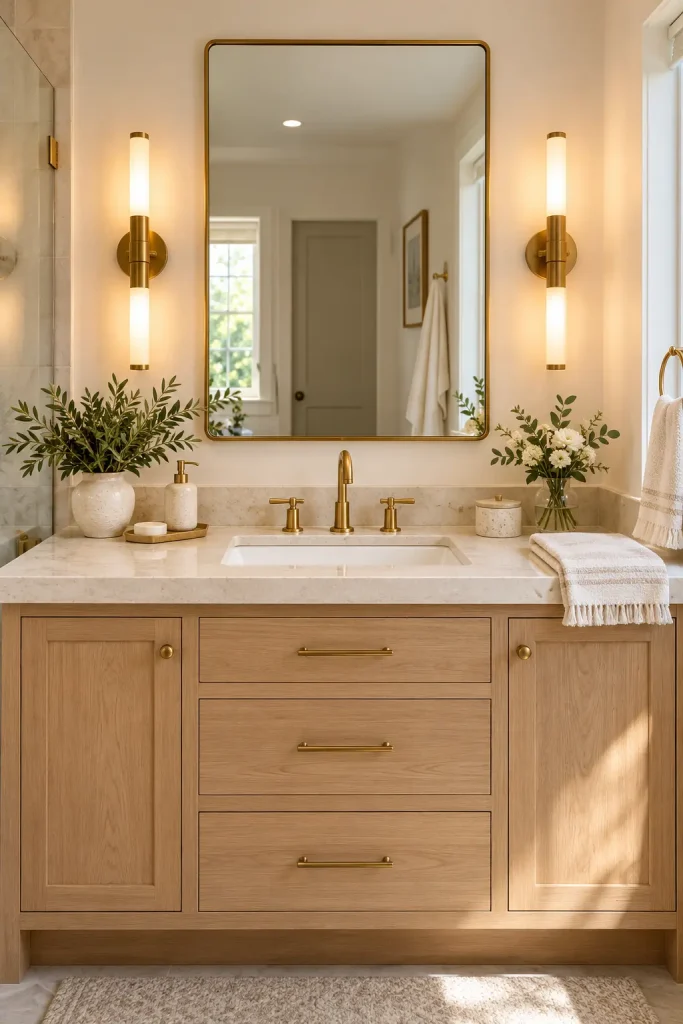
Lighting affects both the appearance and usability of a bathroom. A decorative wall sconce can add architectural interest, reduce the starkness of overhead lighting, and create a more welcoming atmosphere.
For a symmetrical vanity, consider placing matching sconces on either side of the mirror if the wall space and electrical layout allow. In a compact bathroom, a well-proportioned fixture above the mirror may be a more practical alternative.
Choose light that renders colors naturally for everyday grooming, and use a separate dimmable light source for a softer evening atmosphere where practical. All bathroom electrical fixtures and installations should be appropriate for their location and installed according to applicable requirements.
7. Choose Textured Towels for a Boutique-Inspired Finish
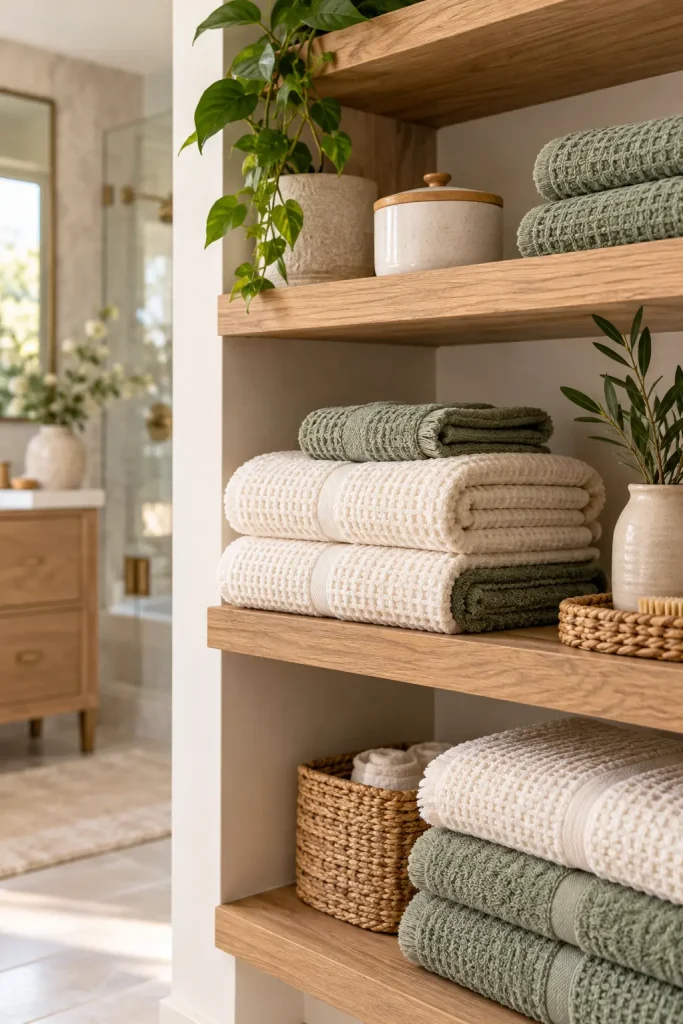
Towels are practical necessities, but they can also contribute to the overall bathroom design. Coordinating colors and textures makes open shelving and towel bars look more intentional.
White and ivory towels create a clean, classic appearance. Muted sage, dusty blue, warm taupe, and charcoal can introduce color without competing with the permanent finishes.
Try combining two complementary textures, such as smooth cotton bath towels with waffle-weave hand towels. Keep the palette limited so the room looks coordinated rather than overly matched.
- Fold extra towels neatly on an open shelf.
- Hang frequently used towels where they can dry properly.
- Choose colors that complement the vanity, flooring, and wall finish.
- Keep spare linens away from areas that remain damp.
The result feels considered while remaining easy to maintain.
8. Introduce a Statement Floor or Shower Tile
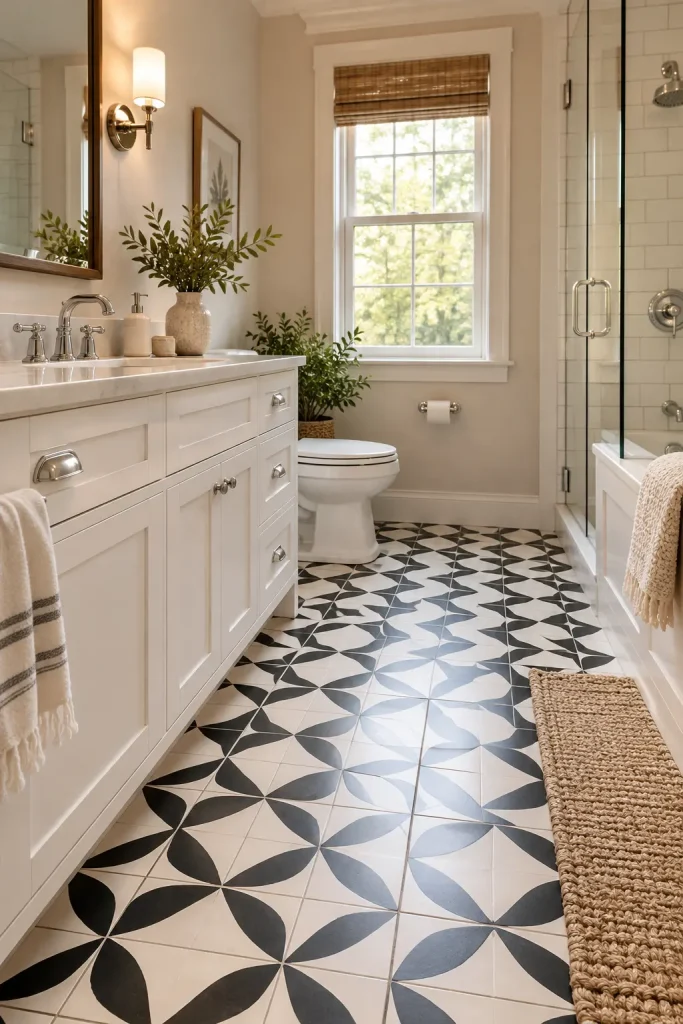
Decorative tile can become the main visual feature of a bathroom. Rather than adding many decorative objects, let one carefully chosen surface provide pattern, color, and character.
A black-and-white geometric floor adds contrast to a simple white bathroom. Muted green shower tiles create a softer, nature-inspired look, while handmade-look cream tiles introduce subtle variations in texture.
If the room is small, consider keeping the remaining surfaces relatively quiet so the patterned tile doesn’t compete with too many other elements.
For a rental, explore removable accessories or approved surface treatments rather than assuming permanent tile can be changed. In a renovation, select flooring and shower materials suitable for wet areas and make sure the installation and waterproofing are handled correctly.
9. Add Floating Shelves for Stylish Storage
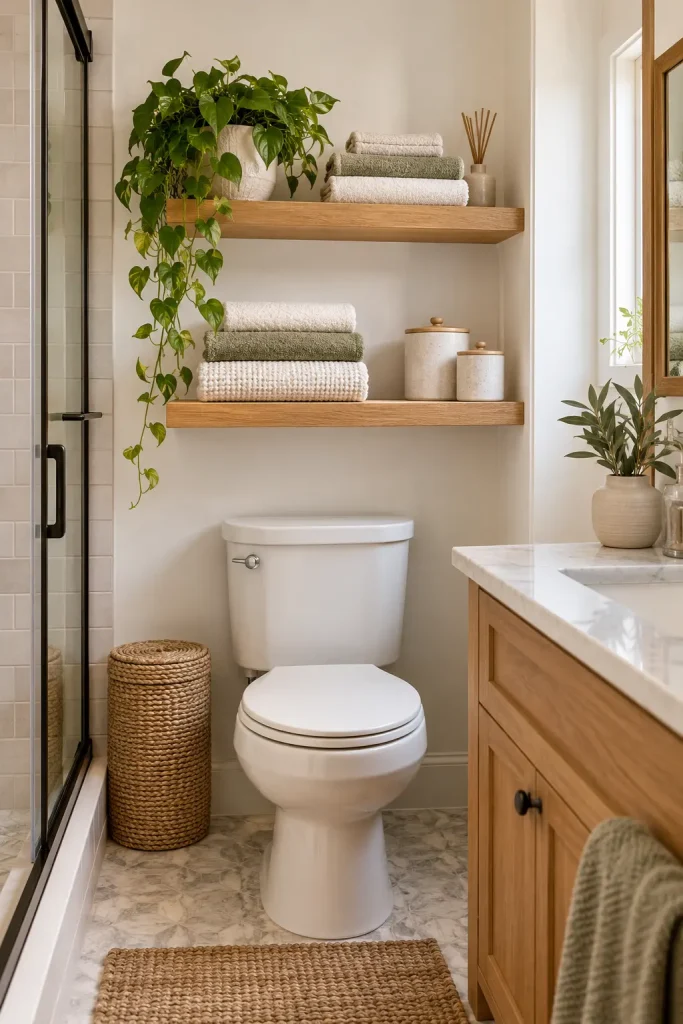
Floating shelves turn unused wall space into practical storage and a place to display a few carefully selected accessories. They’re especially useful in small bathrooms where floor space is limited and a large storage cabinet would feel bulky.
Install one or two shelves above the toilet or beside the vanity, provided the placement doesn’t interfere with fixtures or comfortable movement. Pale oak suits warm, organic bathrooms, while painted white shelves blend into light walls for a quieter effect.
Style the shelves with a mix of functional and decorative pieces:
- Rolled hand towels or washcloths.
- Small lidded containers for everyday supplies.
- A ceramic vase or compact artificial plant.
- A woven basket for lightweight items.
Keep frequently used essentials within easy reach. In bathrooms with limited ventilation, store moisture-sensitive products and linens where they can remain dry.
10. Create Contrast With Black Bathroom Accents
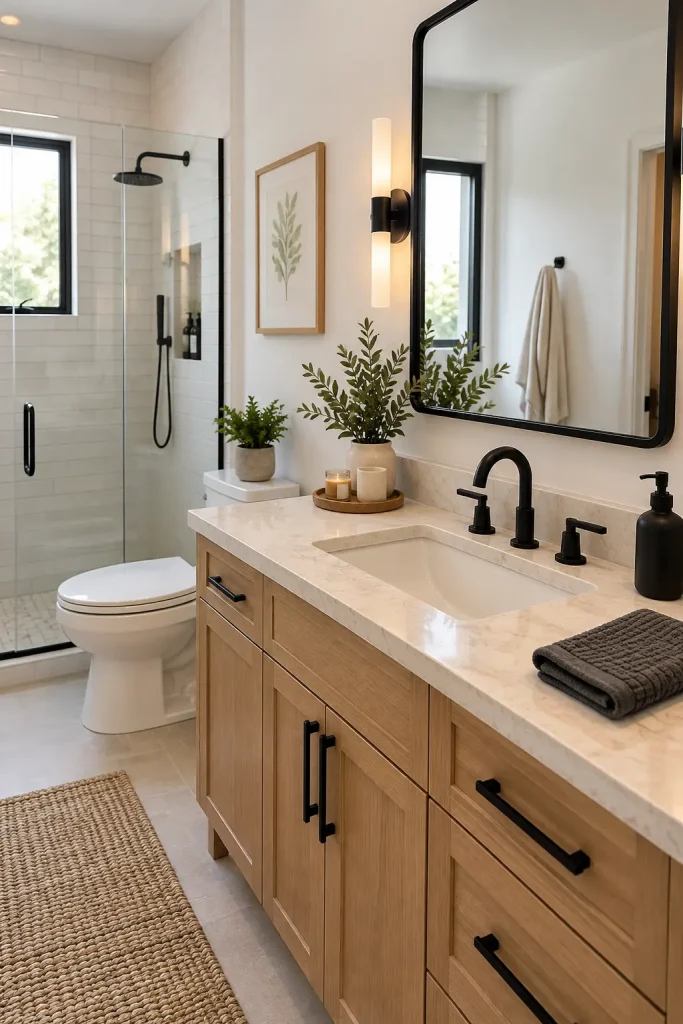
Black accents give a light bathroom definition without requiring a dark color scheme. A black-framed mirror, matte-black faucet, or matching cabinet pulls can create a crisp outline against white walls and pale countertops.
The key is repetition. When black appears in two or three related places, the room feels cohesive. Introducing too many unrelated metal finishes can make a small bathroom look visually busy.
For an easy, reversible update, start with black countertop accessories, a frame, or a towel hook if the existing mounting arrangement allows. Changing plumbing fixtures is a more involved project, particularly if the new fixtures aren’t compatible with the existing connections.
Do: Balance black details with light surfaces, natural wood, or soft textiles.
Don’t: Add black to every available surface if your goal is a bright, airy bathroom.
11. Decorate With a Freestanding Bathtub and Simple Accessories
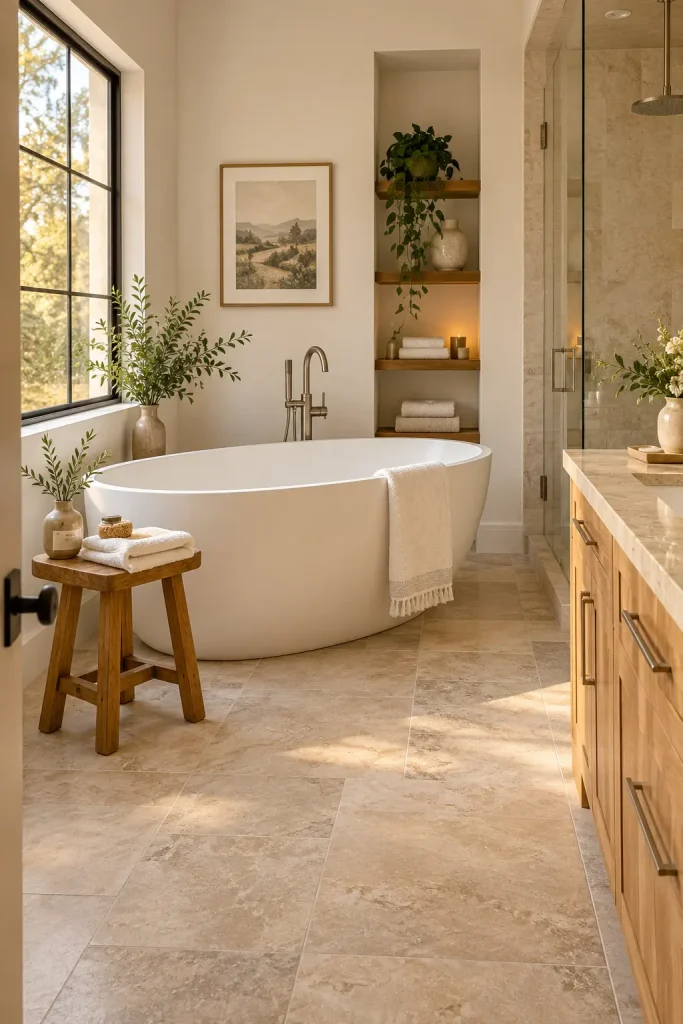
A freestanding bathtub can serve as the focal point of a larger bathroom. Its sculptural shape provides visual interest, so the surrounding decor can remain restrained.
Pair a white oval tub with stone-look flooring, warm neutral walls, and one natural material such as oak or teak. A small stool can hold a folded towel or bath essentials, while a simple vase on a distant surface adds a finishing touch without crowding the tub.
This idea is best suited to bathrooms with enough clearance for comfortable movement and cleaning. In a smaller room, a well-styled built-in tub can achieve a similarly calm appearance without requiring a freestanding fixture.
Before installing a new bathtub, account for plumbing, floor support, access, and the space needed around it.
12. Use a Glass Shower Enclosure to Keep the Room Open
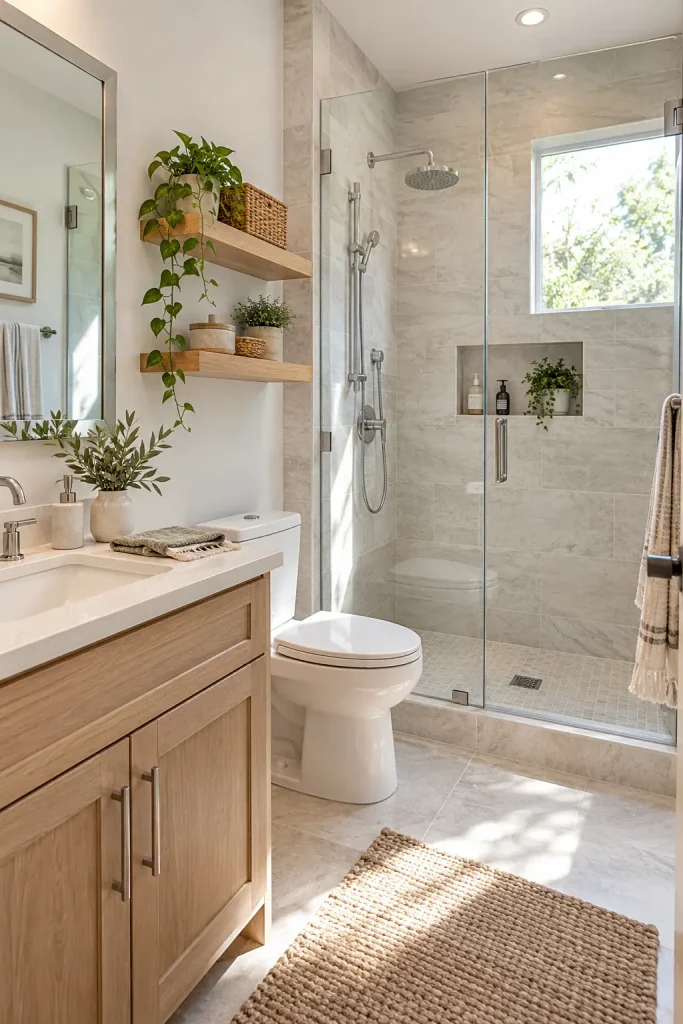
A clear glass shower enclosure can make a bathroom feel more visually open because it allows the eye to travel across the room instead of stopping at an opaque curtain or partition.
This is particularly useful when the shower has attractive tilework or a consistent color palette with the rest of the bathroom. Pale stone, white tile, and understated hardware create a clean backdrop, while darker tile can provide a more dramatic focal point.
Glass does require maintenance. Water spots and soap residue become visible, so regular cleaning helps preserve the uncluttered effect. The glass and enclosure should also be selected and installed appropriately for bathroom use.
If a full glass enclosure isn’t practical, a simple shower curtain in a light, solid color can create a similarly quiet visual effect at a lower investment.
13. Add Vintage Details for Character
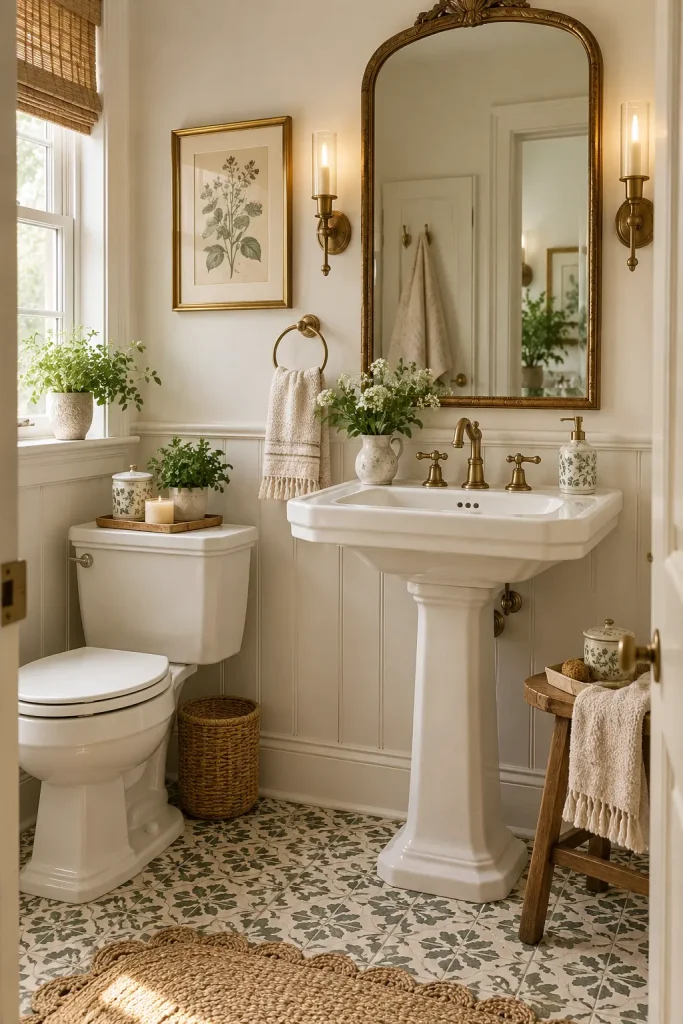
Vintage-inspired decor brings personality to a bathroom that might otherwise feel overly plain. The look works especially well in older homes, cottage-style interiors, and spaces with traditional fixtures.
An antique-style mirror, a small framed botanical print, or a ceramic soap dish can introduce character without making the room feel like a museum. Warm brass finishes and creamy wall colors help the details sit comfortably alongside modern conveniences.
A good starting point is one standout piece rather than an entire collection. For example, an ornate mirror can become the focal point above a simple pedestal sink, while the remaining accessories stay understated.
In damp bathrooms, choose suitable frames and finishes, and avoid hanging unprotected artwork where it will receive direct splashes or persistent moisture.
14. Bring in Color With Sage Green or Muted Blue
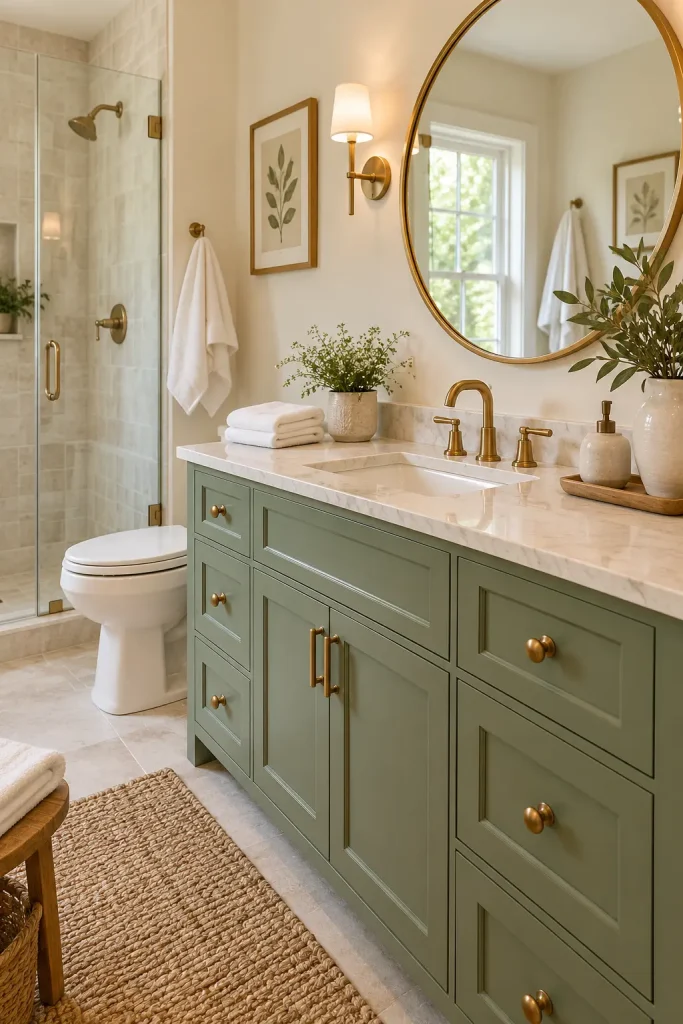
Neutral bathrooms are versatile, but a carefully chosen color can make the room feel more personal. Sage green and muted blue are two appealing options for adding color while maintaining a relaxed atmosphere.
Sage works naturally with pale oak, cream ceramics, warm brass, and botanical accents. Muted blue pairs well with white tile, nickel fixtures, and light gray stone.
You can introduce either shade through painted walls, a vanity, towels, or smaller accessories. If you’re uncertain about committing to a bold finish, start with textiles or a paint sample and view the color in both daylight and evening lighting.
| Color choice | Pairs well with | Overall effect |
|---|---|---|
| Sage green | Oak, cream, brass | Soft and organic |
| Muted blue | White, nickel, pale gray | Cool and calming |
| Dusty rose | Ivory, warm metal, beige | Gentle and warm |
| Deep forest green | White stone, oak, brass | Rich and dramatic |
Quick Tip: Repeat the chosen accent color at least once elsewhere in the room, such as in a hand towel or small accessory, to help the palette feel intentional.
15. Finish the Bathroom With a Stylish Bath Mat and Window Treatments
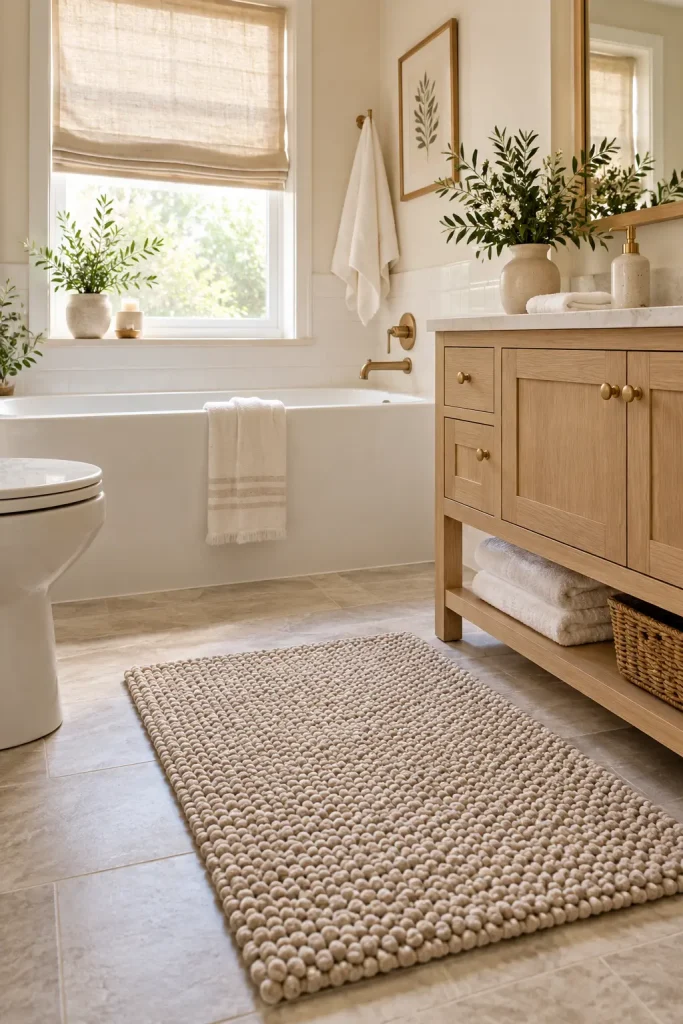
The finishing touches often determine whether a bathroom feels complete. A textured bath mat adds softness underfoot, while an appropriately chosen window treatment can provide privacy and soften hard architectural lines.
For a calm, coordinated look, choose a cotton bath mat in ivory, oatmeal, or muted gray. A subtle stripe or woven texture can add interest without introducing a competing pattern.
For windows, consider a moisture-appropriate shade or curtain that suits the window’s position and privacy needs. Light-filtering fabrics work well where privacy is less of a concern, while a more opaque treatment may be needed for a bathroom facing neighboring homes.
A few practical considerations make these finishing pieces work better:
- Select a bath mat with a suitable nonslip backing for the floor.
- Choose washable textiles that can dry thoroughly between uses.
- Keep window treatments clear of water splashes where possible.
- Coordinate the colors with your towels and permanent finishes.
These relatively small changes can make a bathroom feel more comfortable without the expense of replacing fixtures or tile.