
24 First Apartment Decor Ideas to Make Your Space Feel Like Home
Moving into your first apartment is an exciting milestone, but an empty space can feel a little overwhelming. You might have bare walls, mismatched furniture, limited storage, and a decorating budget that doesn’t stretch as far as you’d like. The good news is that creating a comfortable home doesn’t require buying everything at once or investing in expensive furniture.
The best first apartment decor ideas focus on making your space functional, personal, and inviting. A thoughtfully arranged living room, soft bedroom textiles, warm lighting, and a few meaningful accessories can make even a small rental feel special. You can also create a polished look without permanent renovations or changes your landlord might not allow.
Whether you’re decorating a studio, a one-bedroom apartment, or your first place with a roommate, these 24 ideas will help you build a home that reflects your personality while making everyday life more comfortable.
1. Start With a Warm, Neutral Color Palette
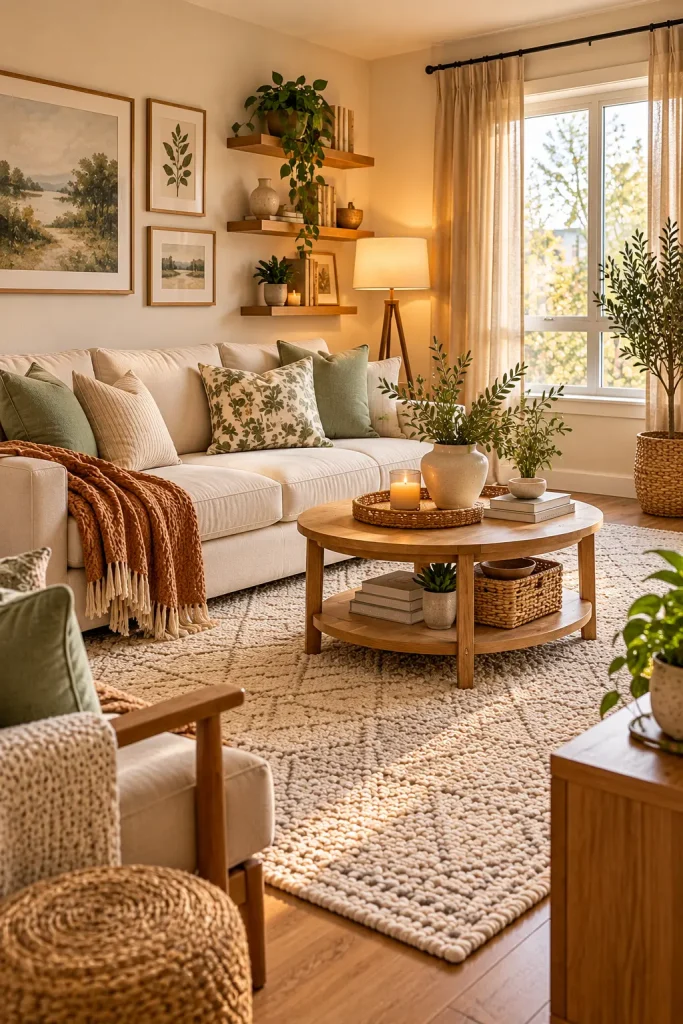
A cohesive color palette is one of the easiest ways to make your first apartment feel thoughtfully decorated. Instead of buying furniture and accessories in completely different colors, choose two or three main shades and repeat them throughout your space.
Warm white, oatmeal, beige, natural oak, and muted sage green work beautifully together. If you prefer a more colorful interior, consider dusty blue, terracotta, or soft olive as accent colors.
You don’t need to make every room identical. Simply repeat a few colors in different ways to create a natural connection between your living room, bedroom, and dining area.
How to get the look:
- Use warm white or cream as your main neutral.
- Add natural wood through furniture, trays, or picture frames.
- Introduce one or two accent colors through pillows, artwork, and blankets.
- Repeat your chosen shades in different rooms for a coordinated appearance.
2. Invest in a Comfortable Sofa That Fits Your Space
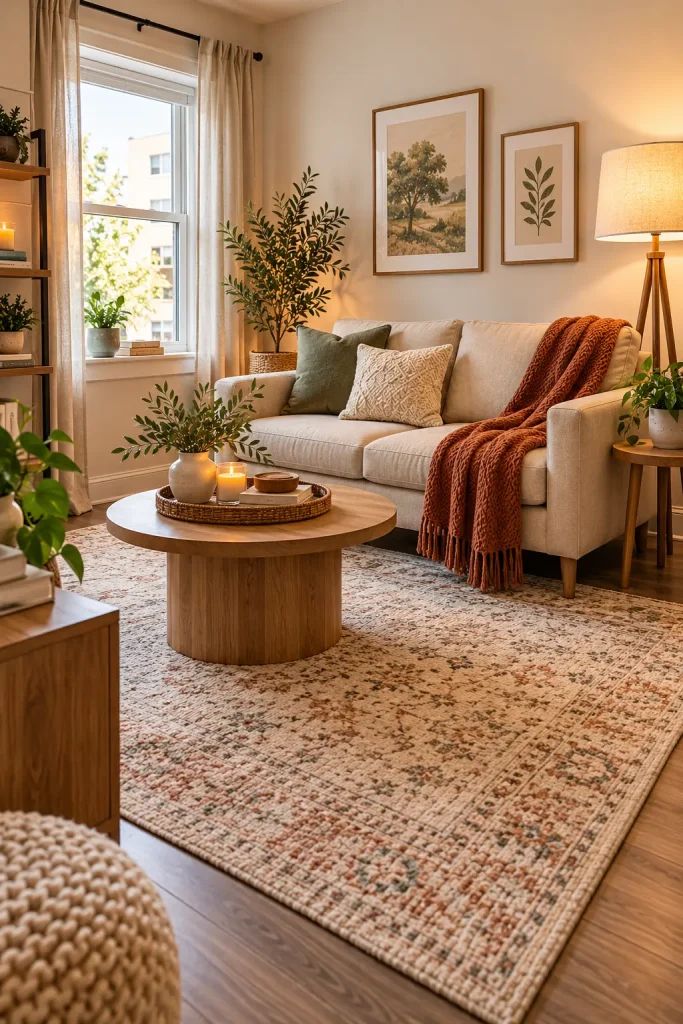
Your sofa will probably become one of the most frequently used pieces of furniture in your first apartment. It’s where you’ll relax after work, watch movies, entertain friends, and enjoy a quiet weekend morning. Choosing the right size matters just as much as choosing the right color.
A compact loveseat or apartment-sized sofa can provide comfortable seating without overwhelming a small living room. Before purchasing one, measure the available wall space, doorway openings, and the route you’ll use to bring it inside.
If your apartment has an open-plan layout, position the sofa to help define the living area rather than automatically pushing every piece of furniture against the walls.
Worth considering: A removable, washable slipcover can be useful if you expect frequent guests, have pets, or simply want the flexibility to change your color scheme later.
3. Create a Cozy Bedroom With Layered Bedding
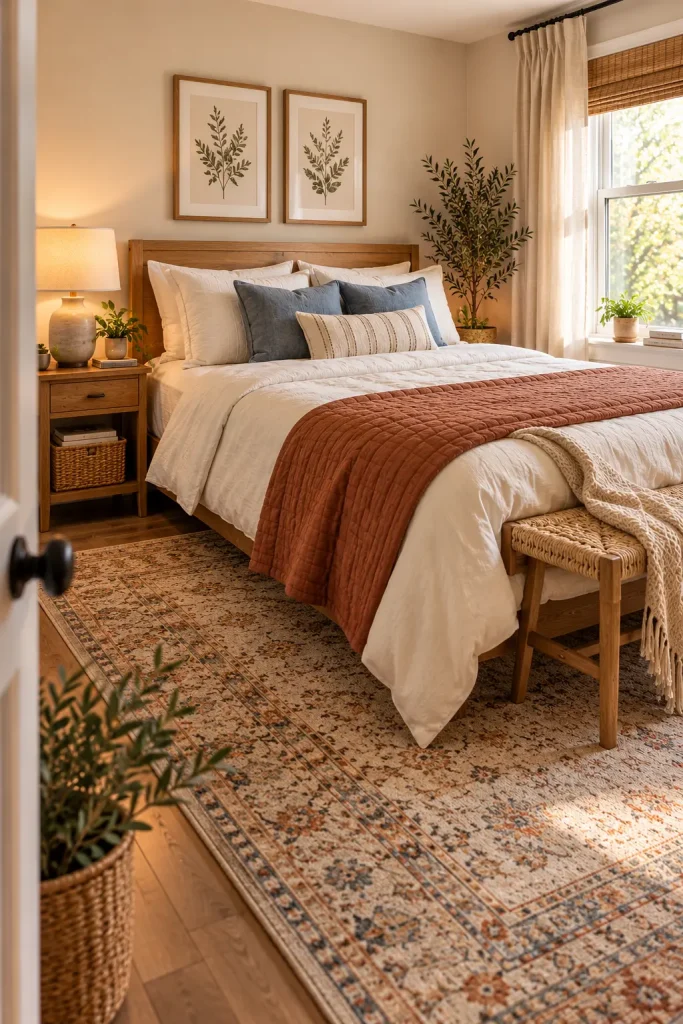
Your bedroom should feel like a place where you can unwind, especially when the rest of your apartment is still coming together. Layering bedding is an effective way to make a basic bedroom look more finished without replacing the bed frame or buying an entire furniture set.
Start with comfortable sheets, add a duvet or quilt, and finish with a lightweight throw and two or three pillows in complementary colors. You can mix textures, such as cotton, linen, and a softly knitted blanket, to add depth without introducing too many patterns.
A simple wooden nightstand, a small bedside lamp, and curtains that soften the window will help complete the room.
Quick Tip: Choose bedding that works with your existing furniture. Neutral bedding can remain useful even when you later change your wall art, curtains, or accent colors.
4. Use Floor and Table Lamps for Warm Lighting
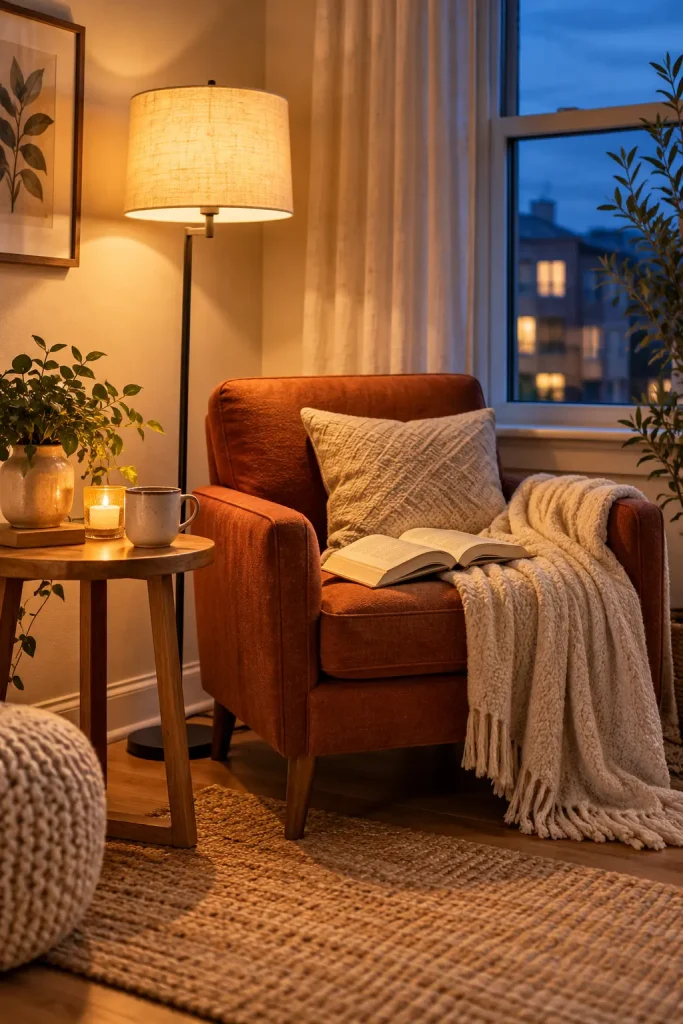
Lighting can dramatically influence how your apartment feels after sunset. Relying entirely on a single overhead fixture may leave the room feeling harsh or flat, particularly if the light is very bright or cool in color.
Instead, create layers of light with a floor lamp beside the sofa, a table lamp on a side table, and a bedside lamp in the bedroom. Warm-white bulbs can help create a softer, more relaxing atmosphere.
You don’t need to purchase all the fixtures at once. Start with the room where you spend the most time and add another lamp when your budget allows.
Three useful lighting options:
- Floor lamp: Adds light beside a reading chair or sofa.
- Table lamp: Creates a comfortable glow on a nightstand or console.
- Desk lamp: Provides more focused light for studying or working.
Keep cords out of walkways, and check that your chosen bulbs and fixtures are compatible.
5. Make a Gallery Wall With Personal Artwork
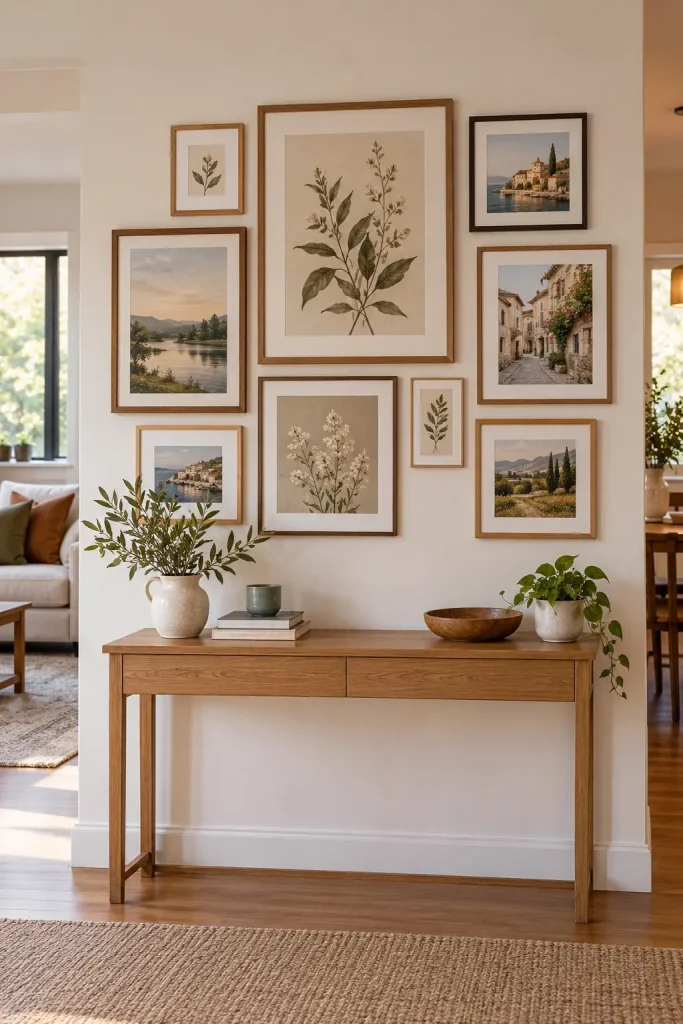
Bare walls can make a new apartment feel unfinished, but you don’t need an expensive art collection to give them character. A gallery wall made from affordable prints, personal photographs, postcards, and simple illustrations can turn an empty wall into a meaningful focal point.
Choose a loose theme to keep the arrangement visually connected. Botanical illustrations, travel photography, abstract artwork, or black-and-white photographs are all good starting points.
Before hanging anything, arrange the frames on the floor. This makes it easier to experiment with spacing and frame sizes before committing to a layout.
If you’re renting, look into removable picture-hanging strips or other landlord-approved solutions. Check the wall surface and the product’s weight limits before installation.
6. Add a Large Area Rug to Define the Living Room
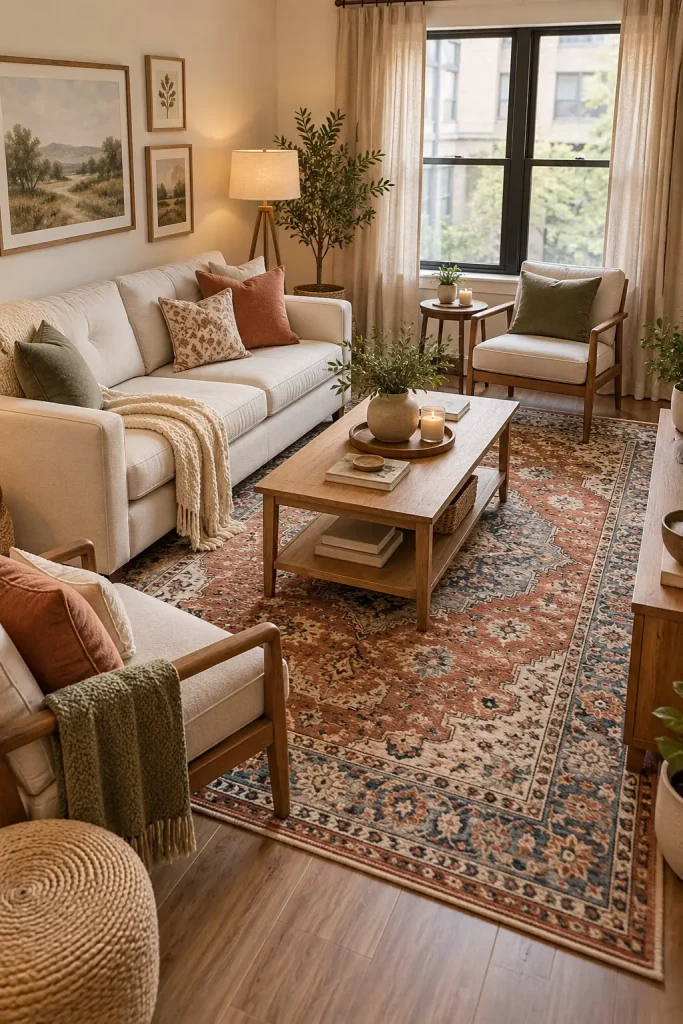
An area rug can make a living room feel more connected, especially in an apartment with an open-plan layout or hard flooring. It adds softness underfoot and visually separates the seating area from the kitchen or dining space.
One common mistake is choosing a rug that’s too small. If possible, select a size that allows the front legs of the sofa and chairs to rest on it. This creates a more unified arrangement than placing a tiny rug in the middle of the seating area.
For everyday practicality, consider a low-pile rug that’s easier to vacuum and less likely to catch on furniture legs. A subtle pattern can also help disguise ordinary wear between cleanings.
Choose a rug based on your lifestyle:
- A washable option can be convenient in a busy apartment.
- A textured neutral rug works well with colorful furniture.
- A faded vintage-style pattern can add character to a simple room.
- A flatweave rug may suit a dining area where chairs need to slide easily.
7. Choose Furniture With Built-In Storage
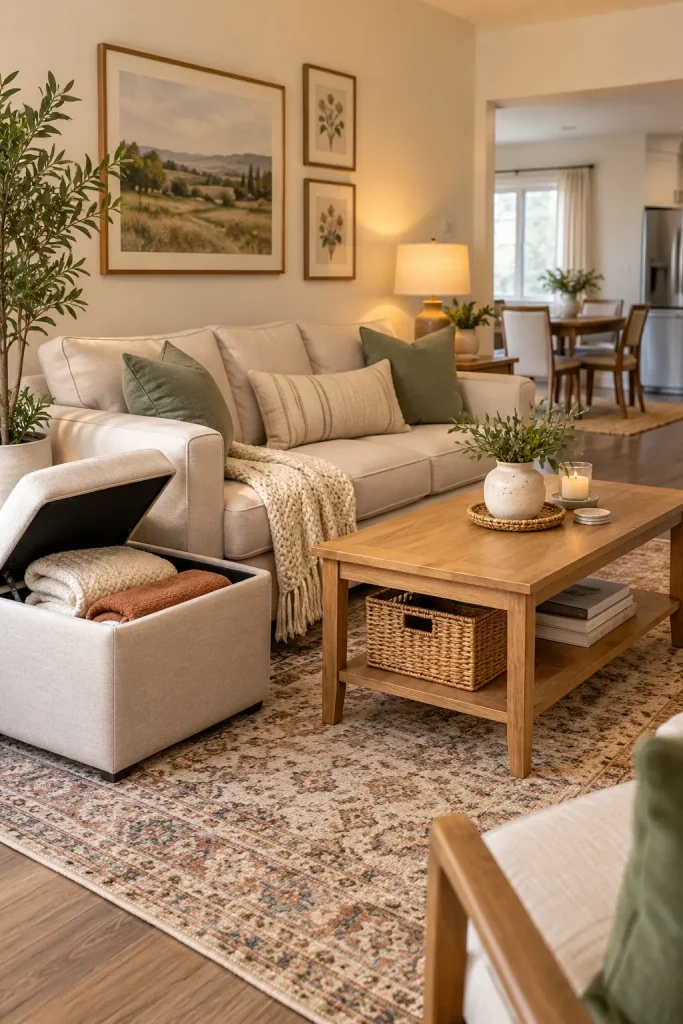
When you’re decorating your first apartment, storage furniture can help you make the most of limited space without filling every corner with separate organizers.
A storage ottoman can hold extra blankets, a bed frame with drawers can accommodate seasonal clothing, and a coffee table with a shelf can provide a place for books or baskets.
The trick is to choose pieces that solve a real problem rather than adding storage simply because it’s available. Measure carefully and consider how drawers, lids, and cabinet doors will open within the room.
Useful furniture combinations:
| Furniture | What it can store |
|---|---|
| Storage ottoman | Blankets, small pillows, and board games |
| Bedside chest | Clothing, accessories, and personal items |
| Coffee table with shelf | Books, baskets, and remotes |
| Entryway bench with compartments | Shoes, bags, and seasonal accessories |
Try to keep frequently used items within easy reach and reserve harder-to-access storage for belongings you need less often.
8. Decorate Your Entryway With a Small Console or Bench
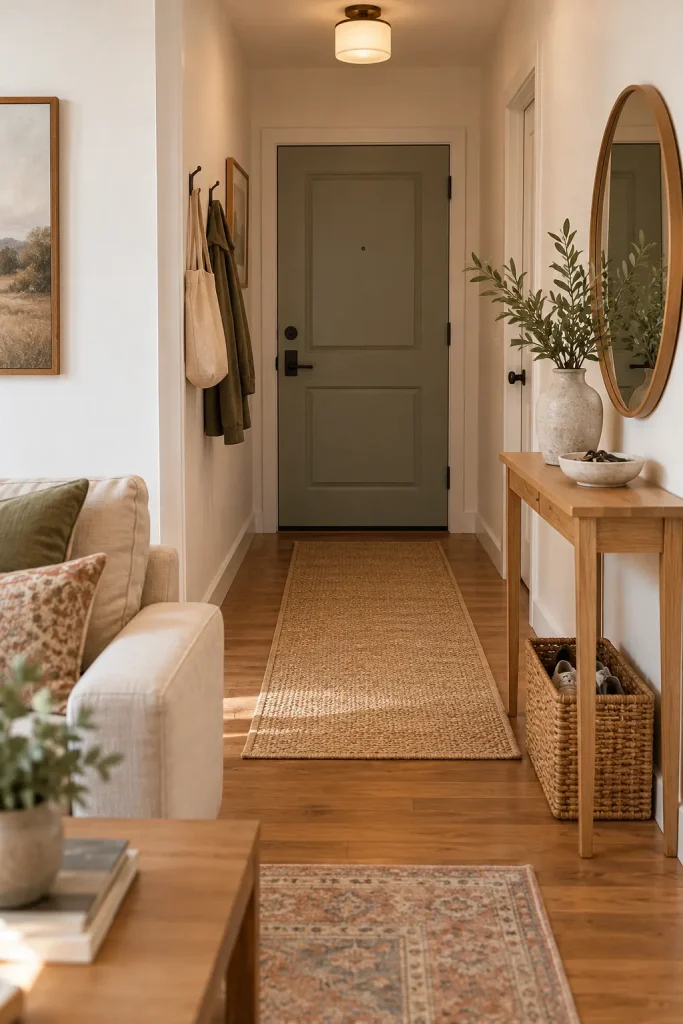
Your entryway is the first part of your home you see when you return, so even a small one deserves attention. A slim console, compact bench, or a few wall hooks can turn an otherwise empty entrance into a useful landing spot.
If your apartment opens directly into the living room, use a narrow console to establish a subtle boundary between the entrance and seating area. In a tighter hallway, a small wall shelf and a row of hooks may be more practical.
Style the surface with just a few items: a shallow bowl for keys, a small framed print, and a vase with leafy branches. Keep everyday essentials accessible without letting the area become a dumping ground.
Renter-friendly idea: A freestanding bench or console gives you flexibility if you move to another apartment later.
9. Bring Nature Indoors With Easy-to-Place Plants
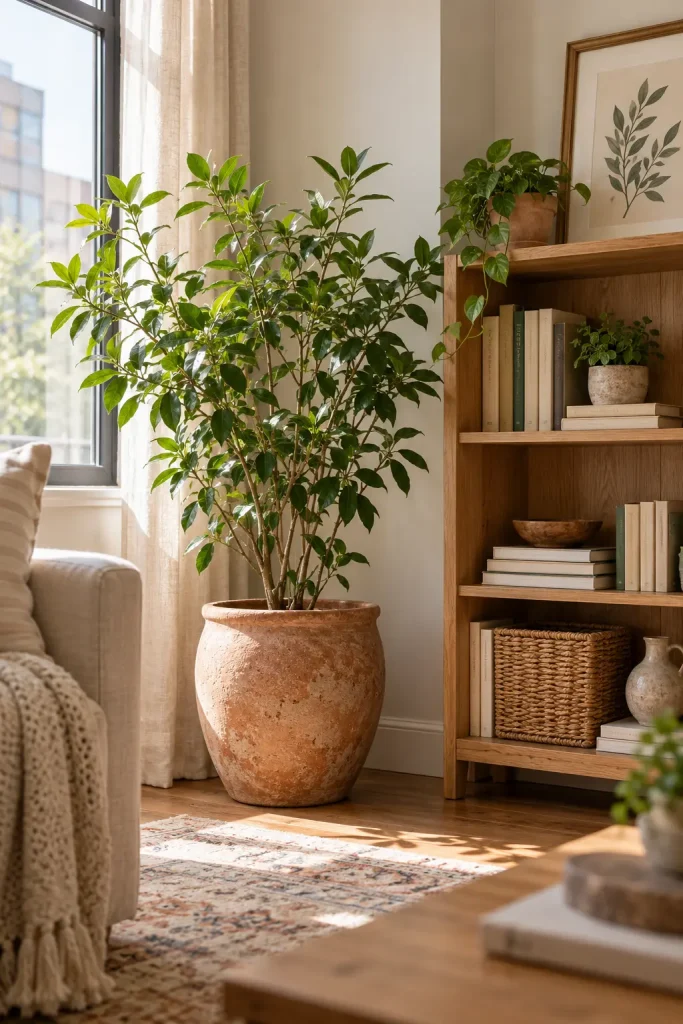
Plants introduce color, shape, and natural texture into an apartment. They can soften the appearance of a plain shelf, brighten a desk, or fill an empty corner without requiring additional furniture.
You don’t need a large collection. Start with one medium-sized floor plant and a smaller plant for a shelf or windowsill. Choose plants according to the light available in your apartment rather than selecting them based on appearance alone.
A sunny window, a shaded corner, and a room with indirect light offer different growing conditions. Check the needs of each plant before deciding where to place it.
For a polished look, use planters in complementary materials such as terracotta, matte ceramic, and woven baskets with suitable waterproof liners.
10. Create a Small Dining Nook
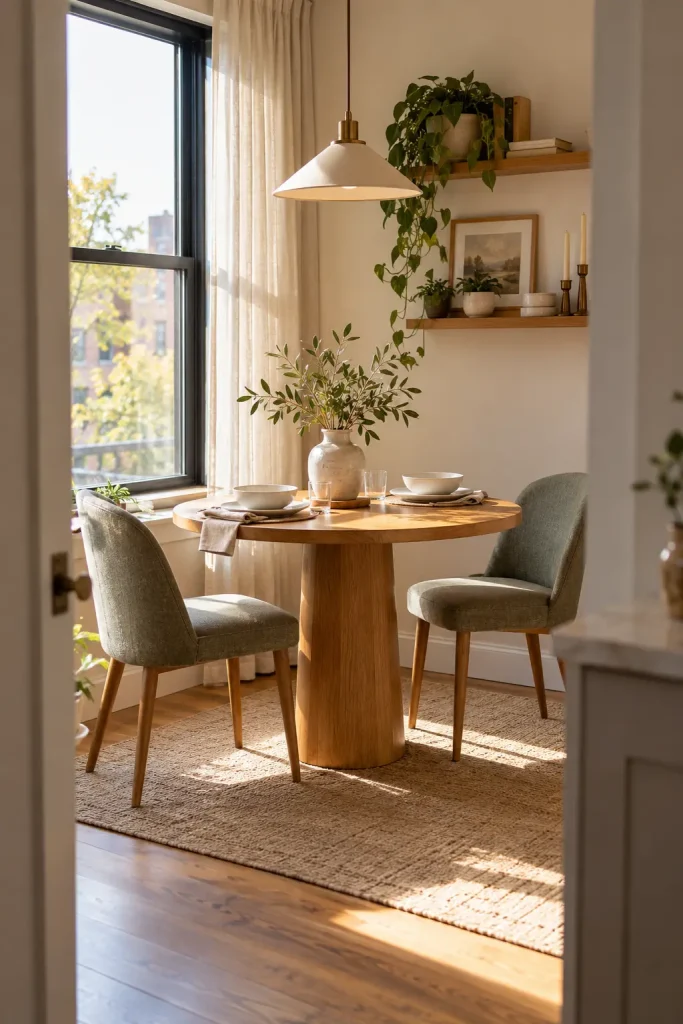
You don’t need a separate dining room to enjoy meals at a proper table. A compact dining nook can fit into an unused corner, a space beside a window, or the area between a kitchen and living room.
A round table is worth considering when space is tight because it has no corners to navigate around. A small rectangular table may work better against a wall or beneath a window.
Keep the arrangement simple with two comfortable chairs, a washable runner, and a small centerpiece. If you regularly entertain friends, look for a table with an extendable surface or additional seating that can be brought out when needed.
The aim is to create a dining area that feels intentional without blocking the natural flow of the apartment.
11. Style Open Shelves With Books and Decorative Objects
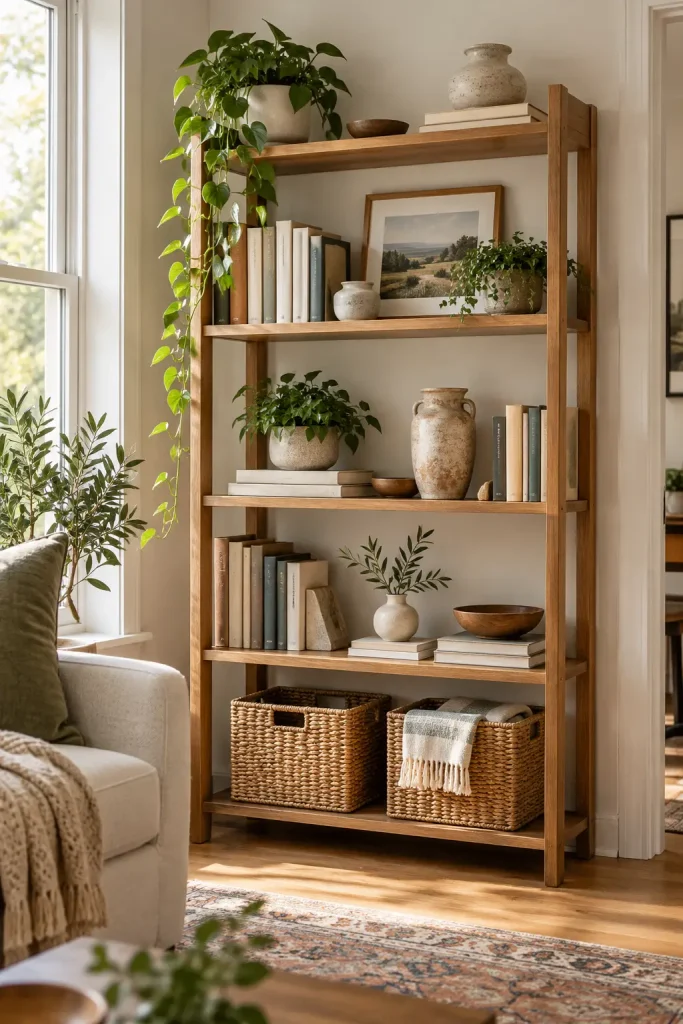
Open shelving gives your apartment a place to display things you love while keeping everyday items within reach. A bookshelf can hold novels, framed photos, ceramics, plants, and a few baskets for smaller belongings.
For a balanced arrangement, mix objects of different heights instead of lining everything up in identical rows. Place a small group of books horizontally on one shelf and use a vase or framed picture to add height nearby.
Leave some empty space, too. Filling every shelf can make a small apartment feel crowded, especially when the shelving is already a prominent feature.
If you need storage for less attractive necessities, use matching baskets on the lower shelves and reserve eye-level spaces for your favorite objects.
12. Use Curtains to Soften the Windows
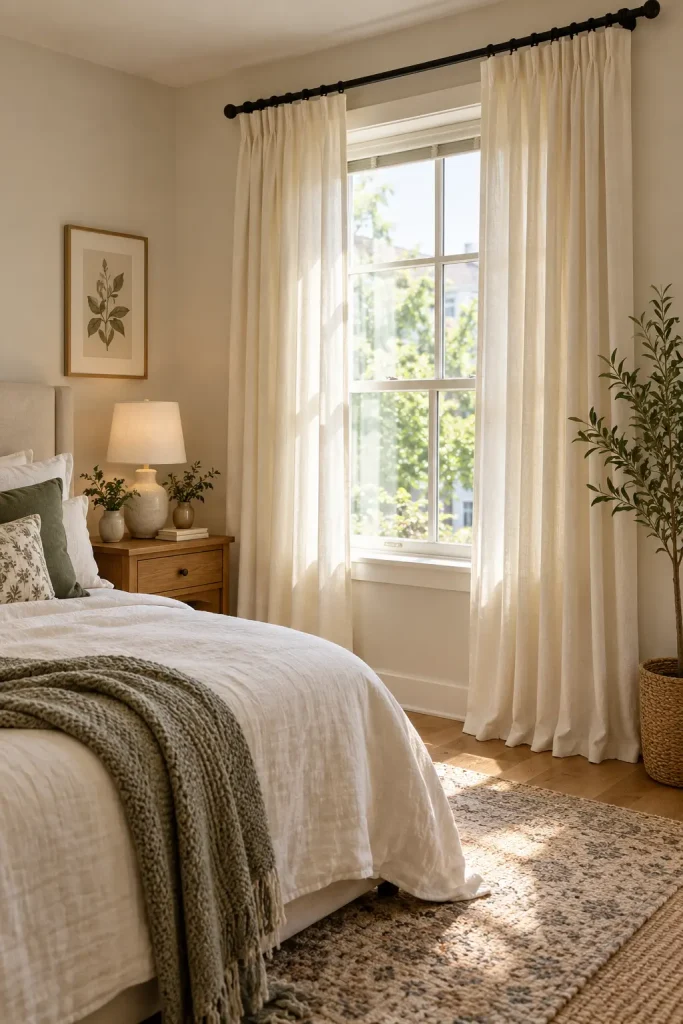
Curtains can make a basic apartment feel more finished by adding softness, color, and visual height. They also help filter daylight and provide privacy when you choose an appropriate fabric and lining.
For a taller-looking window arrangement, hang the curtain rod higher than the window frame when the layout and installation rules allow. Choose panels long enough to reach the floor without dragging excessively.
Light-filtering linen-look curtains work well if you want a bright, relaxed atmosphere. Heavier lined curtains may be more appropriate when privacy or light control is a priority.
Renters should check whether drilling is allowed before installing a rod. Tension rods or other suitable no-drill options may work for some window types, but always confirm the fit and weight capacity.
13. Personalize the Walls With Removable Wallpaper
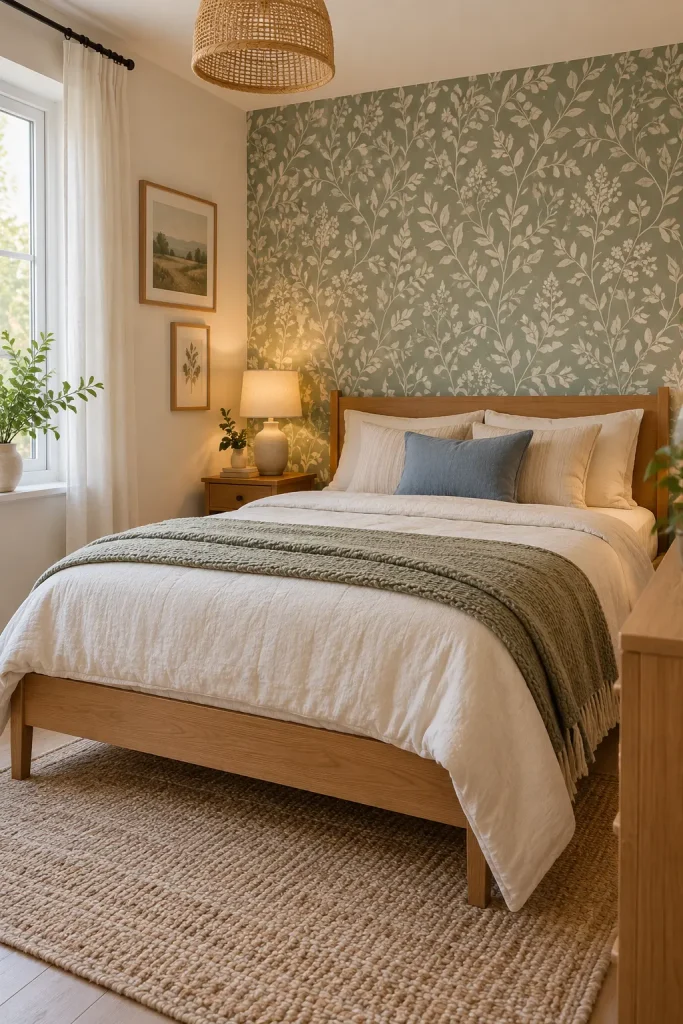
If your apartment’s plain walls feel a little uninspiring, removable wallpaper can introduce pattern without committing to a permanent renovation. Depending on the product and wall surface, it may work well behind a bed, inside a small entryway, or on one section of a home office wall.
Choose a design that complements your existing furnishings. Delicate botanical patterns can create a relaxed atmosphere, while geometric prints offer a more contemporary look.
Before covering a large area, test the product in an inconspicuous spot and follow the manufacturer’s instructions. Some finishes and wall surfaces may not be suitable for removable wallpaper, and removal can still affect certain paints or surfaces.
For a subtle effect, consider using wallpaper on a single accent wall rather than throughout the entire apartment.
14. Turn an Awkward Corner Into a Reading Nook
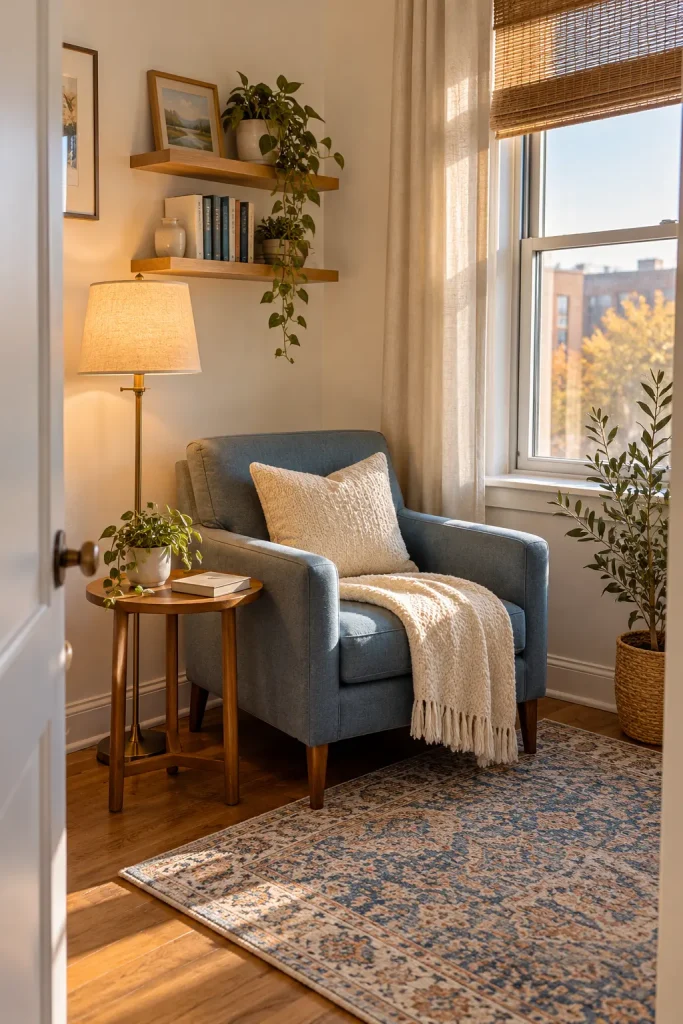
An unused corner can become one of the most inviting places in your apartment with just a few carefully selected pieces. You don’t need a full reading room or a large armchair to create a comfortable spot.
Begin with a chair that fits the available space. Add a small side table for a book and drink, a floor lamp for evening reading, and a soft throw to make the seat more inviting.
If the corner is particularly narrow, try a compact upholstered chair or a cushioned bench instead. Make sure you can sit down and stand up comfortably without moving other furniture.
Quick Tip: Position the chair near a window when practical, then use a dedicated lamp for cloudy days and evenings.
15. Give Your Coffee Table a Thoughtful Makeover
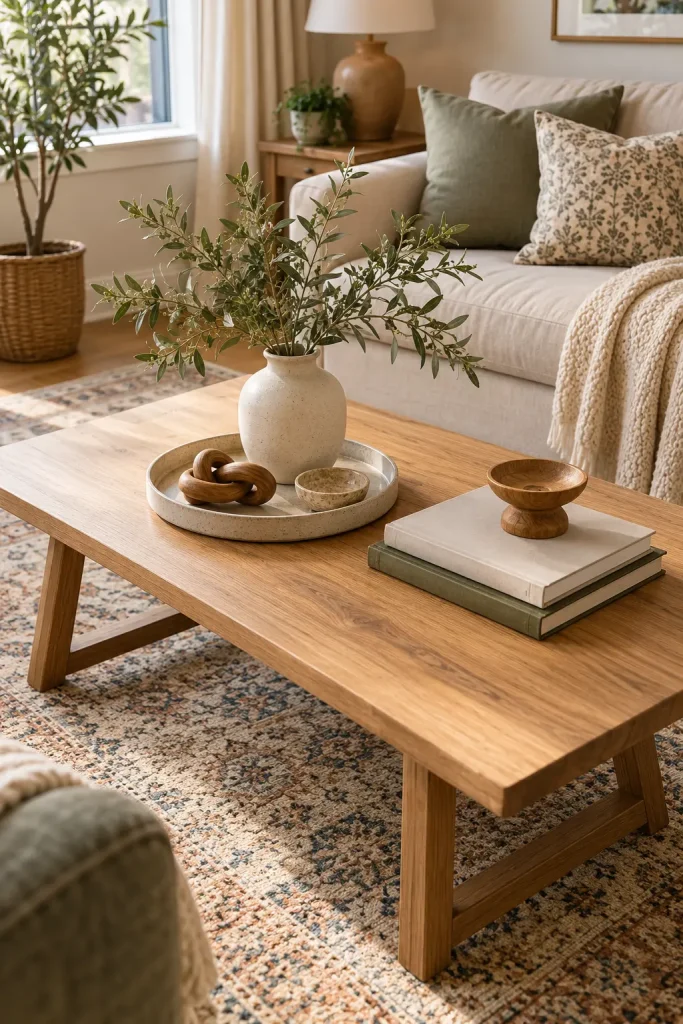
Your coffee table is a practical surface, but it can also help bring your living room’s design together. A few well-chosen objects can make an ordinary table look considered without sacrificing the space you need for everyday activities.
Start with a shallow tray to group smaller accessories. Add one or two books, a small ceramic vase, or a decorative bowl. If the table is particularly small, choose just two or three pieces rather than filling the entire surface.
A combination of different heights and textures usually looks more interesting than a collection of matching objects.
A simple coffee table formula:
- One tray to organize smaller items.
- A short stack of books for height.
- One decorative object, such as a ceramic bowl.
- A small vase with fresh or dried branches, if space allows.
Keep remotes and everyday essentials accessible. The goal is a table that looks attractive but still works for your daily routine.
16. Make a Small Kitchen Feel More Organized
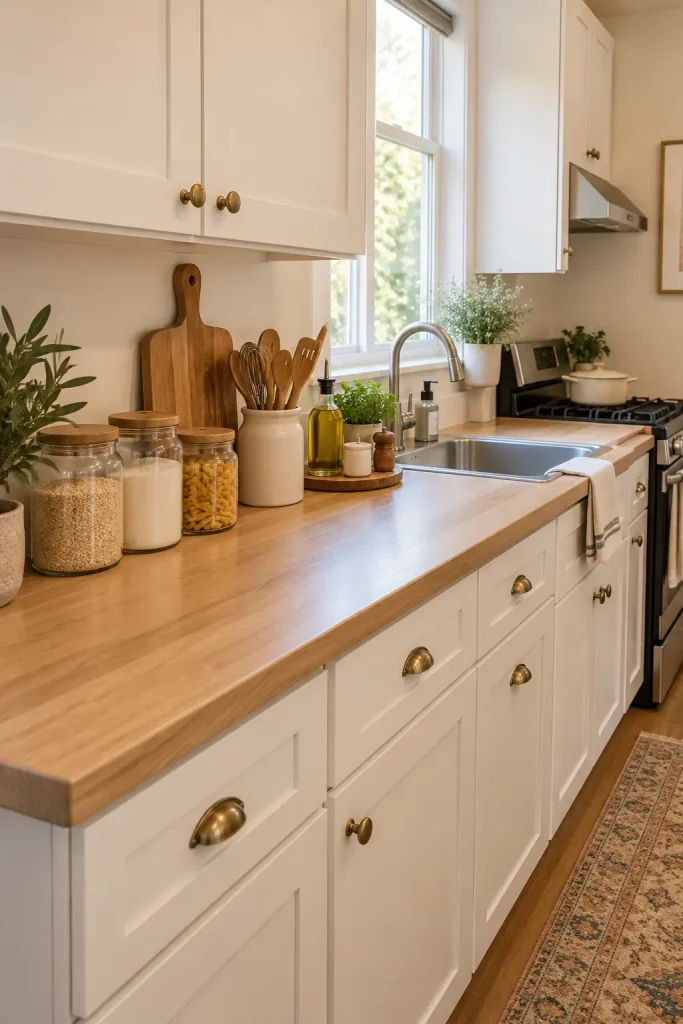
Your first apartment kitchen might not have as much cabinet space as you’d like. Rather than filling the counters with decorative accessories, focus on organization that makes cooking and cleaning easier.
Use matching containers for frequently used dry ingredients, a small utensil holder near your main preparation area, and a tray to group cooking oils or seasonings. If you have open wall space, a landlord-approved rail or freestanding shelf may provide additional storage.
Keep the counter beside your primary preparation area as clear as possible. A few attractive everyday essentials will look more intentional than numerous appliances competing for attention.
Small Kitchen Organization Checklist
- Move rarely used appliances into cabinets when space allows.
- Use vertical dividers to organize baking sheets and cutting boards.
- Store everyday utensils close to where you prepare food.
- Keep cleaning supplies organized and away from food preparation surfaces.
- Use a small tray to contain frequently used bottles.
Common mistake: Buying organizers before measuring your cabinets. Check the dimensions first so you don’t spend money on containers that waste valuable space.
17. Add a Full-Length Mirror to Open Up the Room
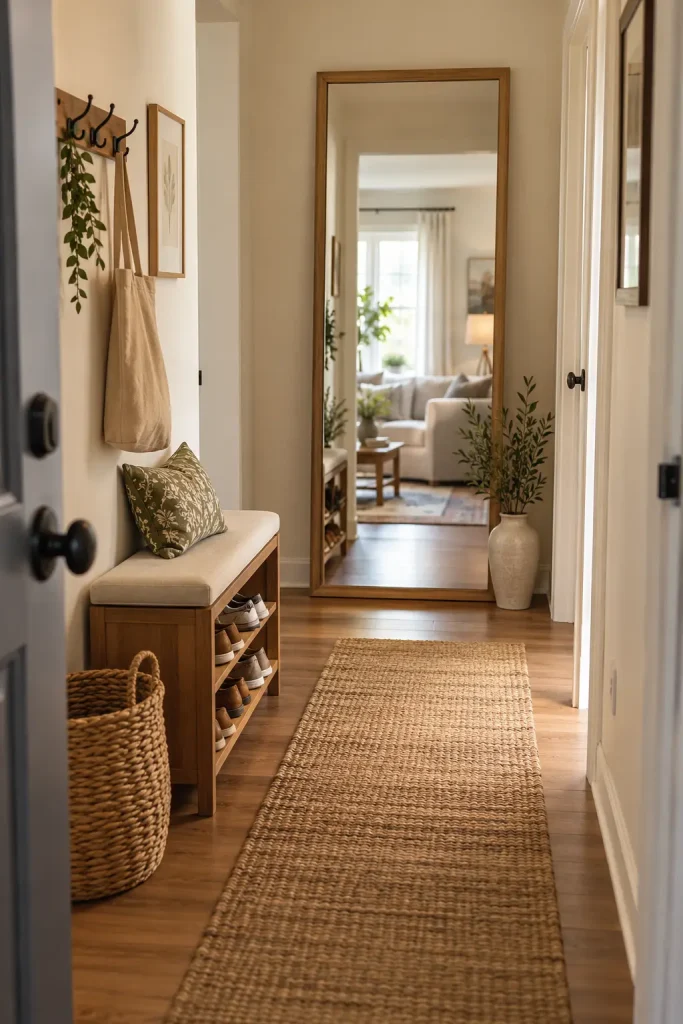
A full-length mirror is a practical addition to a first apartment because it provides a convenient place to check your outfit while reflecting light and adding visual depth.
Lean a properly secured mirror against a suitable wall if the design and your lease allow it, or choose a freestanding model that can move with you. A slim dark frame gives the room a contemporary look, while a natural-wood frame suits a warmer interior.
Placement matters more than size alone. Position the mirror where it reflects a window, a well-lit part of the room, or an attractive arrangement rather than a cluttered corner.
In a narrow entryway, a tall mirror can also make the space feel less enclosed.
18. Create a Functional Work-From-Home Corner
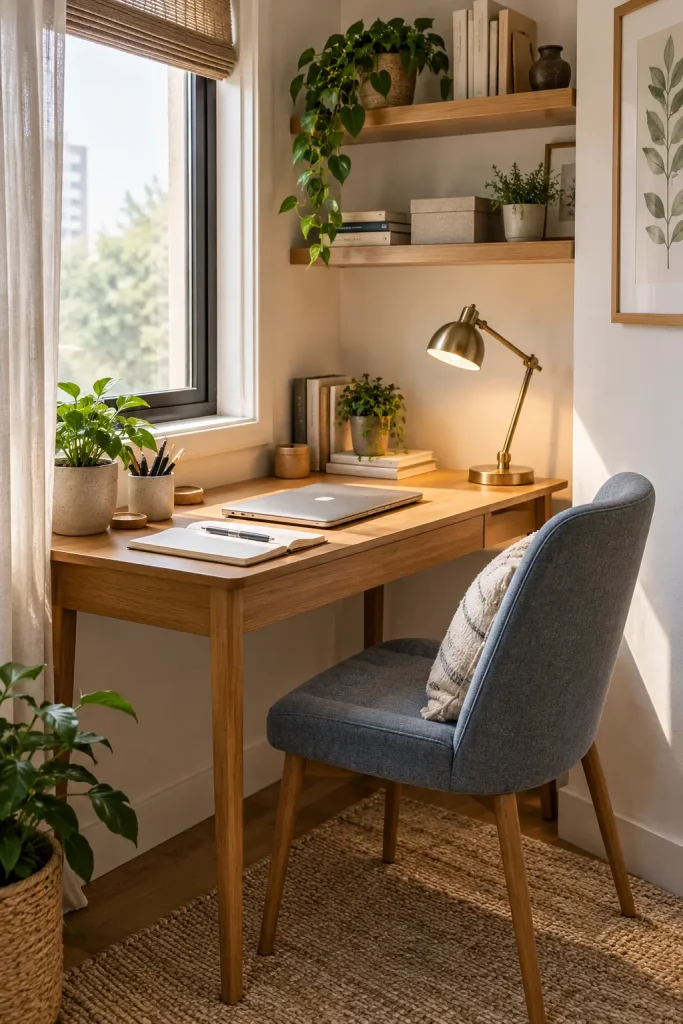
Even if you don’t have a separate office, a small desk can give you a dedicated place to study, work, manage bills, or pursue personal projects.
Look for a desk that fits comfortably against a wall or beneath a window. A narrow writing desk can be enough for a laptop, notebook, and desk lamp. Pair it with a chair that provides appropriate support for the amount of time you’ll spend sitting.
Use a small drawer unit, a desktop organizer, or a shelf to keep supplies accessible without spreading them across the apartment.
If your desk shares space with your living room or bedroom, choose furniture and accessories that complement the rest of the decor. That way, your work area feels like part of your home rather than a temporary addition.
Practical detail: Check where electrical outlets are located before deciding on your desk position. This can reduce the need for cords running across walking paths.
19. Use Throw Pillows to Introduce Color and Texture
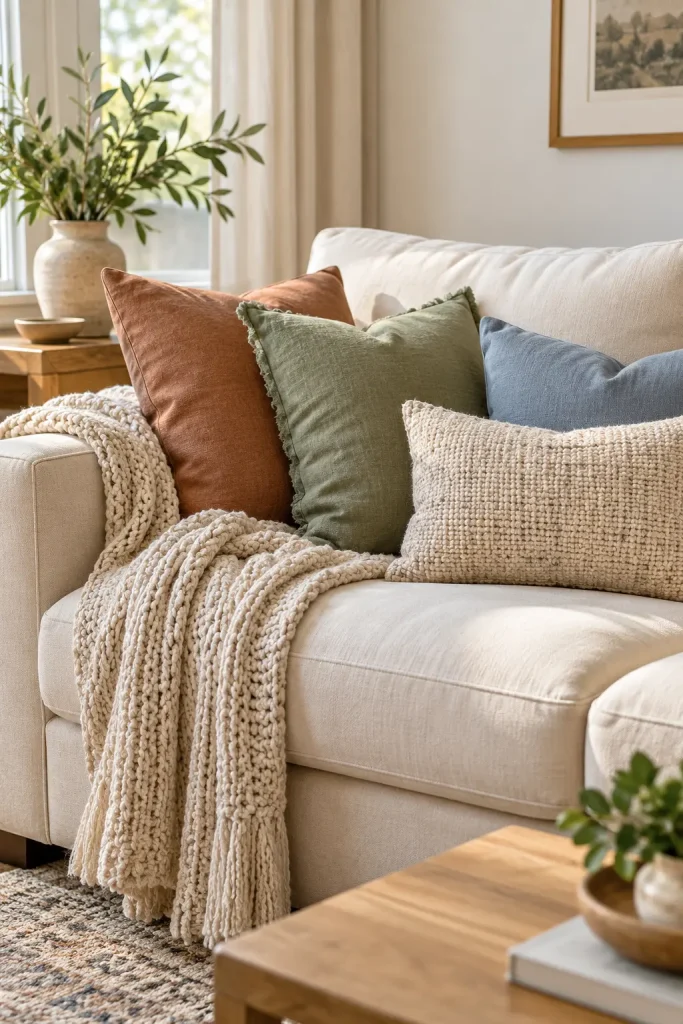
Throw pillows are among the easiest accessories to change as your decorating preferences evolve. They can add color to a neutral sofa, soften a wooden bench, or make a simple bed feel more inviting.
Instead of purchasing a complete matching set, combine a few complementary colors and textures. For example, a cream sofa can work beautifully with a muted terracotta pillow, a sage-green cushion, and a smaller pillow with a subtle woven pattern.
Varying the shapes and textures creates interest without requiring a complicated color scheme.
| Style | Pillow combination |
|---|---|
| Warm and natural | Oatmeal, ivory, and olive |
| Soft and colorful | Dusty blue, blush, and cream |
| Earthy and relaxed | Terracotta, sand, and muted green |
| Modern and minimal | Charcoal, ivory, and textured gray |
Choose pillow covers that can be removed and washed according to their care instructions. This makes it easier to maintain them and refresh your decor without replacing the entire cushion.
20. Make the Bathroom Feel Like a Personal Retreat
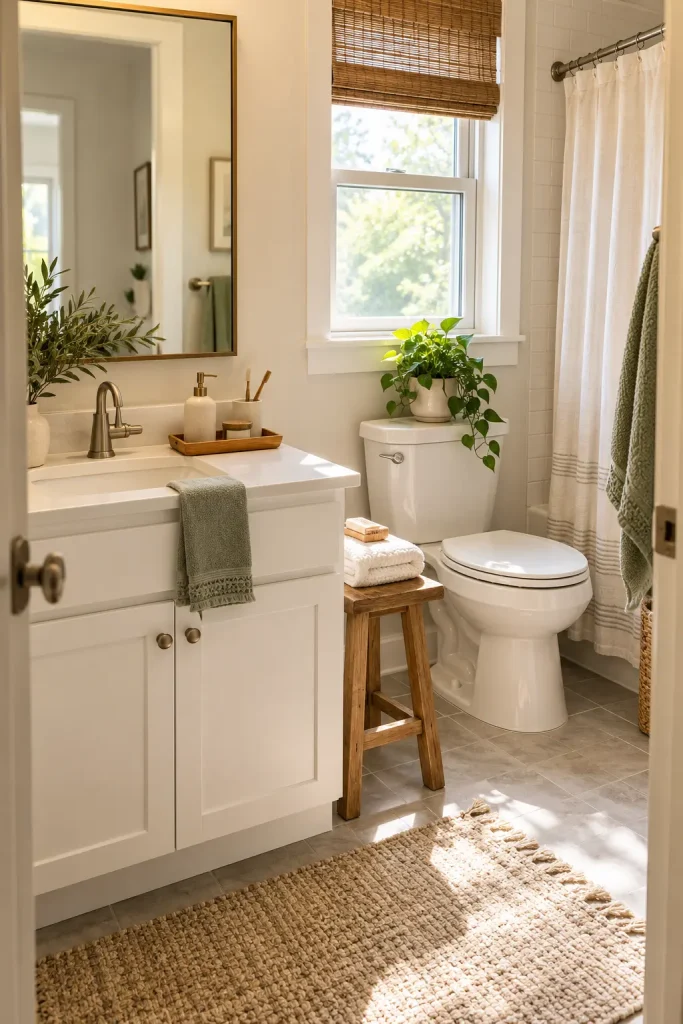
A small apartment bathroom can feel more welcoming with coordinated textiles, better organization, and a few carefully chosen accessories.
Start with matching or complementary hand towels and bath towels. Add a bath mat that fits the available floor space, a simple soap dispenser, and a small tray for frequently used products.
If your bathroom has limited storage, use vertical space with suitable shelves or an over-the-door organizer where permitted. Keep the countertop relatively clear so the room remains easy to clean.
You can introduce warmth through a wooden stool, a small framed print in an appropriate location, or a ceramic container for everyday essentials. Choose accessories that tolerate the room’s humidity and keep fabrics and decor away from sources of excessive moisture.
Quick Tip: Repeating two or three colors throughout the bathroom creates a coordinated look without requiring new fixtures.
21. Decorate With Secondhand Furniture and Vintage Finds
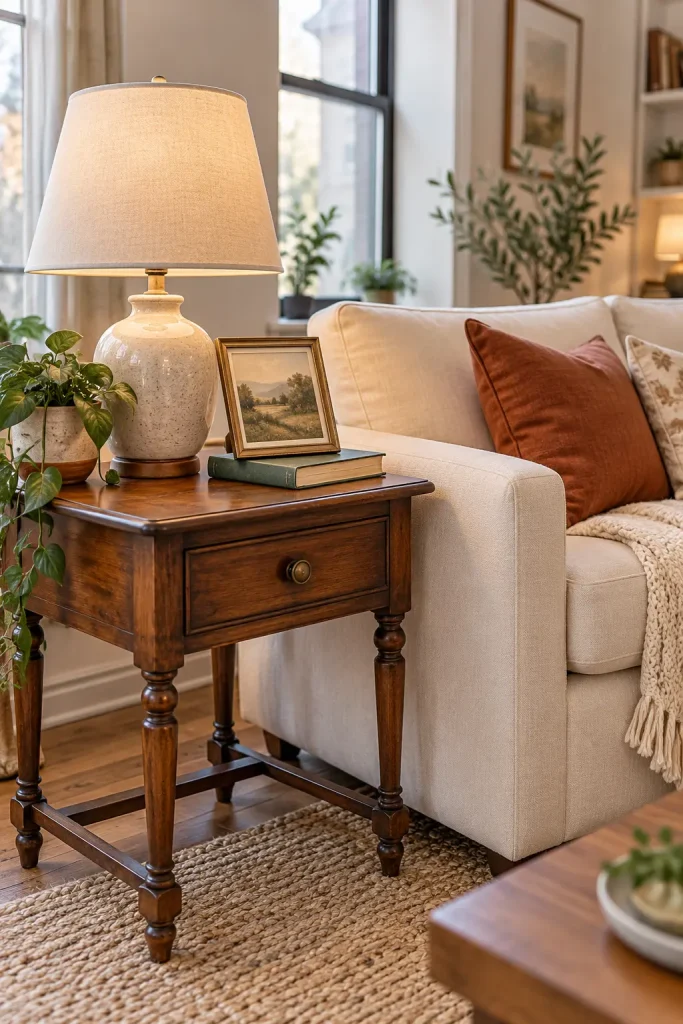
Your first apartment doesn’t need to be furnished entirely with brand-new pieces. Secondhand shops, estate sales, local resale listings, and family hand-me-downs can be useful sources of furniture and accessories with character.
A vintage side table, an older wooden dresser, or an unusual ceramic vase can give a room a more individual feel than a collection of identical new accessories.
The key is to mix older pieces with your existing furniture rather than trying to make every item look vintage. A traditional wooden table can sit comfortably beside a modern sofa, while a vintage picture frame can add warmth to a contemporary gallery wall.
Before purchasing secondhand furniture, inspect its stability, condition, and measurements. Check upholstered pieces carefully and be cautious about bringing home items with signs of pests, persistent odors, or moisture damage.
A simple styling approach: Pair one distinctive vintage piece with two or three understated modern objects so it becomes a focal point rather than visual clutter.
22. Introduce a Statement Piece Without Overdecorating
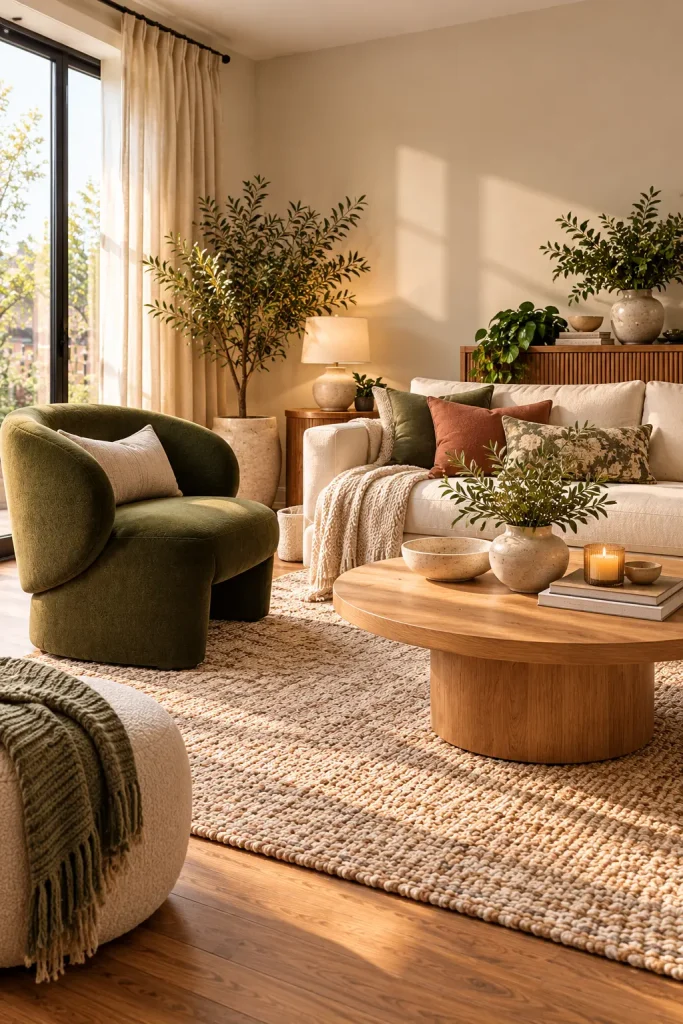
Sometimes one distinctive item can give a room more personality than several smaller accessories. A sculptural floor lamp, an oversized framed print, a colorful accent chair, or an unusual mirror can become the main focal point in your apartment.
Choose the statement piece according to the room’s size and existing furnishings. In a small living room, a distinctive lamp or piece of artwork may be easier to accommodate than a large, brightly colored sofa.
Once you’ve chosen your focal point, let it stand out. Keep nearby accessories relatively simple so the room doesn’t feel as though every object is competing for attention.
Do: Repeat one of the statement piece’s colors in a smaller accessory elsewhere in the room.
Don’t: Add several equally bold objects without considering their relationship to one another.
A well-chosen focal point can make a modest apartment feel more personal while allowing the rest of the room to remain comfortable and functional.
23. Use Baskets to Keep Everyday Clutter Under Control
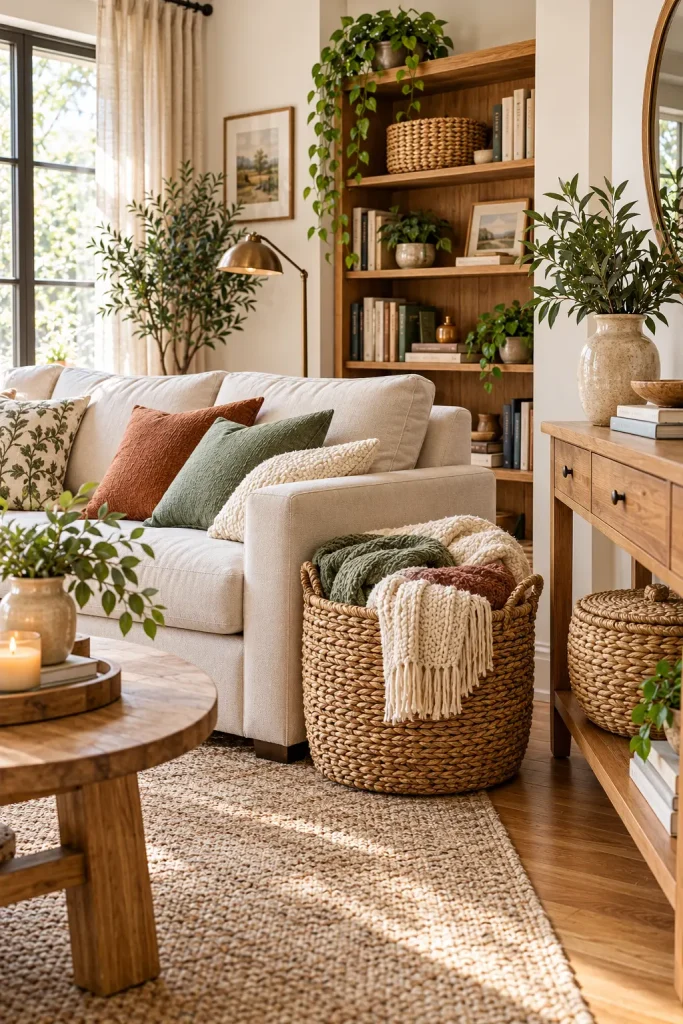
Decorating feels much easier when everyday belongings have a place to go. Baskets can help organize blankets, shoes, magazines, charging accessories, and other small items while adding texture to your apartment.
Choose basket sizes according to their intended use. A large woven basket beside the sofa can hold extra throws, while a smaller basket on a shelf may keep accessories together.
Natural woven baskets suit warm, relaxed interiors, but fabric bins or structured containers may work better inside closets and drawers.
Avoid buying too many storage containers before you understand what you need to store. Start by identifying the areas where clutter accumulates most often, then select baskets that fit those spaces.
Where Baskets Work Best
- Living room: Blankets, magazines, and small accessories.
- Bedroom: Extra linens, scarves, or seasonal items.
- Entryway: Shoes, reusable shopping bags, and accessories.
- Bathroom: Rolled towels or suitable packaged essentials.
- Bookshelf: Smaller belongings that would otherwise look scattered.
For a tidy appearance, keep frequently used baskets easy to reach and avoid overfilling them.
24. Display Meaningful Objects That Reflect Your Personality
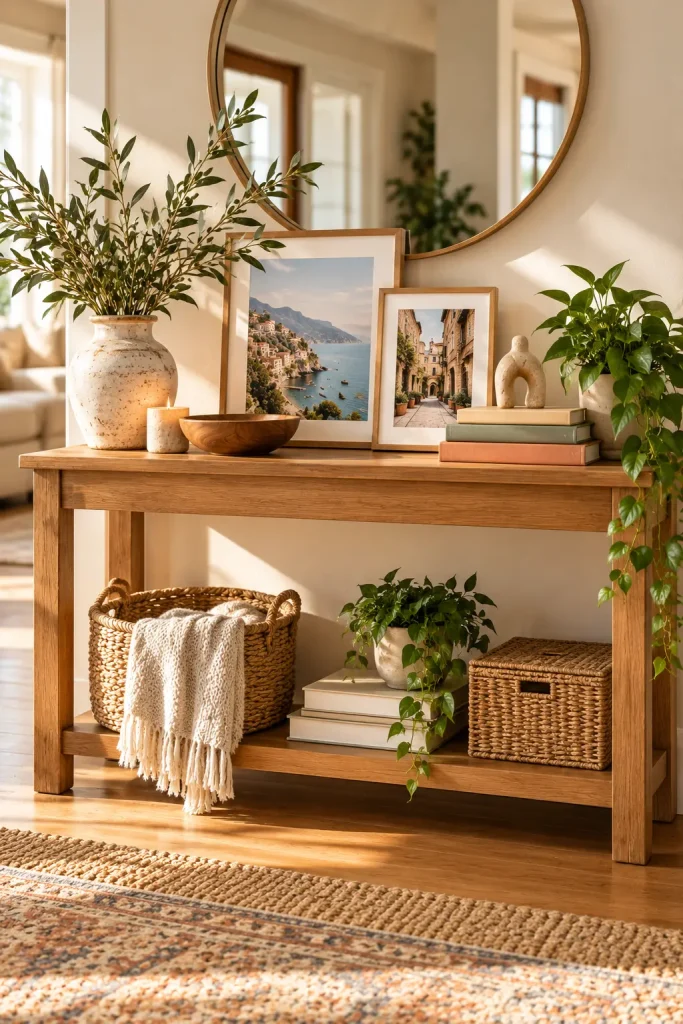
The finishing touch for your first apartment isn’t a particular furniture style or color scheme. It’s the collection of objects that makes the space feel like yours.
Display a few travel souvenirs, framed photographs, favorite books, handmade ceramics, or small items connected to your hobbies. These personal details can make a newly furnished apartment feel more familiar, even if you’ve only recently moved in.
You don’t need to display everything at once. Choose a few meaningful items for a shelf, console, bedside table, or desk. Rotate the collection occasionally if you want to bring different pieces into view.
Try combining personal objects with simple decorative elements so the arrangement feels balanced. A framed photograph beside a small vase, for example, can look more intentional than a crowded collection of unrelated objects.
The most important rule: Your home doesn’t have to resemble a furniture showroom. It should reflect how you live, what you enjoy, and the things that matter to you.