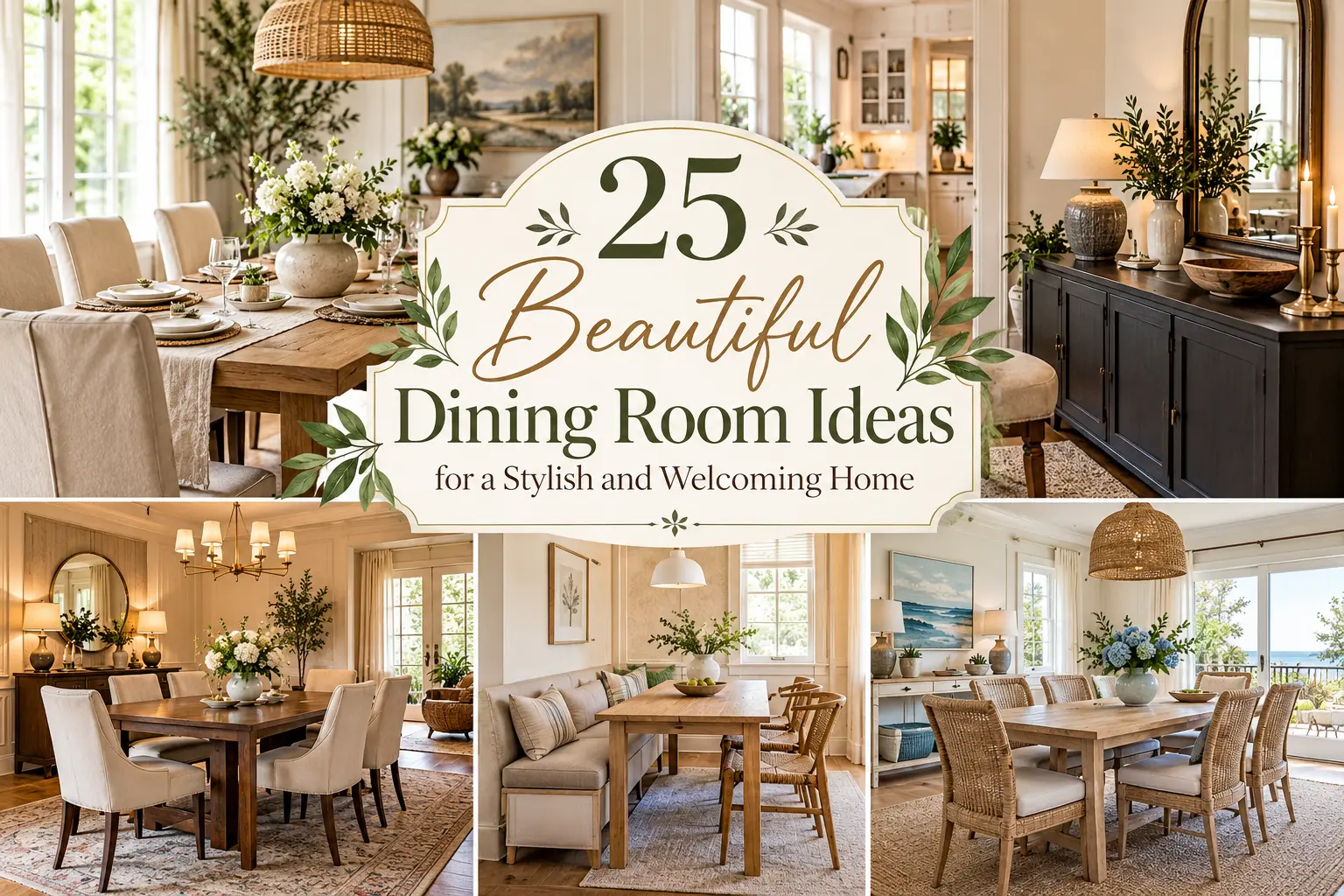
25 Beautiful Dining Room Ideas for a Stylish and Welcoming Home
A dining room should feel inviting enough for everyday meals and special enough for gatherings with family and friends. Whether you have a dedicated dining room, a small breakfast nook, or an open-plan space connected to your kitchen, thoughtful decorating can make the area feel more comfortable and pulled together.
The best dining room ideas combine practical furniture, attractive lighting, balanced colors, and personal details that reflect your home’s style. You don’t need a complete renovation to make a difference. Sometimes, a new pendant light, a well-chosen rug, or a simple centerpiece is all it takes to refresh the room.
From modern neutral interiors and rustic farmhouse tables to colorful walls and space-saving furniture, these 25 dining room ideas offer inspiration for a range of homes and budgets. Each approach focuses on creating a space that looks beautiful while remaining comfortable and functional for everyday living.
1. Create a Warm and Modern Neutral Dining Room
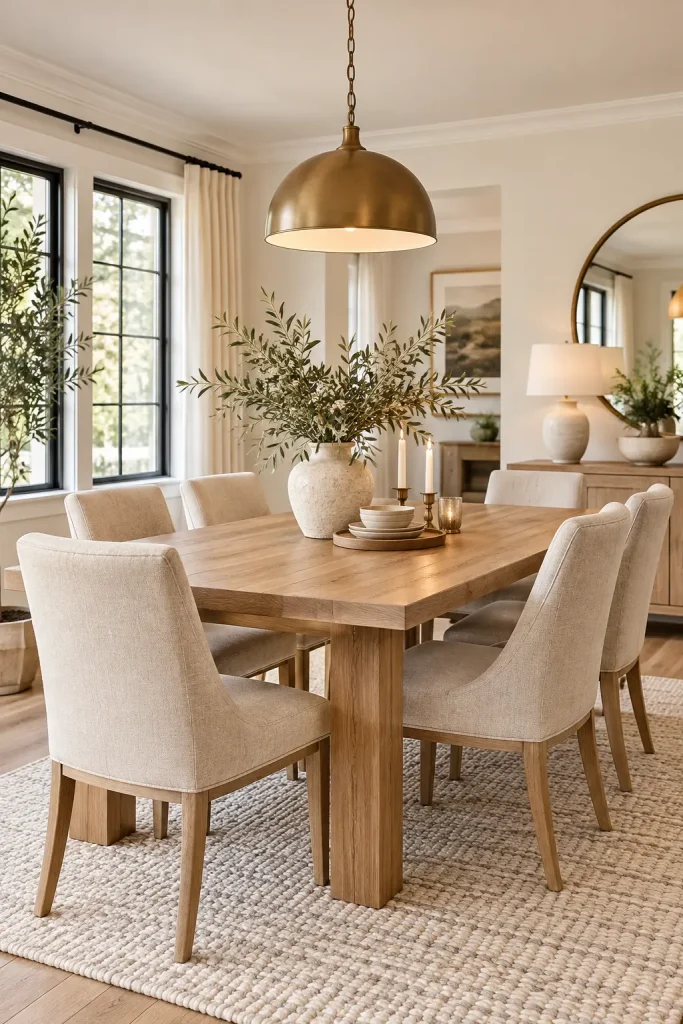
A neutral dining room can feel warm, elegant, and welcoming without relying on elaborate decorations. Start with a combination of creamy white walls, natural oak furniture, beige upholstery, and soft lighting. These shades create a calm foundation that works beautifully in both contemporary homes and traditional interiors.
Choose a rectangular oak dining table with simple lines and pair it with upholstered chairs in oatmeal, ivory, or warm taupe. A textured area rug can help define the dining zone, particularly in an open-plan living space. Add a ceramic vase with fresh branches or seasonal flowers to bring a natural element to the table.
Styling tip: Combine several textures rather than using the same finish everywhere. Linen, wood grain, woven fibers, and matte ceramics add depth without making the room feel busy.
2. Embrace the Charm of a Farmhouse Dining Table
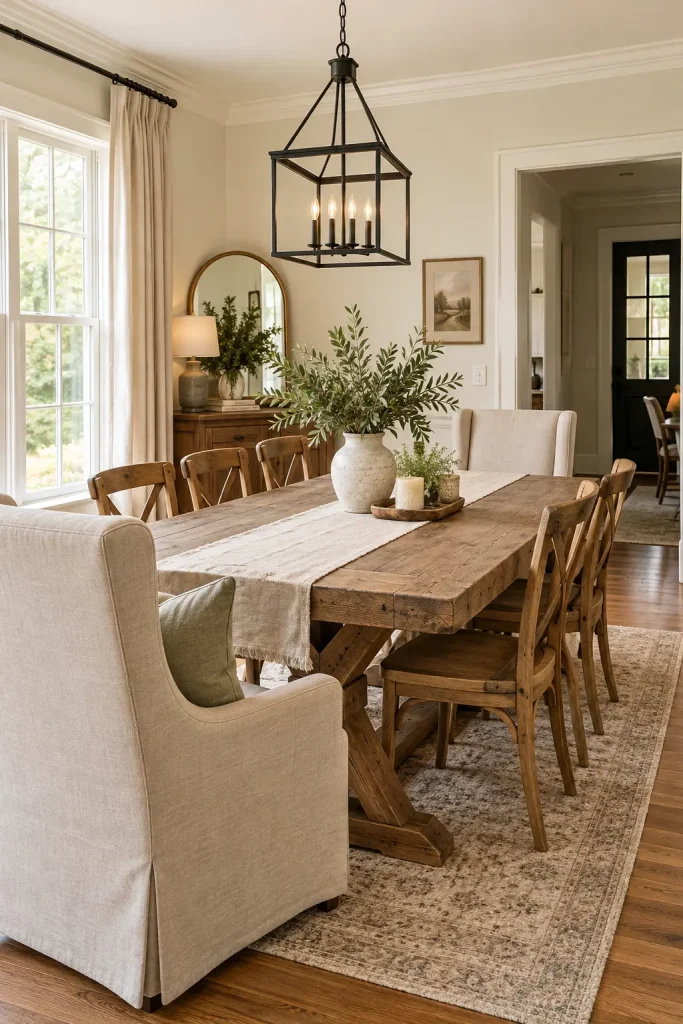
A farmhouse dining room brings a relaxed, lived-in character to the home. The key element is usually a substantial wooden table with visible grain, a natural finish, and a shape that encourages people to gather around it.
Pair a farmhouse table with a mixture of wooden chairs and upholstered seating to keep the arrangement from feeling too uniform. White or warm cream walls provide a fresh backdrop, while black metal lighting introduces a little contrast. A simple linen runner and a low arrangement of greenery complete the look.
For an accessible approach, look for a secondhand wooden table that can be refreshed with a suitable finish. The goal isn’t to make every surface look old. Instead, balance rustic materials with clean surroundings so the dining room feels intentional rather than cluttered.
3. Make a Statement With a Modern Chandelier
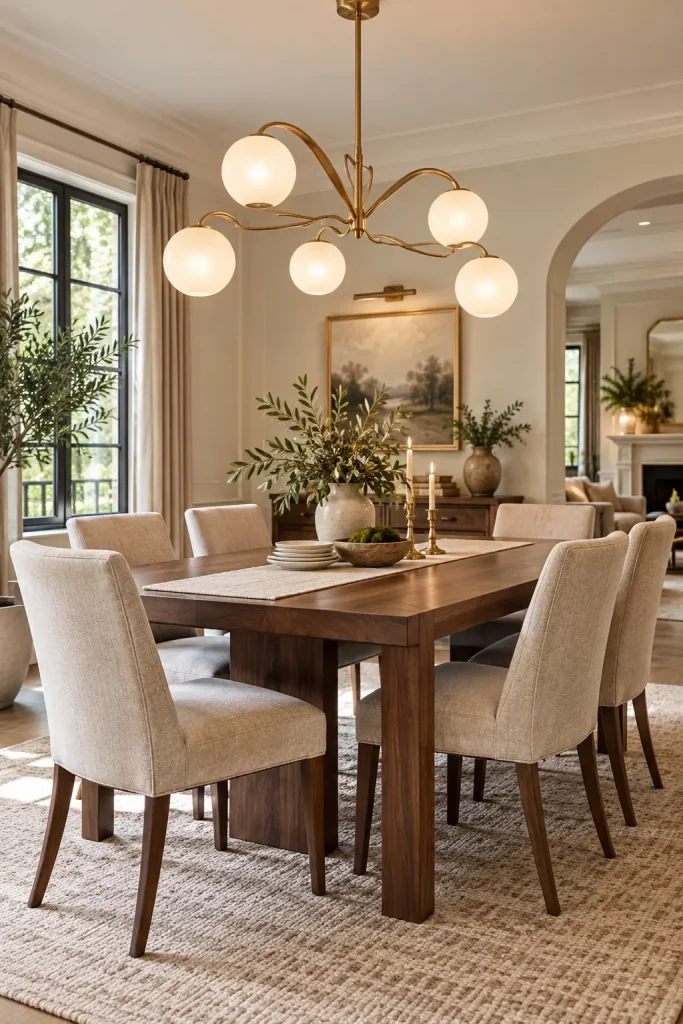
Lighting can determine how a dining room feels, even when the furniture and color palette remain relatively simple. A statement chandelier creates a focal point above the table and gives the room a more finished appearance.
Consider a sculptural fixture with curved arms, a contemporary globe chandelier, or a linear pendant with several light sources. Choose a design that complements the table’s shape and the room’s architecture.
A long rectangular table often works well with an elongated fixture, while a round table can accommodate a centered chandelier. The fixture should provide comfortable illumination without obstructing views across the table.
Quick Tip: If your dining room has a dimmer-compatible fixture and suitable controls, adjustable lighting can make it easier to transition from bright everyday meals to a softer evening atmosphere.
4. Design a Small Dining Room That Feels Spacious
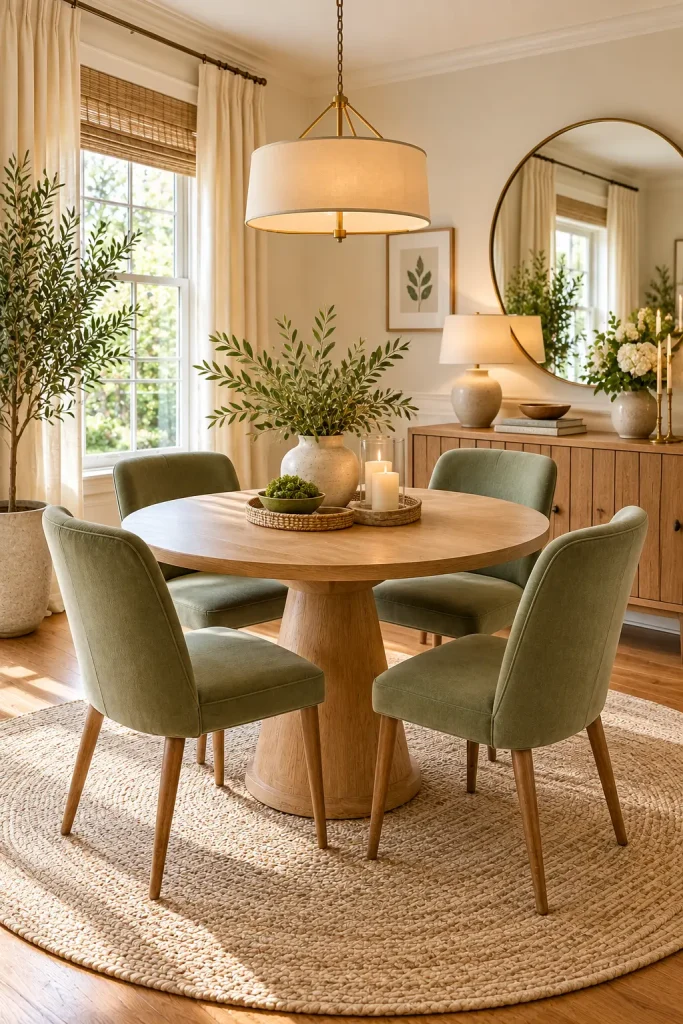
A small dining room doesn’t need to feel cramped or overlooked. The most effective approach is to select furniture that fits the available space and preserve enough room for people to move around comfortably.
A round pedestal table can be useful in a compact room because it eliminates table legs at the corners. Alternatively, a slim rectangular table placed against a wall can make better use of a narrow layout.
Try these practical adjustments:
- Choose chairs with open backs or visually light frames.
- Use a modest pendant to establish a focal point overhead.
- Keep the tabletop relatively clear.
- Add a mirror where it can reflect natural light or an attractive part of the room.
- Select a rug that fits the dining arrangement without interfering with chair movement.
Avoid choosing furniture based only on how it looks in a product photograph. Measure the room and consider how the chairs will be used when everyone is seated.
5. Bring Nature Indoors With Organic Materials
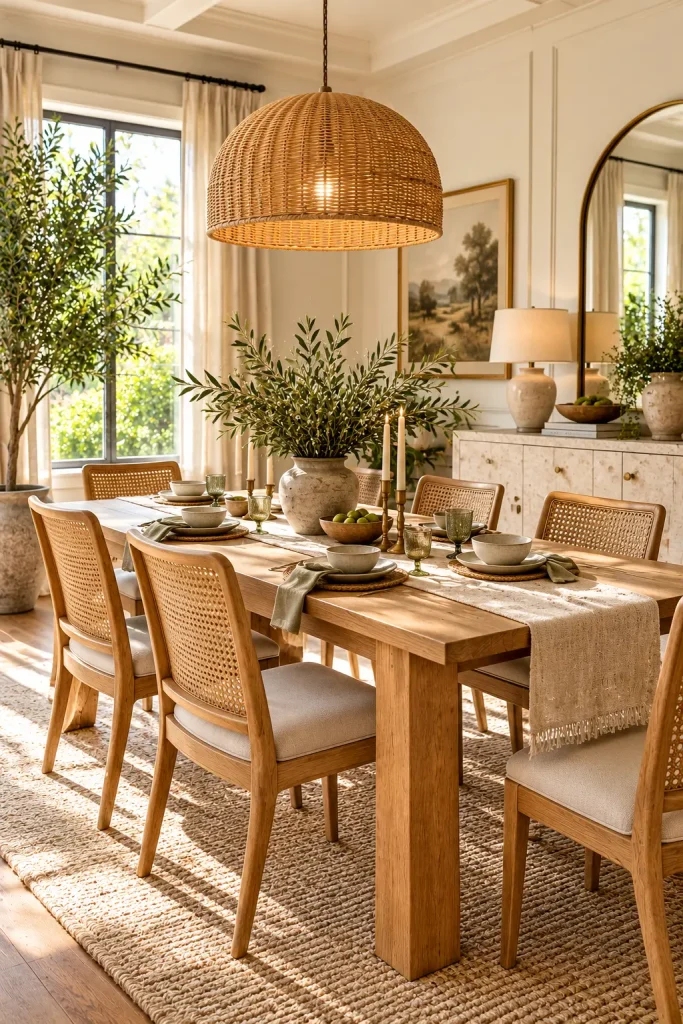
Natural materials give a dining room texture and warmth. Wood, stone, linen, rattan, and handmade ceramics work together to create a relaxed environment that feels connected to the outdoors.
Start with one dominant natural material, such as an oak dining table, and introduce supporting textures through the chairs, rug, lighting, and table accessories. A woven pendant or linen curtains can soften the harder surfaces.
Plants and branches provide another layer of interest. A leafy plant near a window or a simple arrangement of seasonal foliage on the table can add color without overwhelming the space.
The trick is to create variety while maintaining a consistent palette. If the table and chairs are heavily textured, keep the surrounding decorations simpler.
6. Add Character With a Deep Accent Wall
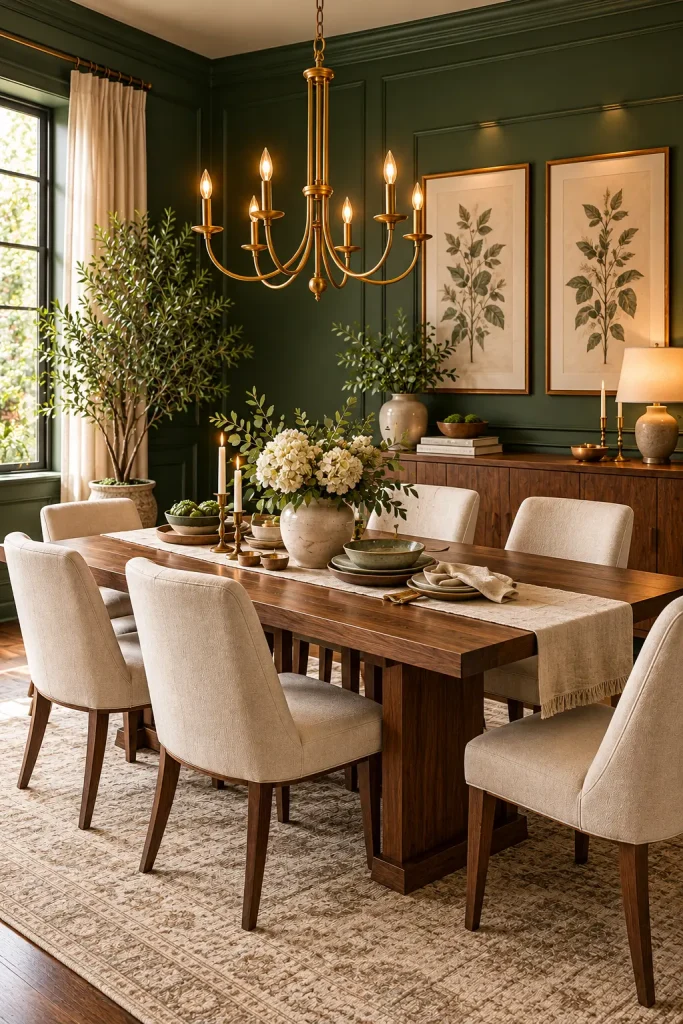
A deeper wall color can make a dining room feel intimate and distinctive, especially when the furniture and lighting are relatively understated. Forest green, muted navy, deep olive, and warm charcoal are all worth considering.
You can paint the entire room for a more enveloping effect or choose one accent wall behind the dining table. Pair darker walls with warm wood furniture, light upholstery, and carefully placed lighting to maintain balance.
For a traditional room, deep green walls with framed botanical artwork can feel classic. In a modern interior, charcoal walls combined with walnut furniture and streamlined lighting create a more dramatic appearance.
Common Mistake: Choosing a dark paint color without considering the room’s lighting.
Better Approach: Test a few samples in the actual space and observe them in daylight and evening light before committing to a color.
7. Choose a Round Table for Better Conversation
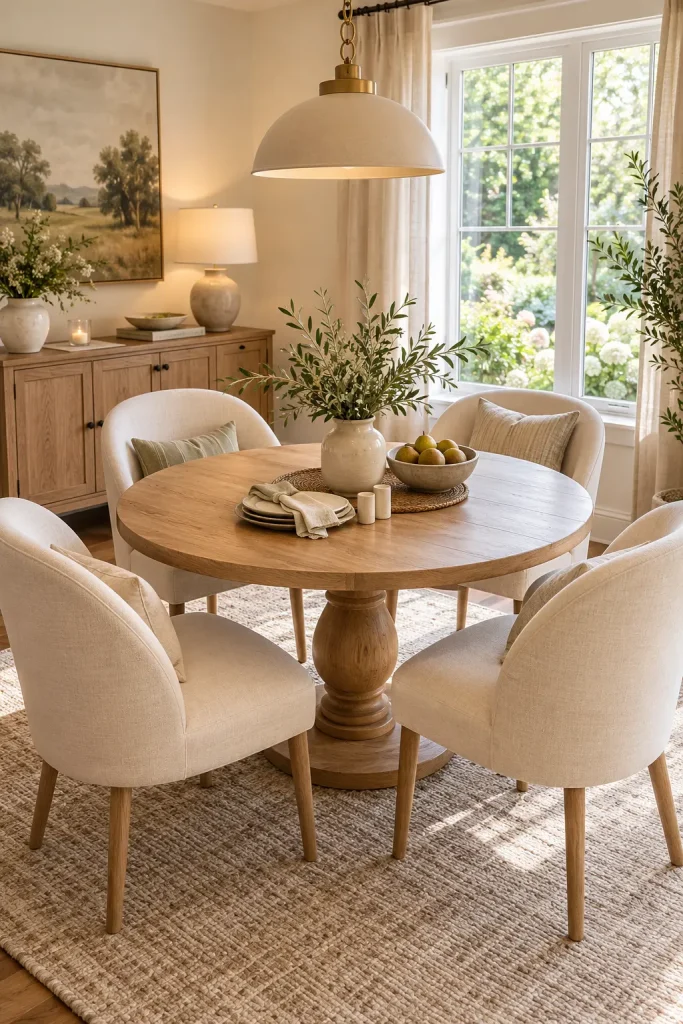
Round dining tables create an intimate arrangement in which everyone can face one another more naturally. They are particularly appealing in breakfast areas, smaller dining rooms, and homes where the dining space doubles as a place for conversation or games.
A pedestal base can provide more flexibility for chair placement than a table with four corner legs. Choose a tabletop size that accommodates your usual household and occasional guests without dominating the room.
For a relaxed look, pair a round oak table with curved upholstered chairs. A more contemporary interior might use a dark round table with sculptural chairs and a simple pendant above.
Before purchasing, check the dimensions of both the table and the chairs. A round table still needs enough surrounding space for people to pull out their seats and move around.
8. Create a Cozy Breakfast Nook
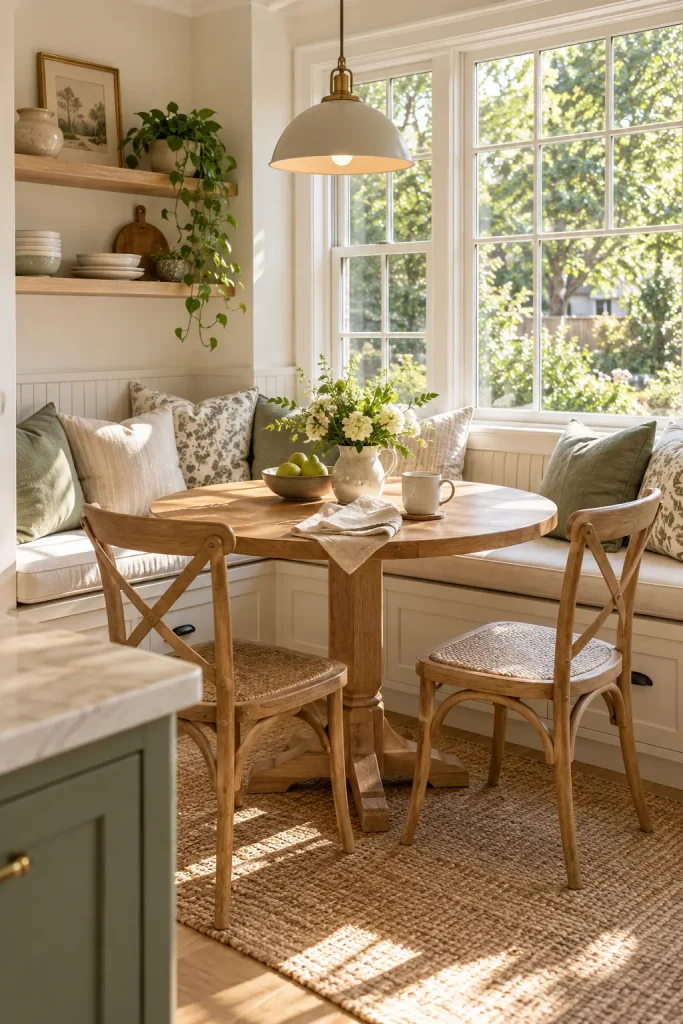
A breakfast nook makes even a small corner feel purposeful. It can provide a comfortable place for morning coffee, casual meals, reading, or homework without requiring a separate dining room.
A built-in bench is an effective option when the layout allows it. Place a rectangular or round table in front of the seating, then add removable cushions in washable fabrics for everyday comfort.
For a softer look, choose warm white walls, natural wood, and muted green or blue accents. Pendant lighting can help distinguish the nook from the surrounding kitchen, while a small vase or bowl creates a simple centerpiece.
If you rent your home, a freestanding bench or compact upholstered banquette can provide a similar effect without permanent construction.
9. Layer a Rug Beneath the Dining Table
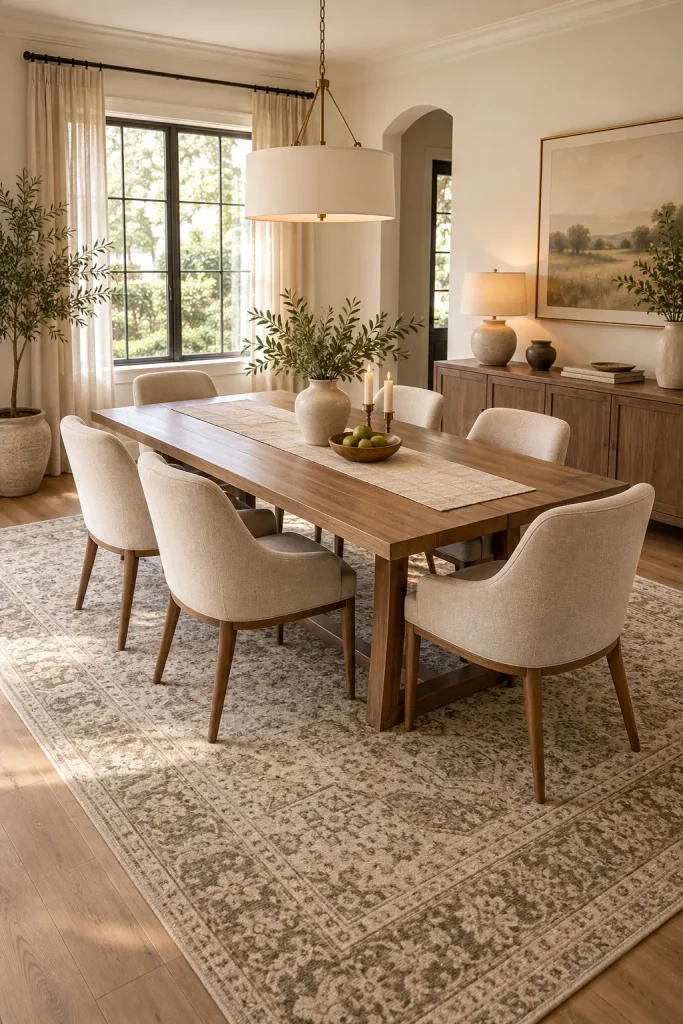
A dining room rug can visually anchor the furniture and introduce color, pattern, or texture. It is especially helpful in an open-plan home where the dining area shares space with a kitchen or living room.
A low-pile rug is generally easier to manage beneath dining chairs than a thick, shaggy design. Flatwoven styles and rugs with subtle patterns can also help disguise everyday crumbs and minor marks.
Before choosing a rug, measure the table and consider how far the chairs move when someone sits down or stands up. Ideally, the chairs should remain on the rug during normal use rather than catching on its edge.
For a neutral room, try a muted geometric pattern or a warm vintage-inspired design. In a colorful dining room, a quieter rug may provide better balance.
10. Mix Dining Chairs for an Eclectic Look
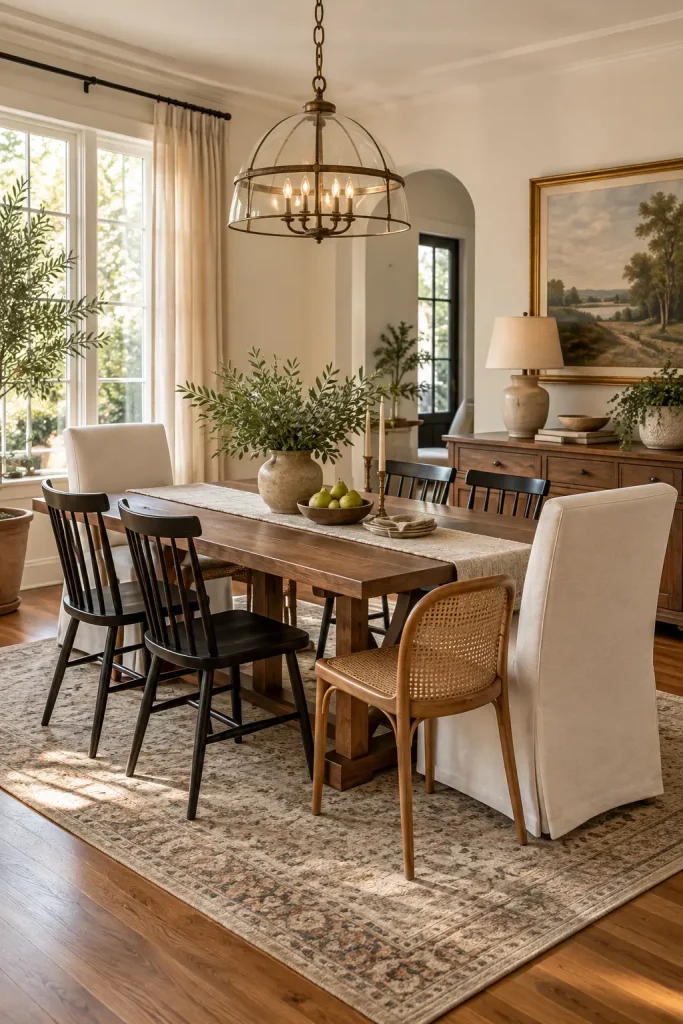
Matching dining chairs create a coordinated appearance, but mixing styles can give the room more personality. The secret is to establish a connection between the different chairs so the arrangement feels intentional.
You might pair simple wooden side chairs with upholstered end chairs, combine two complementary wood finishes, or use matching chair frames in different fabric colors.
A successful combination usually shares at least one element:
- Similar seat heights.
- Related wood tones or metal finishes.
- A consistent color palette.
- Compatible shapes and proportions.
For example, a walnut table can work beautifully with black wooden chairs and two cream upholstered end chairs. The contrast adds variety while keeping the room visually connected.
If the chairs are already quite different, keep the tabletop and surrounding accessories relatively simple.
11. Make the Dining Room Feel Elegant With a Glass Table
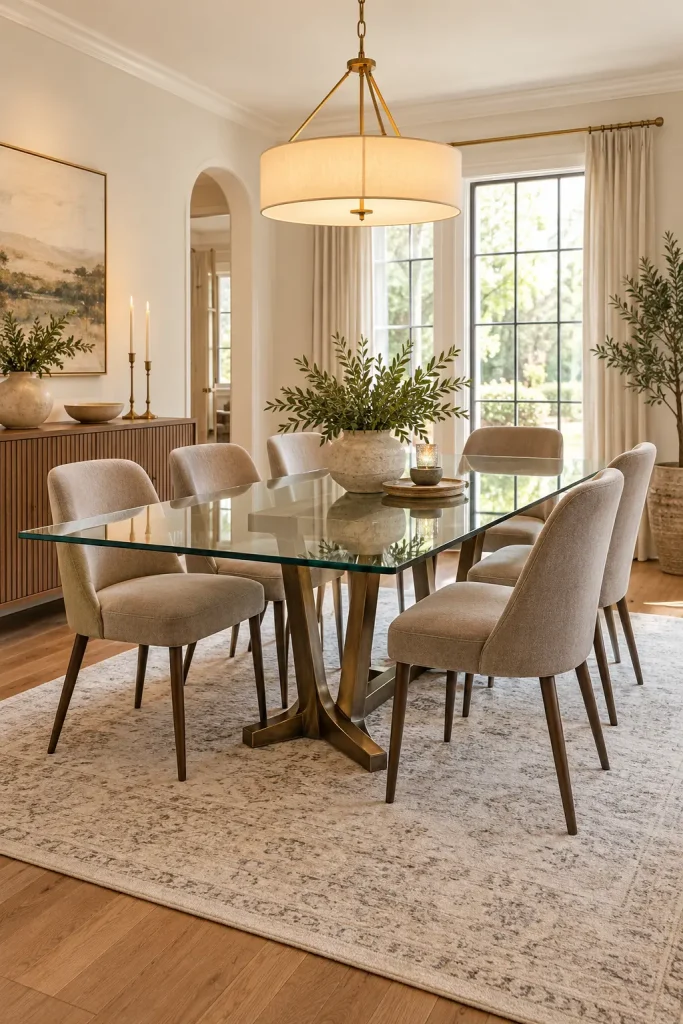
A glass dining table can make a room feel visually lighter because it allows more of the surrounding floor and furniture to remain visible. This can be particularly useful in a contemporary apartment or a dining area that receives limited natural light.
Pair a clear glass tabletop with a sculptural wooden or metal base. Upholstered chairs soften the harder surfaces, while a textured rug can establish a comfortable foundation beneath the arrangement.
Glass does require regular cleaning, especially in homes with children or frequent entertaining. Fingerprints and smudges can be more noticeable than on a wood tabletop, so consider your household’s everyday needs before choosing this finish.
To keep the room from feeling cold, introduce warm lighting, natural textiles, and a few handmade accessories.
12. Use Built-In Storage to Keep the Room Organized
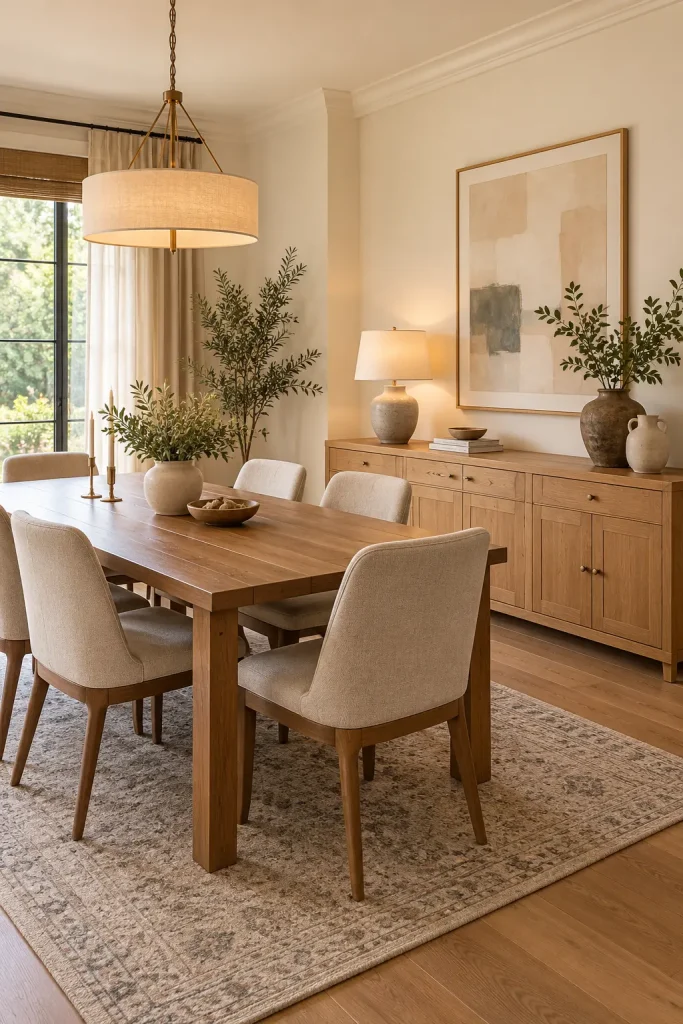
A well-planned dining room should accommodate more than the table and chairs. Storage helps keep serving dishes, linens, candles, and everyday essentials within easy reach.
A low sideboard is one of the most versatile choices. It offers concealed storage and creates a surface for artwork, lamps, or seasonal arrangements. In a larger room, a built-in cabinet can provide a more integrated appearance and make use of an otherwise awkward wall.
For smaller spaces, consider a narrow sideboard rather than a deep cabinet that interrupts circulation.
Practical details to consider:
- Store frequently used items where they are easy to reach.
- Use drawer dividers for napkins and table accessories.
- Keep the top surface from becoming a dumping ground.
- Match the cabinet finish to the room’s existing wood tones or introduce a deliberate contrast.
13. Decorate With a Large Piece of Wall Art
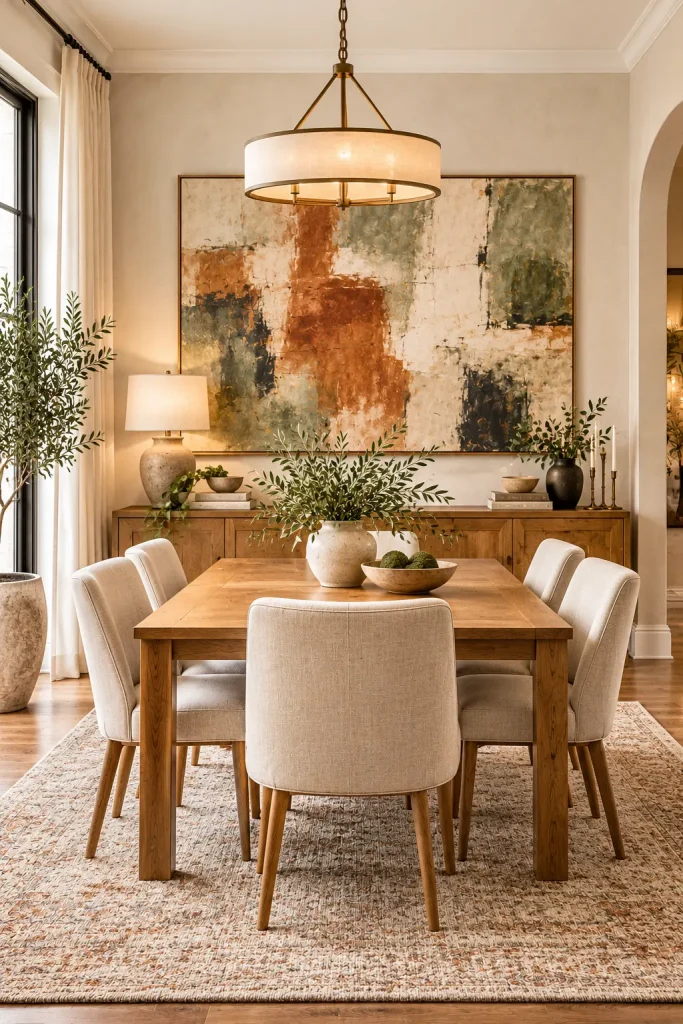
A dining room can feel unfinished when the walls are completely bare, particularly if the table occupies a large portion of the space. A substantial piece of artwork can establish a focal point and connect the room’s colors.
Choose art that complements the furniture without needing to match it exactly. An abstract painting can introduce color into a neutral room, while a landscape or botanical print can support a more traditional or nature-inspired interior.
If you prefer a collected look, arrange a small gallery of related prints instead of hanging a single oversized piece.
When placing artwork above a sideboard or dining table, consider the surrounding furniture and sightlines. The art should feel connected to the arrangement rather than floating too high on the wall.
14. Try a Classic Black-and-White Dining Room
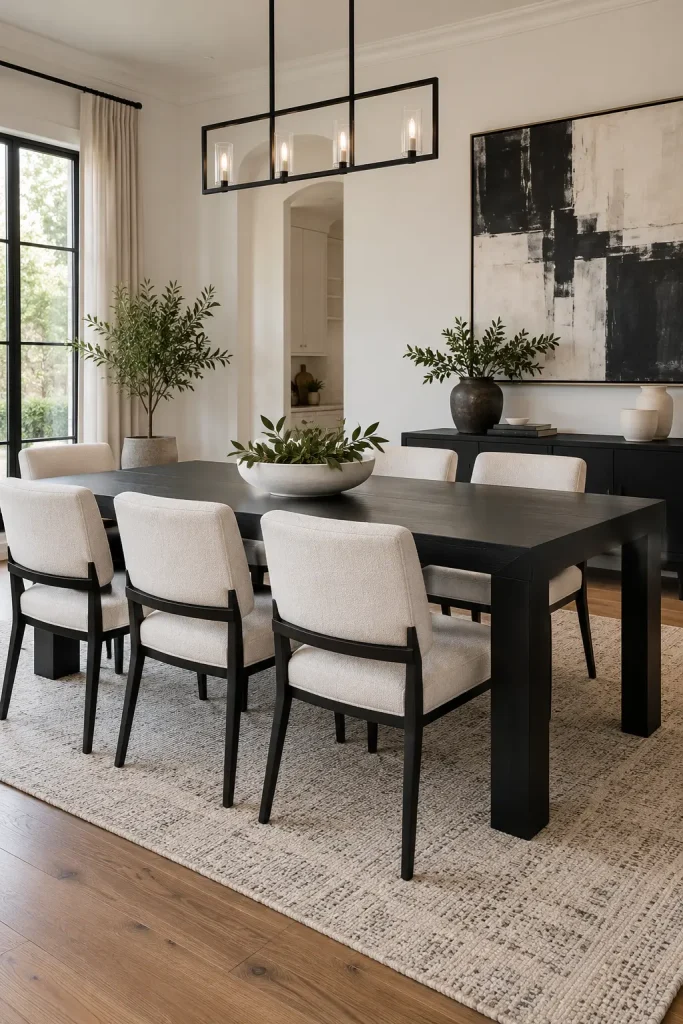
Black and white create a clear, graphic contrast that can suit modern, transitional, and traditional interiors. The combination feels especially effective when the room includes a few softer materials to prevent it from appearing too stark.
Consider a black dining table with cream chairs, or reverse the arrangement with a pale oak table and black metal seating. White walls keep the room bright, while black-framed artwork, lighting, or cabinet hardware creates definition.
Wood, linen, and woven accessories can soften the contrast without diluting the overall design.
| Design Element | Black-and-White Approach | Softer Alternative |
|---|---|---|
| Dining table | Black stained wood | Natural oak |
| Chairs | Black frames | Cream upholstery |
| Lighting | Matte black pendant | Black and brass fixture |
| Rug | Simple monochrome pattern | Warm ivory with charcoal details |
Choose the balance according to the room’s natural light and the atmosphere you want to create.
15. Bring in Vintage Furniture for Timeless Character
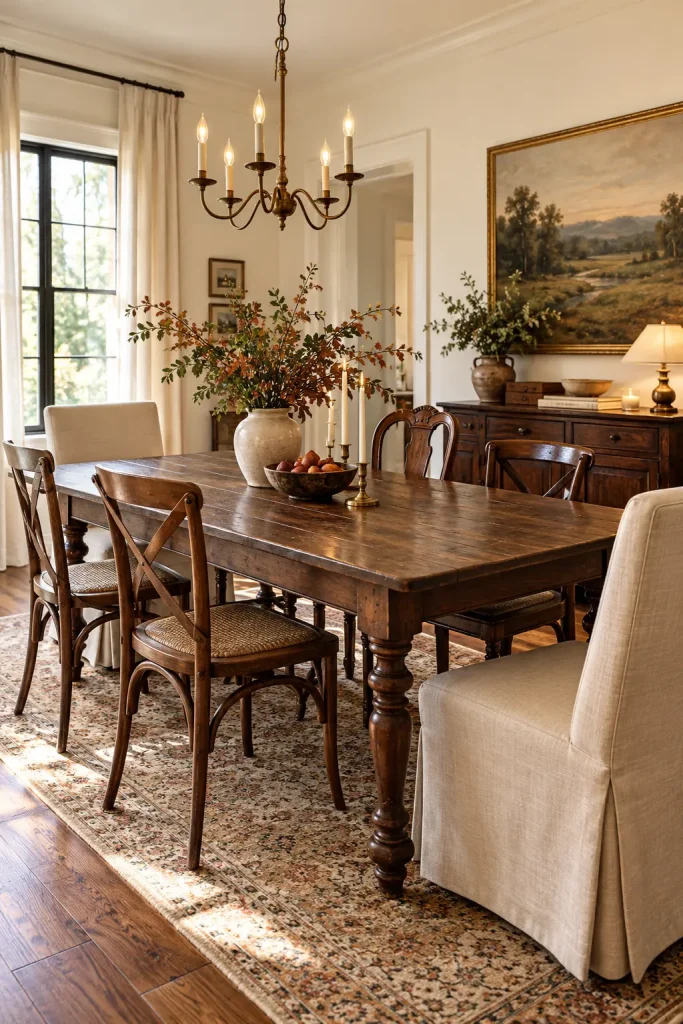
Vintage furniture can make a dining room feel personal rather than assembled from a single furniture collection. An antique table, a secondhand sideboard, or a pair of traditional chairs can introduce character and craftsmanship.
Start with one vintage piece and let it guide the rest of the room. For example, a dark antique dining table can be balanced with lighter contemporary chairs and simple artwork.
You don’t need to create a fully traditional interior. Mixing old and new often makes the result feel more relaxed and individual.
16. Create a Moody Dining Room With Warm Lighting
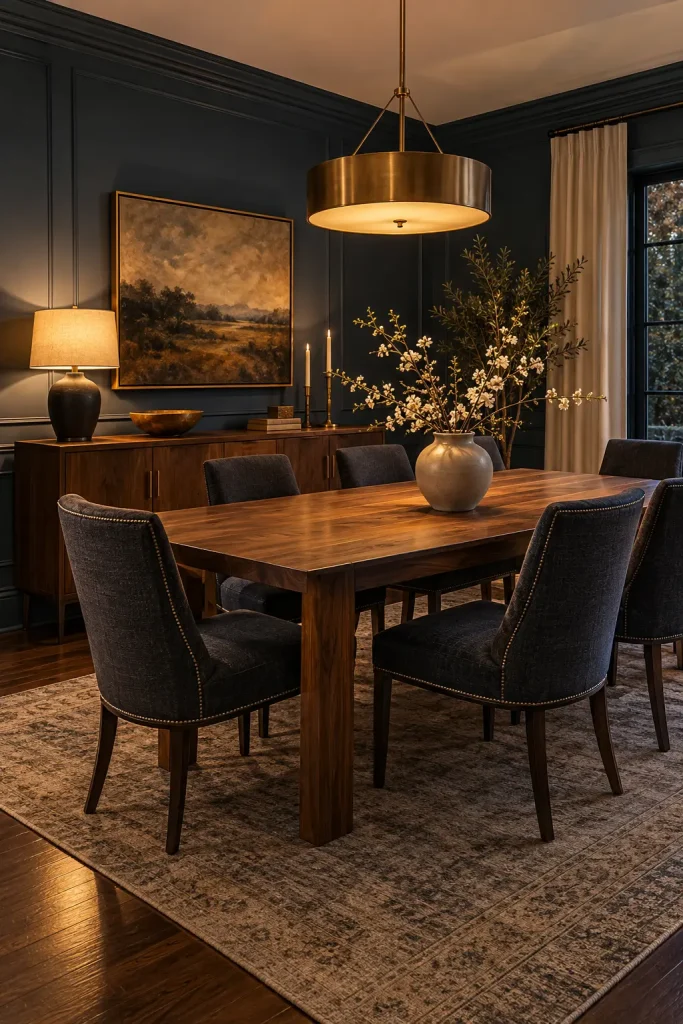
A moody dining room can feel intimate and comfortable, especially during evening meals. Deep wall colors, dark furniture, and layered lighting help establish the atmosphere.
Consider charcoal, deep olive, or inky blue walls paired with walnut furniture and warm-toned metal accents. Instead of depending on one bright overhead fixture, combine the main pendant with a sideboard lamp or wall lights where practical.
Warm lighting can bring out the depth of dark paint and the grain of wooden furniture. However, the room should still have enough illumination for eating, reading menus, and moving around safely.
If you’re hesitant to paint every wall a dark shade, start with a single accent wall and use lighting to create a more intimate effect.
17. Make a Narrow Dining Room Work Harder
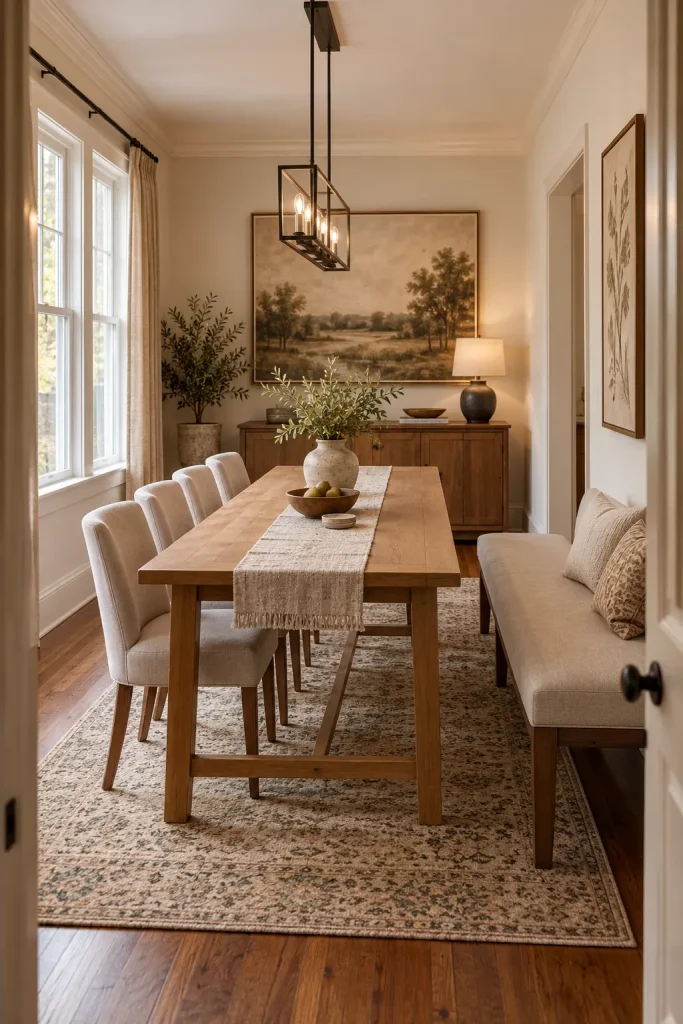
Long, narrow dining rooms can be challenging because oversized furniture may restrict movement. A streamlined table and carefully selected seating can make the layout feel more balanced.
A rectangular table generally follows the room’s shape naturally. Choose a design with a relatively slim profile and avoid adding bulky furniture along both long walls.
For extra flexibility, consider a bench on one side of the table. It can slide beneath the tabletop when not in use, although it should still provide comfortable seating when occupied.
A mirror or artwork at the far end can draw the eye through the space. Keep decorative objects simple and use lighting that distributes illumination across the table without visually crowding the room.
18. Introduce Color With Upholstered Dining Chairs
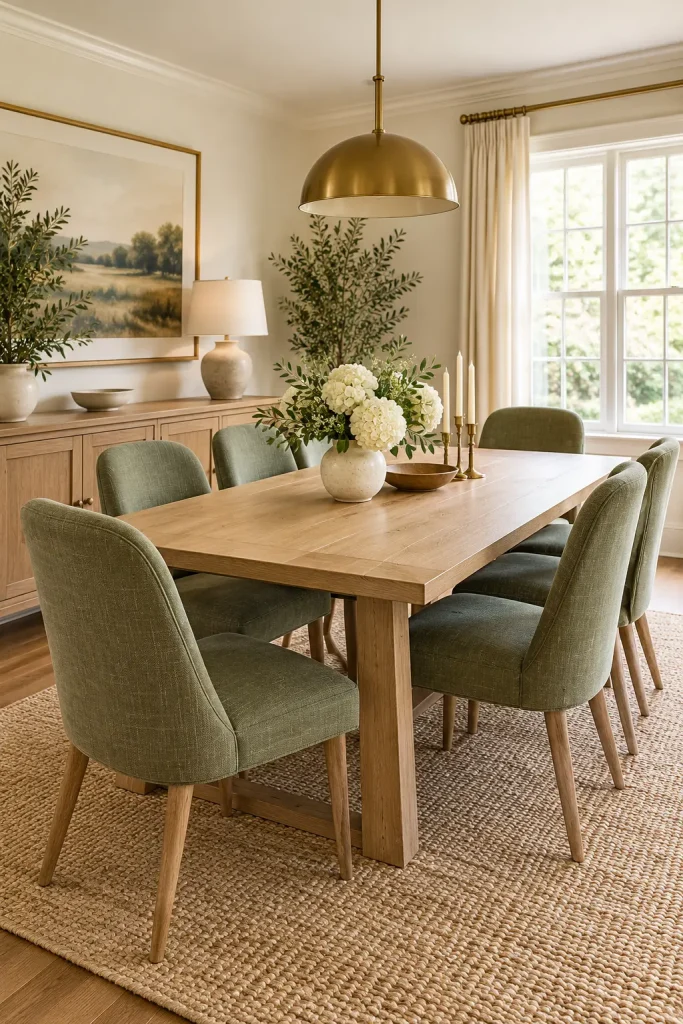
Upholstered dining chairs are a simple way to add color without repainting walls or replacing the dining table. They also introduce softness, which can make a room dominated by wood, stone, or metal feel more comfortable.
Muted sage, dusty blue, warm terracotta, and deep olive are useful options for introducing color while maintaining a balanced palette.
If you already own a neutral dining table, new seat upholstery can refresh the entire arrangement. You can also use colorful end chairs while keeping the side chairs neutral.
When selecting fabric, consider how the dining room is used. Washable or cleanable upholstery may be more practical for frequent family meals than delicate fabric that requires careful maintenance.
19. Add Architectural Interest With Wall Molding
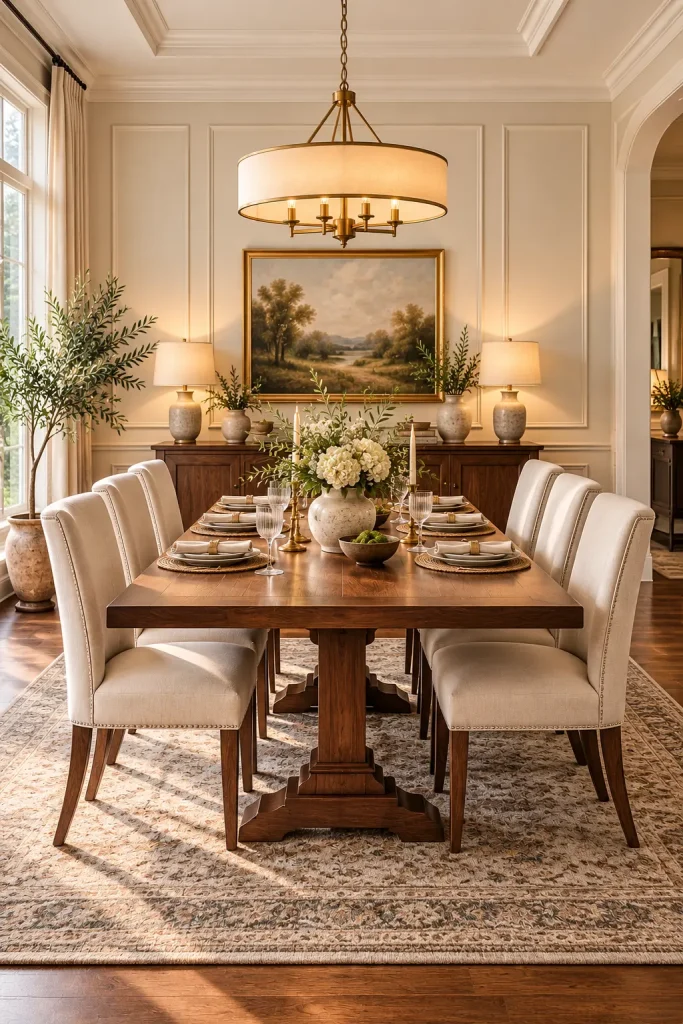
Wall molding can give a dining room architectural definition, especially when the space has plain walls and few built-in features.
Traditional panel molding creates a classic appearance, while simple rectangular trim can work in more contemporary homes. Painting the molding the same color as the wall produces a subtle, cohesive effect. Contrasting colors make the detail more noticeable.
A dining table centered against a paneled wall can create a natural focal point. Keep artwork, lighting, and other decorations proportionate so the wall treatment remains a feature rather than competing with several other statement elements.
For a lower-commitment option, decorative arrangements of framed artwork can create a similar sense of structure without permanent changes.
20. Style the Dining Table With a Simple Centerpiece
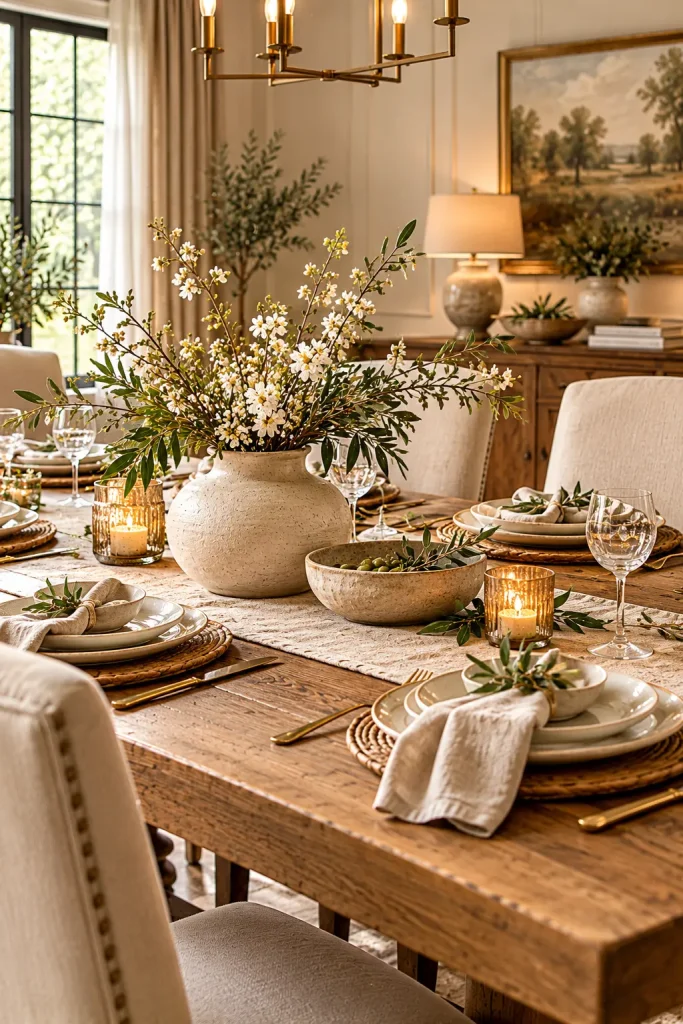
A thoughtful centerpiece gives the dining table a finished appearance without requiring a complete room makeover. The best arrangement depends on the table’s shape, the size of the room, and how often the table is used.
For everyday styling, a low ceramic vase, a shallow fruit bowl, or a small arrangement of seasonal greenery can provide interest without getting in the way.
Try these ideas:
- For a modern room: Use one sculptural ceramic vessel.
- For a farmhouse room: Choose a simple vase with fresh foliage.
- For a traditional room: Arrange flowers in a low, classic container.
- For a minimalist room: Leave most of the tabletop clear and introduce one carefully selected object.
Avoid tall, bulky arrangements that make conversation difficult. A dining table should remain functional, not simply decorative.
21. Give the Dining Room a Coastal Feel
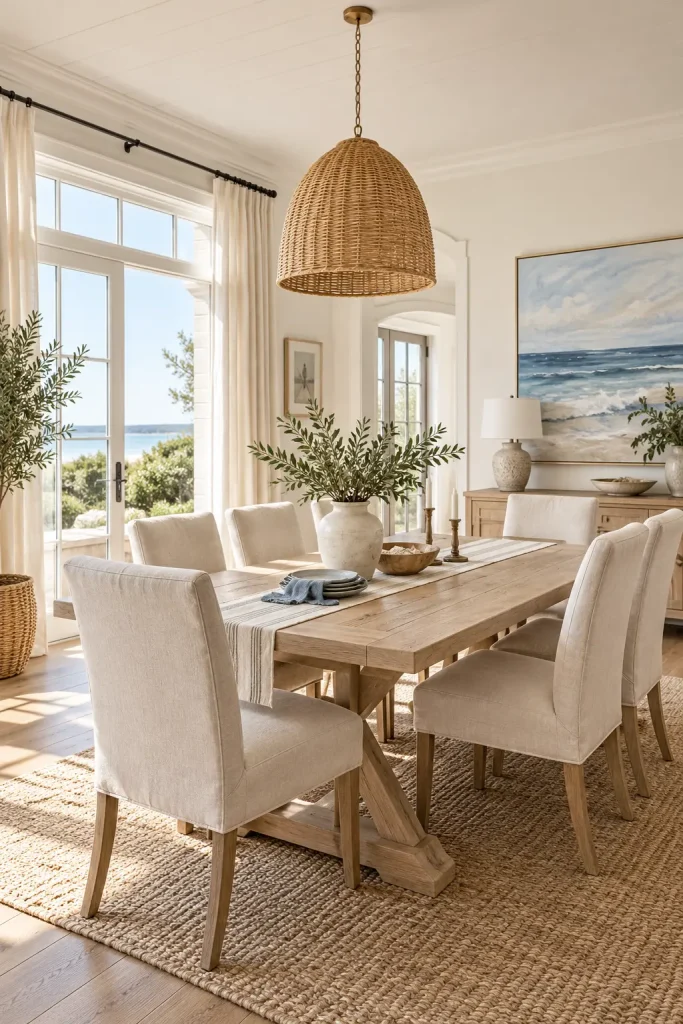
Coastal dining rooms borrow their atmosphere from natural light, relaxed materials, and colors inspired by the shoreline. The result doesn’t need to look nautical or rely on obvious beach-themed decorations.
Start with white or warm sand-colored walls, a natural wood table, and light upholstery. Introduce muted blue through chair cushions, artwork, or a rug. Woven pendants and linen curtains add texture without making the space feel overly themed.
A few carefully chosen details are usually enough. A landscape painting, handmade ceramics, or a vase of greenery can suggest a coastal influence while keeping the room suitable for everyday use.
For a more contemporary interpretation, use fewer decorative objects and focus on light, proportion, and natural materials.
22. Make a Small Dining Area With a Bench
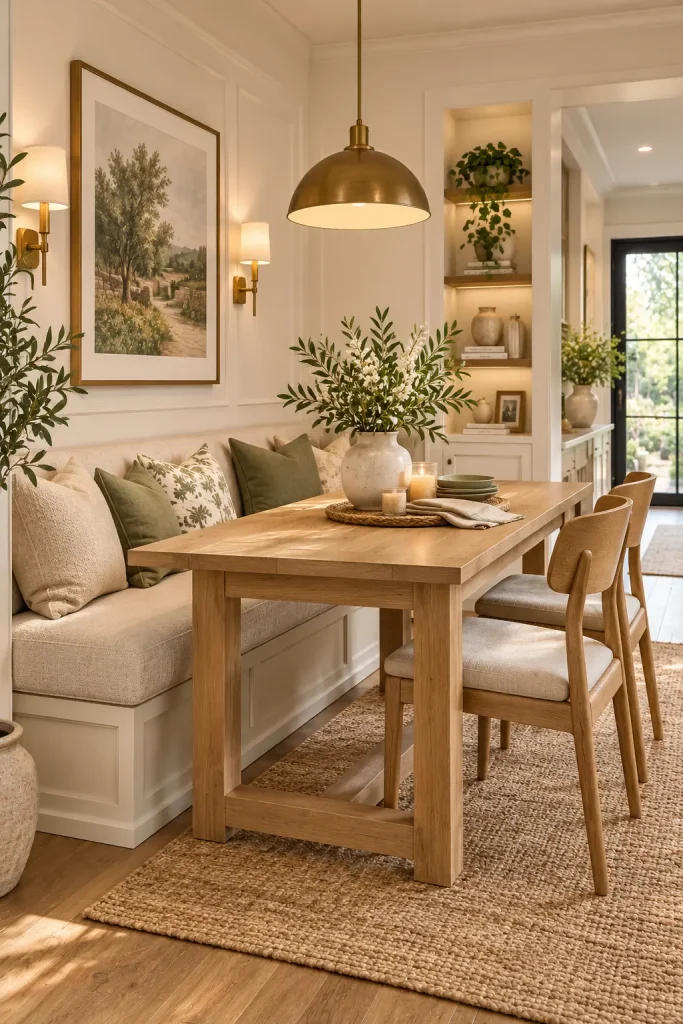
A dining bench can help a small dining area feel more flexible, particularly when one side of the table sits near a wall. Unlike individual chairs, a bench can sometimes accommodate an additional person and slide underneath the table when not in use.
A wooden bench suits rustic and Scandinavian interiors, while an upholstered bench offers a softer, more tailored appearance.
For everyday comfort, consider the seat height, depth, and whether the bench has a backrest. A backless bench can save visual space, but a supportive design may be more comfortable for longer meals.
Pair the bench with individual chairs on the opposite side of the table to maintain flexibility without crowding the room.
23. Create a Sophisticated Dining Room With Walnut Furniture
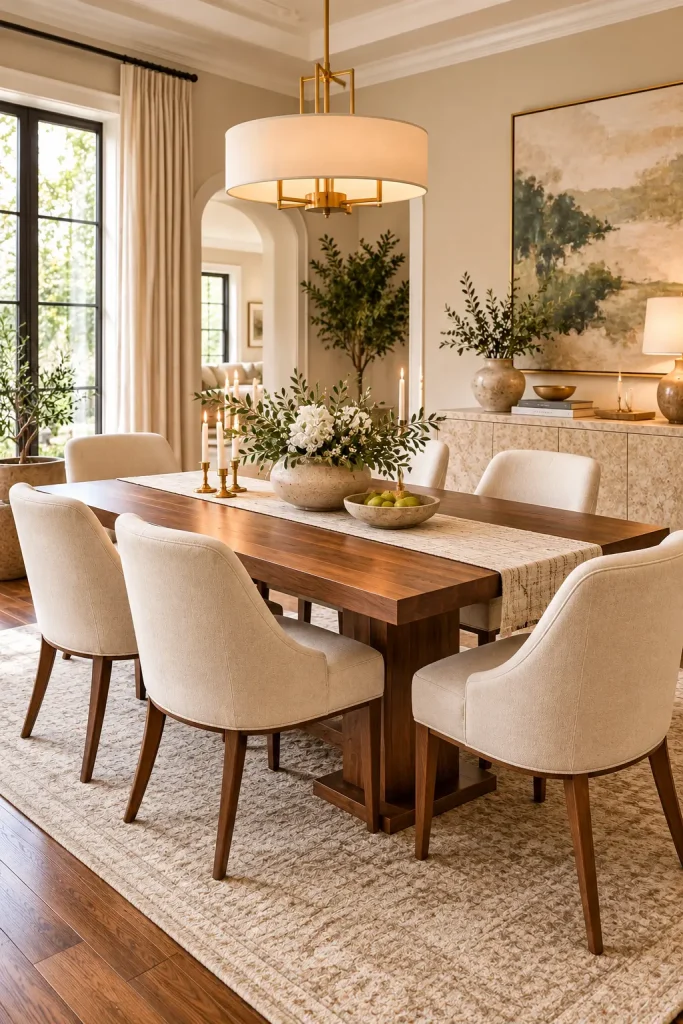
Walnut furniture brings rich brown tones and visible wood grain into the dining room. It works particularly well in contemporary, mid-century-inspired, and transitional interiors.
A walnut table can become the room’s main visual anchor. Pair it with cream or taupe chairs for contrast, or use darker seating for a more dramatic appearance.
Keep the surrounding materials relatively restrained. Pale walls, understated artwork, and soft lighting allow the furniture’s natural color to remain prominent.
If you want to invest in a lasting dining table, consider how its dimensions, finish, and shape will work with your current home rather than selecting it solely for its appearance in a showroom.
24. Decorate With Seasonal Flowers and Natural Greenery
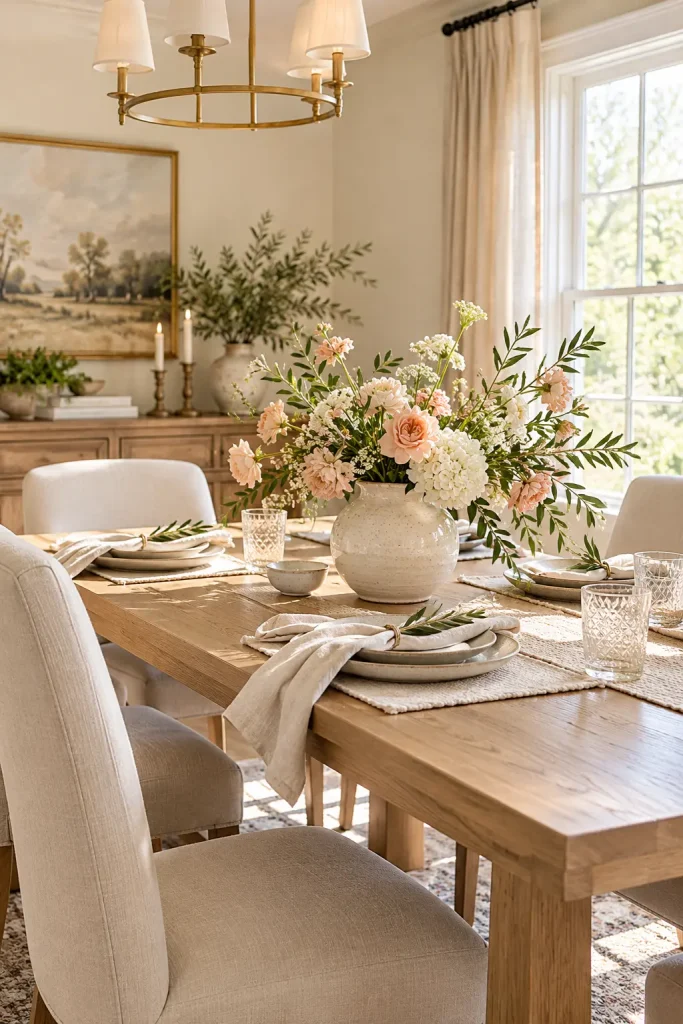
Fresh flowers and greenery make a dining room feel connected to the changing seasons. They can also introduce color without requiring permanent changes to furniture or walls.
Choose arrangements that complement the room rather than overwhelm it. A few branches in a tall vase can look striking in a minimalist interior, while a loose arrangement of seasonal flowers suits a more traditional dining room.
For everyday use, smaller arrangements are often easier to maintain than elaborate bouquets. You can also use durable faux stems if you prefer a decoration that doesn’t require regular replacement.
Keep the arrangement away from places where it interferes with serving dishes, and make sure it doesn’t obstruct the view across the table.
25. Design a Welcoming Dining Room for Family Gatherings
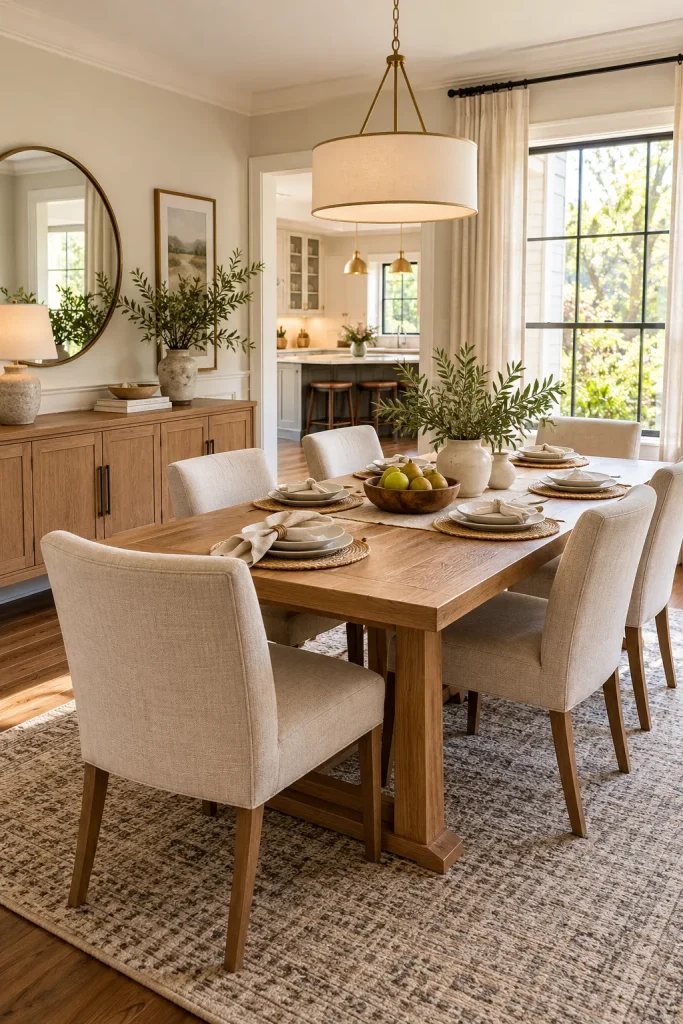
A family-friendly dining room should be comfortable, durable, and flexible enough for more than formal meals. It may need to accommodate everyday dinners, celebrations, homework, board games, and visiting relatives.
Start with a table that suits the household’s usual needs. An extendable dining table is worth considering if you regularly host additional guests but don’t want a permanently oversized piece of furniture.
Choose chairs that are comfortable to sit in and finishes that suit the level of daily use. Washable textiles, easy-to-clean surfaces, and a sideboard for serving supplies can make the room simpler to manage.
A welcoming atmosphere comes from the details as much as the furniture. Layered lighting, a modest centerpiece, comfortable seating, and a few personal decorative touches help the space feel ready for both ordinary evenings and special occasions.
Family dining room essentials:
- A table with enough space for everyday meals.
- Seating that suits the people using it.
- Lighting that makes food and conversation comfortable.
- Storage for dishes, table linens, and serving pieces.
- Clear walking routes around the furniture.