

23 Simple Purse Closet Organization Ideas That Make Finding Your Bags Easier
A beautifully organized purse collection can make your entire closet feel calmer and more functional. Instead of digging through piles of handbags every morning, you can give every purse a dedicated place where it is easy to see and reach. From simple shelf arrangements to clever storage solutions for small closets, there are plenty of ways to organize bags without sacrificing style. The best purse closet organization ideas combine practical storage with an attractive display. Whether you own a few everyday bags or have a growing handbag collection, these ideas can help you create a space that feels intentional. Keep reading for stylish solutions you will want to save for your next closet refresh.
Display Purses on Open Closet Shelves
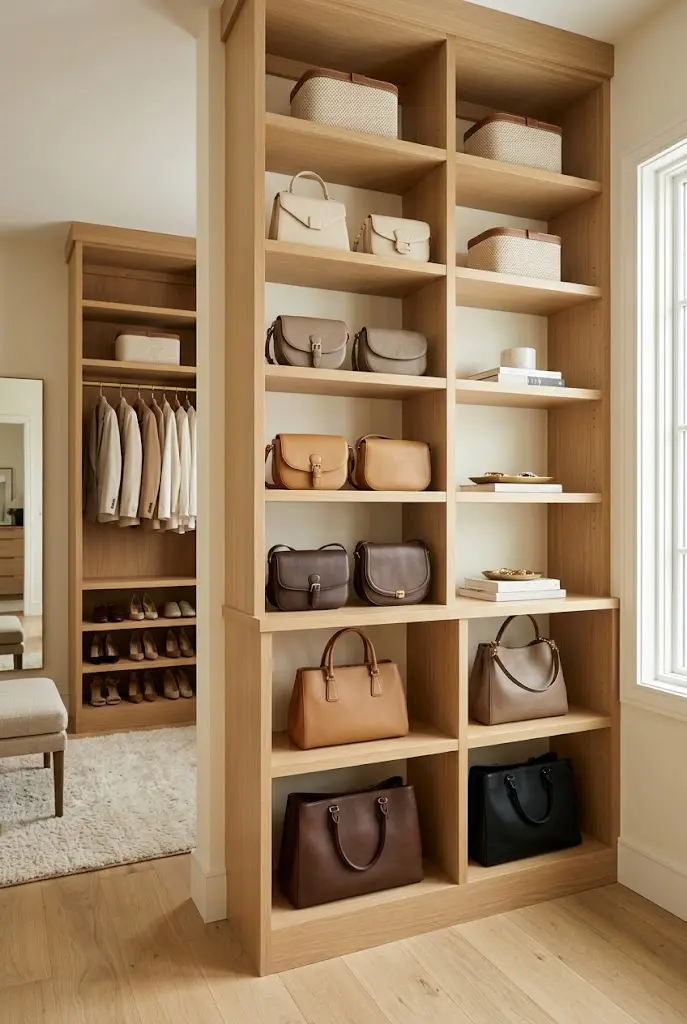
Open shelving is one of the easiest ways to organize purses while keeping your collection visible. Arrange handbags upright with enough space between each one so you can quickly recognize what you own. Larger totes can sit on the bottom shelves, while smaller crossbody bags and clutches can be grouped higher up. Try placing bags by size, color, or frequency of use to create a neat visual system. Neutral shelving paired with cream, tan, black, and brown handbags creates an elegant boutique-inspired look. Add a few decorative baskets or a small tray for accessories without overcrowding the shelves. Avoid stacking too many purses because the bags underneath can become difficult to reach. Open shelves work especially well in walk-in closets where storage can double as decor.
Use Clear Acrylic Shelf Dividers
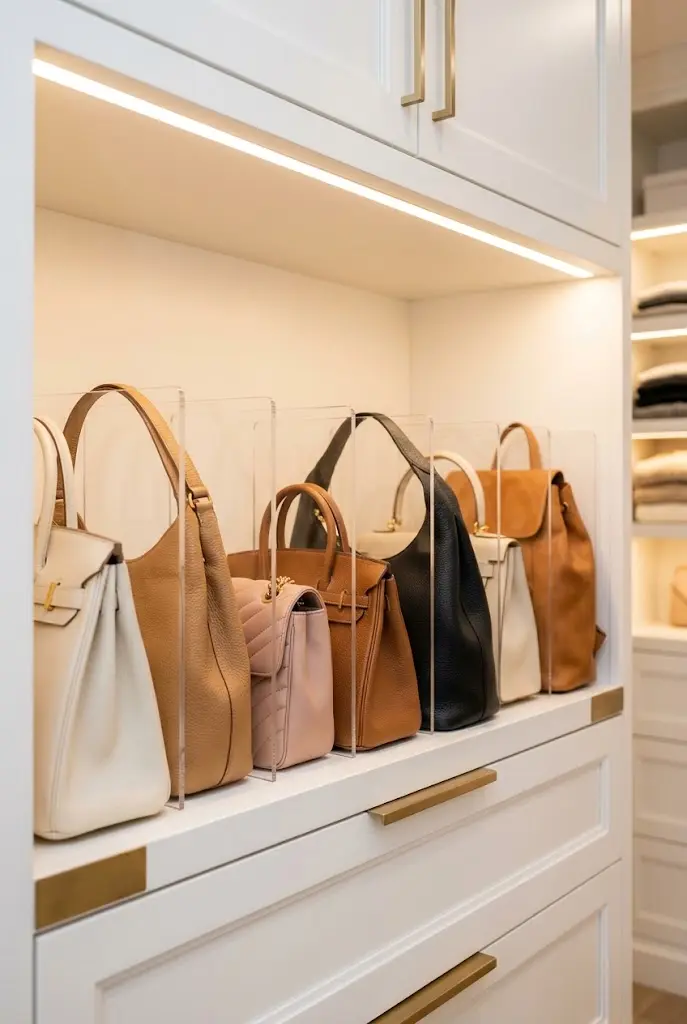
Clear acrylic dividers are perfect when you want your handbags to stay upright and separated. They create individual sections on a shelf without making the closet feel visually heavy. Place one divider between each larger purse or use wider sections for oversized totes. Transparent acrylic allows the colors and shapes of your bags to remain the focus. This solution is particularly useful for soft handbags that tend to slump or lean into one another. You can also adjust the spacing as your collection changes. Keep your most frequently used bags at eye level for convenient access. The result is a clean, streamlined arrangement that looks surprisingly polished. It is an especially useful solution for anyone who wants organization without installing permanent cabinetry.
Install a Purse Hanging Organizer
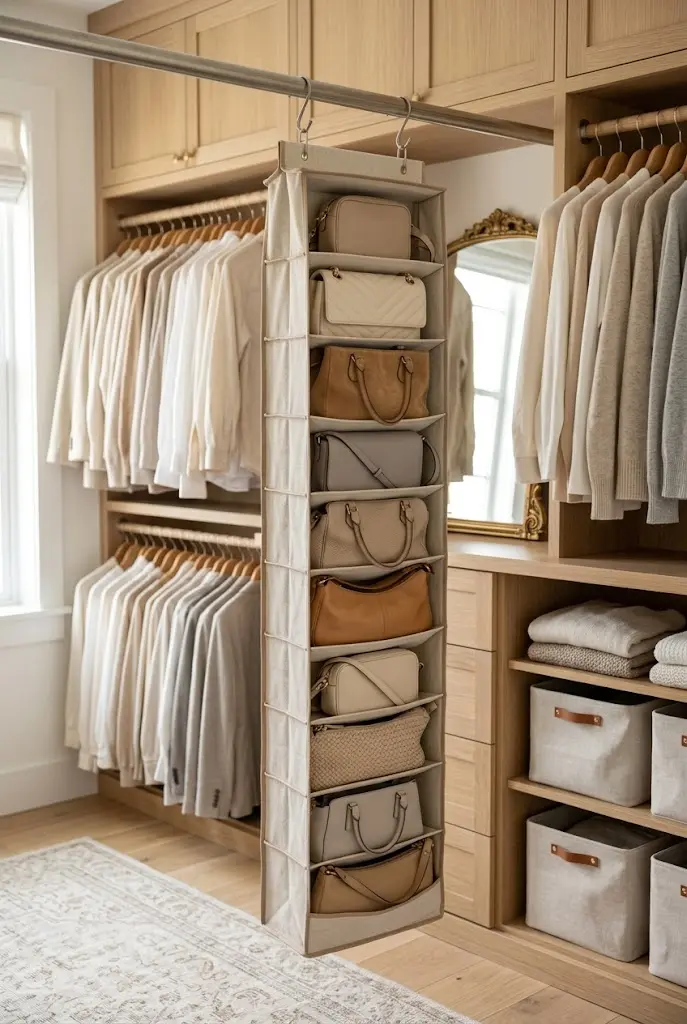
A hanging purse organizer can instantly add storage to an otherwise unused closet area. Choose a sturdy fabric or structured hanging organizer with multiple compartments designed to hold individual handbags. Hang it from a strong closet rod and reserve each compartment for one purse. Smaller crossbody bags, everyday handbags, and lightweight totes are especially easy to store this way. Place the organizer toward one side of the closet so it does not interfere with clothing. Neutral canvas, beige fabric, or soft gray options blend beautifully into most closets. This approach is also renter-friendly because it does not require permanent installation. For better organization, keep your everyday favorites in the easiest-to-reach compartments. It is a practical choice when floor and shelf space are limited.
Arrange Handbags by Color

Organizing purses by color can turn a cluttered collection into an attractive closet display. Start by grouping similar shades together, such as black, white, beige, brown, pink, and colorful statement bags. You can create a soft neutral gradient or arrange colors in a rainbow-inspired sequence. This system makes it much easier to find a specific bag when you already know the color you want to carry. It also gives your closet a boutique-like appearance without requiring expensive storage furniture. Keep bags upright and leave small gaps between groups so the colors remain visually distinct. If you own many neutral handbags, organize those by size within each color family. A color-based system works particularly well on open shelves where the collection is always visible.
Add Baskets for Smaller Purses
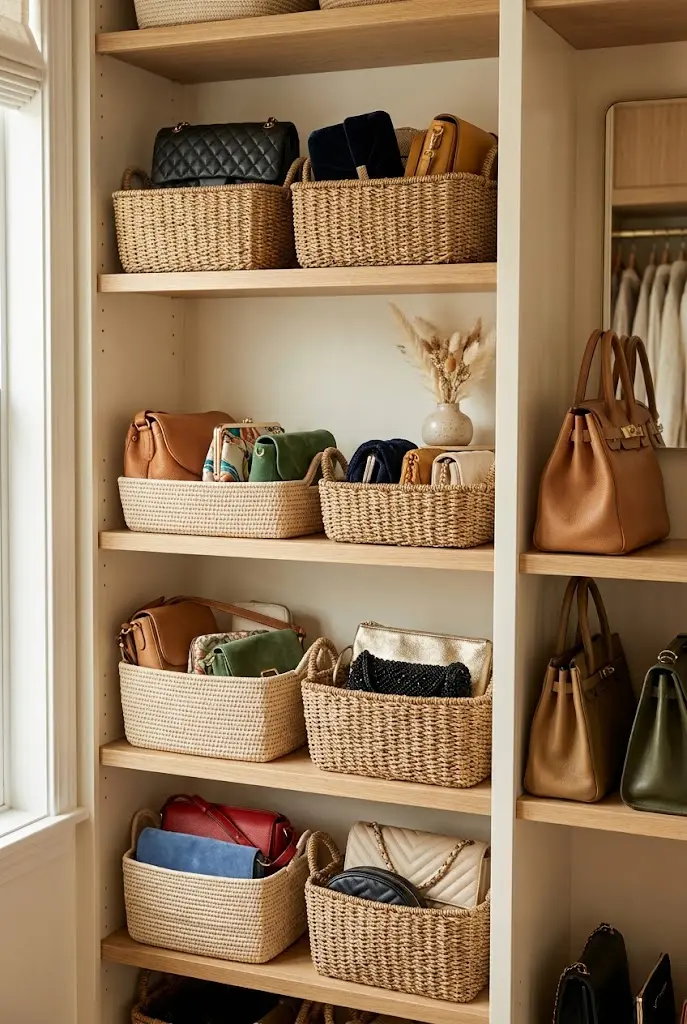
Baskets are a smart way to contain smaller handbags that do not sit neatly on shelves. Use woven, fabric, or wire baskets depending on the style of your closet. Reserve one basket for clutches, another for small evening bags, and another for compact crossbody purses. This prevents tiny bags from becoming scattered throughout drawers and shelves. Choose baskets with low sides if you want to see the contents easily. For a more polished appearance, use matching baskets throughout the closet. Natural woven baskets add warmth to white or cream cabinetry, while fabric bins create a softer look. Keep the baskets at waist or eye level whenever possible. This storage method works especially well for bags that are used less frequently.
Create a Dedicated Handbag Shelf
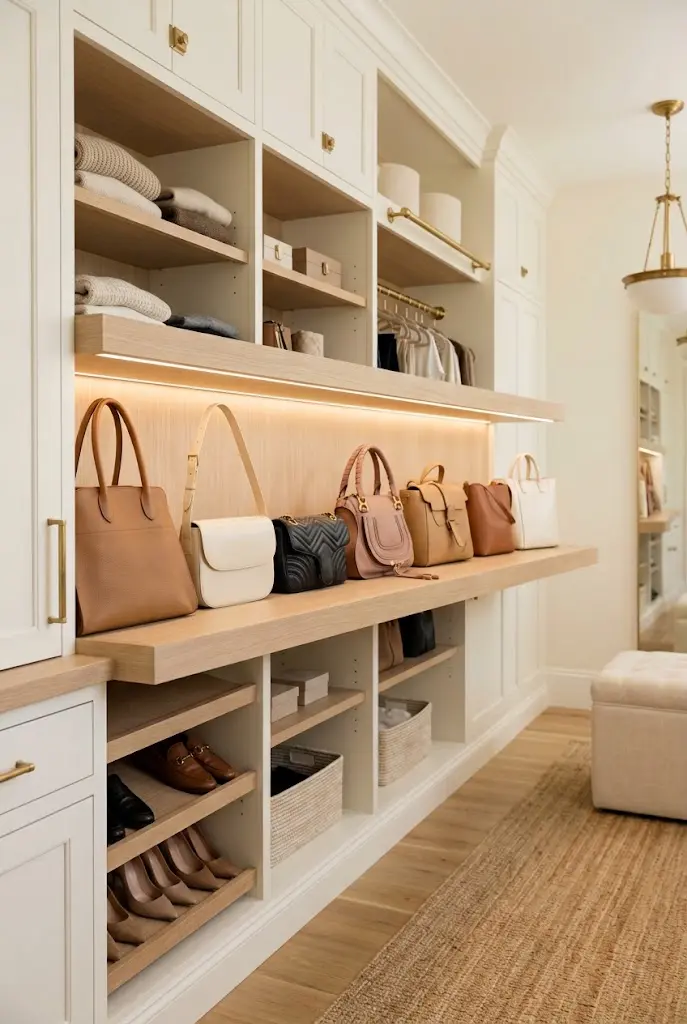
Giving your purses their own dedicated shelf can make a huge difference in a busy closet. Instead of mixing handbags with shoes, clothing, and accessories, create one clearly defined zone for your collection. Use a long shelf to display several bags side by side with enough breathing room between them. Larger totes can stand at one end while smaller structured bags fill the remaining space. You can place the shelf at eye level so choosing a purse becomes quick and effortless. A dedicated shelf also makes it easier to notice which bags you actually use. Keep the styling simple and avoid filling every inch. The goal is to make the collection easy to see and easy to maintain.
Use Cubby Storage for Individual Bags

Cubby storage creates a designated home for every handbag and makes the collection look beautifully structured. Each compartment can hold one medium-sized purse, preventing bags from leaning against one another. Choose cubbies with enough height and depth to accommodate your largest everyday handbags. You can organize each row by color, size, or how frequently you use the bags. The individual compartments also help protect handbags from getting crushed. White cubbies create a bright modern appearance, while natural wood gives the closet a warmer feel. Add a small decorative object or folded scarf to an occasional empty cubby, but avoid overcrowding. This is an excellent option for anyone who enjoys a tidy, symmetrical look.
Store Everyday Purses at Eye Level
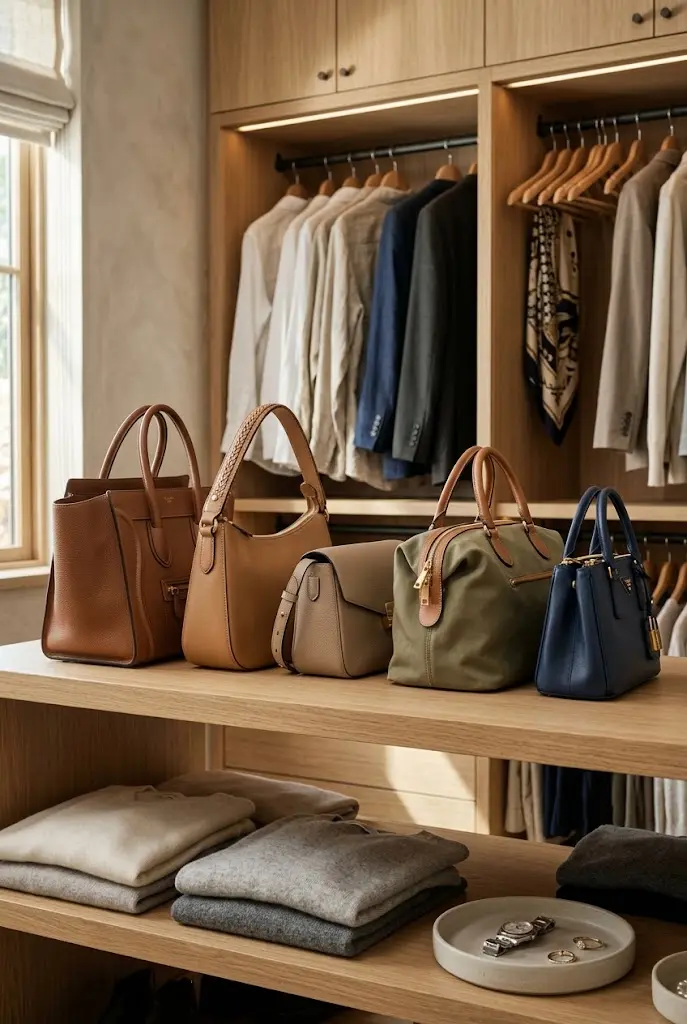
The bags you use most often should always be the easiest ones to reach. Reserve an eye-level shelf for your everyday handbag, work tote, favorite crossbody, and weekend bag. This small change can save time because you will not need to search through your entire collection each morning. Keep these bags upright and separated so you can grab one without disturbing the others. If you rotate bags frequently, leave a little extra room for easy movement. Place less-used seasonal or occasion bags on higher shelves instead. You can also keep frequently used accessories nearby in a small tray. The result is a closet that works around your real daily routine rather than simply looking organized.
Hang Crossbody Bags on Hooks
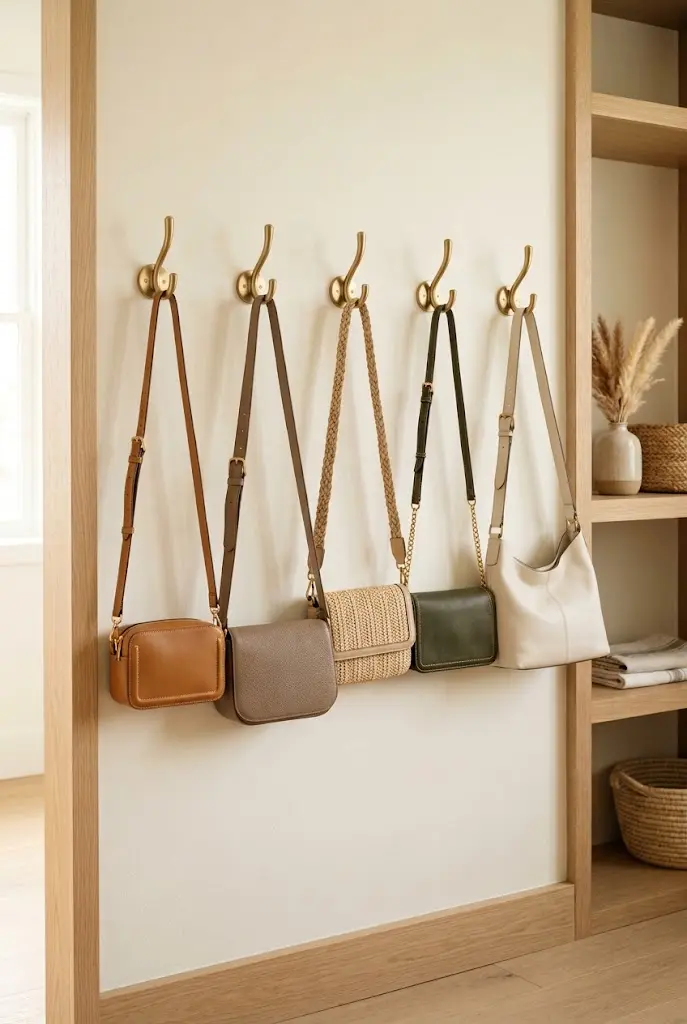
Hooks are one of the simplest solutions for organizing crossbody bags. Install a row of attractive hooks along an empty wall, inside a closet door, or underneath a shelf. Hang each crossbody by its strap so the bags remain visible and easy to grab. Choose hooks that are strong enough to support the weight of your handbags. Group similar styles together or arrange them by color for a decorative effect. This solution uses vertical space that might otherwise go unused. It is especially helpful in smaller closets where traditional shelves are limited. Keep the hooks spaced far enough apart so straps do not become tangled. A neat row of hanging bags can even become a stylish feature of the closet.
Use the Back of the Closet Door
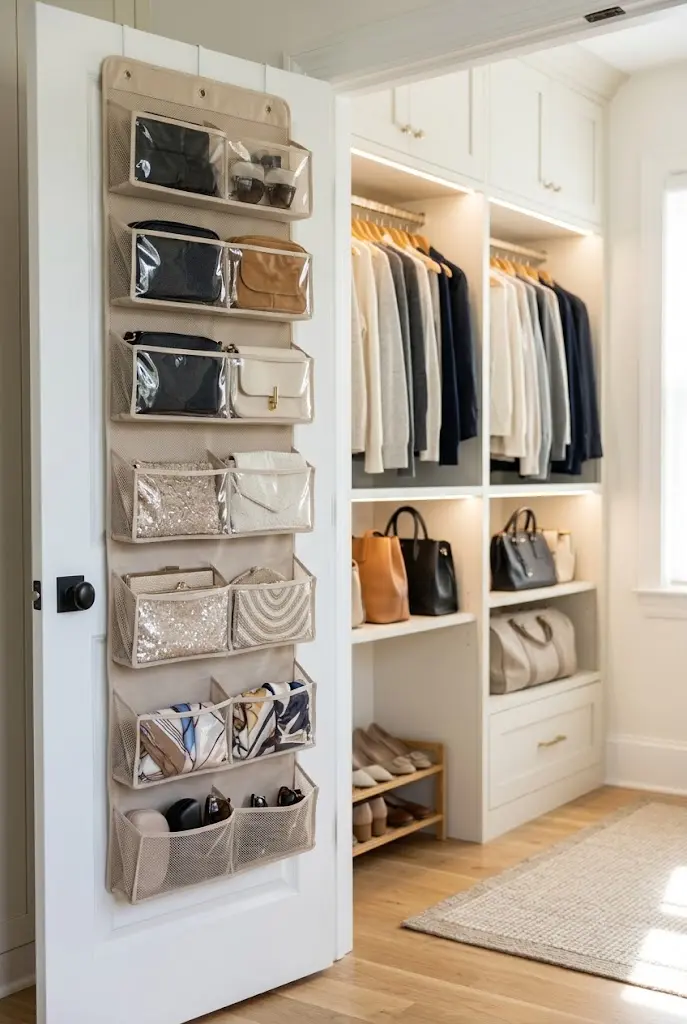
The back of a closet door is valuable storage real estate that is often overlooked. Install an over-the-door organizer with pockets or hooks to hold smaller handbags and accessories. This keeps the main closet shelves available for larger bags. Choose a slim organizer that does not interfere with the door closing properly. Clear pockets can make it especially easy to identify smaller purses at a glance. Fabric organizers offer a softer look, while wire systems create a more modern appearance. Keep lightweight bags and frequently used items in this area. This solution can be particularly useful in apartments, bedrooms, and compact closets where every inch matters.
Keep Structured Bags Upright
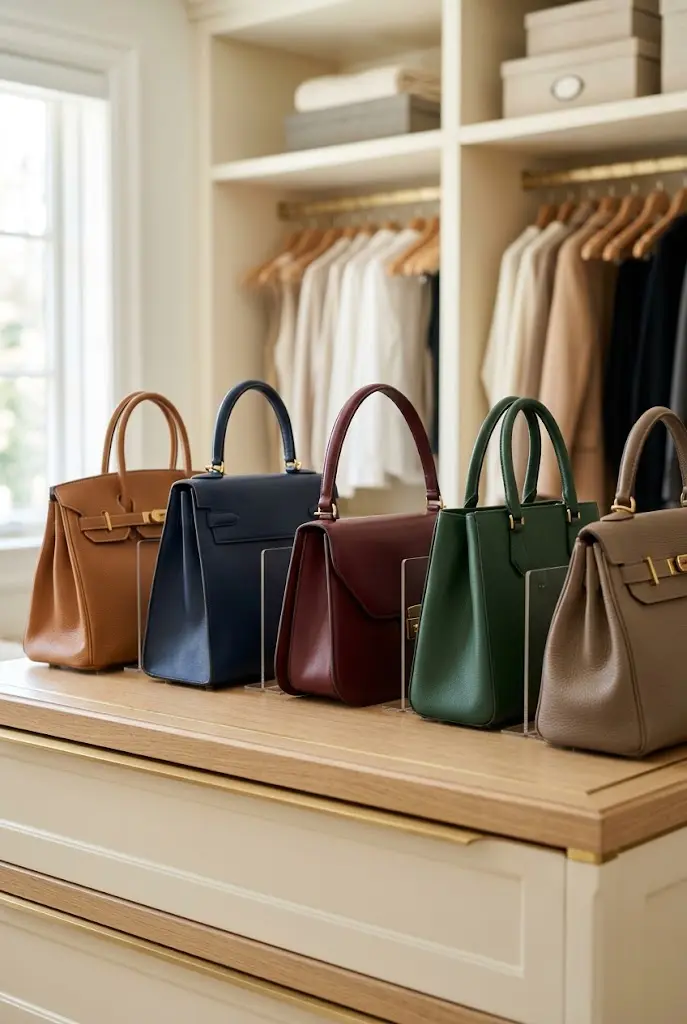
Structured handbags look their best when they are stored upright rather than stacked. Give each bag enough room to maintain its original shape and avoid placing heavy items on top. Use shelf dividers, bookends, or small supports to keep handbags standing vertically. Stuff the interior lightly with tissue paper or clean fabric if a bag tends to collapse. This method helps prevent unwanted creasing and makes every purse easier to identify. Arrange larger structured bags toward the back or bottom of the closet and smaller ones toward the front. If the bags have delicate handles, make sure they are not pressed against neighboring items. Proper upright storage combines organization with long-term handbag care.
Dedicate a Drawer to Clutches

Clutches are small enough to disappear easily, so a dedicated drawer can make them much easier to manage. Use adjustable drawer dividers to create individual sections for evening bags, envelope clutches, and compact accessories. Store each clutch flat or upright depending on its shape and material. Soft fabric-lined drawers are ideal for protecting delicate finishes and embellishments. Arrange your most frequently used evening bags toward the front. Metallic and embellished clutches can be grouped together so they are easy to locate before special occasions. Avoid piling too many bags on top of each other. A well-divided drawer keeps small handbags protected while making the entire collection easier to browse.
Use a Slim Rolling Cart

A slim rolling cart can provide flexible purse storage without requiring permanent closet changes. Choose a narrow cart that fits beside a dresser, closet wall, or shelving unit. Use each tier for a different category, such as everyday handbags, small crossbody bags, and seasonal purses. A cart with wheels can be moved when you need to clean or rearrange the closet. Choose a neutral finish such as white, black, natural wood, or brushed metal to coordinate with the room. Add small baskets to one tier for accessories and straps. Keep heavier bags on the bottom level for stability. This is a smart solution for renters and anyone who likes flexible organization.
Organize Bags by Size

Sorting handbags by size creates a simple system that makes your collection easier to scan. Place oversized totes together, followed by medium handbags, smaller shoulder bags, and compact crossbody styles. Keeping similar proportions together prevents the shelf from looking chaotic. It also helps you choose the right bag based on how much you need to carry. Larger bags can occupy lower shelves because they are heavier and easier to lift from below. Smaller purses can be displayed higher where they are lightweight and easy to reach. Leave a little breathing room between groups so the size differences are visually obvious. This organization method works especially well if your handbag collection includes many different styles.
Create a Boutique-Style Purse Display
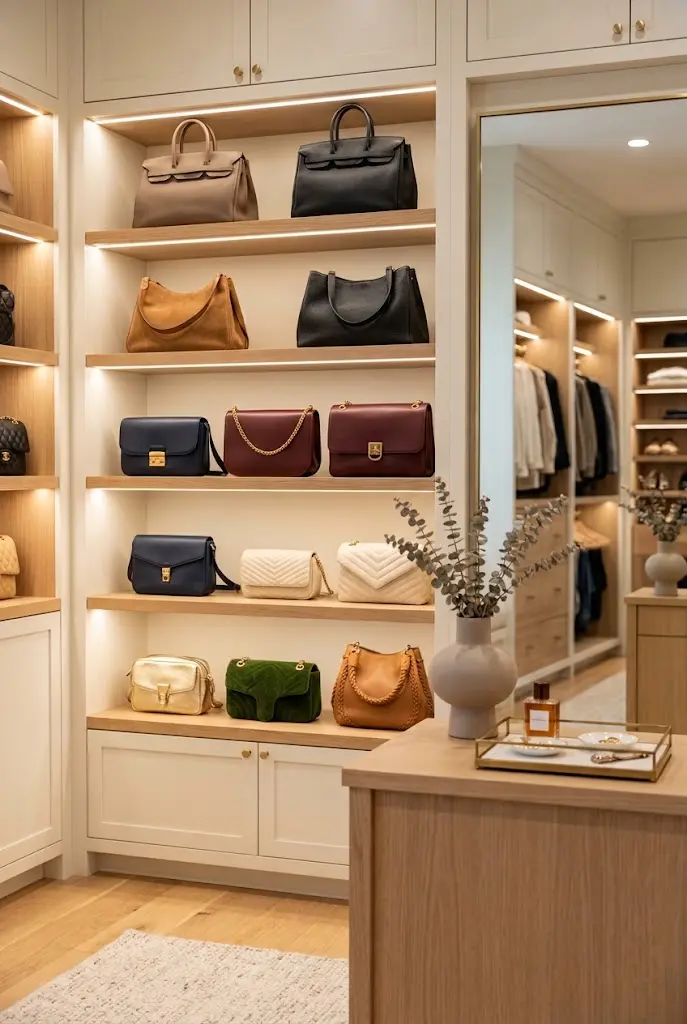
Turn your handbag collection into a stylish boutique-inspired display by treating the closet like a small luxury store. Use evenly spaced shelves, warm lighting, and carefully selected handbags as the visual focus. Display your favorite bags facing forward so their shapes and details are easy to appreciate. Mix practical storage with decorative elements such as a small mirror, elegant tray, or minimalist vase. Keep the color palette cohesive so the space feels intentional rather than crowded. Avoid displaying every bag if your collection is large; rotate seasonal favorites instead. This approach can make getting dressed feel more enjoyable. It also creates an especially attractive backdrop for a home decor-inspired Pinterest aesthetic.
Store Seasonal Bags Separately
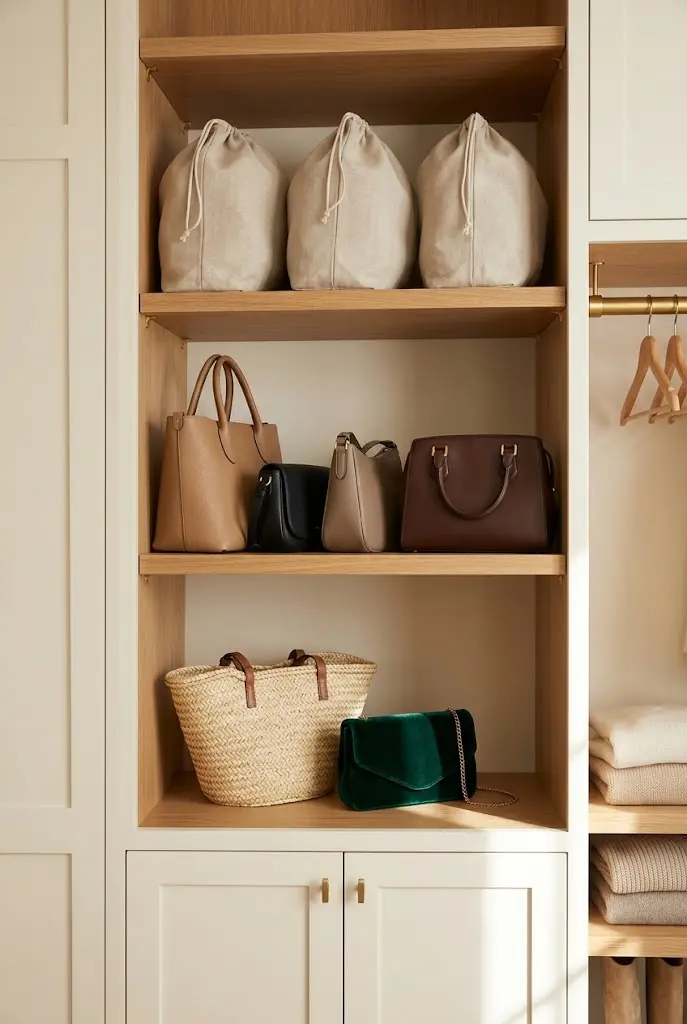
Not every handbag needs to occupy prime closet space all year. Separate seasonal bags so winter textures, summer materials, and occasion-specific styles can be rotated throughout the year. Place off-season handbags in breathable fabric storage bags and keep them on higher shelves. Bring them down when the season changes and replace them with your current favorites. This rotation reduces visual clutter while keeping the entire collection accessible. Avoid airtight plastic containers for materials that need ventilation. Before storing a bag, make sure it is clean and properly supported. Seasonal organization is especially helpful for straw bags, velvet evening purses, and heavier winter styles.
Add a Small Shelf for Mini Bags
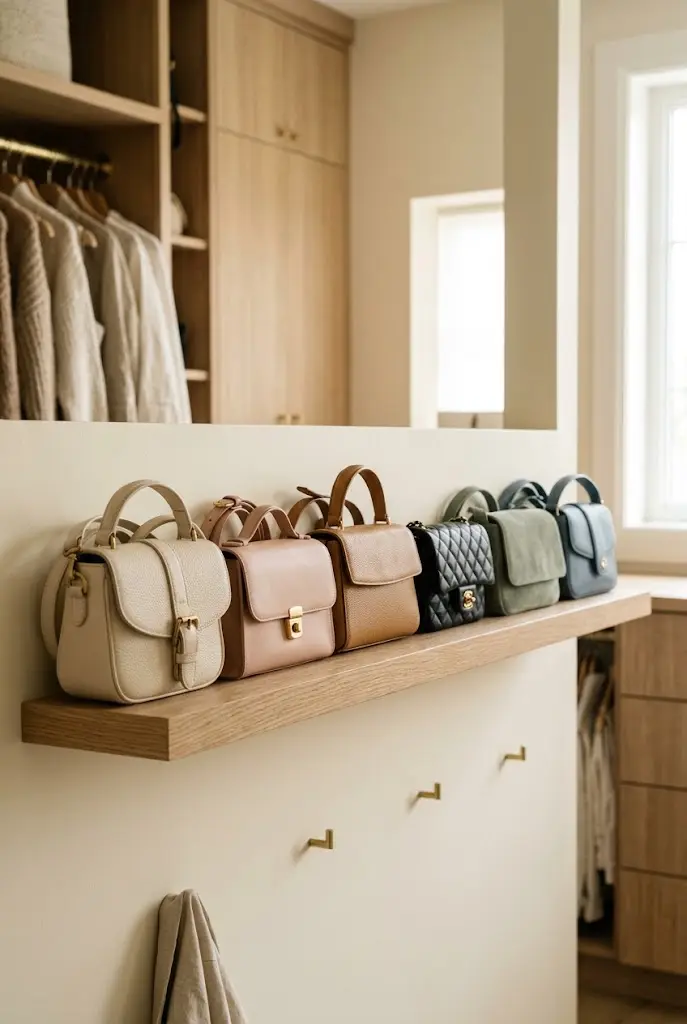
Mini bags deserve their own storage because they can easily get lost among larger handbags. Install a narrow shelf specifically for small purses and compact shoulder bags. Arrange them in a neat row with enough space to see each silhouette. You can group them by color or create a playful collection of different shades. A narrow shelf does not require much closet depth, making it ideal for smaller spaces. Place it above a dresser or below a larger handbag shelf to use vertical space efficiently. Keep straps neatly tucked beside or inside each bag. This simple addition can make even a large collection feel easier to navigate.
Use Matching Storage Boxes

Matching storage boxes can make a closet look instantly more cohesive while protecting handbags from dust. Choose sturdy boxes in neutral shades such as cream, beige, gray, or soft brown. Use them for handbags that are rarely carried, delicate materials, or special-occasion purses. Stack the boxes neatly on higher shelves while keeping everyday bags exposed below. If you need to identify the contents quickly, choose boxes with transparent fronts or openable lids. Avoid overcrowding the boxes because handbags need enough room to maintain their shape. Matching containers create a calm visual backdrop and help hide miscellaneous closet clutter.
Install Floating Shelves
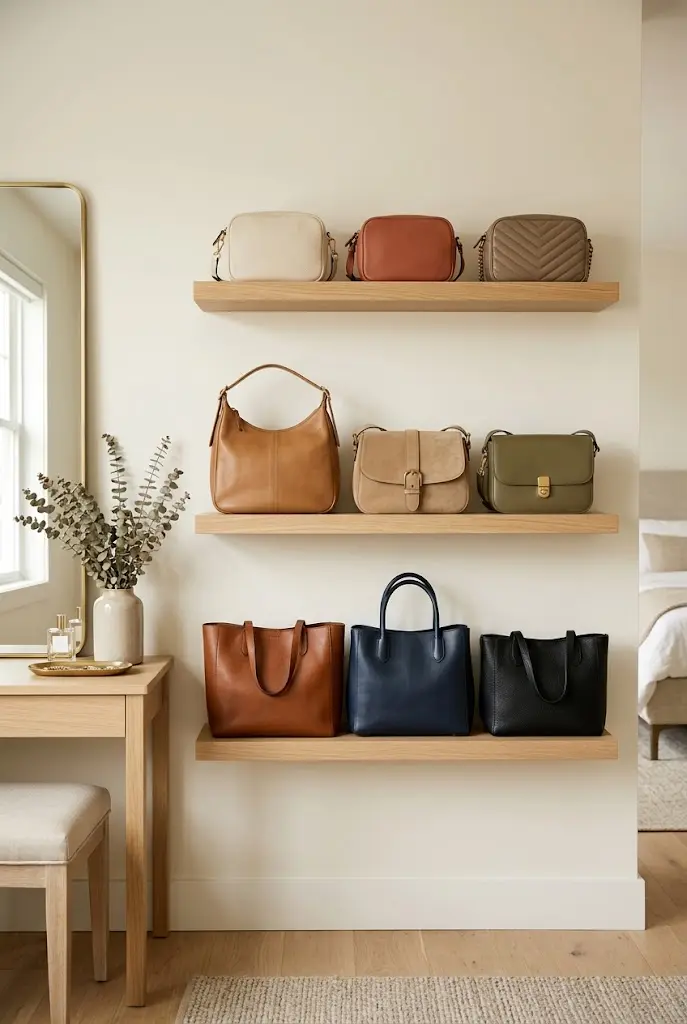
Floating shelves can transform an unused wall into attractive handbag storage without taking up much floor space. Install several shelves vertically with enough distance between them for different purse sizes. Use the lower shelves for larger everyday bags and higher shelves for smaller or less frequently used pieces. Floating shelves work beautifully in bedrooms, dressing areas, and compact closets. Choose wood for warmth, white for a clean look, or a darker finish for contrast. Keep the arrangement simple so the handbags remain the stars of the display. A few carefully chosen accessories can make the shelves feel decorative without becoming cluttered. This solution is particularly useful when traditional closet shelving is limited.
Keep Totes on Lower Shelves

Large tote bags are easier to manage when they have a dedicated lower shelf. Their size and weight make them less convenient to store overhead, so placing them lower improves accessibility. Stand each tote upright with enough room around it to preserve its shape. You can group work totes, travel bags, and oversized everyday handbags together. If a tote is especially soft, use a clean insert or light stuffing to prevent it from collapsing. Avoid stacking heavy bags on top of one another. Keeping large totes together also makes it easier to choose a practical bag when you need extra carrying capacity.
Add a Handbag Station Near the Closet

A small handbag station near the closet can make daily routines much smoother. Set up a compact surface with a few hooks, a tray, and space for one or two current handbags. This can become the place where you switch bags, store keys, or prepare tomorrow’s purse. Choose a small console, dresser, or floating shelf depending on your available space. Keep only the bags you are currently using in this area so it does not become another clutter zone. A mirror nearby can make the setup feel like a mini dressing station. This idea is especially useful for busy mornings when convenience matters as much as organization.
Rotate Your Purse Collection Regularly

Even the best organization system can become difficult if the same bags stay in front forever. Rotate your purse collection every few weeks or at the beginning of each season. Move less-used bags forward and place recently carried bags back into their proper storage areas. This gives you an opportunity to rediscover handbags you may have forgotten. It also helps you notice which styles you genuinely use and which ones are taking up valuable space. Keep a simple rotation based on season, lifestyle, or color palette. Before putting a bag away, empty it and check for receipts, crumbs, or other items. Regular rotation keeps your closet feeling fresh without requiring a complete reorganization.
Create a Simple Purse Organization System
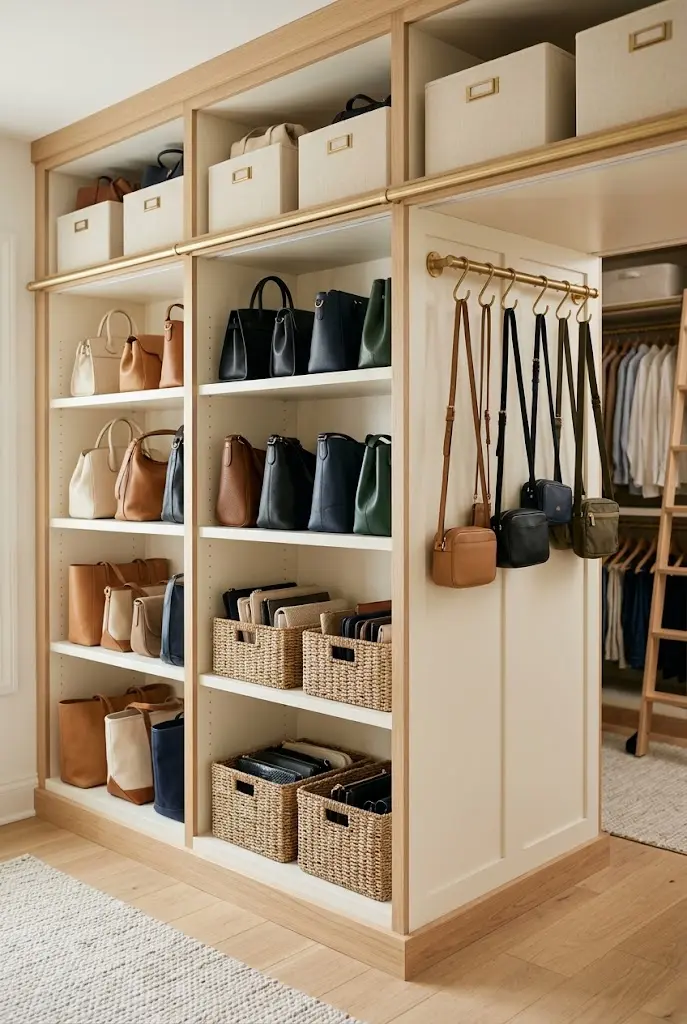
The best purse organization system is one you can realistically maintain. Instead of creating an elaborate setup that takes too much effort, choose a few simple rules that fit your collection and lifestyle. Keep everyday bags at eye level, larger totes below, small purses in baskets or drawers, and special-occasion bags in protected storage. Use shelves, hooks, dividers, or cubbies based on the space you already have. Once everything has a designated home, make a habit of returning each purse to the same place. A simple system makes finding your bags faster and prevents clutter from building again. The goal is not perfection but an organized closet that makes everyday life easier.
Final Thoughts
A well-organized purse collection does not require a huge walk-in closet or expensive custom cabinetry. Small changes such as adding shelf dividers, using hooks, grouping bags by color, or creating a dedicated handbag shelf can make a surprisingly big difference. The key is to make every purse easy to see, easy to reach, and easy to put away.
Whether you prefer a minimalist closet, a boutique-inspired display, or a practical storage system for a small space, there is an approach that can work for you. Start with the bags you use most often and build your organization system around your daily routine. Once every handbag has a home, finding the perfect bag becomes much easier—and your closet can look beautiful at the same time.